- Home
- AI & Machine Learning
- Fine-Tuned Models vs General LLMs: When Specialization Wins for Niche Stacks
Fine-Tuned Models vs General LLMs: When Specialization Wins for Niche Stacks
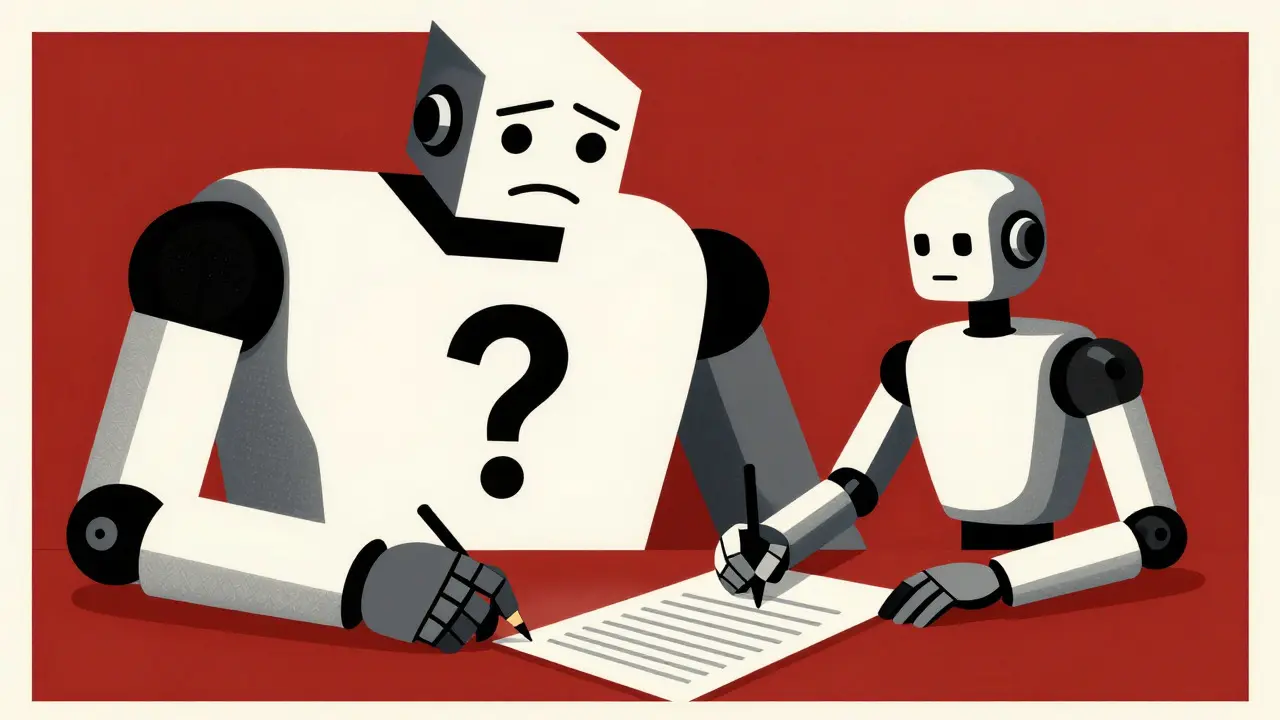
Imagine hiring a brilliant generalist to handle your most sensitive legal contracts. They’re smart, they know the basics of language, but they keep missing subtle jurisdictional nuances. Now imagine a specialist who has spent years reading only those specific types of contracts. Who do you trust with the final signature? In the world of artificial intelligence, we are currently stuck with the generalist. Most companies rely on massive, generic Large Language Models (LLMs) that know everything about nothing in particular. But for specialized industries-legal, medical, financial-the gap between 'good enough' and 'accurate' is dangerous.
This is where fine-tuned models change the game. By taking a base model and training it further on your specific data, you create an AI that speaks your industry’s dialect fluently. The question isn't whether fine-tuning works; the data proves it does. The real question is: when is it worth the effort, cost, and technical headache?
The Case for Specialization: Why Generic LLMs Fail in Niche Contexts
General-purpose LLMs are impressive feats of engineering, but they suffer from what experts call 'hallucination drift' when pushed into specialized domains. A study by Coders GenAI Technologies in 2025 highlighted a stark contrast: in legal summarization tasks, generic models achieved only 68% accuracy, while fine-tuned models hit 92%. More importantly, hallucination rates dropped from 32% to just 8%.
Why does this happen? Generic models are trained on the entire internet. They prioritize probability over precision. When you ask a generic model to interpret a complex HIPAA compliance clause, it guesses based on common patterns in text it has seen before. It doesn't 'know' the law; it mimics the style of legal writing. Fine-tuning anchors the model to verified, domain-specific truth. For a healthcare provider, this means fewer compliance violations. In fact, Professor Andrew Ng noted in late 2024 that fine-tuned models reduced HIPAA compliance violations by 78% compared to their generic counterparts.
Consider customer support. A generic bot might sound polite, but it often misses brand voice or specific product troubleshooting steps. Sapien.io’s analysis from March 2025 showed that fine-tuned models delivered on-brand responses 89% of the time, versus 54% for generic models. That difference isn't just about tone; it's about resolution rate and customer trust.
The Technical Reality: PEFT, QLoRA, and Resource Management
If you think fine-tuning requires a supercomputer and a million-dollar budget, you're thinking about the old way. The landscape shifted dramatically with the advent of Parameter-Efficient Fine-Tuning (PEFT) techniques like LoRA (Low-Rank Adaptation) and QLoRA (Quantized Low-Rank Adaptation).
Historically, fully fine-tuning a model like Llama 2 7B required updating all its parameters, demanding around 78.5GB of GPU memory. This was prohibitive for most teams. However, Meta’s AI research team documented in October 2024 that using QLoRA reduces peak GPU memory requirements to just 15.5GB. This drop-from 78.5GB to 15.5GB-is revolutionary. It means a single NVIDIA A100 GPU, or even high-end consumer hardware in some cases, can now handle the training process for smaller datasets.
| Method | Peak GPU Memory | Accessibility |
|---|---|---|
| Full Fine-Tuning | 78.5 GB | Enterprise Data Centers Only |
| LoRA | 28 GB | High-End Workstations |
| QLoRA | 15.5 GB | Accessible to Small Teams |
This democratization allows startups and mid-sized firms to build proprietary AI assets without relying entirely on expensive API calls to major providers. You retain control over your data and your model's behavior.
When NOT to Fine-Tune: The Pitfalls of Over-Specialization
Fine-tuning is not a silver bullet. In fact, applying it incorrectly can break your application. The primary risk is 'catastrophic forgetting.' This occurs when a model learns new, specific information so intensely that it forgets its general reasoning abilities.
Meta AI researchers found a 22% decline in commonsense reasoning performance after domain-specific fine-tuning. Imagine a medical coding assistant that becomes so focused on ICD-10 codes that it can no longer perform basic arithmetic or understand simple conversational cues. One developer on Hacker News reported exactly this scenario in March 2025: their model 'could no longer perform basic arithmetic after medical terminology training.'
Furthermore, fine-tuned models struggle with breadth. Toloka AI’s October 2024 study revealed that fine-tuned models achieved only 63% effectiveness in general blog writing, compared to 87% for base LLMs. If your use case involves diverse content creation, marketing copy, and general Q&A, a fine-tuned model will feel rigid and narrow. Dr. Emily Zhang of Stanford NLP Lab warned in January 2025 that 'over-specialization creates brittle systems' that fail when presented with edge cases outside their training distribution, noting a 35% performance drop in novel scenarios.
The Hybrid Approach: RAG First, Then Fine-Tune
So, how do you balance specificity with flexibility? The current best practice among AI engineers is a hybrid architecture. Meta AI’s engineering team advocates for a 'RAG-first' strategy. Retrieval-Augmented Generation (RAG) allows you to feed the model external documents at inference time, giving it access to up-to-date information without retraining.
Start with RAG. If the base model plus retrieved documents meets your accuracy needs, stop there. It’s cheaper, faster to update, and less prone to catastrophic forgetting. However, if you need the model to adopt a specific tone, output structured JSON consistently, or understand deep domain jargon that RAG can't capture through context windows alone, then you layer fine-tuning on top.
McKinsey’s January 2025 survey supports this trend, with 82% of AI leaders planning to implement 'fine-tuned models augmented with RAG' as their primary architecture. This combination gives you the factual grounding of RAG and the stylistic/structural precision of fine-tuning.
Data Quality: The Hidden Bottleneck
You can have the best GPUs and the latest PyTorch libraries, but if your data is garbage, your model will be too. The biggest barrier to entry isn't compute power; it's data preparation. Codecademy’s Q1 2025 report cited 'lack of high-quality labeled data' as the primary hurdle for 68% of respondents.
To effectively fine-tune a model, you generally need between 5,000 and 10,000 high-quality, labeled examples. These aren't just raw texts; they are input-output pairs curated by human experts. For a legal tech startup, this means lawyers reviewing and correcting model outputs to create a 'gold standard' dataset. This process takes time-typically 2 to 6 weeks for dataset curation alone.
Common challenges include:
- Data Leakage: Reported by 42% of practitioners, this happens when test data accidentally enters the training set, inflating accuracy metrics artificially.
- Overfitting: Occurring in 37% of cases, this is when the model memorizes the training data rather than learning underlying patterns, leading to poor performance on new data.
- Bias Amplification: If your historical data contains biases, fine-tuning will bake them deeper into the model. With FDA and SEC guidance issued in November 2024, regulatory bodies now demand 'demonstrable evidence of domain-specific validation,' making bias testing mandatory for healthcare and finance.
Cost-Benefit Analysis: Is It Worth It?
Let's talk numbers. Fine-tuning isn't free. You pay for data labeling, compute resources, and engineering hours. However, the return on investment can be significant for high-stakes applications.
Consider inference costs. Codecademy’s analysis showed that a fine-tuned Gemma3 4B model matched the performance of a much larger Gemma3 27B model on domain-specific tasks (87% vs 85% accuracy) while reducing inference costs by 65%. Smaller models run faster and cheaper. If you can achieve enterprise-grade accuracy with a tiny, fine-tuned model instead of paying premium API fees for a massive generic one, the savings compound quickly.
Dr. Jane Chen, Chief AI Officer at Coders GenAI Technologies, recommends a phased approach: 'Start with a generic model, gather usage data, then fine-tune to reach the next level of performance.' This method reduces development costs by 40% compared to attempting a perfect fine-tune from day one.
Implementation Roadmap for 2026
If you decide to proceed, here is a realistic timeline and checklist for deploying a fine-tuned model in a niche stack:
- Define the Failure Mode (Week 1): Identify exactly where the generic LLM fails. Is it tone? Accuracy? Format? Be specific.
- Curate the Dataset (Weeks 2-6): Collect 5,000+ examples. Use subject matter experts to label them. Ensure diversity in the data to prevent brittleness.
- Select the Base Model: Choose an open-source model like Llama 3, Mistral, or Gemma that aligns with your ethical and licensing requirements.
- Choose the Technique: Use QLoRA if you are resource-constrained. Use full fine-tuning only if you have abundant GPU resources and need maximum plasticity.
- Train and Validate (Weeks 7-8): Train the model. Crucially, validate against a hold-out set that was never seen during training to check for overfitting and catastrophic forgetting.
- Deploy with Guardrails: Integrate the model via API or container. Implement monitoring to track drift. Have a fallback mechanism to route queries to a generic model if confidence scores are low.
The market for customized LLMs is growing fast, reaching $4.7 billion in Q4 2024. But growth brings scrutiny. As base models improve rapidly, Gartner warns that 'models fine-tuned on narrow datasets face obsolescence risks.' To stay relevant, plan for continuous retraining pipelines, not one-off projects.
How much data do I need to fine-tune an LLM effectively?
For meaningful specialization, you typically need between 5,000 and 10,000 high-quality, labeled examples. Fewer than 5,000 examples may lead to overfitting or negligible improvements, while more than 10,000 can provide robust generalization within the niche domain. The quality of labels matters more than quantity; expert-reviewed data yields better results than large volumes of noisy data.
What is the difference between RAG and Fine-Tuning?
Retrieval-Augmented Generation (RAG) adds external knowledge to the model at runtime by searching a database and feeding relevant documents into the prompt. It is great for facts and up-to-date information. Fine-tuning changes the model's internal weights to learn styles, formats, and deep domain logic. RAG is easier to update; fine-tuning provides deeper behavioral alignment. Best practice often combines both.
Can I fine-tune an LLM on my laptop?
Yes, thanks to QLoRA (Quantized Low-Rank Adaptation). While full fine-tuning requires massive GPU clusters, QLoRA allows you to fine-tune models like Llama 2 7B with as little as 15.5GB of VRAM. High-end consumer GPUs or cloud instances with modest specifications can handle this process efficiently.
What is catastrophic forgetting in AI models?
Catastrophic forgetting occurs when a model learns new, specific tasks so intensely that it loses its previously acquired general knowledge. For example, a model fine-tuned for medical coding might lose its ability to perform basic math or general conversation. This is why validation sets and hybrid approaches are critical.
Is fine-tuning worth the cost for small businesses?
It depends on your use case. If you need strict brand voice, structured output, or high accuracy in a regulated field, yes. The reduction in inference costs (using smaller, efficient models) and the increase in accuracy can outweigh the initial setup costs. However, for general content generation or broad Q&A, sticking with generic APIs and good prompt engineering is likely more cost-effective.
Susannah Greenwood
I'm a technical writer and AI content strategist based in Asheville, where I translate complex machine learning research into clear, useful stories for product teams and curious readers. I also consult on responsible AI guidelines and produce a weekly newsletter on practical AI workflows.
1 Comments
Write a comment Cancel reply
About
EHGA is the Education Hub for Generative AI, offering clear guides, tutorials, and curated resources for learners and professionals. Explore ethical frameworks, governance insights, and best practices for responsible AI development and deployment. Stay updated with research summaries, tool reviews, and project-based learning paths. Build practical skills in prompt engineering, model evaluation, and MLOps for generative AI.
great read man really breaks down the QLoRA thing nicely