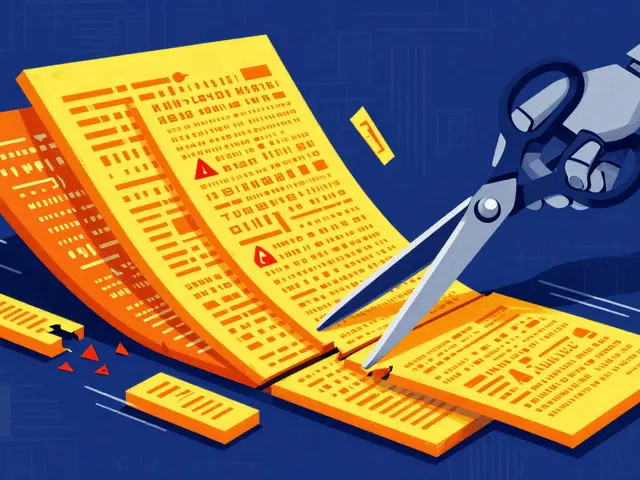
Token-Level Logging Minimization: Protecting Privacy in LLM Systems
You send a query to an Large Language Model (LLM) asking for help with a medical symptom. The model gives you a great answer. But what happens to that conversation? If your system logs every word exactly as it was typed, you just stored sensitive health data in a database that might not be encrypted, accessible by support staff, or even sold to third parties. This is the hidden risk of modern AI deployment.
Token-level logging minimization is the technical practice of scrubbing Personally Identifiable Information (PII) from logs at the individual token level before storage. It’s not just about hiding names; it’s about ensuring that operational telemetry doesn’t become a privacy liability. Recent data shows why this matters: the European Data Protection Board (EDPB) found that 78% of enterprise LLM implementations had inadequate logging controls. If you’re running AI systems in production, ignoring this isn’t just risky-it’s likely non-compliant.
Why Standard Logging Fails LLMs
Traditional application logging assumes structured data. You log user IDs, timestamps, and error codes. LLMs are different. They process unstructured natural language where context is everything. A single sentence can contain multiple types of sensitive data mixed with benign text.
The core problem is multi-turn conversation leakage. In a chat interface, turn 1 might contain a name. Turn 5 might reference "the patient" mentioned earlier. If you only scan the current input, you miss the link. Protecto AI’s research highlights that an innocuous query in later turns can indirectly reveal private data provided in earlier turns. Without token-level awareness, your logs accumulate a trail of breadcrumbs that anyone with access can follow back to the user.
Furthermore, standard redaction tools often fail because they look for patterns like email addresses or credit card numbers. They miss quasi-identifiers-unique combinations of data like job title plus location plus age-that can re-identify users even without direct names. Token-level minimization addresses this by treating each piece of the prompt as a discrete unit that needs evaluation.
How Deterministic Tokenization Works
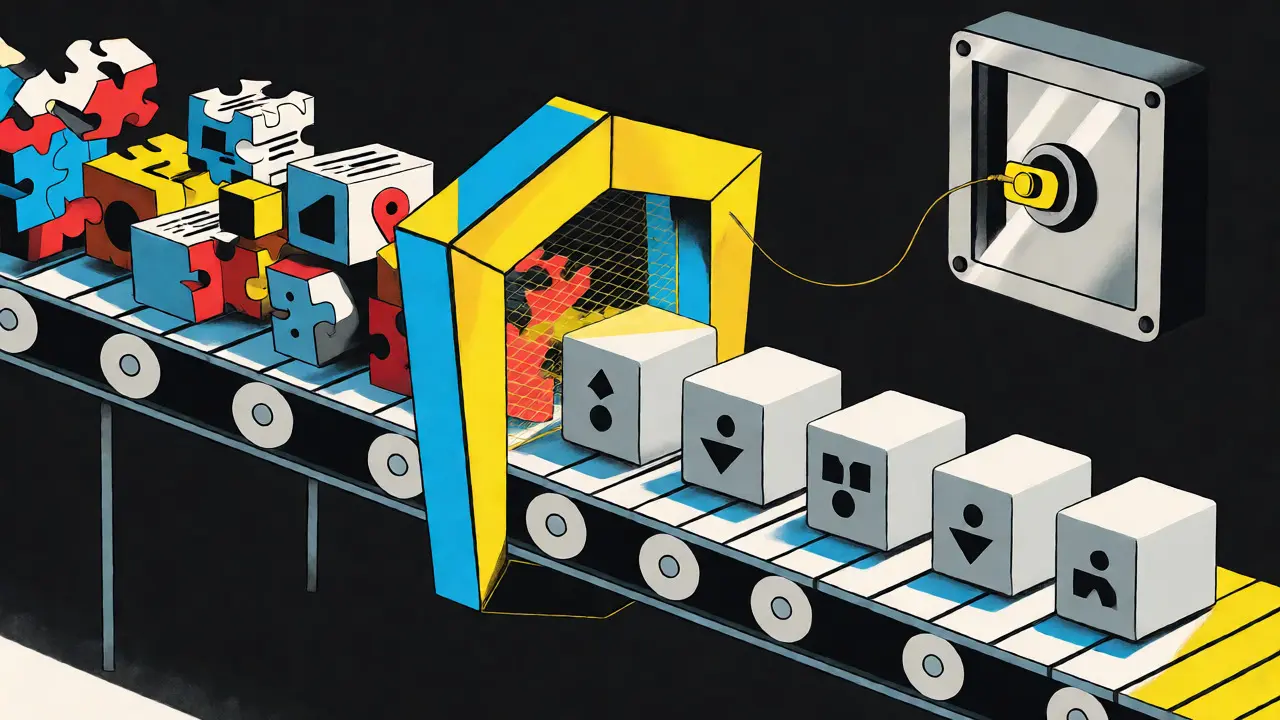
The most effective method for achieving this balance is deterministic tokenization. Unlike random masking, which breaks consistency, deterministic tokenization replaces specific entities with consistent placeholders. For example, every instance of "John Doe" becomes "NAME_042" throughout the session. This preserves the structure of the conversation so developers can still debug issues, but the actual identity is hidden.
Implementing this requires four precise steps:
- Field Identification: Define what counts as PII. This includes direct identifiers (SSNs, emails) and contextual clues (dates, locations).
- Token Format Selection: Choose a format that maintains readability, such as "ID_
" or category-based tags like "[PHONE]". - Secure Mapping Vault: Store the original-to-token mapping in a highly secure, access-controlled vault. Never store this map alongside the logs.
- Pipeline Integration: Apply tokenization before the data hits the LLM API and reverse it only after results are produced, if necessary for display.
This approach allows you to keep the utility of your logs. Engineers can see that a request failed due to a timeout, not because of a bad input, without seeing the user’s social security number. It’s a trade-off between visibility and privacy, but one that is increasingly required by law.
Performance vs. Privacy Trade-offs
Every security measure adds latency. How much does token-level filtering hurt performance? According to IBM’s October 2024 analysis, adding token-level filtering introduces approximately 12-18ms of latency per request. For most enterprise applications, this represents a 0.8-1.3% overhead-a cost that is almost always acceptable compared to the risk of a data breach.
Compare this to full data encryption, which can add 45-60ms per request. Token-level minimization targets only the sensitive elements, reducing processing overhead by roughly 68% compared to blanket encryption methods. You aren’t encrypting the entire payload; you’re surgically removing the parts that matter legally.
| Approach | Latency Overhead | Privacy Preservation | Implementation Complexity |
|---|---|---|---|
| Rule-Based Redaction | <5ms | Low (misses context) | Low |
| Deterministic Tokenization | 12-18ms | High (consistent mapping) | Medium |
| Contextual Manipulation | 20-30ms | Very High (semantic aware) | High |
| Full Encryption | 45-60ms | Total | Medium |
While rule-based redaction is fast, it fails against sophisticated attacks. Contextual manipulation offers better security but demands more computational power. Deterministic tokenization sits in the sweet spot for most enterprises, offering strong compliance with manageable costs.
The Multi-Turn Memory Challenge
Here is where many implementations fail: session tracking. If you tokenize each message independently, you lose the ability to track how context evolves. Professor Michael Chen from MIT warns that token-level approaches create false confidence if implemented without comprehensive session monitoring. An attacker could correlate tokens across different sessions to reconstruct identities.
To fix this, you need session-level logging workflows. These systems trace full interaction histories and monitor for "multi-turn drift," where the meaning of a token changes over time. Galileo AI’s case study found that 73% of initial implementations failed here. They missed cases where a user corrected their name in turn 3, but the log retained the incorrect name from turn 1 as a separate entity.
Solution: Use semantic scanners that flag if a combination of older and newer messages risks revealing something. This requires storing the session state securely and applying privacy rules to the aggregate history, not just the current input.

Regulatory Drivers and Market Reality
Why is everyone talking about this now? Because regulators are paying attention. The EU AI Act mandates "data minimization by design." GDPR Article 32 requires appropriate technical measures to ensure security. The EDPB explicitly recommends token-level filtering as a minimum standard for AI systems.
Market adoption reflects this pressure. Gartner reports that 68.3% of Fortune 500 companies have implemented token-level privacy controls. In highly regulated sectors like finance and healthcare, that number jumps to 87%. Companies aren’t doing this just to be nice; they’re doing it to avoid fines and maintain customer trust.
If you’re building an LLM application today, assume that your logs will be audited. Assume that every token stored is a potential liability. The goal isn’t to stop logging-you need logs to operate-but to make them safe.
Implementation Checklist for Teams
Ready to implement? Here is a practical roadmap based on successful enterprise deployments:
- Audit Current Logs: Identify what PII currently leaks into your observability stack.
- Define Token Schemas: Decide on consistent formats for names, IDs, and locations.
- Integrate Before API Call: Ensure tokenization happens client-side or via a proxy before hitting the LLM provider.
- Secure the Map: Implement strict access controls for the vault that holds the original values.
- Test for Leakage: Run regular tests against known attack patterns, such as those in the OWASP Top 10 LLM Security Risks.
- Monitor Session Drift: Add alerts for unusual patterns in multi-turn conversations that might indicate reconstruction attempts.
Developers typically need 35-45 hours of training to master these techniques. Don’t underestimate the learning curve. Tools exist to help, but understanding the underlying logic is crucial for troubleshooting when things go wrong.
What is token-level logging minimization?
It is a privacy technique that removes or masks Personally Identifiable Information (PII) from logs at the individual token level before storage. This ensures that operational data remains useful for debugging while protecting user privacy and meeting regulatory requirements like GDPR.
Does tokenization affect LLM performance?
Yes, but minimally. Deterministic tokenization adds approximately 12-18ms of latency per request, which is generally considered negligible for enterprise applications. This is significantly faster than full data encryption, which can add 45-60ms.
Why is multi-turn conversation tracking important?
Because privacy risks accumulate over time. A user might provide sensitive info in one turn and reference it vaguely in another. Without tracking the session context, logs might fail to capture the full scope of exposed data, leading to incomplete anonymization.
Is deterministic tokenization reversible?
Yes, within the system. The original values are stored in a secure mapping vault. Authorized personnel can reverse the tokens using this vault, but the logs themselves remain anonymous to anyone without access to the vault.
Which industries need this the most?
Finance and healthcare lead adoption due to strict regulations like HIPAA and PCI-DSS. However, any sector handling personal data under GDPR or the EU AI Act should prioritize token-level minimization to avoid heavy fines.