Maximizing Talent Strategy ROI for Generative AI: Upskilling vs. Recruitment
You've bought the licenses. You've rolled out Copilot or ChatGPT Enterprise to your engineering and marketing teams. But if you're looking at your P&L and wondering where the return on investment actually went, you aren't alone. Correlation-One reports that while about 50 percent of organizations have achieved high adoption of generative AI, most struggle to realize its true financial return. The problem usually isn't the software; it's the people strategy behind it.
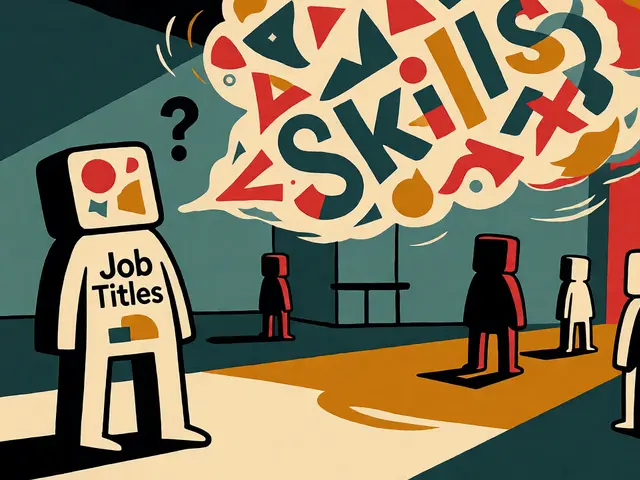
Here is the hard truth: Generative AI doesn't replace entire roles overnight-it automates specific tasks within them. McKinsey research indicates these tools currently assist with only 10 to 20 percent of coding activities. If you are still hiring based on traditional job titles or firing junior staff because an AI can write a basic function, you are likely burning cash without gaining efficiency. To get real ROI, you need to shift from role-based planning to a skills-centric model that balances internal upskilling with strategic recruitment.
The Myth of the "AI-Proof" Job Title
For decades, HR departments have operated on a simple logic: identify a gap in a role (like "Software Engineer") and hire someone to fill it. This breaks down with generative AI. Because AI impacts tasks rather than whole jobs, a "Software Engineer" who refuses to learn how to prompt-engineer their code reviews is now less valuable than a mid-level engineer who uses AI to double their output.
Leading companies are moving toward skills-based workforce planning. Instead of asking "Do we need more engineers?", they ask "Which specific skills are being automated, and which are becoming more critical?" For example, while AI handles boilerplate code, the demand for skills in system architecture, ethical AI oversight, and complex problem-solving spikes. By treating skills as data assets-tagging employees with specific capabilities like "Python," "Prompt Engineering," or "Data Ethics"-you can use AI itself to map your internal talent gaps. This approach allows you to see that you might not need to hire ten new developers; you might just need to train five existing ones on advanced debugging techniques that AI cannot yet fully automate.
Upskilling: The High-Yield Investment
Recruiting top-tier AI talent is expensive and slow. The market for specialists is overheated, and turnover rates are high. Upskilling your existing workforce is often the faster, cheaper path to ROI. Dataiku’s research highlights that successful companies build "unicorn teams" by empowering current employees to combine domain expertise with new AI fluency, rather than hunting for rare external candidates who possess both.
But generic training doesn't work. A one-hour webinar on "What is LLMs?" yields near-zero ROI. Effective upskilling requires hands-on application. Consider the apprenticeship model championed by firms like McKinsey. It works best when senior experts actively mentor juniors-not just checking boxes, but reviewing code together, shadowing work sessions, and discussing judgment calls. When a senior developer teaches a junior how to evaluate whether AI-generated code is actually suitable for production, they are transferring tacit knowledge that no tool can replicate.
To make this stick, you must incentivize it. Make mentoring part of performance evaluations. Give seniors protected time to teach. Without this structural support, upskilling initiatives die quietly after the initial excitement fades.

Recruitment Shifts: Hiring for Adaptability
Does this mean you stop hiring? Absolutely not. But the profile of the ideal candidate changes. BCG estimates that GenAI will impact roughly 90 percent of tech jobs, reducing costs in tech functions by about 10 percent. This cost reduction frees up budget, but it also changes who you need. Many tech leaders are finding they need fewer entry-level engineers who rely on rote coding skills, and more senior engineers who can orchestrate AI agents and manage complex systems.
Furthermore, recruitment processes themselves are being optimized by AI. Tools like Eightfold and Custom GPT implementations are already saving recruiters significant time. For instance, generating Boolean search strings from job descriptions saves about five minutes per string-a small gain that compounds across hundreds of searches. More impressively, specialized sourcing assistants can compile competitor insights and accelerate expansion research by 90 percent. Use these tools to free up your recruiters' time so they can focus on what humans do best: assessing cultural fit, negotiating offers, and evaluating soft skills like adaptability and curiosity.
| Metric | Traditional Role-Based Approach | Skills-Based AI Strategy |
|---|---|---|
| Hiring Focus | Job Titles & Years of Experience | Specific Skill Proficiency & AI Fluency |
| Training Model | Generic Onboarding & Annual Reviews | Continuous Micro-learning & Apprenticeships |
| Cost Structure | High External Recruitment Fees | Internal Upskilling Costs + Tool Licenses |
| Speed to Value | Slow (3-6 months onboarding) | Fast (Weeks for targeted skill gaps) |
| Risk Factor | Skills Obsolescence | Change Management Resistance |
Measuring the Real ROI
If you can't measure it, you can't improve it. Too many companies track vanity metrics like "number of employees trained." That tells you nothing about value. To calculate true Talent Strategy ROI for Generative AI, you need to look at outcome-based metrics.
- Productivity Lift: Did code deployment frequency increase? Did report generation time drop from hours to minutes?
- Quality Improvement: Did error rates decrease due to better AI-assisted testing or review processes?
- Retention Rates: Are employees staying longer because they feel empowered rather than threatened by AI?
- Time-to-Hire Reduction: Did AI-driven sourcing tools shorten the recruitment cycle?
A life sciences company recently implemented an AI skills inferencing tool that scanned LinkedIn profiles, Jira tickets, and HR data to map actual employee skills against project needs. They discovered they had hidden internal talent capable of leading AI projects, saving them six figures in external consulting fees. This is the kind of concrete ROI you should be chasing.

Bridging the Gap: Build, Hire, or Evolve?
Facing a skill gap, you have three options: Build (train internally), Hire (buy externally), or Evolve (restructure roles). There is no one-size-fits-all answer. Randstad and other talent intelligence firms suggest using a decision framework based on urgency and scarcity.
If the skill is common and evolving slowly (like basic data literacy), Build. Train your existing staff. If the skill is rare and critical for immediate competitive advantage (like advanced LLM fine-tuning), Hire. But be careful-external hires bring fresh perspectives but may lack institutional context. Often, the best move is to Evolve: take a domain expert (like a marketing manager) and pair them with a technical specialist to create a hybrid role that didn't exist before. This "fusion team" approach leverages the strengths of both groups and creates unique value that pure tech or pure business teams miss.
Pitfalls to Avoid
Even with a great strategy, execution fails if you ignore the human element. Here are three common traps:
- The Checkbox Training Trap: Assuming that completing an online module equals competency. Without practical application and mentorship, retention of new AI skills is low.
- The Fear Factor: If employees believe AI is coming for their jobs, they will sabotage adoption. Communicate clearly that AI is a co-pilot, not an autopilot. Emphasize augmentation over replacement.
- Data Silos: You can't optimize talent if your HR data lives in one system and your productivity data in another. Integrating these sources is crucial for accurate skills mapping.
Ultimately, maximizing ROI from generative AI isn't about buying the smartest algorithm. It's about building the smartest organization around it. Companies that treat their workforce as adaptable, data-rich networks of skills-rather than static lists of job titles-are the ones seeing genuine returns. Start by auditing your current skills inventory, identifying which tasks are ripe for automation, and investing heavily in the human judgment required to guide those machines.
Is upskilling really cheaper than hiring new AI talent?
Generally, yes. While training programs have upfront costs, they avoid the premium salaries, recruitment agency fees, and onboarding time associated with hiring scarce AI specialists. Moreover, upskilling retains institutional knowledge, which reduces long-term operational risks and improves employee retention.
How does generative AI change the definition of "technical talent"?
It blurs the line between technical and non-technical roles. Technical talent now includes not just coders and data scientists, but also "prompt engineers" and domain experts who can effectively collaborate with AI. Non-technical roles increasingly require digital literacy and the ability to interpret AI outputs, making cross-functional skills more valuable than deep siloed expertise.
What is the biggest barrier to realizing AI ROI in talent strategy?
Resistance to change and lack of clear measurement frameworks. Many organizations adopt tools without changing workflows or measuring outcomes. Without integrating AI usage into performance metrics and providing adequate training, adoption remains superficial, and the expected productivity gains never materialize.
Should I stop hiring entry-level engineers because of AI?
Not necessarily, but you should adjust the criteria. AI handles routine coding tasks well, so entry-level roles may require fewer pure coders and more individuals with strong problem-solving and communication skills. Consider shifting focus to hiring interns or juniors who demonstrate high adaptability and willingness to learn AI-assisted workflows, rather than just syntax proficiency.
How do I measure the success of my AI upskilling program?
Track both leading and lagging indicators. Leading indicators include participation rates in training and usage stats of AI tools. Lagging indicators, which matter more for ROI, include reduced time-to-market for products, lower error rates, increased revenue per employee, and improved employee satisfaction scores related to workload management.