
NLP Datasets: From Wikipedia to Web-Scale LLM Corpora
You know that feeling when you try to teach a toddler a new word? You don’t just hand them a dictionary. You point at objects, repeat sounds, and correct their mistakes over thousands of interactions. Now imagine doing that for a computer, but instead of one child, you’re teaching billions of parameters how to understand human nuance, sarcasm, and grammar. That’s the role of NLP datasets is the raw fuel that powers Natural Language Processing. Without them, even the most sophisticated algorithms are just empty shells waiting for input.
We’ve come a long way from the early days when researchers scraped Wikipedia pages by hand. Today, we’re dealing with web-scale corpora-massive collections of text pulled from Reddit, Common Crawl, and proprietary books-that train Large Language Models (LLMs). But here’s the catch: bigger isn’t always better. The shift from curated, clean datasets like WikiText to messy, unfiltered internet data has changed everything about how we build AI. If you’re trying to figure out which data source actually moves the needle for your model, or why some models hallucinate while others seem eerily smart, it usually comes down to what they ate during training.
The Evolution of Data Sources in NLP
Think back to the mid-2010s. If you wanted to train a language model, you probably grabbed the WikiText dataset. It was extracted from Wikipedia articles, meaning it was structured, fact-heavy, and relatively clean. It had millions of words, organized by topic, making it perfect for next-word prediction tasks where context mattered more than slang. Back then, quality control was king. We spent hours cleaning up HTML tags, removing citations, and standardizing formatting because noise hurt performance.
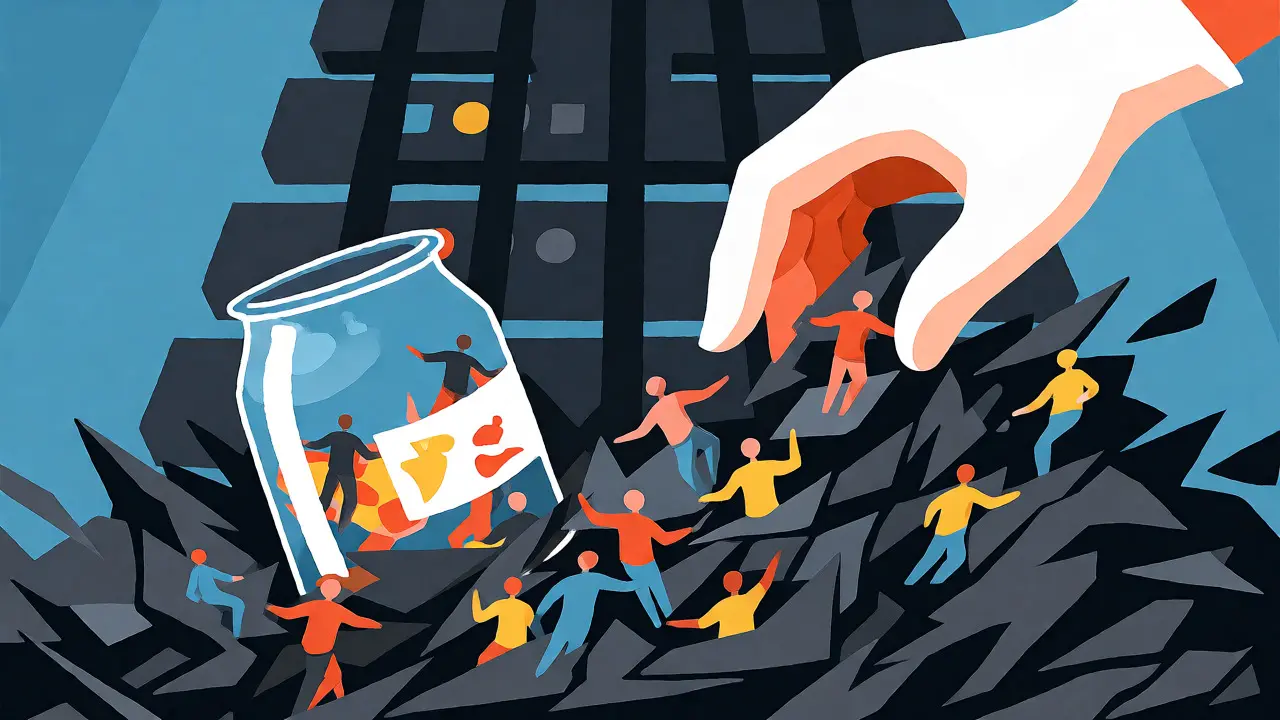
Fast forward to today, and the game has flipped. Modern LLMs aren’t trained on tidy encyclopedias alone. They’re fed web-scale corpora derived from sources like Common Crawl, which scrapes the entire visible web. This includes forum posts, news articles, blogs, and yes, plenty of typos and memes. Why the change? Because general understanding requires exposure to the chaos of real human communication. A model trained only on Wikipedia might sound like a professor who’s never left the library. One trained on the web knows how people actually talk, argue, and joke online.
This transition wasn’t just about volume; it was about diversity. Early datasets were often biased toward formal English or specific domains. Web-scale data introduced multilingual content, code snippets, and informal dialects. However, this came with a cost: data hygiene became a nightmare. Cleaning petabytes of text requires automated pipelines rather than manual review, leading to issues like duplicate content and toxic language slipping through the cracks.
Anatomy of Key Dataset Types
Not all data serves the same purpose. Depending on what you want your model to do, you’ll need different flavors of information. Let’s break down the main categories you’ll encounter in the wild.
- General Language Modeling Corpora: These are massive, unlabeled text dumps used for pre-training. Examples include The Pile, which aggregates diverse sources like PubMed abstracts, GitHub code, and Project Gutenberg books. The goal here is breadth. You want the model to see every possible sentence structure so it learns the underlying statistics of language.
- Task-Specific Annotated Datasets: Once the base model is trained, you fine-tune it using smaller, labeled sets. For sentiment analysis, you might use the Stanford Sentiment Treebank (SST). Unlike simple positive/negative labels, SST provides phrase-level annotations, allowing models to detect subtle shifts in tone within a single sentence.
- Benchmark Evaluation Sets: How do you know if your model is good? You test it against standardized challenges. GLUE (General Language Understanding Evaluation) and its successor SuperGLUE provide suites of tasks like natural language inference and question answering. These aren’t for training; they’re for grading.
Consider the difference between the Blog Authorship Corpus and the Yelp Open Dataset. The former contains over 681,000 blog posts from nearly 20,000 bloggers. It’s great for studying writing style and authorship attribution because it captures personal voice. The latter, however, consists of nearly 7 million reviews for businesses. It’s noisy, opinionated, and short. Using the wrong one for your task can lead to poor results. If you train a customer service bot on literary blogs, it might respond to complaints with poetic metaphors instead of solutions.
| Dataset Type | Primary Source | Scale | Best Use Case | Key Challenge |
|---|---|---|---|---|
| Web-Scale Pre-training | Common Crawl, Reddit | Petabytes | General world knowledge | Noise and duplication |
| Curated Encyclopedic | Wikipedia, Britannica | Gigabytes | Factual consistency | Limited conversational variety |
| Sentiment Analysis | Amazon Reviews, Twitter | Millions of examples | Opinion mining | Subjectivity and sarcasm |
| Code Intelligence | GitHub Repositories | Terabytes | Programming assistance | Syntax vs. semantics balance |
From Curated Text to Raw Internet Scrapes
Why did we move away from the neatness of Project Gutenberg-which offers over 50,000 public domain books-to the chaotic sprawl of social media? Simple: coverage. Books represent a narrow slice of human experience. They’re edited, polished, and often outdated. Social media, on the other hand, is live. It reflects current events, emerging slang, and real-time reactions.
Take the AG News Corpus. It categorizes news articles into World, Sports, Business, and Science/Tech. It’s useful for classification tasks, but it doesn’t capture the informal chatter that dominates modern communication. Compare this to datasets derived from Reddit, where users discuss niche hobbies, technical problems, and pop culture in fragmented threads. Models trained on the latter learn to handle incomplete sentences and contextual references that formal texts rarely exhibit.
However, relying solely on web scrapes introduces bias. The internet isn’t a representative sample of humanity. It skews younger, more tech-savvy, and often more extreme in its opinions. When an LLM trained on this data makes a mistake, it’s often reflecting these biases. Researchers now spend significant effort on "data curation"-filtering out low-quality pages, deduplicating content, and balancing representation across languages and demographics.
The Impact of Scale on Model Performance
There’s a common misconception that simply adding more data always improves performance. While true up to a point, diminishing returns kick in fast. Training on ten times the data might yield only a marginal improvement in accuracy if the new data is redundant. For instance, scraping the same news article from five different sites adds little value compared to finding unique perspectives from local blogs.
What matters more is diversity. A model exposed to legal contracts, medical journals, casual chats, and Python code develops a richer internal representation of language. This is why mixed-source datasets like The Pile have become popular. By combining high-quality subsets from various domains, developers ensure the model doesn’t overfit to one style.
Moreover, scale affects computational costs. Processing petabytes of text requires distributed computing clusters that can cost hundreds of thousands of dollars per run. For startups or academic labs, choosing the right subset of data is crucial. Sometimes, a well-curated 10GB dataset outperforms a sloppy 1TB dump because the signal-to-noise ratio is higher.

Ethical Considerations and Data Hygiene
As datasets grew larger, ethical concerns moved from the sidelines to center stage. Early datasets like the Blog Authorship Corpus raised privacy issues because they contained personal diaries and identifiable details. Today, with web-scale scraping, the problem is magnified. Did the user consent to having their tweet used to train a commercial AI? Can we remove copyrighted material effectively?
Projects like Hugging Face Datasets have tried to address this by providing standardized interfaces and documentation for open-source datasets. This transparency helps researchers track provenance. If a model behaves strangely, you can trace it back to specific data sources. Yet, gaps remain. Many large corpora lack detailed metadata about the demographic background of authors or the cultural context of the text.
Another issue is toxicity. Unfiltered web data contains hate speech, profanity, and misinformation. If not handled carefully, models inherit these traits. Fine-tuning on safer datasets helps, but it’s like putting a bandage on a broken bone. The root cause lies in the pre-training data. Recent efforts focus on creating "cleaner" versions of web corpora, filtering out aggressive language without stripping away necessary colloquialisms.
Practical Tips for Selecting Your Dataset
If you’re building an NLP application, don’t just grab the biggest file available. Ask yourself three questions:
- Is my task general or specific? If you’re building a chatbot for healthcare, start with a general corpus but prioritize medical texts during fine-tuning. Don’t waste time on sports forums.
- How much noise can I tolerate? If you need precise answers, avoid raw social media data. Stick to curated sources like textbooks or professional articles.
- Do I have the compute power? Larger datasets require more GPU memory and time. Ensure your infrastructure can handle the load before committing.
Also, check the license. Some datasets are strictly for research, while others allow commercial use. Ignoring this can lead to legal headaches later. Always read the terms of service for sources like Common Crawl or Kaggle competitions.
Why are web-scale datasets preferred over Wikipedia for LLMs?
Web-scale datasets provide greater diversity in language styles, including informal speech, slang, and varied sentence structures that Wikipedia lacks. This helps models generalize better to real-world conversations rather than sounding overly formal or academic.
What is the main downside of using unfiltered internet data?
Unfiltered data contains significant noise, such as typos, duplicates, and toxic language. It also introduces societal biases present in online communities, which can skew model outputs unless carefully managed through filtering and balanced sampling.
Can small datasets still be effective for NLP tasks?
Yes, especially for specialized tasks like named entity recognition or sentiment analysis in a specific industry. High-quality, annotated small datasets can outperform large, noisy ones when combined with transfer learning from pre-trained models.
How does data duplication affect model training?
Duplication causes models to overfit on repeated patterns, reducing their ability to generalize. It also wastes computational resources. Deduplication techniques are critical in preprocessing web-scale corpora to ensure efficient learning.
Are there ethical risks in using public web data for training?
Yes, concerns include copyright infringement, privacy violations, and the perpetuation of harmful stereotypes. Ensuring consent and anonymization is challenging at web scale, requiring robust legal and technical frameworks.




love this breakdown on how we moved from clean wiki text to the messy wild west of common crawl its honestly what makes llms feel alive instead of like a textbook 🚀
typical oversimplification.