Generative AI Governance Committees: Roles, RACI, and Cadence Guide
You just rolled out a new generative AI tool for customer support. It’s fast, it’s smart, and it’s already saving your team hours. But then a compliance officer asks who approved the data usage, or a legal lead flags a potential bias in the output. Suddenly, you’re stuck in an email chain with no clear owner. This is exactly why Generative AI Governance Committees are no longer optional luxuries-they are critical infrastructure.
If you’re building or refining your AI strategy, you need more than just good models. You need a structured way to decide what gets built, who owns the risk, and how often you check in. By late 2023, 78% of Fortune 500 companies had established some form of these committees. If you haven’t yet, you’re likely operating with blind spots that could cost you millions in compliance fines or lost opportunities.
Why You Need a Formal Structure Now
The rush to adopt tools like ChatGPT and internal LLMs created a gap. Teams deployed solutions faster than legal and security could review them. The result? Privacy vulnerabilities, security gaps, and unclear accountability. A formal Governance Committee acts as the central coordination point. It ensures your AI initiatives align with company values and regulatory requirements.
Think of it this way: without a committee, every department builds its own AI sandbox. With one, you have a shared rulebook. Data from The Institute of Internal Auditors suggests that effective governance reduces implementation risks by up to 63%. More importantly, it speeds things up. Streamlined approval processes can accelerate time-to-value by 41%. You aren’t adding bureaucracy; you’re removing the friction of constant second-guessing.
Who Sits at the Table?
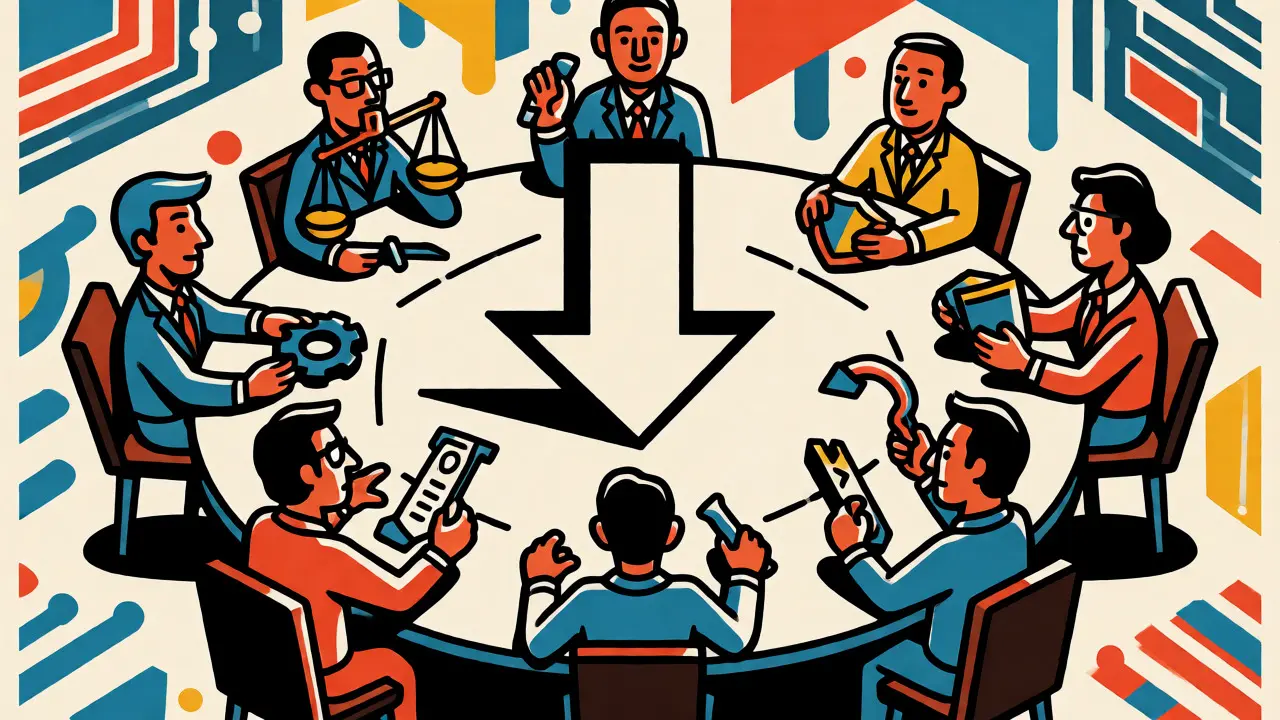
Composition matters more than title. You don’t just need executives; you need cross-functional expertise. OneTrust’s implementation guide highlights seven critical domains that must be represented. Missing even one creates a blind spot.
- Legal: Provides regulatory oversight and interprets laws like the EU AI Act.
- Ethics and Compliance: Ensures alignment with ethical standards and corporate values.
- Privacy: Verifies lawful data processing and consent management.
- Information Security: Safeguards systems against breaches and model inversion attacks.
- Research and Development: Offers technical insights on model capabilities and limitations.
- Product Management: Represents user needs and business value.
- Executive Leadership: Sets strategic direction and breaks ties.
Don’t make the mistake of excluding engineering. Kabir Barday, Chief Privacy Officer at OneTrust, noted that committees with engineering representation reduced model drift incidents by 52%. Engineers understand the difference between fine-tuning and prompt engineering. Without them, you might reject a viable marketing tool because the committee misunderstands the technology, costing you real money-like the $1.2 million opportunity loss reported by a Microsoft Azure engineer.
Defining Roles with RACI
Confusion over ownership kills momentum. Use the RACI framework (Responsible, Accountable, Consulted, Informed) to clarify duties. This isn’t just theory; IANS Research explicitly recommends it for AI governance.
| Role | RACI Assignment | Key Responsibility |
|---|---|---|
| Committee Chair (C-Suite) | Accountable | Final decision authority; owns the outcome. |
| Legal Team | Responsible | Executes compliance verification and policy enforcement. |
| Privacy Officer | Consulted | Advises on data rights and regulatory constraints before decisions. |
| Business Units | Informed | Receives final approvals and updates on policy changes. |
| Data Science Team | Responsible | Implements technical controls and reports on model performance. |
The key here is veto power. Dr. Rumman Chowdhury from Accenture states that 100% of effective committees possess explicit authority to halt deployments. If Legal says “no,” the project stops until risks are mitigated. If the Chair is merely advisory, the committee becomes a rubber stamp.
Choosing Your Model: Centralized vs. Federated
There is no one-size-fits-all structure. Alation’s Q1 2025 survey identifies three main models. Your choice depends on your company size and risk tolerance.
The Centralized Model: Adopted by 42% of organizations, this features a single enterprise-wide committee with absolute authority. IBM’s AI Ethics Council is a prime example. It works best for high-risk applications where consistency is paramount. Organizations using this approach report fewer regulatory incidents but spend 30% more executive time on reviews.
The Federated Model: Used by 38% of enterprises, this hybrid approach creates a central oversight body alongside business-unit-specific subcommittees. JPMorgan Chase uses this structure. It offers balance. Microsoft reported 44% faster deployment cycles with this model while maintaining compliance. It allows local teams to move quickly on low-risk projects while keeping high-stakes decisions centralized.
The Decentralized Model: Only 20% of firms use this, delegating primary governance to business units with light central coordination. While it boosts efficiency for low-risk apps by 68%, it carries elevated risk. TMASolutions found this model resulted in 57% higher compliance violations. Unless you have very mature decentralized teams, avoid this for generative AI.
Setting the Right Cadence
How often should you meet? Too often, and you become a bottleneck. Too rarely, and you miss emerging risks. The industry standard follows a tiered approach.
Executive-Level Meetings: Convene quarterly (every 90 days). Focus on strategy, policy updates, and high-level performance metrics. This is where you review the big picture, such as new regulations like the U.S. Executive Order 14110 or the EU AI Act.
Operational Working Groups: Meet bi-weekly (every 14 days). These groups assess individual use cases, review risk assessments, and handle day-to-day approvals. They do the heavy lifting so the executive group doesn’t get bogged down in details.
Emergency Approvals: For time-sensitive issues, implement electronic voting mechanisms. Leading organizations enable approvals within 72-hour windows. This prevents urgent business needs from waiting weeks for a scheduled meeting.

Process Flow and Documentation
Chaos happens when there’s no standard workflow. Successful committees document their process clearly. Here is a typical cycle time breakdown based on OneTrust’s benchmarks:
- Intake (2-5 days): Business unit submits a proposal with use case details.
- Risk Tiering (3-7 days): Initial assessment determines if the project is High, Medium, or Low risk.
- Privacy and Security Review (5-10 days): Deep dive into data handling and security architecture.
- Data Readiness Checks (3-5 days): Verification that training data is clean and compliant.
- Final Approval (2-3 days): Committee vote and sign-off.
Total cycle time ranges from 15 to 25 days. If your current process takes 45 days, you’re losing competitive edge. Standardized risk tiering helps here. One senior data governance specialist noted that clear categorization reduced their approval time from 45 to 12 days.
Documentation is non-negotiable. You need a written charter defining scope and authority. You also need version-controlled policy frameworks. Privacera notes that leading organizations update these documents quarterly. Treat your AI policies like code-track changes, review diffs, and archive old versions.
Common Pitfalls and How to Avoid Them
Even well-intentioned committees fail. Here are the top three reasons why, and how to fix them.
Pitfall 1: Technical Illiteracy. Non-technical members often struggle to evaluate AI risks. Privacera’s training assessment shows they need 20-25 hours of specialized training. Don’t skip this. Invest in upskilling your legal and executive members on basic AI concepts like hallucinations, bias, and model drift.
Pitfall 2: Bureaucratic Bottlenecks. 61% of organizations report approval delays exceeding 30 days due to poor workflows. Fix this by implementing automated monitoring tools. 63% of leading firms now use AI governance platforms that provide real-time risk dashboards. Let the software handle routine checks so humans can focus on judgment calls.
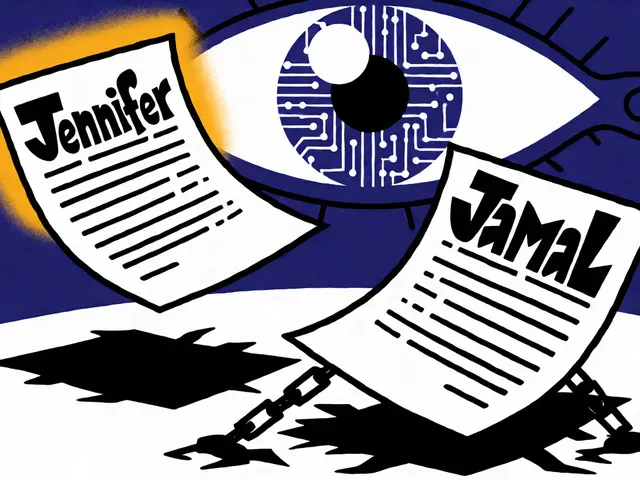
Pitfall 3: Lack of Veto Power. If the committee can’t stop a launch, it’s not governing. Ensure the Chair has explicit authority to halt deployments. Professor Fei-Fei Li warned that diverse technical expertise is crucial to prevent algorithmic bias. If your committee lacks this diversity, you’ll see 73% more bias incidents.
Regulatory Drivers and Future Trends
The landscape is shifting fast. The global AI governance market is projected to hit $1.2 billion by 2026. Why? Regulation. The EU AI Act, effective February 2025, mandates risk-based governance for high-impact systems. In the U.S., the SEC is expected to require public companies to disclose AI governance committee composition by Q3 2025.
This means your committee isn’t just internal housekeeping-it’s a public-facing asset. Investors will look at your governance structure to assess risk. Financial services leads adoption at 89%, followed by healthcare at 76%. If you’re in tech or retail, catch up. Gartner predicts 78% of remaining S&P 500 companies will establish formal committees by year-end 2025.
Looking ahead, expect automation. 83% of analysts predict increased automation of routine governance tasks by 2027. Your committee will evolve from manual reviews to overseeing automated compliance engines. Start building the foundation now so you’re ready to scale later.
What is the minimum number of members needed for an AI governance committee?
While there is no strict legal minimum, effective committees typically range from 5 to 9 core members. This size allows for diverse perspectives across legal, ethics, privacy, security, and technical domains while remaining small enough to make decisions efficiently. Larger groups often suffer from slower consensus and diluted accountability.
How much does it cost to set up an AI governance committee?
The direct cost is primarily time rather than cash. Setting up requires 8-12 weeks of preparatory work, including stakeholder mapping and charter development. For larger enterprises (10,000+ employees), this timeline may extend by 30%. The ongoing cost involves executive time investment; centralized models require about 30% more leadership bandwidth compared to federated models.
Can existing IT steering committees handle generative AI governance?
Generally, no. Traditional IT steering committees lack the specific expertise required for generative AI, such as understanding large language model behaviors, prompt injection risks, and data provenance. They also often miss the necessary legal and ethical perspectives. It is better to create a dedicated AI governance body or significantly expand the scope and membership of an existing committee to include AI-specific roles.
What happens if a business unit deploys AI without committee approval?
This creates significant liability. Unapproved deployments bypass risk assessments, potentially violating privacy laws like GDPR or CCPA. Remediation usually involves pausing the application, conducting a retroactive audit, and possibly retraining staff. In severe cases, it can lead to regulatory fines or reputational damage. Strong change management policies and automated discovery tools help prevent unauthorized deployments.
How do we measure the success of our AI governance committee?
Track both speed and safety metrics. Key indicators include average approval time (targeting under 25 days), percentage of projects blocked due to high risk, and number of post-deployment incidents (bias, security breaches). Also monitor adoption rates; successful committees facilitate innovation rather than stifling it, aiming for accelerated time-to-value as seen in organizations reporting 41% faster rollouts.