Community and Ethics for Generative AI: A Guide to Stakeholder Engagement
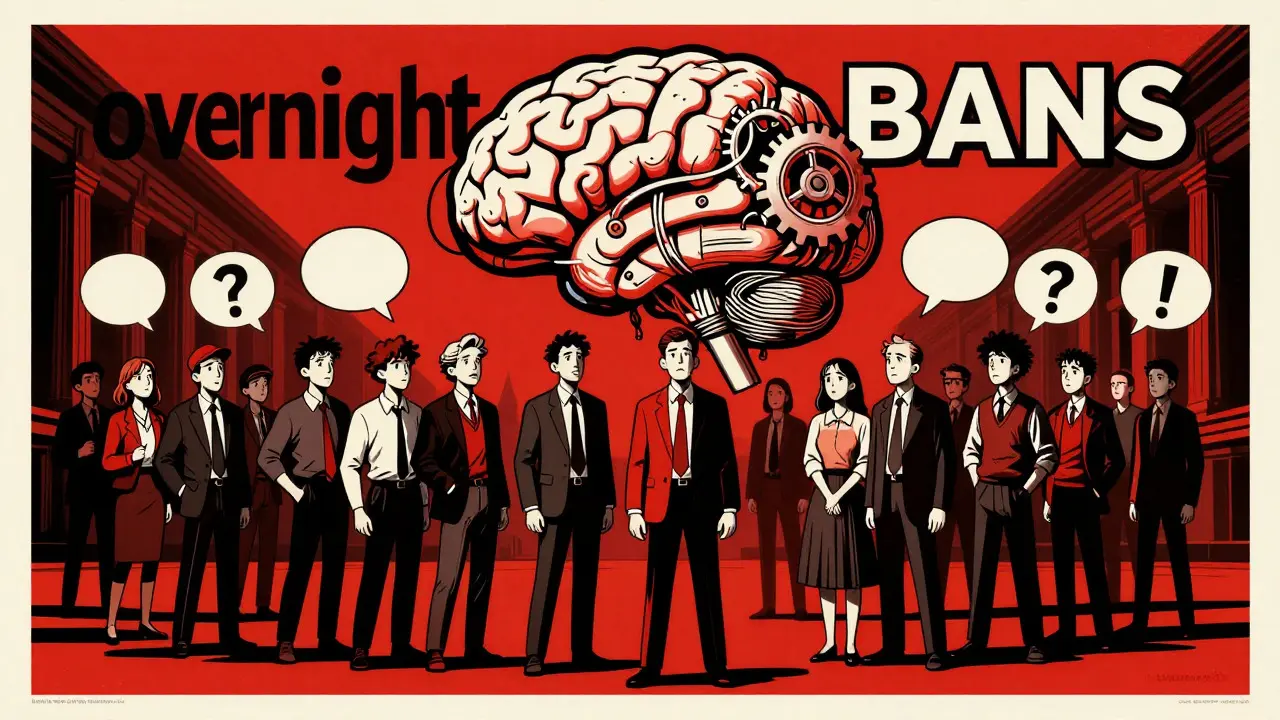
You’ve probably heard the horror stories. A university bans ChatGPT overnight, leaving students confused about what they can actually use for their thesis. Or a corporate team quietly uses an AI tool that leaks confidential client data because nobody checked who owns the output. These aren't just tech glitches; they are failures of community and ethics in how we deploy generative artificial intelligence programs. If you’re running an AI initiative, whether in academia, healthcare, or business, your biggest risk isn’t the algorithm-it’s the people around it. Without clear stakeholder engagement and radical transparency, your program will stall under the weight of mistrust and regulatory friction.
Why Traditional Governance Fails with Generative AI
Traditional software governance assumes you know exactly what the code does before you ship it. You test it, you deploy it, and if it breaks, you fix the bug. Generative AI flips this model on its head. Large Language Models (LLMs) like those powering OpenAI’s ChatGPT are probabilistic, not deterministic. They hallucinate. They bias. They evolve as you interact with them. This unpredictability means you cannot simply write a static policy document and hope for the best. You need a living framework that adapts to human behavior.
Consider the timeline. When ChatGPT launched in late 2022, most institutions were caught off guard. By 2024, major players like UNESCO and the European Commission had rolled out comprehensive guidelines. But here is the catch: many of these frameworks remain theoretical. A study by the Alan Turing Institute found that 61% of existing AI ethics frameworks lack specific metrics to measure whether transparency is actually working. They tell you *what* to do, but not *how* to verify it in real-time. This gap creates anxiety among users. Faculty at East Tennessee State University reported that 68% of concerns stemmed from vague disclosure requirements. If your stakeholders don’t understand the rules, they won’t follow them.
The Core Pillars: Transparency and Accountability
Transparency in generative AI isn’t just about open-source code. It’s about provenance. Who wrote the prompt? What version of the model was used? Did a human edit the output? The European Commission’s "Responsible Use of Generative AI in Research" document emphasizes four principles: Reliability, Honesty, Respect, and Accountability. Let’s break down why "Honesty" is the hardest part.
In academic settings, honesty means disclosing AI use without fear of punishment. Harvard University’s guidelines strictly prohibit entering Level 2+ confidential data into public tools. But researchers often feel penalized for using AI, even when it speeds up literature reviews. Dr. Timnit Gebru, founder of the Distributed AI Research Institute, argues that most institutional policies fail to address how AI perpetuates biases through training data. She points out that hiding AI use doesn’t remove the bias; it just makes it invisible. True transparency requires creating an environment where admitting to AI assistance is seen as a sign of efficiency, not laziness. If your culture punishes disclosure, you’ll get silent misuse instead of managed adoption.
Mapping Your Stakeholders: Who Has Skin in the Game?
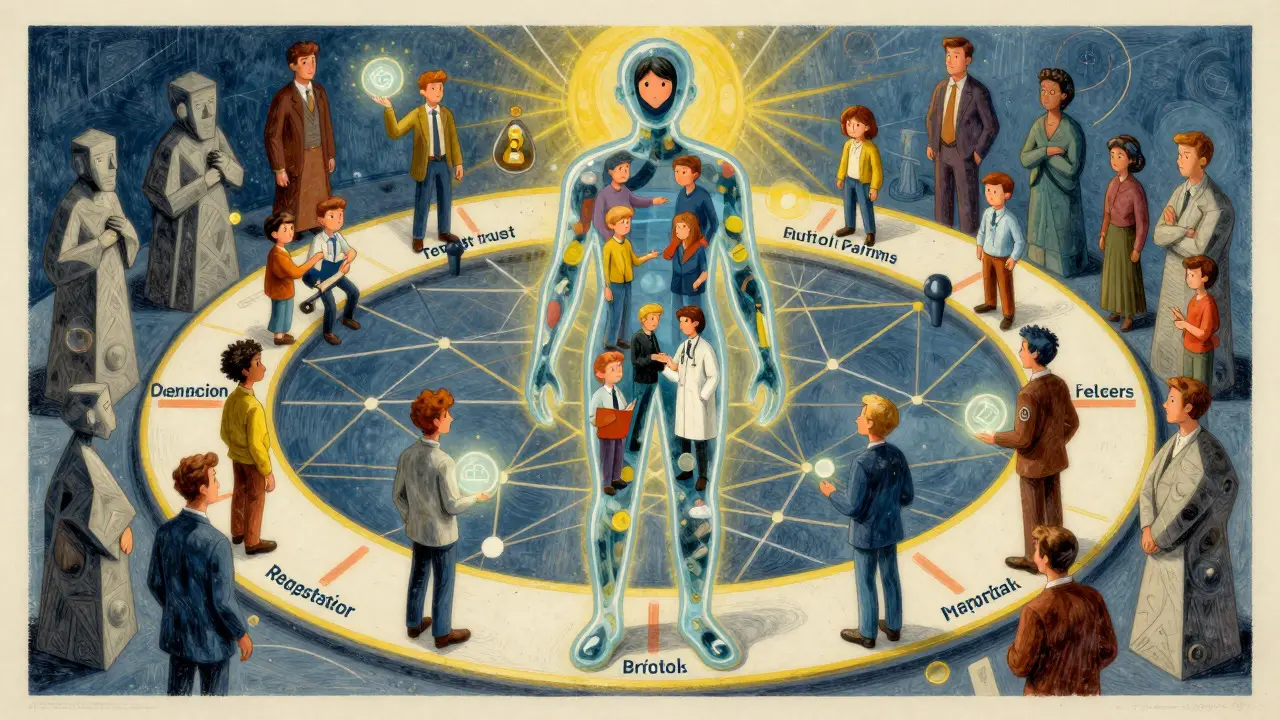
You can’t build an ethical AI program in a vacuum. You need to identify every group affected by the technology. This goes beyond the IT department. We call this process stakeholder mapping. Start by categorizing your stakeholders into three tiers:
- Primary Users: The people interacting with the AI daily. In a university, this includes students and faculty. In a hospital, it’s doctors and nurses.
- Impacted Parties: Those whose data is processed or who are affected by the outputs. Think patients, clients, or research subjects.
- Regulators and Partners: Government bodies like the NIH, funding agencies, and external collaborators.
A common mistake is excluding the "Impacted Parties." For example, if you use AI to screen job applicants, the candidates are stakeholders. If the AI rejects them based on biased training data, they have a right to know. UNESCO’s framework highlights "Multi-stakeholder and Adaptive Governance," meaning decisions shouldn’t be made solely by tech leaders. At Columbia University, policies now integrate staff, faculty, and students into the governance loop. This broadens the perspective and catches blind spots early.
Building a Feedback Loop That Actually Works
Engagement isn’t a one-time survey. It’s a continuous dialogue. You need mechanisms for reporting issues and sharing wins. Anonymous reporting systems, like those established by East Tennessee State University, allow faculty to flag problematic AI use without fear of retaliation. This is crucial because 41% of researchers at Columbia reported significant barriers to collaboration due to restrictive data policies. If they can’t voice these frustrations, they’ll work around the system.
Look at the University of California system’s approach. They implemented "AI literacy workshops" that achieved 87% participant satisfaction. Why? Because the workshops focused on practical application, such as how to properly disclose AI use in NIH grant applications. They didn’t just lecture on ethics; they solved immediate pain points. Your feedback loop should prioritize education over enforcement. When stakeholders understand the "why" behind a rule, compliance becomes natural.
Data Privacy and Security Constraints
Let’s talk about the elephant in the room: data privacy. You cannot treat all data equally. Harvard’s Information Security office mandates that confidential data (Level 2 and above) never enters public AI tools. This includes non-public research data, HR records, and student grades. Violating this rule can lead to legal nightmares.
To manage this, implement a strict data classification system. Before any AI tool is approved, ask: "Can this handle our most sensitive data?" If the answer is no, restrict its use to low-sensitivity tasks. For higher sensitivity, consider enterprise-grade solutions with zero-retention policies. Remember, responsibility without control leads to harm. Susan D’Antoni from EDUCAUSE warns against "black box" cloud solutions where you don’t know where your data goes. Always demand clarity on data storage, processing location, and retention periods.
Measuring Success: Metrics for Ethics and Engagement
How do you know your program is working? Don’t rely on vanity metrics like "number of licenses purchased." Instead, track indicators of trust and safety. Here are some concrete KPIs to monitor:
| Metric Category | Specific Indicator | Target Benchmark |
|---|---|---|
| Adoption Quality | % of projects with documented AI disclosure | >90% |
| User Confidence | Satisfaction score from AI literacy training | >85% |
| Risk Mitigation | Number of reported privacy incidents per quarter | <5 |
| Engagement Depth | Participation rate in stakeholder feedback sessions | >60% of active users |
Notice the focus on documentation and participation. If only 20% of your users attend training, your adoption quality will suffer regardless of how good the tool is. Also, track the time it takes to resolve ethical queries. If a researcher waits weeks for approval to use an AI tool, they’ll stop asking and start guessing.
Pitfalls to Avoid in Community Engagement
Even well-intentioned programs fail if they ignore human psychology. One major pitfall is "ethics washing." This happens when organizations publish glossy policy documents but change nothing in practice. Dr. Meredith Whittaker of the Signal Foundation warns that without enforcement, ethics frameworks become public relations exercises. To avoid this, tie ethical compliance to performance reviews or funding eligibility. Make it real.
Another trap is over-restriction. If your policies are too rigid, innovation dies. Researchers at Columbia noted that strict data rules hindered interdisciplinary work. Balance is key. Create sandbox environments where teams can experiment with new tools under supervised conditions. Once a tool proves safe, promote it to general availability. This iterative approach builds confidence gradually.
Action Plan for Implementation
Ready to move forward? Follow these steps to launch or refine your generative AI ethics program:
- Audit Current Usage: Find out who is already using AI tools, even unofficially. Shadow usage is your biggest risk.
- Classify Data Flows: Map out which tools touch which types of data. Flag any high-risk combinations immediately.
- Launch Education Campaigns: Run workshops focused on practical skills, like prompt engineering and citation standards. Aim for 80% completion rates.
- Establish Feedback Channels: Set up anonymous reporting tools and regular town halls. Act on the feedback visibly.
- Review Policies Quarterly: Technology moves fast. Update your guidelines every three months to reflect new capabilities and risks.
By prioritizing community and ethics, you turn AI from a threat into a trusted partner. The goal isn’t to slow down innovation; it’s to steer it safely.
What is the difference between AI ethics and AI governance?
AI ethics refers to the moral principles guiding how AI should be developed and used, such as fairness and transparency. AI governance is the operational framework-policies, processes, and controls-that ensures those ethical principles are followed in practice. Ethics sets the destination; governance provides the map and vehicle to get there.
How can I encourage honest disclosure of AI use among employees?
Create a non-punitive culture where disclosure is rewarded, not penalized. Provide clear templates for how to cite AI assistance. Offer training that demonstrates the benefits of transparency, such as faster peer review or better audit trails. Ensure that leadership models this behavior by publicly disclosing their own AI use.
Do small businesses need formal AI ethics frameworks?
Yes, though they can be simpler. Small businesses still face risks regarding data privacy and customer trust. A basic framework defining which tools are approved, how data is handled, and who is accountable for outputs is essential. It doesn’t need to be complex, but it must be documented and communicated to all staff.
What role does UNESCO play in AI ethics?
UNESCO adopted the first global normative instrument on the ethics of AI in 2021. Their Recommendation serves as a universal reference point for countries developing national policies. It emphasizes multi-stakeholder engagement and adaptive governance, encouraging nations to align their local regulations with global best practices while addressing specific cultural contexts.
How often should AI policies be updated?
At least quarterly. Given the rapid pace of AI development, annual updates are often insufficient. Track changes in tool capabilities, regulatory shifts (like the EU AI Act), and user feedback. A dynamic review cycle ensures your policies remain relevant and effective rather than becoming obsolete constraints.






Another bloated corporate framework trying to control American innovation with European bureaucracy.
We don't need 'radical transparency' or endless stakeholder meetings. We need clear, strict rules and less hand-wringing over feelings. If the tech works, use it. If it breaks, fix it. Stop wasting time on 'community engagement' theater.
This article is so painfully obvious... yet somehow, most people still miss the point!!
You see, the issue isn't just about 'metrics' or 'KPIs'. It's about moral integrity!!! The fact that you have to explain why honesty matters in research is a testament to how far we've fallen as a society. Most of these 'stakeholder mapping' exercises are just busy work for consultants who want to bill more hours. Real ethics doesn't require a flowchart; it requires character. But sure, keep writing your quarterly reviews and pretending that will stop someone from pasting confidential data into a public chatbot. It won't. It never does. You're treating symptoms while the disease spreads. And honestly? I'm tired of reading about 'adaptive governance' when what we actually need is accountability. Not this soft, fuzzy stuff that everyone nods along to until the next scandal hits. Then they write another paper. Rinse. Repeat. It's exhausting, really.
I appreciate the distinction between ethics and governance here. It helps clarify where my responsibilities lie versus where the institution's do. Keeping boundaries clear reduces anxiety for introverted staff like me who prefer structured expectations over ambiguous social negotiations.
Hey, just wanted to say that the focus on practical workshops over lectures is spot on. When I was training new hires, seeing them actually solve problems with the tools made them feel much more confident than any policy doc could. Keep encouraging that hands-on approach! 💪
Omg yes!! 🤯 The part about 'ethics washing' really hit home for me. It’s like, if the culture doesn’t support the rules, the rules are just decoration... 🏛️✨
I’ve been thinking a lot about how fear stops us from being honest. Like, if I admit I used AI to help structure my thoughts, am I admitting I’m lazy? Or am I admitting I’m efficient? 🤔 That shift in perspective is everything. We’re so scared of judgment that we hide our processes. But hiding creates shadows where bias can grow unchecked. 🌑🌱
The idea of 'radical transparency' sounds scary but maybe it’s just radical trust? Trusting that people will do the right thing if they understand the 'why'? Because without understanding, compliance is just resentment waiting to boil over. 😤💦
I wonder though... does making disclosure mandatory make it performative? Like, do we just check the box and move on? Or does it actually change the conversation? I think it changes the conversation IF there’s no punishment attached. If there’s punishment, it’s just silence with extra steps. 🚶♀️🔇
Also, the stakeholder mapping part... excluding the 'impacted parties' feels so colonial to me. Who gets to decide who matters? Usually it’s the ones with power. But the ones affected by the output often have the least voice. 🗣️📉
We need to listen to the people whose lives are changed by the algorithm, not just the people buying the license. That’s true community. That’s real ethics. Not just a PDF on a server. 📄💻
Anyway, sorry for the rant! Just feeling very passionate about this today! 🌈❤️