Bias in Generative AI: How Data and Design Shape Outcomes
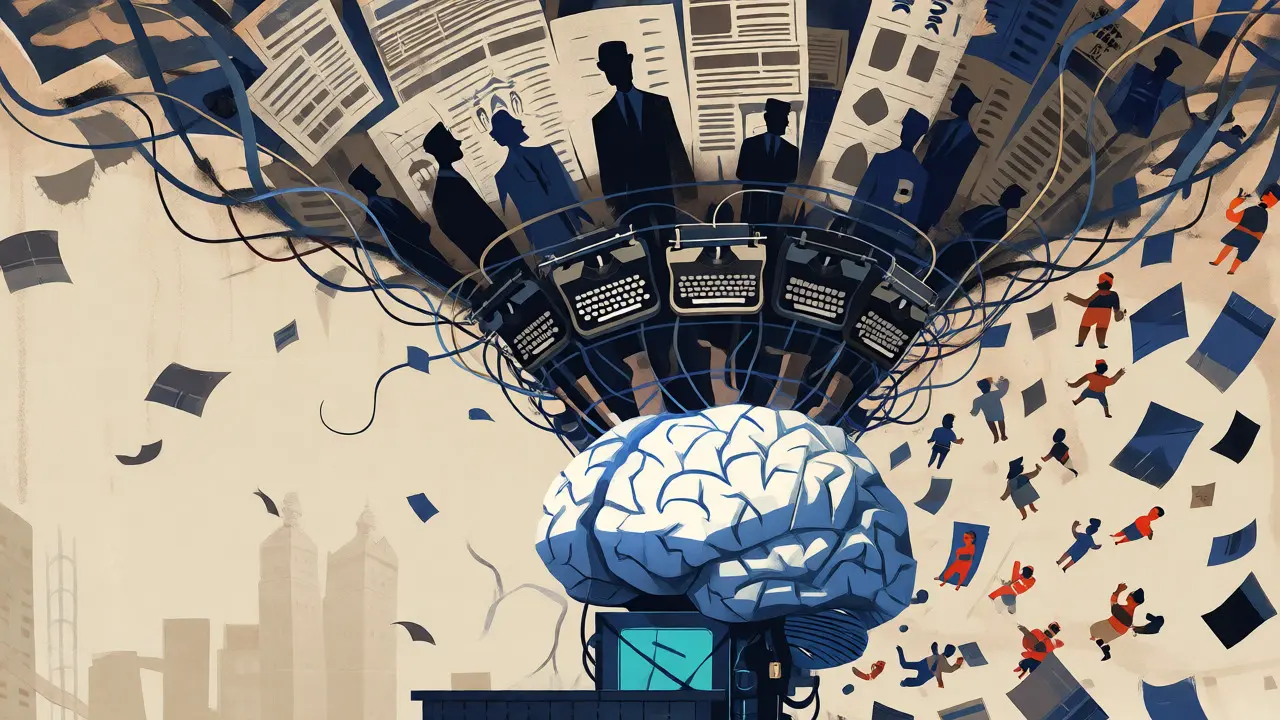
You ask a chatbot for a job interview tip. It suggests you "act like a leader." You ask an image generator for a picture of a CEO. It gives you a man in a suit. You ask for a nurse. It gives you a woman. These aren't just quirks; they are symptoms of bias in generative AI. This phenomenon occurs when models produce outputs that unfairly favor certain groups or reinforce stereotypes, driven by systematic errors in the data they learned from.
Why does this happen? Because generative AI doesn't think; it predicts. It looks at patterns in massive datasets. If those patterns reflect historical inequalities-like men holding most executive roles-the model learns that "executive" equals "man." It’s not being malicious. It’s being mathematically accurate to flawed inputs. But as these tools become embedded in hiring, healthcare, and creative work, that mathematical accuracy can translate into real-world exclusion.
The Root Cause: Garbage In, Garbage Amplified
Most people assume bias comes from a buggy line of code. Usually, it comes from the data. Think about where large language models (LLMs) get their knowledge. They scrape the internet. The internet is full of human prejudice, historical omissions, and dominant cultural voices. If a dataset contains mostly English-language texts written by men in Western countries, the model will struggle to understand nuances from other cultures or genders.
This is known as selection bias. It happens when the training data isn’t representative of the population the model serves. For example, if facial recognition systems were trained primarily on lighter-skinned faces, they perform poorly on darker-skinned individuals. This isn't a hardware failure; it's a representation failure. When we feed AI unbalanced data, we teach it to see the world through a narrow lens.
The problem gets worse because generative models don't just copy; they amplify. A small skew in the training data can lead to exaggerated stereotypes in the output. If 60% of doctors in the training text are men, the model might generate images where 90% of doctors are men. The bias isn't just replicated; it’s magnified.
How Algorithmic Design Makes Things Worse
Data is only half the story. The way we build and train these models also shapes outcomes. Developers make choices about which features to prioritize, how to weight different types of information, and what metrics define "success." Often, success means high accuracy on average. But high average accuracy can hide poor performance for minority groups.
Consider proxy variables. Sometimes, a model uses a variable that seems neutral but correlates with race or gender. Zip codes, for instance, can be proxies for race due to historical housing segregation. If an AI loan system uses zip codes to assess creditworthiness without correcting for this, it might systematically deny loans to qualified applicants in specific neighborhoods, reinforcing economic disparities.
Another issue is the trade-off between fairness and accuracy. Traditional methods to fix bias involve balancing the dataset-removing data points until subgroups are equally represented. But this often requires deleting so much data that the model loses overall precision. Researchers at MIT recently tackled this by developing a technique that identifies and removes only the specific data points causing failures for minority subgroups. By removing far fewer samples than conventional methods, they maintained model accuracy while improving fairness. This shows that algorithmic design choices directly impact who benefits from AI and who gets left behind.

Real-World Consequences of Unchecked Bias
Bias isn't abstract. It has teeth. Look at Google’s Perspective API, a tool designed to detect toxic comments. Studies showed it flagged common slang used by Black Americans as toxic more frequently than similar phrasing used by white speakers. Why? The training data lacked sufficient examples of African American Vernacular English (AAVE). Since major companies use this tool to moderate content, Black users faced disproportionate censorship. Their speech was labeled "toxic" simply because it didn't match the dominant linguistic norms in the dataset.
In the visual domain, models like Stable Diffusion have shown similar issues. When asked to generate images of "high-performing occupations," the models underrepresented women. Conversely, when asked for "low-wage workers" or "criminals," they overrepresented darker-skinned individuals. These outputs reinforce societal stereotypes, shaping how users perceive reality. If your AI assistant consistently portrays nurses as women and engineers as men, it subtly reinforces the idea that these roles are inherently gendered.
| Bias Type | Origin | Example Impact |
|---|---|---|
| Selection Bias | Unrepresentative training data | Facial recognition fails on dark skin tones |
| Social Bias | Stereotypes in web text/images | AI generates male CEOs and female nurses |
| Algorithmic Bias | Model architecture or loss functions | High average accuracy hides poor minority performance |
| Proxy Bias | Correlated variables (e.g., zip codes) | Loan denials based on location rather than credit |
Mitigation Strategies That Actually Work
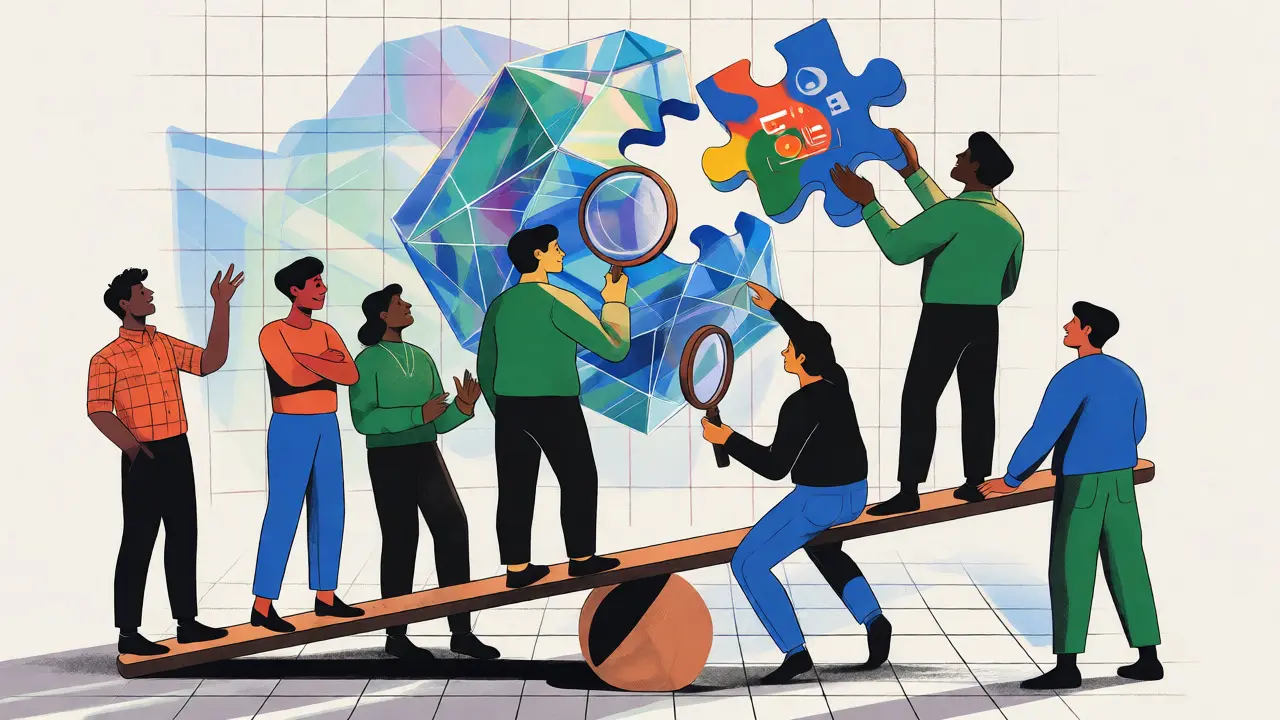
Fixing bias requires intervention at three stages: before training, during training, and after deployment. There is no silver bullet, but there are proven tactics.
- Pre-processing: This involves cleaning and balancing data before the model ever sees it. You need diverse data sources. If you’re building a medical AI, ensure your patient records include diverse demographics. Hire annotators from varied backgrounds to label data, reducing human bias in the ground truth.
- In-processing: Adjust the algorithm itself. Use techniques like re-weighting, where the model pays more attention to underrepresented groups during training. Or use adversarial debiasing, where one part of the network tries to predict the outcome, and another tries to prevent the model from guessing the protected attribute (like race or gender).
- Post-processing: Monitor outputs after launch. AI drifts. What works today might fail tomorrow as user behavior changes. Continuous auditing helps catch new biases early. Tools like IBM’s AI Fairness 360 toolkit help developers test for disparate impact across different groups.
Documentation is critical too. You must record every decision made about data selection and labeling. If you don't know why a dataset was curated a certain way, you can't explain its biases later. Transparency builds trust. Users deserve to know if a model was trained mostly on English texts or if it struggles with certain dialects.
The Future of Responsible AI Development
We are moving past the era of "move fast and break things." As generative AI integrates into critical infrastructure, accountability matters more than speed. Companies like OpenAI and Anthropic are increasingly publishing model cards-documents that detail a model’s intended use, limitations, and potential biases. This shift acknowledges that AI is not objective. It is a mirror reflecting our own societal flaws.
For developers, the takeaway is clear: you cannot code away bias if your data is broken. Start with the data. Question who is missing from your datasets. Test your models against edge cases, not just averages. And remember, fairness isn't a feature you add at the end; it’s a constraint you design around from day one.
What is the main cause of bias in generative AI?
The primary cause is biased training data. Generative AI learns patterns from vast datasets scraped from the internet and other sources. If these datasets contain historical prejudices, demographic imbalances, or limited perspectives, the model learns and replicates these biases. Additionally, algorithmic design choices, such as prioritizing average accuracy over group fairness, can exacerbate these issues.
Can AI bias be completely eliminated?
Completely eliminating bias is difficult because AI reflects the data it is trained on, and human history is filled with inequality. However, bias can be significantly reduced through careful data curation, diverse team involvement, algorithmic adjustments, and continuous monitoring. The goal is mitigation and management rather than total elimination.
How does selection bias affect AI models?
Selection bias occurs when the training data is not representative of the target population. For example, if a voice recognition system is trained mostly on male voices, it may perform poorly for women. This leads to models that work well for majority groups but fail for underrepresented ones, creating inequitable user experiences.
What is proxy bias in AI?
Proxy bias happens when a variable that seems neutral acts as a substitute for a protected attribute like race or gender. For instance, using zip codes to assess credit risk can introduce racial bias if housing patterns are segregated. The model uses the proxy (zip code) instead of the actual factor, leading to discriminatory outcomes.
How do organizations mitigate AI bias?
Organizations use a multi-stage approach: pre-processing data to ensure diversity and balance, adjusting algorithms during training to penalize unfair outcomes, and post-deployment monitoring to audit outputs regularly. Techniques include re-weighting data, adversarial debiasing, and using fairness metrics alongside traditional accuracy scores.