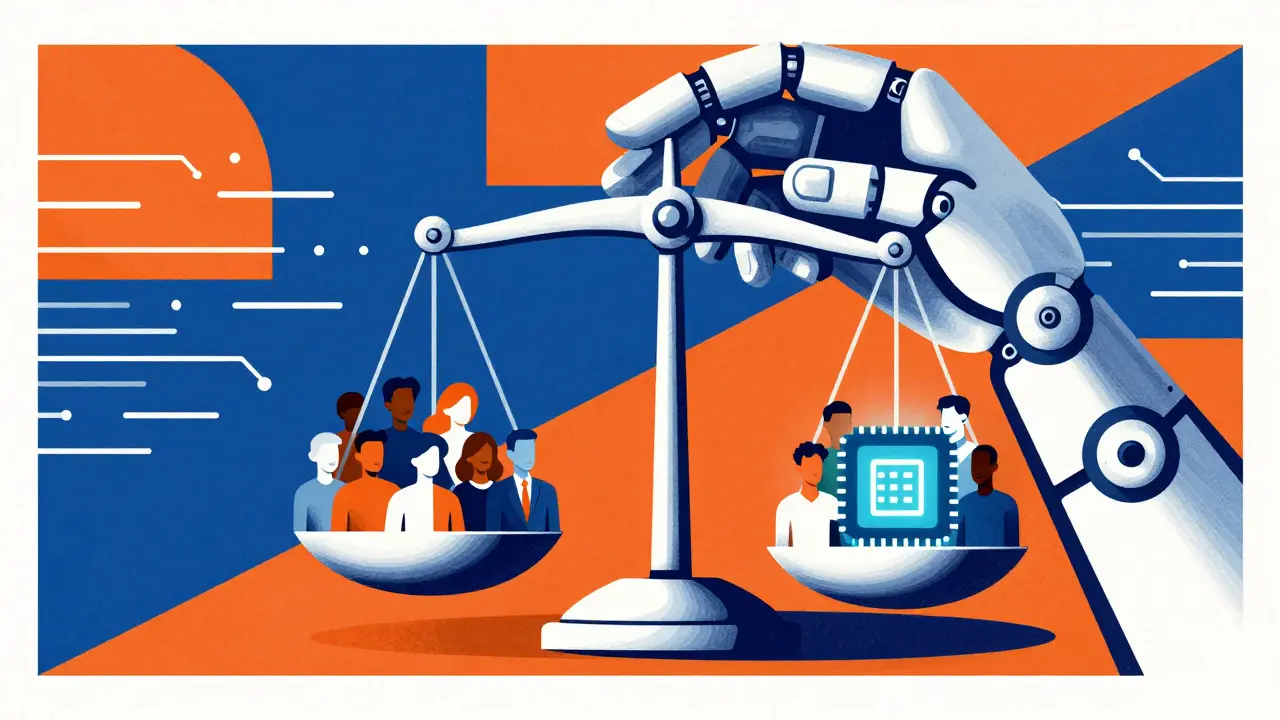
Evaluation Frameworks for Fairness in Enterprise LLM Deployments: A Practical Guide
Deploying a large language model (LLM) in your HR system or customer service channel is no longer just about accuracy. It’s about who gets treated fairly when the machine makes the call. If your model recommends a loan applicant based on their name, or suggests a job candidate based on gendered language, you don’t just have a technical bug-you have a legal and reputational risk. That’s why evaluation frameworks for fairness have become essential infrastructure for any enterprise taking AI seriously in 2026.
The challenge isn’t that we don’t know bias exists. We do. The problem is measuring it consistently across complex, real-world workflows where prompts vary, users differ, and context shifts constantly. Traditional single-metric checks fail here. You need structured systems that test how outputs change when you tweak sensitive attributes like age, occupation, or personality traits. This guide breaks down the core methodologies, the leading tools, and the practical steps to implement fairness auditing before your next major deployment.
Why Standard Accuracy Metrics Fail for Fairness
Most teams start by checking if an LLM gives the "right" answer. But fairness isn’t binary. It’s about distribution. Does the model treat a female nurse differently than a male doctor? Does it recommend harder courses to students from certain zip codes? These questions can’t be answered by looking at one output in isolation.
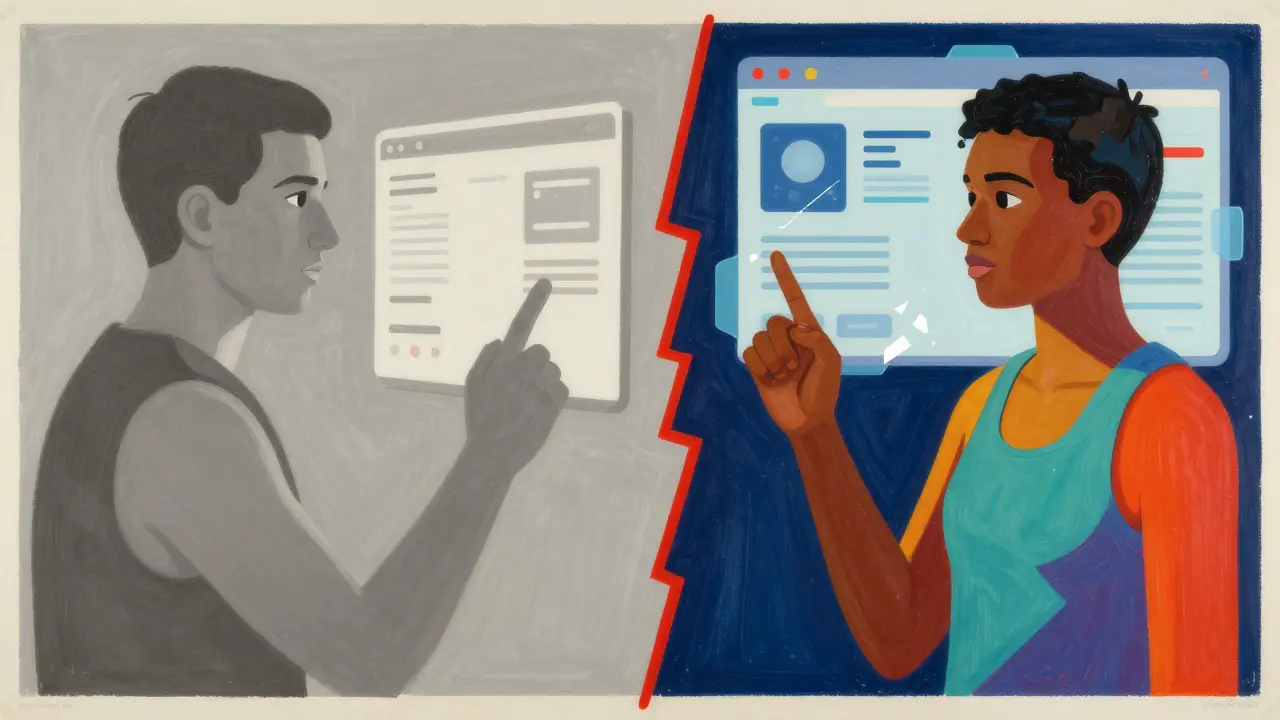
Fairness evaluation requires comparing outcomes across groups. In enterprise settings, this means testing how the model responds to neutral prompts versus prompts containing specific demographic markers. If the recommendation list changes significantly when you add "female" to the user profile, you’ve found a signal of potential bias. The goal is minimal divergence: fair systems should produce similar results regardless of protected attributes. When similarity scores drop sharply between neutral and sensitive prompt sets, that’s where the risk lives.
This approach moves beyond static benchmarks. It acknowledges that bias often hides in subtle linguistic variations or contextual cues that only appear under stress-testing. By isolating these variables, you get actionable data rather than vague impressions of "the model feels biased."
Core Methodologies: How Fairness Is Measured
Effective frameworks rely on a mix of quantitative metrics and qualitative human review. Here are the key methods driving modern enterprise evaluations:
- Prompt Sensitivity Analysis: Testing how small changes in input language affect output consistency. This catches models that react unpredictably to typos or multilingual variations.
- Demographic Divergence Testing: Comparing outputs generated from neutral prompts against those including sensitive attributes like gender, race, or age. Lower similarity scores indicate higher bias risk.
- Personality-Conditioned Evaluation: Assessing whether the model treats users with different personality profiles (e.g., introverted vs. extroverted) equitably, especially in recommendation systems.
- Human-in-the-Loop Audits: Trained evaluators score responses for stereotypes, discriminatory language, and hidden assumptions. This catches nuances that algorithms might miss.
These methods work best when combined. Algorithmic metrics provide scale and repeatability, while human review adds context and cultural awareness. For regulated industries like finance and healthcare, this hybrid approach is often a compliance requirement, not just a best practice.
Leading Frameworks: FairEval and LangFair
Two tools stand out in the current landscape for their distinct approaches to enterprise fairness auditing.
FairEval: Deep-Dive Recommendation Fairness
FairEval is a specialized framework designed to assess fairness in LLM-based recommendation systems, particularly in educational and media contexts. It stands out for its granular handling of both demographic and personality attributes. FairEval processes user prompts through state-of-the-art models like ChatGPT-4.0 and Gemini 1.5 Flash, then computes fairness metrics across eight sensitive categories covering 31 distinct values.
The framework uses several key metrics:
- Jaccard Similarity at K (J@K): Measures overlap between recommendation lists generated from neutral vs. sensitive prompts.
- SERP Fairness: Evaluates ranking representation of different groups in search-style results.
- PRAG (Personalization Balance): Ensures recommendations aren’t overly personalized in ways that create disparate impact.
- PAFS (Personality-Aware Fairness Score): Quantifies disparities across personality-defined user groups.
In recent tests, PAFS@25 achieved consistency scores as high as 0.9969 for ChatGPT 4o and 0.9997 for Gemini 1.5 Flash, showing robust performance but also revealing subtle gaps in specific domains. FairEval’s strength lies in its ability to detect nuanced patterns of prompt-sensitive and personality-linked bias that older benchmarks missed.
LangFair: Practical Enterprise Auditing
LangFair is a Python library developed by CVS Health for conducting bias and fairness assessments of LLM use cases using a Bring Your Own Prompts (BYOP) approach. Unlike FairEval’s focus on recommendation systems, LangFair is built for general text generation and summarization tasks in production environments.
Its BYOP methodology lets organizations tailor evaluations to their specific workflows. Instead of relying on generic benchmarks, you feed in real-world prompts from your actual deployment scenarios. This makes LangFair ideal for governance audits where you need to prove that your specific use case meets internal policies and regulatory standards. Because it focuses on output-based metrics, it doesn’t require access to internal model states, making it accessible for enterprises managing multiple third-party LLMs.
| Feature | FairEval | LangFair |
|---|---|---|
| Primary Focus | Recommendation Systems (Education/Media) | General Text Generation & Summarization |
| Methodology | Fixed attribute sets (8 categories, 31 values) | Bring Your Own Prompts (BYOP) |
| Key Metrics | J@K, SERP, PRAG, PAFS | Output-based bias scores, toxicity, stereotype detection |
| Best For | Detecting nuanced demographic/personality bias in recs | Governance audits, custom use-case validation |
| Model Agnostic? | Yes (tested on ChatGPT, Gemini) | Yes (supports multiple LLM backends) |
Implementation Strategy: From Pilot to Production
Integrating fairness evaluation into your CI/CD pipeline isn’t just about running a script once. It’s about building a continuous monitoring loop. Start by defining your sensitive attributes relevant to your industry. In healthcare, age and condition severity matter. In hiring, gender and education level are critical. Don’t copy-paste a generic list; tailor it to your risk profile.
Next, establish baseline metrics. Run your current model against a set of neutral and sensitive prompts. Record the Jaccard similarity and other divergence scores. This becomes your benchmark. Any future model update or prompt change should be tested against this baseline to ensure no regression in fairness.
Finally, incorporate human review. Automated metrics flag potential issues, but humans decide if they’re material. Train your evaluators to look for specific patterns: stereotypical language, uneven tone, or hidden assumptions. Document their findings alongside algorithmic scores to build a defensible audit trail for regulators or stakeholders.

Common Pitfalls to Avoid
Even with the right tools, teams often stumble on execution. Here’s what to watch out for:
- Over-reliance on Single Models: Different LLMs have different fairness profiles. What works for one model may fail for another. Always test your specific stack.
- Ignoring Prompt Variability: Typos, slang, and multilingual inputs can trigger unexpected biases. Include perturbation testing in your suite.
- Static Benchmarking: Using old datasets that don’t reflect your current user base leads to false confidence. Keep your test prompts fresh and representative.
- Neglecting Context: A fair output in one domain (e.g., movie recommendations) might be unfair in another (e.g., medical advice). Evaluate per use case.
Avoiding these traps ensures your fairness framework remains a reliable safety net rather than a box-ticking exercise.
Future Trajectory: Toward Customized Governance
As of 2026, the field is moving away from one-size-fits-all benchmarks toward highly customized, use-case-specific evaluation. The success of LangFair’s BYOP approach signals that enterprises want control over what they measure. Expect future frameworks to integrate fairness scoring directly into MLOps platforms, providing real-time dashboards that alert teams when bias drifts occur in live traffic.
Regulatory pressure will also drive adoption. With emerging AI governance rules in the EU and US, proving fairness won’t be optional. Teams that build robust evaluation capabilities now will find themselves ahead of the curve, turning compliance into a competitive advantage by delivering more equitable and trustworthy AI experiences.
What is the most important metric for LLM fairness?
There is no single "most important" metric, but Jaccard Similarity at K (J@K) is widely used because it directly measures how much recommendations change when sensitive attributes are added. However, it should always be paired with human review and context-specific metrics like PRAG or PAFS for a complete picture.
Can I use LangFair for non-text tasks?
LangFair is primarily designed for text generation and summarization. For multimodal tasks (like image-captioning), you may need to extend its logic or use complementary tools. Its BYOP approach makes it adaptable, but core metrics are text-centric.
How often should I run fairness evaluations?
Run them whenever you update your model, change prompts, or expand to new user segments. Additionally, schedule periodic audits (quarterly or bi-annually) to catch drift caused by changing data distributions or societal norms.
Is FairEval open-source?
FairEval was introduced through academic research and is available for use in research and enterprise settings. While specific licensing terms may vary, the methodology is well-documented and reproducible. Check the latest repository status for current access options.
How does personality bias differ from demographic bias?
Demographic bias relates to protected categories like gender or race. Personality bias occurs when the model treats users differently based on non-demographic traits like introversion or aggression. Both can lead to unfair outcomes, but personality bias is often harder to detect without specialized metrics like PAFS.







Let's be real, this is mostly just a rehash of the same old disparate impact theories dressed up in fancy LLM clothing. You think you're doing science, but you're really just guessing at what 'fair' means because there is no objective ground truth for fairness in a probabilistic model. The Jaccard similarity metric is particularly laughable if your prompt engineering isn't perfect, which it never is in production. One typo and your entire 'bias' score changes, so why bother? Also, assuming that personality traits are even measurable enough to build a robust test suite around is a stretch that most data scientists will quietly roll their eyes at. The industry needs less 'frameworks' and more actual legal clarity on what constitutes discrimination in code.
Who reads these things anyway? It's all just buzzwords to get budget approval. Fairness is a moving target and by the time you deploy this framework, the model has already changed. Just ship it and deal with the lawsuits later, that's the only way to move fast.
Also, who cares about 'personality-conditioned evaluation'? That sounds like something out of a bad sci-fi novel. If the model treats an introvert differently than an extrovert, that's not bias, that's... well, whatever. Stop overthinking it and just use the default settings from OpenAI or Google. They've got lawyers, right?
The whole BYOP thing is cute but ultimately useless because your prompts will change every Tuesday. So you're auditing yesterday's problem. Save yourself the trouble. The best fairness metric is 'did the customer complain?' If they didn't, you're fine. Everything else is noise.
I bet half the people reading this haven't even deployed an LLM yet and are just collecting conference badges. The real world is messy and doesn't care about your Jaccard scores. It cares about revenue.
So yeah, great post, very academic, very detached from reality. But let's keep pretending we can engineer morality into a transformer architecture. It's adorable, really.
This is such a timely read! I’ve been struggling with how to actually measure bias beyond just gut feeling, and seeing the breakdown of FairEval vs LangFair was super helpful. I love that they highlighted the importance of human-in-the-loop audits; it’s easy to forget that algorithms don’t have cultural context. Thanks for sharing this!
Oh my gosh, did anyone else feel like they were holding their breath through the section on 'Personality-Conditioned Evaluation'? Like, seriously, when does 'introverted' become a protected class? It feels like we are stretching the definition of fairness until it snaps. I mean, sure, demographic bias is real and scary, but adding personality traits to the mix? That seems like a slippery slope to judging users based on vibes rather than data.
Also, the idea that we need to test for typos to check for bias is wild. If a model gets confused by a typo, that's a robustness issue, not necessarily a fairness one. Mixing those two together in the same framework feels like muddying the waters. We need clear lines, not fuzzy overlaps where everything is potentially 'biased' because the input wasn't perfect.
I’m just saying, before we start auditing for 'extroversion disparity,' maybe we should focus on making sure the model doesn't crash when someone uses slang. Priorities, people. Priorities.
Hey hey, nice write-up! I totally agree that static benchmarks are dead. I work in ed-tech and we found that our 'fair' recommendations actually skewed heavily toward students with certain zip codes until we started using the BYOP approach mentioned here. It was eye-opening. The colorful part of this is that it finally gives us a language to talk to the legal team without them rolling their eyes. Big win for the non-coders among us!
LET'S TALK ABOUT THE HUMAN ELEMENT! 🚀 This post nails it: you cannot automate empathy. I’ve seen teams try to solve bias with pure code and end up with models that are technically 'balanced' but socially tone-deaf. We need to train our evaluators to look for the *vibe* of the response, not just the stats.
If you’re building a hiring tool, ask yourself: does this output make a candidate feel welcome? Or does it feel cold? That’s the metric that matters. Don’t just run the script; run the conversation. Get diverse humans in the room and let them tear the outputs apart. That’s where the real value is. Let’s stop treating AI as a black box and start treating it as a teammate that needs coaching. Who’s ready to level up their audit process? 💪
One must consider the ontological implications of measuring 'fairness' in a system that is fundamentally stochastic. Is the bias in the model, or is it in the observer’s projection of moral order onto a mathematical function? The Jaccard similarity index is merely a proxy for consistency, not equity. To assume that similar outputs equal fair treatment is a profound category error. We are conflating statistical parity with substantive justice, which are two vastly different philosophical constructs.
Furthermore, the reliance on 'human-in-the-loop' audits introduces its own layer of subjective bias, creating a recursive loop of interpretation. Who audits the auditor? The question of who defines the 'neutral' prompt is itself a political act, laden with assumptions about linguistic normativity. Until we resolve the epistemological crisis of defining 'fairness' independent of cultural context, these frameworks remain mere administrative rituals. A beautiful dance of futility, if you ask me. But do enjoy the metrics while they last.
THE DRAMA OF IT ALL IS UNREAL! 😱 Can you imagine if your HR bot accidentally rejected a candidate because their name sounded too 'aggressive'? That would be a PR nightmare straight out of a soap opera! I mean, seriously, who is watching the watchers? If the model thinks an introvert is lazy, is that bias or just bad programming? The tension between 'personalization' and 'fairness' is giving me whiplash. We are walking a tightrope over a pit of lawsuits! 🎭
And don't get me started on the 'typos' part. If I misspell 'resume' as 'resum', am I now subject to demographic profiling? The stakes are SO high. One wrong word and boom, discrimination case. It’s like living in a world where every keystroke is a potential crime scene. Who wants to work under this pressure? Not me! But here we are, playing god with algorithms. The sheer audacity of trying to quantify human dignity with a Python script is both terrifying and magnificent. Let the games begin! 📉📈