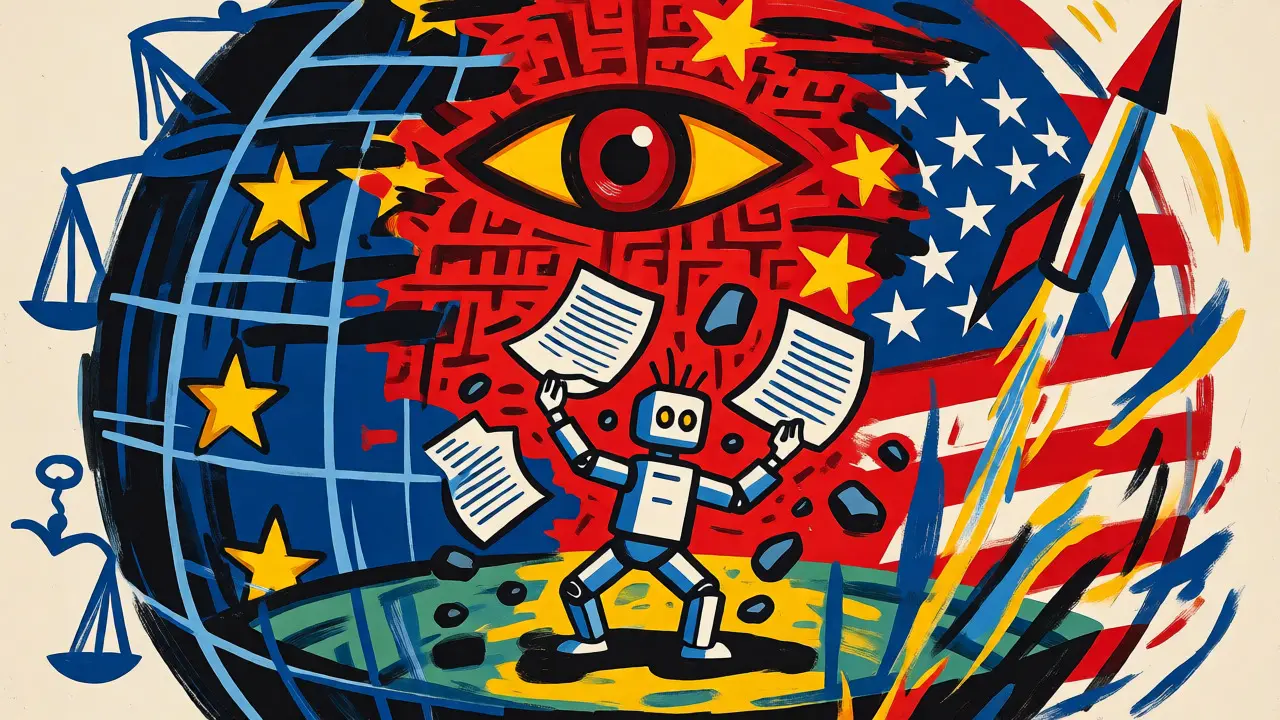
Global Generative AI Regulation: Convergence and Divergence in 2026
Imagine trying to launch a single AI product that satisfies the strict transparency laws of Brussels, the data localization mandates of Beijing, and the innovation-first deregulation push of Washington. Sounds like a logistical nightmare? That is exactly where most tech companies find themselves in late 2026. The era of treating artificial intelligence as a wild west experiment is over. Today, Generative AI is treated as critical infrastructure, demanding provenance, explainability, and accountability from every developer who touches it.
If you are building or deploying large language models (LLMs) right now, you aren't just competing on accuracy or speed anymore. You are navigating a fragmented map of legal requirements that shift depending on which side of the border your servers sit on. While there is some convergence on core principles-like telling users when they are talking to a bot-the execution varies wildly. This article breaks down how major jurisdictions are handling these rules, why they differ, and what you need to do to stay compliant without stifling your innovation.
The Big Three: How Major Powers Are Handling AI
To understand the current landscape, we have to look at the three biggest players: the European Union, China, and the United States. Each has taken a distinct path based on its political values and economic goals.
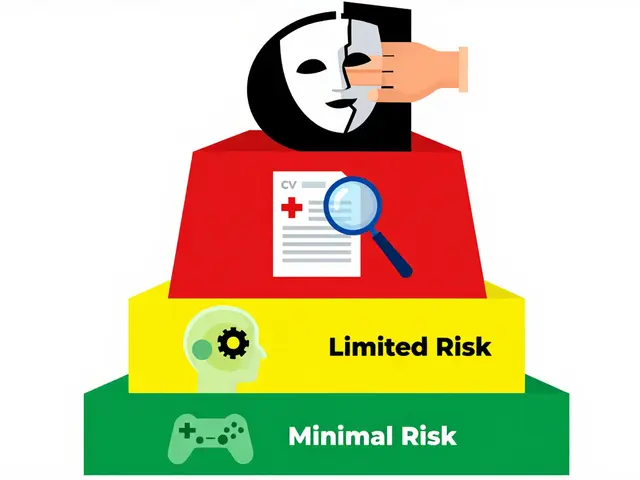
The EU AI Act represents the most comprehensive regulatory framework globally. Fully in effect as of August 2025, it uses a risk-based approach. If your generative model poses "systemic risks"-meaning it could impact public health, safety, or fundamental rights-you face strict obligations. These include mandatory transparency reports, copyright compliance checks, and detailed documentation of training data. The EU isn't just asking nicely; non-compliance can lead to fines up to 7% of global annual turnover. It’s heavy, but for many multinational corporations, the EU standard has become the de facto baseline because it covers so much ground.
In contrast, China's Interim Measures, effective since August 2023, prioritize social stability and state authority above all else. The Cyberspace Administration of China (CAC) requires that all generative AI services align with "socialist core values." Practically, this means rigorous content moderation. Your model must not generate content that undermines state authority or violates intellectual property laws. Unlike the EU's broad risk assessment, China's rules are prescriptive about specific outputs. They also mandate visible watermarks or metadata tags on AI-generated content, making it easy for regulators to trace sources.
The United States took a sharp turn in January 2025. President Biden's Executive Order 14110 was revoked by Executive Order 14179, issued by the subsequent administration. This shift marked a pivot from caution to acceleration. The new directive aims to eliminate federal policies seen as impediments to U.S. dominance in AI. Instead of a sweeping federal law, the U.S. relies on sector-specific guidance and voluntary commitments. For example, while there is no single "US AI Act," agencies like the FTC and NIST are issuing targeted guidelines. The goal here is clear: keep the barrier to entry low for startups and big tech alike, assuming market forces will drive best practices faster than bureaucracy can.
Where Do They Agree? The Convergence Points
Despite these philosophical differences, there is surprising agreement on a few key technical requirements. If you are coding a global AI product, you can build certain features once and deploy them everywhere. Here is where the lines blur.
- Transparency and Labeling: Almost every major jurisdiction now demands that users know when they are interacting with AI. Whether it's the EU's disclosure requirements or China's watermarking mandates, hiding the fact that an image or text block was generated by a machine is becoming illegal. A 2025 survey showed that 100% of major regulatory frameworks include some form of disclosure mandate.
- Data Provenance: You can no longer scrape the internet blindly. All regions require proof that your training data was legally sourced. This involves respecting intellectual property rights and, in some cases, obtaining explicit consent from data creators. The days of "fair use" being a blanket shield for massive dataset scraping are fading.
- Risk Management: Organizations are reporting an average of four AI-related risks they actively manage, up from two in 2022. Privacy, explainability, reputation, and regulatory compliance are the top concerns. Even in the deregulatory U.S., companies are adopting internal risk frameworks because liability lawsuits don't care about executive orders.
The Divergence: Why One Size Doesn't Fit All
While transparency is universal, the implementation details create significant friction for global companies. Let's look at a concrete example: data residency.
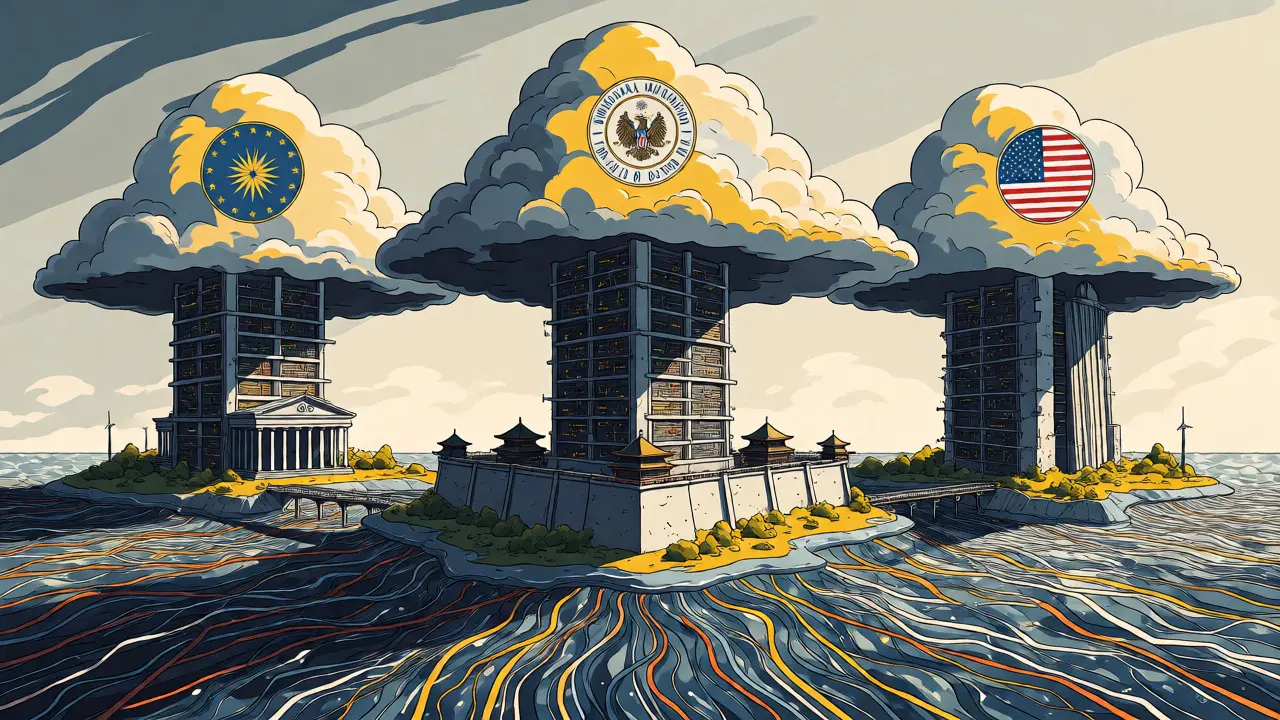
Sovereign AI is the concept of keeping data, models, and compute resources within controlled national boundaries. In China, data localization is strict; user data collected in China often cannot leave the country for processing. The EU has similar constraints under GDPR, requiring adequate protection levels for data transferred outside the bloc. The U.S., however, generally allows free flow of data across borders, provided privacy standards are met. This creates a complex architecture problem. If you run a chatbot serving users in Shanghai, Berlin, and New York, you might need three separate backend infrastructures to satisfy local sovereignty rules.
| Feature | EU (AI Act) | China (Interim Measures) | US (EO 14179 Context) |
|---|---|---|---|
| Primary Focus | Risk Mitigation & Rights | Social Stability & Control | Innovation & Dominance |
| Transparency | Mandatory Disclosure | Visible Watermarks/Metadata | Voluntary/Industry Standards |
| Data Sourcing | Copyright Compliance | Lawful Use + State Values | Fair Use / Market Driven |
| Enforcement | Centralized (High Fines) | State Agencies (CAC) | Decentralized (FTC/State Laws) |
| Systemic Risk | Strict Oversight Required | Aligned with National Security | Monitored via NIST Benchmarks |
Another area of divergence is the definition of "harm." In the EU, harm is often defined through the lens of fundamental human rights-think discrimination in hiring algorithms or bias in credit scoring. In China, harm includes undermining social order or spreading misinformation that contradicts official narratives. In the U.S., harm is largely viewed through consumer protection lenses-did the AI deceive the buyer? Did it cause financial loss? These differing definitions mean that a feature acceptable in one region might trigger a compliance review in another.
Practical Challenges for Developers and Businesses
So, what does this mean for your daily operations? If you are running a startup or managing an enterprise AI team, the regulatory burden is real. According to McKinsey's 2025 State of AI survey, 60% of organizations cite risk and compliance concerns as a primary barrier to adopting agentic AI. It takes an average of 6.2 months to establish an effective AI governance framework. That is half a year of engineering time spent on paperwork and process rather than product development.
Here are the biggest pain points reported by engineers and compliance officers:
- Reconciling Conflicting Rules: As one Reddit user in r/MachineLearning noted, "The biggest headache is reconciling EU's strict transparency requirements with China's data localization rules when operating globally." You might need different code paths for different regions just to handle logging and data storage.
- Lack of Standardized Evaluations: While benchmarks like HELM Safety and AIR-Bench are emerging, there is no single global certification for "safe AI." Companies often have to self-certify, which leaves room for error and future litigation.
- Skill Gaps: 78% of organizations now require dedicated AI compliance officers, up from just 32% in 2023. Finding people who understand both Python and international law is tough and expensive.
Furthermore, the cost of compliance tools is rising. In 2024, regulatory compliance tools accounted for 12.3% of the $33.9 billion invested in the generative AI market. This suggests that businesses are willing to pay for software that automates audit trails and data lineage tracking. If you aren't using tools to track where your training data came from, you are likely already behind.
The Rise of Sovereign AI and Global Coordination
A growing trend is the push for Sovereign AI. More than 50% of AI leaders identify regulatory monitoring and infrastructure control as significant challenges. Countries want their own models, trained on their own data, hosted on their own clouds. France committed €109 billion to AI infrastructure, while Saudi Arabia launched a $100 billion initiative called Project Transcendence. This isn't just about economics; it's about security. Nations are wary of relying on models that might be influenced by foreign corporate interests or subject to extraterritorial laws.
However, total fragmentation is bad for business. That is why we see increasing efforts toward coordination. The OECD, EU, UN, and African Union have all released governance frameworks focused on Responsible AI principles. While these aren't binding laws, they set a common language. Experts predict that by 2027, we will see the first major cross-jurisdictional enforcement actions against AI systems that violate multiple frameworks simultaneously. This means a single misstep in your algorithm could trigger investigations in three different countries at once.
What Should You Do Now?
You don't need to wait for perfect clarity to move forward. Here is a practical checklist for navigating the current regulatory environment:
- Map Your Data Flows: Know exactly where your data originates and where it is processed. If you serve Chinese users, ensure their data stays in China. If you serve EU users, ensure you have a legal basis for processing.
- Implement Transparency Early: Build labeling into your UI from day one. Don't treat it as an afterthought. Make it clear when content is AI-generated.
- Document Everything: Keep detailed records of your model versions, training datasets, and decision logs. If a regulator asks, you should be able to reconstruct the history of any output.
- Hire or Train Compliance Experts: You need someone who understands the intersection of technology and law. Relying solely on external counsel is too slow for agile AI development.
- Monitor Emerging Benchmarks: Keep an eye on evaluations like FACTS and HELM Safety. Using recognized benchmarks helps demonstrate due diligence if you end up in court.
The regulatory landscape for generative AI is maturing rapidly. We have moved past the phase of vague warnings and into the era of specific, enforceable rules. While the approaches diverge significantly between the EU, China, and the U.S., the underlying demand for trust and transparency is universal. By building compliance into your architecture rather than bolting it on later, you can turn regulatory complexity into a competitive advantage. After all, customers trust products that tell them the truth about how they work.
Is the EU AI Act applicable to small businesses?
Yes, but with exemptions. The EU AI Act applies to providers placing AI systems on the EU market, regardless of size. However, high-risk obligations are lighter for SMEs, and minimal-risk systems (like spam filters) have very few requirements. Small businesses must still comply with general transparency rules if their AI interacts directly with humans.
How does China's regulation affect foreign AI companies?
Foreign companies must register their generative AI services with the Cyberspace Administration of China (CAC). They must undergo security assessments and ensure their models adhere to local content standards. Often, this requires partnering with local firms or hosting data on domestic cloud infrastructure to meet localization requirements.
Does the US have a federal AI law?
As of 2026, the U.S. lacks a single comprehensive federal AI law. Instead, it relies on Executive Orders, such as EO 14179, which emphasizes deregulation and innovation. Specific regulations come from agencies like the FTC (consumer protection) and NIST (standards), along with individual state laws like those in California and Colorado.
What is the penalty for violating the EU AI Act?
Penalties can be severe. For prohibited AI practices, fines can reach up to 7% of a company's global annual turnover or €35 million, whichever is higher. For other violations, fines range from 3% to 5% of global turnover. These penalties are designed to be significant enough to deter non-compliance among large tech firms.
Do I need to label AI-generated images?
In most major jurisdictions, yes. The EU requires disclosure that content is AI-generated. China mandates visible watermarks or metadata tags. While the U.S. doesn't have a federal mandate, industry standards and potential FTC enforcement make labeling a best practice to avoid claims of deceptive advertising.