Scaling Vibe-Coded Apps: From MVP to Thousands of Users
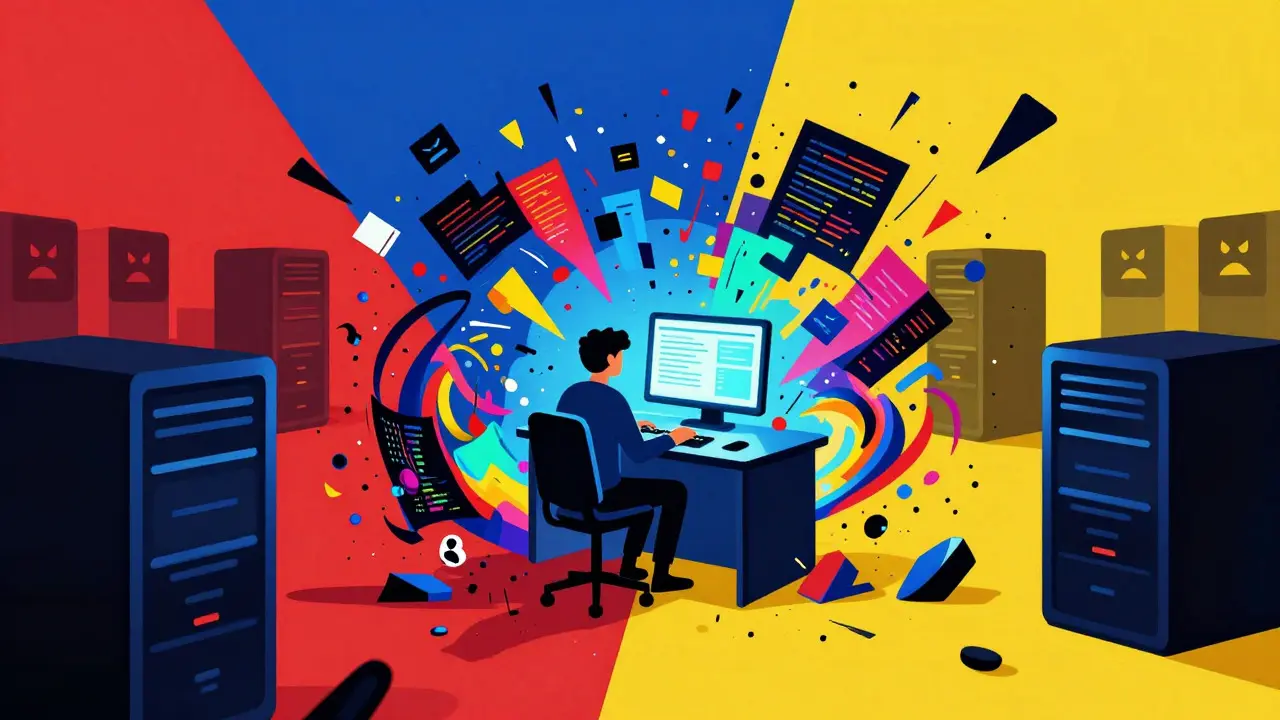
You built it in a weekend. You used Replit is an online integrated development environment that enables rapid application deployment and hosting. It allows developers to write, run, and deploy code directly from the browser without local setup., you chatted with an AI, and boom-your app was live. It works perfectly for your five beta testers. Then, overnight, a tweet goes viral. Suddenly, you have five thousand users hitting your server at once. And then... silence. The app crashes. Or worse, it slows to a crawl until everyone gives up and leaves.
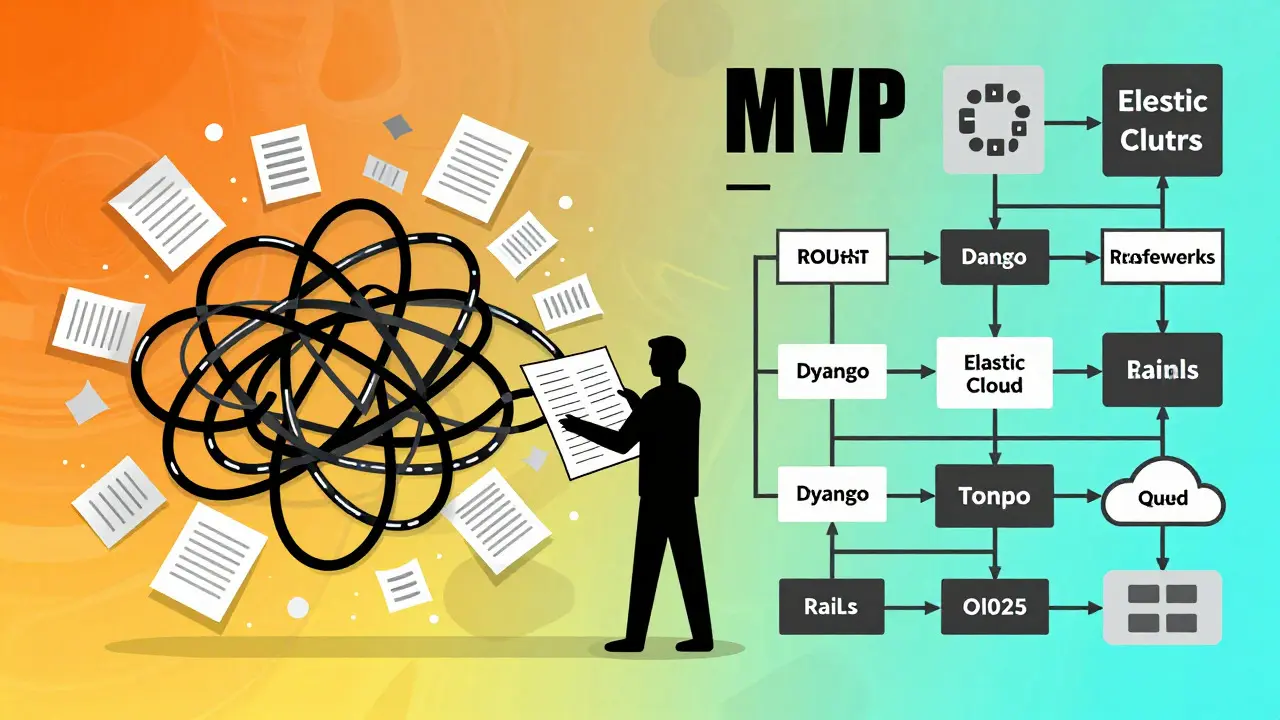
This is the classic trap of Vibe Coding is a software development approach leveraging AI assistants to rapidly generate functional code with minimal manual effort. It prioritizes speed and intuition over traditional architectural planning.. This style of development, which exploded in popularity during summer 2025, lets you ship products faster than ever before. But speed has a cost. When you move from an MVP (Minimum Viable Product) to thousands of active users, the "vibes" aren't enough anymore. You need architecture.
The Illusion of Infinite Scale
Let’s be real about what vibe coding actually does for you. It removes the friction of starting. Tools like Claude Code is an AI-powered coding assistant that helps developers generate, debug, and optimize code through natural language interaction. It integrates into existing workflows to accelerate development cycles. or Lovable is a no-code/low-code platform powered by AI that allows users to build web applications through conversational prompts. It simplifies the development process for non-technical founders and early-stage startups. are incredible for validation. They prove that people want your idea. One developer recently shipped ten production apps using this method, hitting nearly one million total uses. Another built birdseyes.app on Lovable and hit 30,000 users. That is huge success.
But here is the hard truth: these tools optimize for creation, not endurance. The code they generate is often clever but messy. It might use inefficient database queries because the AI didn't know the data would grow. It might lack proper error handling because you only tested the "happy path." When you are at 50 users, nobody notices. At 5,000 users, the system collapses under its own weight. The difference between a hobby project and a scalable business isn't just traffic; it's how your code handles that traffic when things go wrong.
Why Your App Crashes at 5,000 Users
If your vibe-coded app suddenly stops working as user count climbs, it’s usually not a mystery. It’s almost always one of two technical debt issues that AI tools tend to ignore in favor of quick fixes.
The N+1 Query Problem
This is the silent killer of startup databases. Imagine you are building a blog. To display a list of posts, your app makes one query to get all the post titles. Then, for each post, it makes another query to get the author's name. If you have 100 posts, that’s 101 database queries. At 50 users, that’s fine. At 5,000 concurrent users, your database server drowns in requests.
AI-generated code often writes these loops because they are logically simple to generate. Humans know to batch these queries. AI, unless explicitly told otherwise, takes the path of least resistance. You need to audit your database calls. Look for loops that trigger SQL queries. Replace them with joined queries or eager loading strategies provided by your ORM.
Unoptimized Infrastructure
Most vibe-coded apps start on shared hosting or basic cloud instances designed for low traffic. These environments don’t auto-scale. When traffic spikes, the single server hits its CPU or memory limit and throttles. Every new request waits in line. Eventually, the queue fills up, and the server returns errors. You aren't just dealing with bad code; you're dealing with rigid infrastructure that can't breathe.
Transitioning from MVP to Production
So, you’ve validated the idea. Now you need to rebuild the foundation without losing momentum. This isn't about scrapping everything; it's about strategic reinforcement. Here is how you bridge the gap.
1. Adopt a Robust Framework
While vibe coding often results in ad-hoc scripts or loosely structured components, scaling requires discipline. Moving to a proven web framework like Django is a high-level Python web framework that encourages rapid development and clean design. It provides built-in security features, URL routing, and database abstraction layers. or Ruby on Rails is a server-side web application framework written in Ruby that follows the model-view-controller pattern. It emphasizes convention over configuration to streamline development processes. forces structure upon your codebase. These frameworks come with best practices baked in for security, routing, and database management. They prevent you from reinventing the wheel every time you add a feature.
2. Implement an ORM
An Object-Relational Mapping (ORM) tool acts as a translator between your application code and your database. Instead of writing raw SQL strings-which are prone to injection attacks and optimization errors-you interact with database tables as if they were objects in your programming language. ORMs like SQLAlchemy (for Python) or Active Record (for Ruby) help manage connections efficiently and reduce the risk of the N+1 problem mentioned earlier. They also make migrating data later much easier.
3. Automate Testing
In the MVP phase, testing meant clicking around manually. In production, manual testing is impossible. You need automated tests that run every time you push new code. Start small. Write unit tests for your most critical functions-the payment processing, the user authentication, the core algorithm. As your team grows, expand to integration tests. This safety net ensures that fixing one bug doesn't break three other features.

Infrastructure: Building for Elasticity
Your code needs to be efficient, but your servers need to be elastic. Static infrastructure fails under dynamic loads. You need a setup that grows and shrinks automatically.
| Feature | MVP / Vibe-Coded Setup | Production-Grade Setup |
|---|---|---|
| Hosting Platform | Shared Hosting / Basic VM | AWS / GCP / Azure with Auto-Scaling Groups |
| Database Management | Single Instance, Manual Backups | Managed Database Service (RDS/Cloud SQL), Automated Backups, Read Replicas |
| Deployment Strategy | Manual Uploads / Simple CI/CD | Kubernetes / Docker Containers with Rolling Updates |
| Monitoring | None or Basic Logs | Real-time Monitoring (Datadog/New Relic), Alerting Systems |
| Cost Model | Fixed Low Cost | Variable Based on Usage (Pay-as-you-go) |
Moving to platforms like AWS or Google Cloud Platform allows you to use Kubernetes or native auto-scaling groups. These systems monitor your traffic. If CPU usage hits 70%, they spin up new server instances automatically. When traffic drops, they shut them down to save money. This elasticity is non-negotiable for apps expecting variable user loads.
The Human Element: Documentation and Review
As you scale, you likely won't be the only person touching the code. Even if you are, your future self will thank you for documenting now. Vibe coding often skips documentation because it feels unnecessary in the moment. But when you hire your first engineer, or when you return to the project six months later, undocumented code is a nightmare.
Create a comprehensive README file. Explain how to set up the development environment locally. Draw architecture diagrams showing how your frontend talks to your backend, and how the backend talks to the database. Add docstrings to complex functions. Establish a code review process where every change is looked at by another pair of eyes. This catches bugs before they reach production and spreads knowledge across your team.
Data Migration: The Hidden Hurdle
If you are pulling users from an existing solution, or even moving your own vibe-coded data to a more robust structure, you face "Concierge Migration." This term refers to the complex, often manual-heavy process of transferring user data accurately and securely. It is one of the biggest barriers to scaling because users hate downtime and fear losing their data.
Plan this carefully. Test migrations on staging environments first. Ensure you have backups. Communicate clearly with your users about any potential interruptions. A failed migration can destroy trust instantly, undoing all the goodwill you built with your rapid launch.
When to Stop Vibe Coding
There is no shame in vibe coding. It is a powerful tool for getting ideas off the ground. But recognize the signs that it’s time to switch gears. Are you spending more time debugging than building? Are your server costs skyrocketing due to inefficiency? Is your app crashing during peak hours?
If the answer is yes, it’s time to invest in architecture. Transitioning from MVP to a scalable product is not just about adding more servers; it’s about refining the core systems that hold everything together. By addressing query optimization, adopting robust frameworks, automating testing, and implementing elastic infrastructure, you turn a fragile prototype into a resilient business asset. The goal isn't just to survive the next thousand users; it's to thrive with millions.
What is vibe coding exactly?
Vibe coding is a development methodology that relies heavily on AI assistants like Claude Code or Replit to generate code quickly. It prioritizes speed and immediate functionality over long-term architectural considerations, making it ideal for MVPs but risky for large-scale production apps.
Why do vibe-coded apps fail at scale?
They often suffer from unoptimized database queries (like the N+1 problem), lack of automated testing, and rigid infrastructure that cannot handle sudden traffic spikes. The code works for small datasets but becomes inefficient or breaks under heavy load.
How do I fix the N+1 query problem?
Identify loops in your code that trigger individual database queries. Use an ORM to implement eager loading or join queries, allowing you to fetch related data in a single database call rather than multiple sequential ones.
Is it too late to refactor a vibe-coded app?
Not at all. Many successful startups begin with rapid prototypes. The key is to recognize when the current architecture limits growth and systematically introduce better frameworks, testing, and infrastructure before the user base explodes.
What tools help scale an app beyond MVP?
You should look into robust web frameworks like Django or Ruby on Rails, Object-Relational Mappers (ORMs) for database efficiency, containerization tools like Docker, orchestration platforms like Kubernetes, and cloud providers with auto-scaling capabilities like AWS or GCP.