Marketing Vibe Coding Wins Internally: A Guide to Internal Adoption
You just built a working app in two weeks using natural language prompts. No code. No dev team bottleneck. But when you walk into the Monday morning stand-up and say, "I vibe-coded this," your colleagues stare at you like you just spoke in tongues. Or worse, they dismiss it as a toy prototype that won't survive real-world pressure.
This is the silent killer of innovation in modern enterprises: the vibe coding gap between technical reality and organizational perception. You have the results-revenue up, time-to-market slashed-but you lack the narrative that makes leadership see it as strategy, not a hack. Telling the success story internally isn't about bragging; it's about building the social proof required for broader adoption. If you can't market your wins, your tooling remains a niche experiment instead of becoming the company standard.
Why Traditional Metrics Fail Vibe Coding Narratives
Most internal reporting structures are built for traditional software development lifecycles (SDLC). They track lines of code, sprint velocity, bug counts, and developer hours. When you try to fit vibe coding into these boxes, the data looks weird. You didn't write 5,000 lines of Python; you wrote 15 prompts and iterated three times. Your "velocity" was measured in days, not sprints. If you report this using old metrics, it looks like you skipped work.
Instead, you need to shift the metric from "effort input" to "business outcome output." The most successful internal campaigns don't talk about how easy it was to use Cursor or Lovable. They talk about what those tools enabled the business to do that it couldn't do before. For example, consider Maria, an Italian restaurant owner in Manchester. She didn't care about the tech stack. She cared that third-party delivery apps were eating 30% of her revenue. By using visual development tools, she built a direct ordering system in three weeks. The result? Takeaway orders jumped 60%, and she kept 100% of the margin. That’s a story finance understands. That’s a story operations respects.
When you frame your win around financial retention or customer friction removal, you bypass the skepticism of engineers who worry about technical debt. You speak the language of the P&L statement, which is the only language every department head truly speaks fluently.
The Anatomy of a Compelling Internal Case Study
A generic announcement like "We launched a new internal tool" dies in the inbox. To get traction, your case study needs specific structural elements that highlight the contrast between the old way and the new way. Here is the framework that works:
- The Specific Pain Point: Don't say "we improved efficiency." Say "Marcus, a trainer, spent 50% of his consultation time re-explaining workout routines because clients forgot them." Specificity creates relatability.
- The Barrier to Entry: Highlight why this wasn't possible before. Was it cost? Time? Skill gap? For Sarah, a jewelry maker, hiring a developer was out of budget. This validates the need for alternative tools.
- The Timeline Compression: Quantify the speed. Connor Burd built an app generating $20k monthly recurring revenue in under two weeks. Compare this to the traditional six-to-eight-month development cycle. The delta is your headline.
- The User-Centric Outcome: Focus on the end-user benefit. Did it save customers time? Did it increase engagement? Marina, an artist, saw 500 downloads in six months, surpassing two years of previous sales volume. That’s tangible growth.
Notice the pattern? Each element answers a stakeholder's hidden question. Finance asks, "What did it cost us?" Operations asks, "How fast can we scale?" Product asks, "Will users actually adopt it?" By addressing these explicitly, you turn a personal win into an organizational asset.

Bridging the Trust Gap with Engineering Teams
The biggest resistance to vibe coding often comes from engineering. Developers worry that non-technical staff building apps will create unmaintainable spaghetti code or security vulnerabilities. If you ignore this fear, your marketing effort backfires. You need to proactively address the "quality" objection.
Don't claim vibe coding replaces engineering. Claim it offloads low-complexity tasks. Use examples like Tim Metz, Director of Marketing at Animalz, who used Cursor to build an SEO calculator lead magnet. This wasn't a core banking transaction system; it was a marketing tool. It solved a specific prospect question and moved leads down the funnel. By categorizing your wins correctly, you show engineers that you respect their domain while expanding your own capabilities.
Create a tiered classification for your internal projects:
| Project Tier | Complexity Level | Primary Owner | Engineering Role |
|---|---|---|---|
| Tier 1: Prototypes | Low (UI/UX validation) | Product/Design | None / Advisory |
| Tier 2: Internal Tools | Medium (Workflow automation) | Ops/HR/Finance | Code Review / Security Scan |
| Tier 3: Customer-Facing MVPs | High (Scalability needed) | Product + Eng Pair | Refactoring / Deployment |
By showing that you understand where vibe coding fits in the hierarchy, you lower the defensive walls of your technical peers. You’re not trying to take their jobs; you’re clearing the backlog of small requests that never made it into their sprints.
Leveraging Data Over Anecdotes
While stories like Paulius Masalskas building CreatorHunter to $30k/month revenue are inspiring, data anchors credibility. Humans trust numbers more than narratives when making investment decisions. However, raw numbers without context are meaningless. You need to pair every metric with a comparative baseline.
For instance, if you reduced a reporting process from four hours to fifteen minutes, state the annualized savings. If you saved $10,000 in external developer quotes by building a dashboard yourself, highlight that cash preservation. In the case of Marcus, the fitness trainer, the key metric wasn't just that he built an app, but that other trainers requested access, leading to a new subscription revenue stream. This demonstrates network effects-a powerful concept for executives looking for scalable innovations.
Use visual dashboards in your internal newsletters. Show a simple graph: "Time to Launch: Traditional vs. Vibe Coded." Seeing the bar drop from 8 months to 2 weeks is more persuasive than any paragraph of text. Visual evidence cuts through cognitive bias and makes the success undeniable.
Overcoming the "Toy Problem" Perception
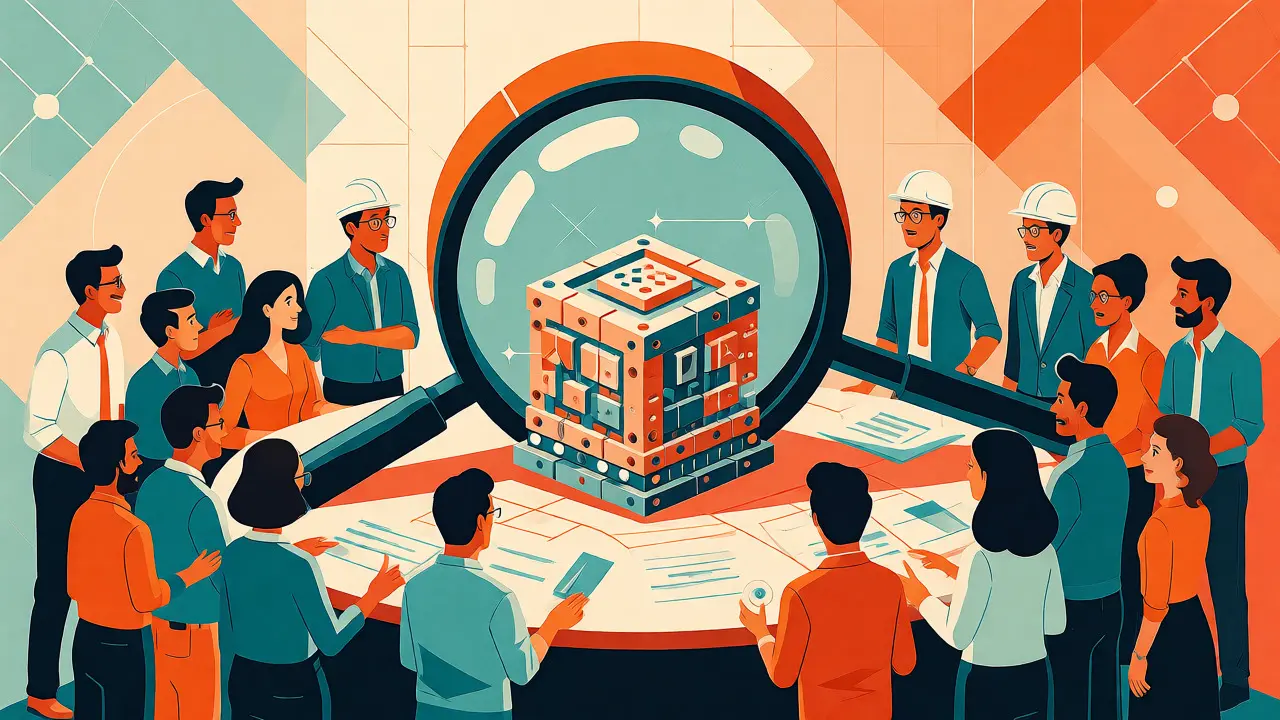
Skeptics will label your work as "toys" or "glorified spreadsheets." To counter this, you must demonstrate robustness. How did you handle edge cases? Did you implement error handling? Did you test with real users?
Share the iteration loop. Show screenshots of version 1 versus version 5. Explain how user feedback drove changes. For example, Maria expanded her restaurant app to include loyalty points and inventory tracking after seeing usage patterns. This shows that vibe coding isn't just about initial creation; it's about rapid adaptation. Traditional development is rigid; vibe coding is fluid. Frame this fluidity as a competitive advantage in a fast-moving market, not as a lack of structure.
Also, acknowledge limitations honestly. Admitting that vibe-coded apps might struggle with massive concurrency or complex database joins builds trust. It shows you aren't overselling. As one analysis noted, some success stories gloss over the nuance that prior technical familiarity helps. By admitting that learning curve exists, you appear more credible and less like a hype merchant.
Creating a Feedback Loop for Future Adoption
Your goal isn't just to celebrate one win; it's to inspire others to try. After sharing your success story, provide a clear path for colleagues to replicate it. Include a "Starter Kit" section in your communication:
- Tool Recommendations: List the specific tools used (e.g., Lovable for UI, Cursor for logic).
- Prompt Templates: Share the exact prompts that worked best.
- Governance Guidelines: Briefly outline security checks or review processes.
Invite interested colleagues to a "Show and Tell" session. Let them see the live demo, not just slides. Interaction breaks down barriers faster than documentation. When a colleague sees that you can tweak a feature in five minutes during a meeting, the perceived complexity of software development collapses. This democratization of capability is the true long-term value of vibe coding.
Finally, recognize the cultural shift. Moving from "waiting for IT" to "building it ourselves" requires psychological safety. Celebrate failures too. If someone tried vibe coding and it didn't work, share what they learned. This reduces the risk aversion that stifles experimentation. A culture that rewards attempt and iteration will naturally gravitate toward these new tools, driving organic adoption far beyond your initial campaign.
What is vibe coding?
Vibe coding is a method of creating software applications using AI-powered tools and natural language prompts rather than writing traditional code line-by-line. It allows non-technical users to describe their intent in plain English, letting AI generate the underlying code, enabling rapid prototyping and deployment.
Why do internal stakeholders resist vibe coding?
Stakeholders often resist due to concerns about code quality, security risks, and maintainability. Engineers may view it as a threat to their role or fear technical debt. Additionally, there is often a lack of understanding about the capabilities of AI development tools, leading to the perception that such apps are merely toys rather than production-ready solutions.
How do I measure the ROI of vibe coding?
Measure ROI by comparing time-to-market reductions, cost savings from avoided external development fees, and revenue generated or retained. For example, calculate the difference between the cost of hiring a developer versus the time invested in prompting, and add the operational efficiencies gained, such as reduced manual processing hours or increased customer conversion rates.
Can vibe coding replace professional developers?
No, vibe coding does not replace professional developers but complements them. It handles low-complexity tasks, prototypes, and internal tools, freeing up developers to focus on complex architecture, scalability, and critical infrastructure. It shifts the developer role from pure coding to oversight, refactoring, and integration.
What are common pitfalls in marketing vibe coding wins?
Common pitfalls include focusing too much on the technology rather than business outcomes, ignoring the concerns of engineering teams, failing to provide governance guidelines, and overstating capabilities without acknowledging limitations. Successful marketing balances enthusiasm with realistic expectations and clear paths for replication.