Anonymization vs Pseudonymization in LLM Workflows: A Practical Guide
You’ve got a massive dataset of user conversations. It’s perfect for fine-tuning your new Large Language Model. But there’s a catch: it’s full of names, addresses, and credit card numbers. If you feed this raw into the model, you’re risking a privacy disaster. So, what do you do? You scrub the data. But here is where most teams get stuck: should you use anonymization or pseudonymization? These terms get thrown around like they’re interchangeable, but they aren’t. One keeps your data usable; the other locks it down forever. Getting this wrong can either kill your model’s performance or land you in regulatory hot water.
The Core Difference: Reversibility Is Everything
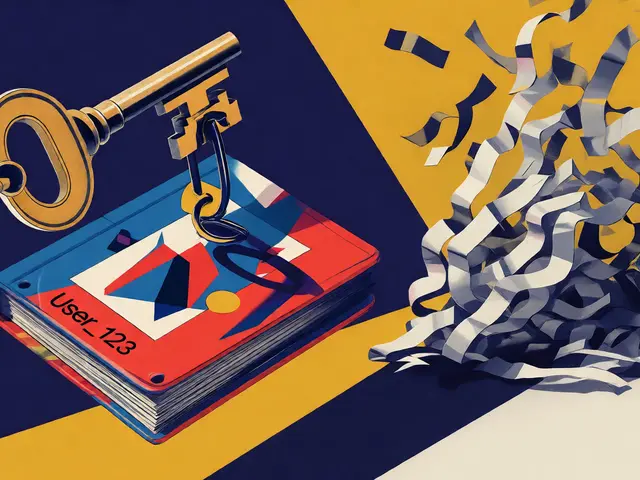
Think of it this way. Pseudonymization is like putting a lock on a diary. You replace the real name "John Doe" with "User_123." The data looks anonymous to anyone without the key, but if you have the mapping table (the key), you can unlock it and find out who User_123 really is. Because that key exists, the data is still considered personal under laws like the General Data Protection Regulation (GDPR).
Anonymization, on the other hand, is like shredding the diary. You replace "John Doe" with something that cannot be traced back, or you delete the identifier entirely so no link remains. Once data is truly anonymized, it’s no longer personal data. GDPR doesn’t care about it anymore because it’s impossible to identify the person. The trade-off? You lose the ability to re-identify users later. For LLM workflows, this distinction dictates everything from how you train models to how you handle a data breach.
Why LLMs Break Simple Anonymization
Here’s the problem specific to AI: Large Language Models are context machines. They don’t just look at isolated words; they look at relationships. If you simply remove names, an LLM might still figure out who someone is based on their job title, location, and specific anecdotes. This is called inference attack.
A recent study from the ACL Anthology’s PrivateNLP workshop in 2025 tested this exact scenario. They compared three strategies: simple masking, contextual anonymization, and pseudonymization across different models. The results were surprising. For some models, like Llama 3.3:70b, adding too much context actually made it easier for the model to guess the original entity. Simpler masking worked better. But for GPT-4o, providing context helped maintain response quality. This means you can’t just pick one technique and apply it everywhere. Your choice depends on the architecture of the model you are using.
| Feature | Pseudonymization | Anonymization |
|---|---|---|
| Reversibility | Yes, with a key | No, permanent |
| GDPR Status | Still Personal Data | Not Personal Data |
| Data Utility | High (maintains structure) | Limited (loses links) |
| Breach Risk | High (must notify) | Low (no notification needed) |
| Best Use Case | Internal analytics, testing | Public sharing, third-party sales |
Technical Implementation: How to Actually Do It
So, how do you implement these techniques in your Python pipeline? It’s not just about finding and replacing strings. You need tools that understand language structure.
Pseudonymization with Named Entity Recognition (NER)
The gold standard for text-based pseudonymization is Named Entity Recognition (NER). You use a transformer model, such as XLM-RoBERTa-large-finetuned-conll03-english, to scan your text. This model identifies entities like persons, locations, and organizations. Instead of deleting them, it replaces them with structured labels. "New York" becomes "LOCATION_1," and "John Doe" becomes "PERSON_1."
This method preserves the syntactic flow of the sentence. The model still sees a noun where a noun should be. Crucially, you keep a secure mapping file (the key) that says PERSON_1 = John Doe. If you need to analyze customer support tickets later, you can decrypt the ticket to see who complained, but the training data itself remains safe from casual prying eyes.
Anonymization with Synthetic Data Generation
If you want true anonymity, you need to break the link completely. Tools like the Faker library in Python are excellent for this. Faker generates realistic but fake names, addresses, and phone numbers. When you swap "John Smith" with "Alice Johnson," there is no mapping key stored anywhere. Alice Johnson never existed. The link is severed.
Another powerful technique is generalization. Instead of saying a user is "34 years old," you change it to "30-40 years old." You lose precision, but you gain privacy. In LLM training, this helps prevent the model from memorizing specific demographic quirks that could lead to re-identification.

The Trade-Off: Utility vs. Security
Let’s be honest: privacy always costs something. In the world of LLMs, that cost is usually accuracy or utility. When you mask entities, the model has less information to work with. Does this hurt performance?
According to recent benchmarks, the impact is surprisingly low. Studies show that effective pseudonymization can reduce response quality by only about 1 point on a 10-point scale while preserving 97%-99% of entity privacy. That’s a bargain. However, this assumes you are doing it correctly. If you over-anonymize-for example, removing all proper nouns including product names-your model will start sounding vague and unhelpful. It might say, "I bought a [PRODUCT] last week," which is useless for a recommendation engine.
Pseudonymization generally maintains higher utility because it keeps the structure intact. Anonymization, especially aggressive generalization, can strip away nuance. If you are building a medical chatbot, knowing that a patient is "male, age 65" is more useful than knowing they are "adult, senior." Pseudonymization lets you keep that granularity safely.
Regulatory Reality: The GDPR Burden
If you operate in Europe or serve European customers, this isn’t just a technical choice; it’s a legal one. Under GDPR, pseudonymized data is still personal data. Why? Because the possibility of re-identification exists. If your server gets hacked and the attacker steals both the pseudonymized database and the key file, you have a full-blown data breach. You must notify authorities within 72 hours, investigate, and potentially pay fines.
Anonymized data is different. Since it’s impossible to trace back to an individual, it falls outside GDPR jurisdiction. If you leak anonymized data, you generally don’t face the same regulatory hammer. This makes anonymization attractive for sharing data with third parties or publishing datasets publicly. But remember, achieving true anonymity is hard. If you publish a dataset that seems anonymous but allows someone to cross-reference public records to identify users, it wasn’t truly anonymized. You need rigorous checks to ensure irreversibility.

Choosing the Right Strategy for Your Workflow
How do you decide? Ask yourself three questions:
- Do I need to re-identify users? If yes, go with pseudonymization. You’ll need this for things like fraud detection, personalized marketing follow-ups, or linking patient records over time.
- Who is accessing the data? If it’s internal analysts who trust your security controls, pseudonymization is fine. If you’re sending data to external vendors or making it public, anonymization is safer.
- What is the risk tolerance? If a data breach would be catastrophic for your brand reputation, minimize the surface area. Anonymization reduces the blast radius of a potential leak.
For most modern LLM pipelines, a hybrid approach works best. Use pseudonymization during the development and testing phases where you need to debug outputs against real user contexts. Then, switch to anonymization when deploying the final model or sharing training corpora externally. This balances the need for high-quality training signals with strict privacy guarantees.
Frequently Asked Questions
Is pseudonymized data safe to share with third parties?
It depends on the contract and security measures. Technically, it is still personal data under GDPR. You can share it, but you must ensure the recipient has robust security controls and agrees to treat it as regulated data. If they lose the key or the data, you are liable. Always use Data Processing Agreements (DPAs) when sharing pseudonymized data.
Can LLMs reverse pseudonymization?
LLMs cannot technically "reverse" it without the key, but they can infer identities. If the context is unique enough (e.g., "The CEO of Apple who lives in Cupertino"), a model might guess the identity even if the name is replaced with "PERSON_1." This is why context-aware masking is critical.
Which tool is better for text anonymization, Faker or NER?
They serve different purposes. Use NER (like spaCy or Hugging Face transformers) for pseudonymization to maintain structure and consistency. Use Faker for anonymization when you need to generate entirely new, unrelated values to break all links. Often, you use NER to find the entities and then Faker to replace them if you choose the anonymization route.
Does anonymization hurt LLM performance significantly?
Research suggests minimal impact if done correctly. Losses are often around 1% on quality metrics. However, over-generalization (e.g., turning specific dates into just "last year") can hurt temporal reasoning capabilities. Balance specificity with privacy needs.
What happens if I lose the pseudonymization key?
Your pseudonymized data effectively becomes anonymized because it can no longer be reversed. However, this is risky management. If you planned to use that key for future analysis, you’ve lost that capability. Treat key management as critically as the data itself.