
Backlog Hygiene for Vibe Coding: Managing Defects, Debt, and Enhancements
Imagine cutting your feature delivery time from a full week to a single day. It sounds like a fantasy, but that's exactly what happens when you stop treating your backlog as a dusty list of wishes and start using it as a precision tool for AI. This is the heart of Vibe Coding is an AI-assisted software development methodology where developers and AI assistants work in a tight loop to accelerate delivery while keeping code quality high.
The secret isn't just a better prompt; it's the hygiene of your issues. If you throw a vague "fix the login bug" at an AI, you'll get a quick fix that might break three other things. But if your backlog is surgically clean, you can move at a pace that feels almost supernatural. The goal is to shift from monolithic user stories to a high-volume stream of micro-issues that an AI can execute with near-perfect accuracy.
The Anatomy of a Vibe-Ready Issue
In traditional agile, a user story is often a conversation starter. In vibe coding, a GitHub Issue is a formal contract. For the AI to succeed, the issue must be self-contained. This means it doesn't just describe the "what," but explicitly defines the guardrails.
A high-hygiene issue must include non-functional requirements. If you're building an export feature, don't just say "make it work." Your issue should explicitly state: "Log all export requests. Alert if export takes over 10 seconds. No PII in logs." When you provide these constraints upfront, you eliminate the back-and-forth and prevent the AI from hallucinating a solution that ignores your security or performance standards.
One of the most effective ways to manage this is by using
Backlog.md, a command-line tool that allows developers to manage kanban boards directly within their repository using markdown files. Instead of jumping between a browser and an IDE, you can create a task like backlog task create "Fix responsive header" and immediately have a structured file ready for the AI to consume.
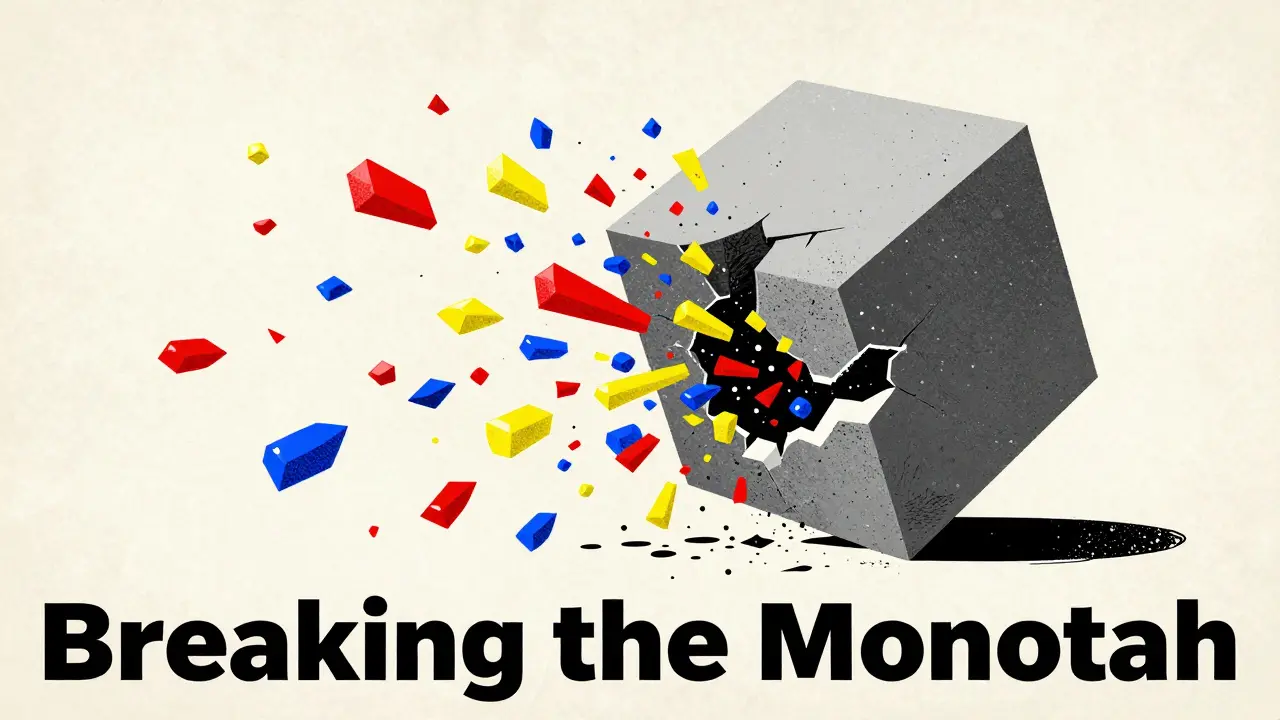
Breaking the Monolith: The Power of Micro-Issues
If you're used to Scrum, you probably maintain a backlog of 20 to 50 items. Vibe coding flips this on its head. You should actually want a "busy" backlog. We're talking hundreds of micro-issues. Why? Because AI performs best when the scope is tiny.
The rule of thumb is that an issue should be small enough to be implemented, tested, and deployed in a single development session. A traditional user story usually breaks down into 3 to 5 vibe-sized issues. This granularity allows you to deploy 10 to 20 times a day rather than once a week. You aren't just shipping a feature; you're shipping a series of tiny, verified wins.
| Feature | Traditional Agile | Vibe Coding |
|---|---|---|
| Issue Size | User Stories (Medium/Large) | Micro-issues (Tiny/Atomic) |
| Backlog Volume | Low (20-50 active items) | High (100+ active items) |
| Deployment Frequency | Weekly/Bi-weekly | Multiple times per day |
| Requirement Style | Conversational/Flexible | Explicit/Non-functional constraints |
| Debt Handling | Manual/Periodic Sprints | AI-generated follow-up issues |
Managing the AI Debt Cycle
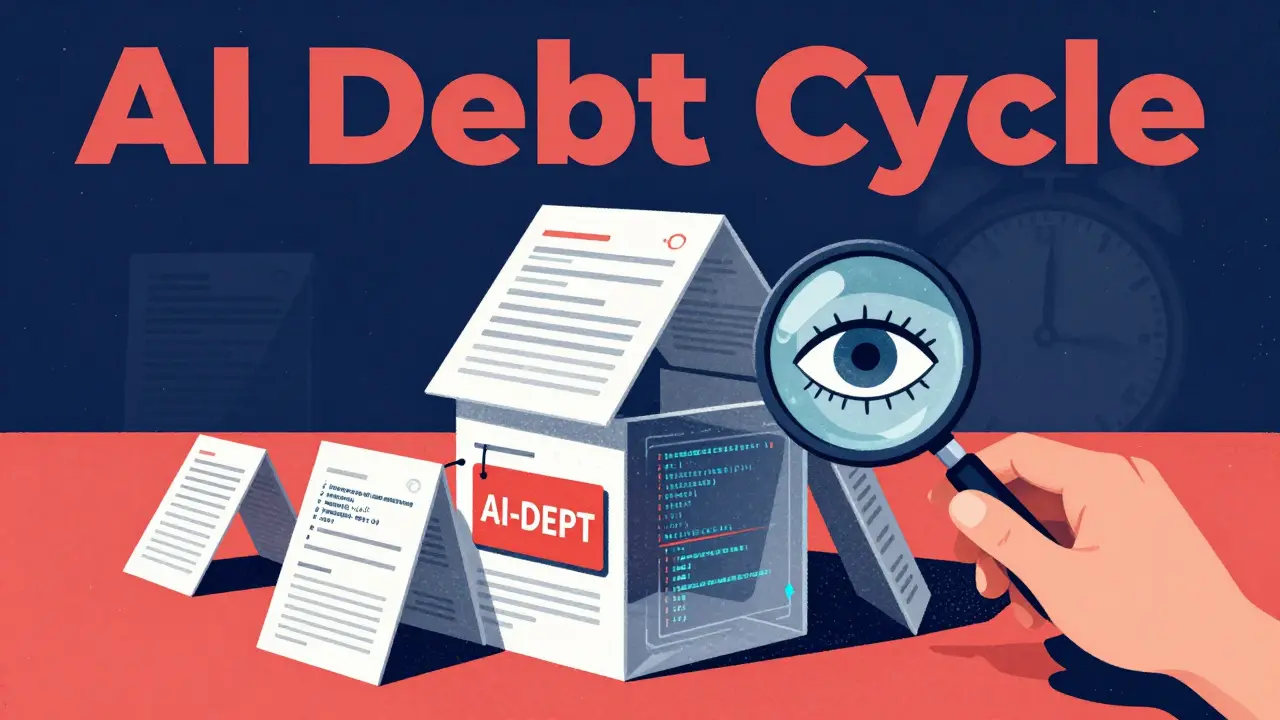
Here is the danger zone: AI is incredibly good at making things work *now*, but it can be reckless about how they work *later*. If you aren't careful, you'll face a productivity collapse within six months. This is where the "debt" part of backlog hygiene becomes critical.
In a vibe coding workflow, the AI is tasked with identifying its own shortcuts. For example, while implementing a feature for achievement queries, the AI might realize the database needs better indexing to stay fast. Instead of just ignoring it or doing a "quick and dirty" fix, the workflow mandates that the AI automatically generates a follow-up issue. You might see a new Issue #88 pop up: "Add database indexes for achievement queries - user_id, achievement_id combinations."
To prevent these issues from drowning your backlog, use strict categorization. A common industry practice is tagging all these items as [AI-DEBT]. If you don't review these weekly, you're just building a house of cards. Data shows that teams who ignore this AI-generated debt see technical debt increase by 37%, while those who maintain a strict review ritual enjoy significantly higher long-term productivity.
Defects and Enhancements: The Feedback Loop
When a bug appears in a vibe-coded system, the fix follows the same hygiene rules as a new feature. Don't just prompt the AI to "fix the bug." Create a defect issue that includes the exact failing state and the expected outcome. The a-ha moment comes when you use the command pattern: "Implement GitHub Issue #47". By referring to the issue number, you force the AI to use the documented context rather than relying on its own (often flawed) memory of the chat history.
Enhancements should be handled as a continuous stream of micro-improvements. Because the cost of implementation is so low, you can afford to be more experimental. However, keep an eye on architectural drift. AI can struggle with complex system design. For instance, it might suggest a synchronous API call for email validation that slows down your entire registration flow. This is where the human developer steps in to steer the vibe, moving the logic to a background process before the AI even starts coding.
Practical Execution and Pitfalls
Getting this right takes about two to three weeks of adjustment. The hardest part is the time investment in issue creation. It might take 10 to 15 minutes to write a truly vibe-ready issue, which feels slow compared to a quick prompt. But that investment saves you hours of debugging AI hallucinations later.
One major pitfall is spending too much time obsessing over the "perfect prompt." Don't do it. Focus on the results and the requirements in the backlog. The prompt is just the trigger; the backlog is the intelligence. If the AI misses the mark, don't just keep chatting-update the issue. If the requirements were missing, the issue was the problem, not the prompt.
For those starting out, the best path is to begin with a pilot project-something where speed is more important than absolute perfection. Start by tracking defects, then move into managing debt, and finally scale to enhancements. This staged approach prevents the "overwhelming feeling" that comes when you suddenly have 200 open tickets in your tracker.
How does vibe coding differ from traditional Agile?
The primary difference is the granularity of work. Traditional Agile uses medium-sized user stories designed for human coordination. Vibe coding uses micro-issues-tiny, self-contained units of work designed for AI execution. This allows for much faster deployment cycles, often moving from weekly releases to 10-20 deployments per day.
What exactly is AI-generated technical debt?
AI-generated debt occurs when an AI assistant provides a solution that passes the immediate test but is suboptimal for long-term maintenance (e.g., missing database indexes or redundant API calls). In vibe coding, this is managed by having the AI automatically create follow-up issues to address these shortcuts immediately after the primary feature is implemented.
Why should I use Backlog.md instead of Jira or Trello?
Backlog.md keeps your task management entirely within your repository as markdown files. This means your tasks are version-controlled and provide a persistent, local context that AI assistants can access more easily than external project management tools, reducing the friction between planning and coding.
Do I need to write complex prompts for every issue?
No. The goal of vibe coding is to move the intelligence into the backlog. Instead of complex prompts, you create a high-quality GitHub issue with clear requirements and then simply tell the AI to "Implement GitHub Issue #[number]." The AI uses the issue's structured data as its guide.
How do I stop a huge number of micro-issues from becoming overwhelming?
The key is strict categorization and tagging. Use tags like [AI-DEBT] or [ENHANCEMENT] and establish a weekly ritual to review and prune these items. Because the implementation time for each micro-issue is so low, the volume is manageable as long as you have a consistent review process.








The shift toward atomic issues makes a lot of sense from a cognitive load perspective. When you shrink the scope, you're basically removing the ambiguity that usually leads to those nasty AI hallucinations.
I've found that breaking things down into these micro-tasks not only helps the AI but actually forces the human dev to think through the edge cases more thoroughly before a single line of code is even written. It's almost like TDD but for the requirements phase.
Actually, the idea of having hundreds of micro-issues is exactly how high-velocity teams should be operating anyway, regardless of whether they use AI or not!
One must wonder... if we are simply outsourcing the decomposition of tasks to a machine, and then spending our precious human hours merely documenting the 'guardrails' for that machine... are we not simply trading one form of bureaucratic drudgery for another, more clinical version of the same nightmare??? It seems quite naive to assume that 'hygiene' can replace actual architectural foresight!!!!
It is quite amusing to see the industry embrace such a fragmented approach to development. I suppose for those who lack the capacity for holistic system design, the comfort of a "micro-issue" is a necessary crutch. One does wonder if the resulting codebase will actually resemble a cohesive piece of software or merely a quilt of disjointed patches.
Typical rubbish... just another way for the big tech firms to trick us into thinking we're 'productive' while they track every single tiny move we make with these 'micro-issues'!!! It's all part of the same surveillance game, innit... probably just a way to make real coders obsolete so they can replace us with scripts that don't demand a proper wage!!!! Total joke!!!!
The phrase "vibe coding" is an absolute linguistic disaster. Also, the author fails to mention that storing your entire backlog in markdown files is a security nightmare waiting to happen-who knows who has access to those files once they're pushed to a repo? It's a transparent attempt to gather more data on developer workflows for some shadowy AI training set. The lack of proper punctuation in some of these technical terms is honestly distressing.
I find this approach to be most agreeable, though the effort of writing so many issues seems rather tedious for one's daily routine.