
Consent Management in Generative AI: User Rights and Data Choices
You clicked "I agree" on a cookie banner three years ago. You probably didn't think about it again. But now, the large language model powering your company’s customer service bot is using that old data to generate new responses, potentially creating content you never explicitly authorized. This is the messy reality of Consent Management in the age of Gen AI. It’s no longer just about checking a box; it’s about managing a living, breathing relationship between your data and an algorithm that keeps changing.
If you’re building or deploying generative AI tools, you’re walking a tightrope. On one side, you have the massive utility of models that learn from vast datasets. On the other, you have strict regulations like the GDPR and the EU AI Act, which demand transparency and control. The core problem? Traditional consent was static. You gave permission for a specific task. Generative AI is dynamic. It updates its weights, changes its capabilities, and sometimes uses your data in ways you couldn’t have predicted when you first signed up. So, how do you keep users in control without killing innovation?
Why Static Consent Breaks Down with Gen AI
Think about how traditional software works. If you use a photo editing app, it processes your image to apply filters. That’s it. The logic doesn’t change overnight. Now, consider a generative AI system. It ingests text, images, audio, and code. It doesn’t just process; it creates. And crucially, it learns. When a foundation model gets updated, the way it interprets and reuses your personal data can shift fundamentally.
The EU AI Act defines these systems as "foundation models used in AI systems specifically intended to generate... content such as complex text, images, audio, or video." Because these models are so broad, the initial consent you collected might not cover the new uses the model discovers. Did you ask users if they were okay with their chat logs being used to train a new feature that summarizes legal contracts? Probably not. This gap between original consent and current usage is where legal trouble starts.
Sensitive data makes this even riskier. Health records, financial history, and children’s information require higher standards of protection. If an AI system inadvertently leaks or misuses this data because the consent framework wasn’t robust enough, the consequences aren’t just fines-they’re lost trust. Users don’t care about your technical debt; they care that their private thoughts stayed private.
The Regulatory Landscape: GDPR and Beyond
You can’t ignore the law here. The General Data Protection Regulation (GDPR) is still the gold standard, even outside Europe. Article 6 requires a lawful basis for processing data, and Article 7 sets strict rules for valid consent. It has to be informed, voluntary, and specific. Vague terms like "we may use your data to improve services" often fail this test when applied to AI training.
Then there’s Article 22, which deals with automated decision-making. If an AI system makes a decision that significantly affects someone-like denying a loan or filtering job applications-users have the right to human intervention and meaningful information about the logic involved. For generative AI, this is tricky. How do you explain the "logic" behind a neural network generating a creative response? You need safeguards and transparency mechanisms that go beyond simple disclosure.
| Regulation/Framework | Core Requirement | Impact on Gen AI |
|---|---|---|
| GDPR Article 6 | Lawful basis for processing | Requires explicit consent if no other basis exists for AI training/inference. |
| GDPR Article 22 | Rights regarding automated decisions | Mandates human review options for significant AI-driven outcomes. |
| EU AI Act | Transparency for foundation models | Demands clear communication about data sources and model capabilities. |
| CCPA (California) | Right to opt-out of sale/sharing | Users must be able to restrict how their data feeds into third-party AI tools. |
Anticipated updates will likely tighten these rules further. We’re moving toward global standardization, meaning a fragmented approach won’t work for international products. If you serve users in Berlin, San Francisco, and Tokyo, your consent strategy needs to handle all those jurisdictions simultaneously.
How Consent Management Platforms (CMPs) Evolve
A simple cookie banner isn’t enough anymore. You need a Consent Management Platform (CMP). These aren’t just pop-ups; they’re sophisticated engines that manage the entire lifecycle of user preferences. Modern CMPs offer granular choices. Instead of one big "Accept All," users can say yes to basic functionality but no to AI training or personalized content generation.
Here’s why this matters for Gen AI: dynamic synchronization. Your AI model might sit on one server, while your marketing stack sits on another. A good CMP ensures that if a user revokes consent for AI training, that signal propagates instantly to every tool in your stack-analytics, CRMs, advertising pixels, and the AI inference engine itself. Tools like Google Consent Mode v2 help transmit these real-time privacy signals, ensuring that data isn’t accidentally processed after a user says "no."
Geolocation detection is another critical feature. An EU user should see GDPR-compliant options, while a California user sees CCPA-appropriate choices. The CMP handles this automatically, adapting the language and legal disclosures based on where the user is accessing the service. This reduces friction for the user and compliance burden for you.

Implementing Dynamic Consent Models
Static consent fails because AI evolves. The solution is dynamic consent. This means treating consent as an ongoing conversation rather than a one-time transaction. When your AI model undergoes a significant update-say, it starts supporting voice input or generates code-you trigger a re-consent request. You clearly communicate what changed and ask users to reaffirm or adjust their permissions.
To make this work, you need a solid technical architecture:
- Data Mapping and Inventory: Document every AI system, its data sources, and its purposes. You can’t manage consent for systems you haven’t mapped.
- Granular Permission Configuration: Allow users to opt in or out of specific AI features separately. Maybe they want the chatbot but not the background analysis.
- Audit Trails: Record exactly when consent was given, modified, or withdrawn. In a dispute, this log is your best defense.
- User Dashboards: Give users a central place to view and change their preferences easily. If they can’t find the settings, they’ll assume you’re ignoring them.
Design your interfaces with plain language. Avoid jargon like "model weights" or "inference latency." Say instead, "We use your chats to improve our writing assistant." Clarity builds trust faster than legalese ever could.
The Role of Business Analysts and Ethics
Compliance isn’t just a legal checklist; it’s a business strategy. Business analysts play a pivotal role here. They sit at the intersection of tech, business goals, and regulation. They’re the ones who can translate regulatory requirements into practical workflows. They ensure that ethical principles-transparency, fairness, accountability-are baked into the product design, not bolted on later.
Consider the concept of "responsible AI." It’s more than a buzzword. It means embedding privacy by design. If you’re launching a new Gen AI feature, involve legal and compliance early. Use analytics to track consent trends. Are users opting out of AI training? Why? Is the value proposition unclear? These insights help you refine both the product and the consent experience.
Ethical deployment also involves minimizing data collection. Do you really need the user’s full name, or would a pseudonym suffice? Data minimization reduces risk. If you hold less sensitive data, there’s less to lose if something goes wrong.
Emerging Tech: Blockchain and Predictive Consent
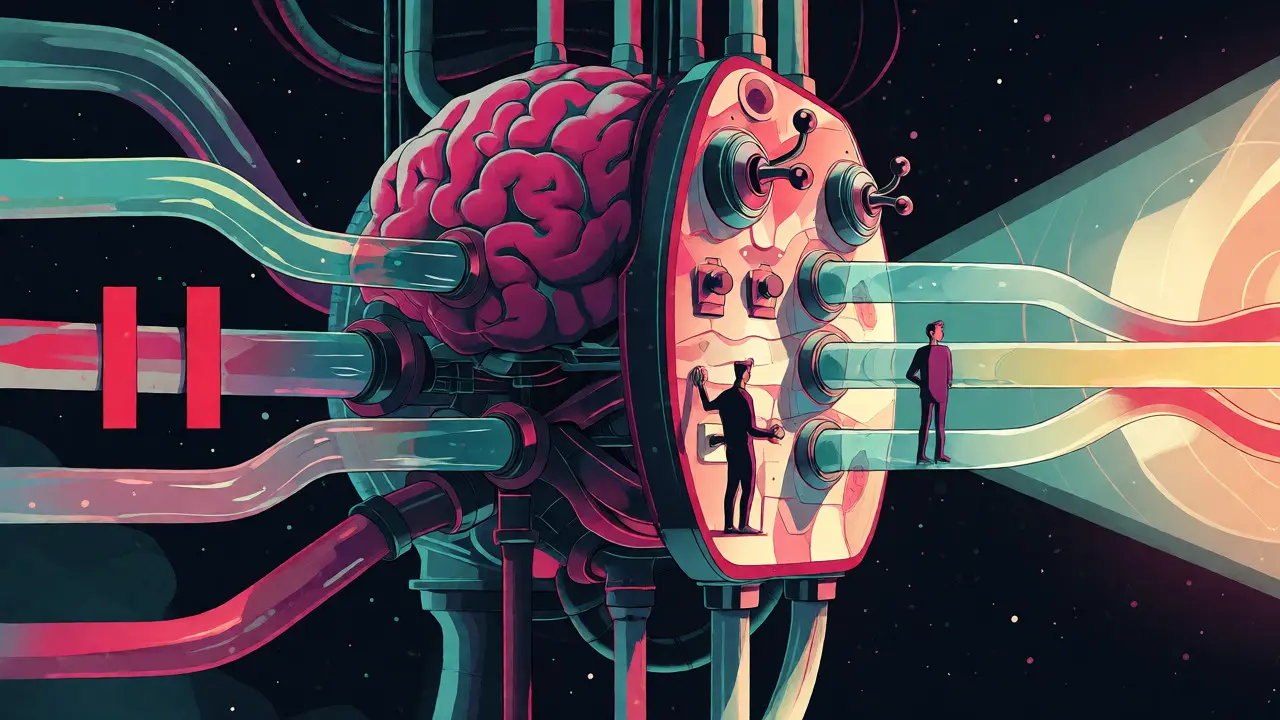
Looking ahead, technology is offering new ways to manage trust. Blockchain-based consent records provide immutable audit trails. Once a user gives consent, it’s recorded on a decentralized ledger. This offers strong evidence during regulatory investigations and prevents tampering. While blockchain has scalability challenges, it’s promising for high-stakes industries like healthcare or finance.
Another frontier is predictive consent modeling. Imagine an AI that anticipates when a user might want to change their privacy settings based on their behavior or life events. If a user starts uploading medical documents, the system might proactively suggest stricter privacy controls. This shifts consent from reactive to proactive, enhancing user agency.
However, we must be careful. Using AI to manage consent introduces a paradox: relying on algorithms to protect privacy. We need to ensure these meta-AI systems themselves are transparent and unbiased. Otherwise, we’re just swapping one black box for another.
Practical Steps for Today
You don’t need to wait for perfect regulations to act. Start here:
- Audit your current AI systems: List every model, its data inputs, and its outputs. Identify where personal data flows.
- Review your consent banners: Are they granular? Do they explain AI usage in plain English? Test them with actual users.
- Integrate a robust CMP: Ensure it supports dynamic updates and multi-jurisdictional compliance.
- Establish re-consent triggers: Define what constitutes a "significant change" to your AI that warrants asking users again.
- Create a user-friendly preference center: Make it easy for people to exercise their rights.
Remember, consent management is a marathon, not a sprint. As generative AI continues to reshape industries, the organizations that win will be those that treat user data with respect and transparency. It’s not just about avoiding fines; it’s about building a sustainable relationship with your customers.
Do I need separate consent for each AI feature?
Ideally, yes. Granular consent allows users to choose which AI functionalities they engage with. Bundling too many purposes into one consent request can violate GDPR's requirement for specificity, especially if some features involve sensitive data or different processing risks.
What happens if my AI model updates after I've collected consent?
If the update significantly changes how data is processed or introduces new uses not covered by the original consent, you should seek re-consent. Implement a dynamic consent framework that triggers notifications to users when major model changes occur, allowing them to review and approve the new terms.
Can I rely on 'legitimate interest' instead of consent for AI training?
Sometimes, but it's risky. Legitimate interest requires a balancing test showing your interests don't override user rights. For generative AI, especially with sensitive data or unexpected uses, explicit consent is often safer and more defensible under GDPR Article 6.
How do I prove I obtained valid consent?
Maintain detailed audit trails. Your Consent Management Platform should record the timestamp, IP address, version of the consent notice shown, and the specific choices made. This documentation is crucial for demonstrating compliance during regulatory audits.
Does the EU AI Act replace GDPR?
No, it complements it. The EU AI Act focuses on safety, transparency, and fundamental rights impacts of AI systems, while GDPR governs personal data processing. You must comply with both frameworks simultaneously, ensuring your consent mechanisms satisfy data protection laws and AI-specific transparency requirements.









oh great another article telling me that the checkbox i clicked in 2019 is now legally void because some neural net decided to learn from my grocery list. how convenient for the corporations and how exhausting for us.
I appreciate the focus on granular choices, but I think we need to be careful about assuming users actually want to manage every single permission. It can feel like homework.
My boundary is simple: if I don't understand what you're doing with my data in two sentences or less, I'm opting out. We shouldn't have to be legal experts just to use a chatbot.
This is exactly what people are ignoring!!! The EU AI Act isn't just a suggestion it's law... and companies are treating it like a polite request. If your model updates its weights and suddenly starts generating code based on my private chats, that is a NEW purpose of processing. You cannot rely on old consent for new capabilities. Period. End of story. Stop being lazy with your compliance teams.
You are missing the forest for the trees Tamara. The issue isn't just the act itself it is the fundamental lack of transparency in the black box. How do you explain the logic of a transformer model to a regulator? You cant. You just throw more paperwork at them. Its performative compliance. Everyone knows this. We are all pretending these audit trails mean something when they really just document our own ignorance.
Hey everyone, totally valid points here. I think the key takeaway for anyone starting out is just to start small. You don't need blockchain tomorrow. Just make sure your current banner explains *why* you need the data in plain English. That builds trust way faster than complex legal jargon. Keep going, you've got this!