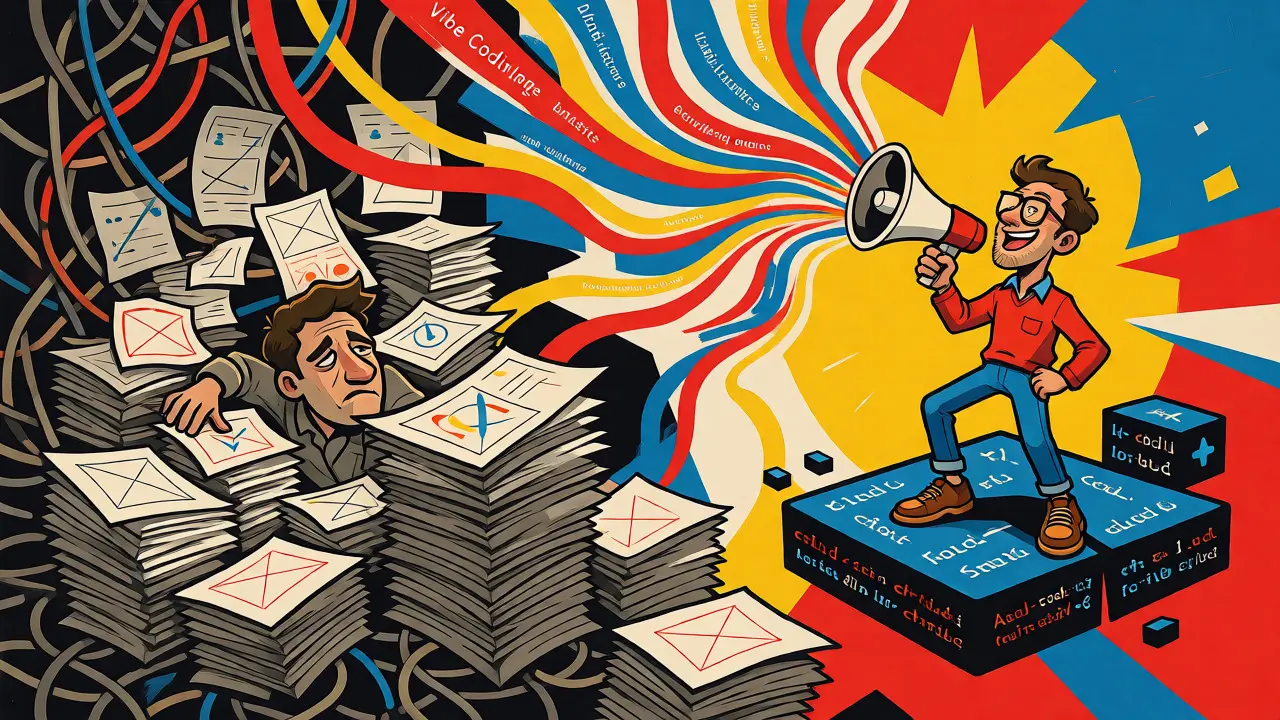
How Startups Use Vibe Coding for Rapid Prototyping and MVP Development
Remember when building a Minimum Viable Product (MVP) meant months of wireframing, endless sprint planning, and praying your engineering team didn't burn out before launch? That era is fading. Enter vibe coding, a rapid, intuition-driven approach to software development that uses generative AI to turn plain English prompts into working code in minutes. It’s not just a buzzword; it’s the new standard for how agile startups validate ideas without burning through their seed funding.
If you’re a founder or product manager, you’ve likely felt the friction between having a brilliant idea and seeing it built. Traditional development cycles are linear: plan, design, build, test. Vibe coding shatters this linearity. It allows you to describe what you want, watch an AI generate it, tweak the output, and iterate instantly. This isn’t about replacing senior engineers with chatbots. It’s about collapsing the time between thought and execution so you can fail fast, learn faster, and ship sooner.
What Is Vibe Coding and Why Does It Matter?
At its core, vibe coding is about flow state applied to software creation. Instead of worrying about syntax errors or database schemas in the first hour, you focus on the user experience and business logic. You type, "Create a dashboard where users can upload CSV files and see a pie chart of expenses," and tools like Lovable or Bolt.new generate the React components, handle the state management, and even set up the backend API.
This methodology prioritizes experimentation over architectural perfection. In the early stages of a startup, perfect architecture is often premature optimization. You don’t need a scalable microservices architecture if only ten people are using your app. You need something that works well enough to get feedback. Vibe coding enables this by letting non-technical founders and product managers build functional prototypes directly, bypassing the traditional bottleneck of waiting for engineering resources.
The Shift from Linear Planning to Iterative Experimentation
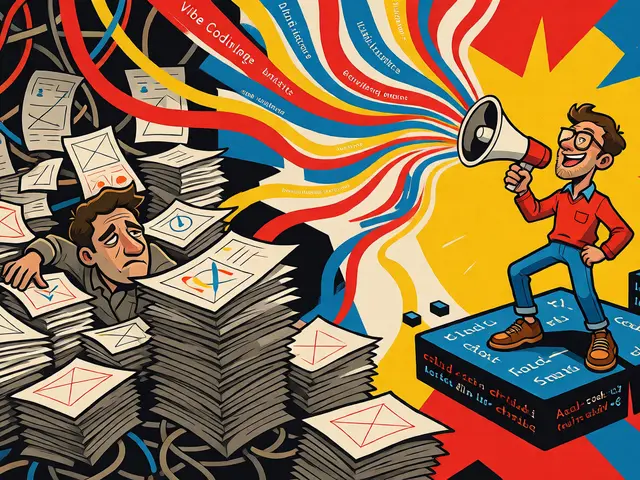
Traditional product development requires extensive upfront planning. You write specifications, create Jira tickets, and estimate story points. Vibe coding flips this model. It encourages a "jump in and tweak it later" mentality. This shift is critical for startups because market conditions change rapidly. What seemed like a solid feature six months ago might be irrelevant today.
Consider the difference in feedback loops. A traditional MVP might take three months to build. By the time you launch, your assumptions might be outdated. With vibe coding, you can build a prototype in an afternoon, share it with five potential customers, and have actionable insights by dinner. This speed reduces the risk of building the wrong thing-a common killer for early-stage companies.
| Feature | Traditional Development | Vibe Coding |
|---|---|---|
| Time to Prototype | Weeks to Months | Hours to Days |
| Primary Skill Required | Deep technical expertise | Prompt engineering + Product sense |
| Cost Efficiency | High labor costs upfront | Low initial cost, higher iteration cost |
| Risk Profile | High risk of building unused features | Low risk due to rapid validation |
Key Tools Powering the Vibe Coding Revolution
You can’t practice vibe coding with just a text editor. You need AI-powered platforms that understand context, manage dependencies, and provide visual feedback. Several tools have emerged as leaders in this space, each serving slightly different needs within the startup ecosystem.
Lovable is particularly popular among product managers and designers. It offers a chat-based interface where you describe features in natural language, and it builds full-stack applications. Its strength lies in live rendering-you can see changes in real-time, which keeps stakeholders engaged during demos. It also handles version control automatically, reducing the fear of breaking things while experimenting.
For developers who want more control but still want speed, Cursor is an AI-first code editor. Unlike Lovable, which generates entire apps, Cursor helps you write code faster by predicting your next steps and refactoring existing blocks. It’s ideal for teams that already have some codebase structure but want to accelerate feature development.
Then there’s v0 by Vercel, which specializes in UI generation. If your startup’s value proposition is heavily reliant on a slick, responsive interface, v0 can generate Tailwind CSS and React components based on screenshots or text descriptions. It integrates seamlessly with Next.js, making it a favorite for frontend-heavy projects.
Real-World Impact: How Startups Are Using Vibe Coding
Theoretical benefits are nice, but let’s look at concrete examples. Data from recent case studies shows significant efficiency gains. One AI marketplace platform reduced its development timeline by 50% by using vibe coding for its initial MVP. Another health monitoring app saw a 30% increase in user engagement simply because they could iterate on the UI weekly instead of monthly.
Perhaps the most striking example comes from hardware startups. Fable Engineering prototyped an AI-powered companion robot in just three days. They used vibe coding principles to define the robot's behavior via prompts, then combined this with rapid hardware iteration. The robot featured computer vision, expressive displays, and on-device AI-all running on a Raspberry Pi 5. This proves that vibe coding isn’t limited to web apps; it applies to any domain where software controls hardware.
Even giants like Airbnb started with rough prototypes. Founders Brian Chesky and Joe Gebbia spent weeks learning to code to build their first site. Today, a solo founder could replicate that MVP in an afternoon using vibe coding tools. This democratization of development means fewer barriers to entry for entrepreneurs who lack deep technical backgrounds.
Strategic Implementation: The Two-Track Approach
Does this mean you should fire your CTO and hire prompt engineers? Absolutely not. The most successful startups use a hybrid strategy. Think of it as a two-track system:
- Track 1: Rapid Prototyping. Use vibe coding tools to explore ideas, validate hypotheses, and demo concepts to investors. These prototypes are disposable. Their goal is learning, not longevity.
- Track 2: Professional Development. Once a concept is validated, hand it off to professional engineers to rebuild it with robust architecture, security standards, and scalability in mind.
This approach maximizes learning speed while ensuring operational reliability. It prevents the "tech debt" explosion that happens when you try to scale a messy AI-generated codebase indefinitely. Leaders must communicate this distinction clearly to their teams. Prototypes are learning tools; production systems are assets.
Avoiding Common Pitfalls
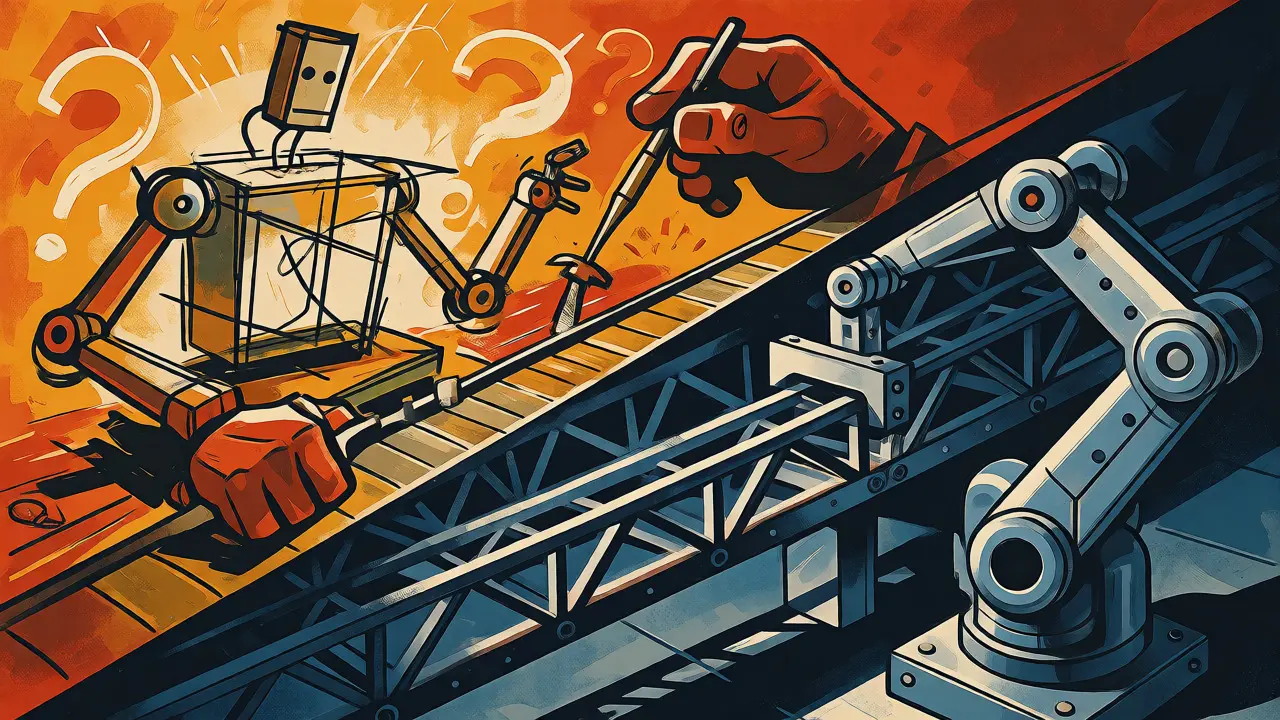
Vibe coding isn’t magic. It has limitations. One major pitfall is hallucination-AI can confidently generate incorrect code or logic. Always review the output. Another issue is security. AI models trained on public code might introduce vulnerabilities if you blindly copy-paste snippets into sensitive areas. For MVPs, this risk is acceptable. For production, it’s not.
Also, beware of "prompt fatigue." If you find yourself spending more time crafting the perfect prompt than actually testing the feature, you’re doing it wrong. Keep prompts simple and iterative. Start broad, then refine. Remember, the goal is to move from concept to validated learning, not to win a poetry contest with your AI.
The Competitive Advantage of Early Adoption
We are currently in the early adoption phase of vibe coding. Organizations that master this workflow now will have a distinct advantage. They can respond to market changes faster, test more variations, and allocate capital more efficiently. Investors are noticing this too. When pitching to VCs, highlighting your ability to rapidly test assumptions demonstrates sophistication. It shows you understand that technology’s value lies in faster feedback loops, not just cheaper code.
As we move deeper into 2026, the question isn’t whether vibe coding will become mainstream-it already is. The question is whether your startup will adopt it quickly enough to stay competitive. The tools exist. The methodology is proven. The only variable left is your willingness to embrace the chaos of rapid iteration.
Is vibe coding suitable for complex enterprise applications?
Not initially. Vibe coding excels at prototyping and MVPs where speed and flexibility are paramount. For complex enterprise applications requiring strict compliance, high availability, and intricate data relationships, traditional development methods are still superior. However, vibe coding can accelerate specific modules or internal tools within larger enterprises.
Do I need to know how to code to use vibe coding tools?
No. Tools like Lovable and Bolt.new are designed for non-technical users. You need strong product sense and clear communication skills to describe what you want. However, basic understanding of programming concepts helps in debugging and refining the AI's output.
How does vibe coding affect intellectual property rights?
This varies by tool provider. Most reputable platforms grant users ownership of the generated code. However, always check the terms of service. Some providers may retain rights to train their models on your inputs. For sensitive IP, consider self-hosted AI solutions or legal review.
Can vibe coding replace my engineering team?
No. It changes their role. Engineers spend less time writing boilerplate code and more time on architecture, integration, security, and solving complex logical problems that AI struggles with. It frees them to work on higher-value tasks rather than routine implementation.
What happens if the AI generates bad code?
You iterate. Since vibe coding is fast, fixing bad code takes minutes. You can ask the AI to refactor, explain the error, or rewrite the component. The low cost of iteration makes dealing with occasional errors manageable compared to the high cost of long development cycles.





I find it deeply troubling that we are collectively deciding to lower the bar for software engineering by calling this "vibe coding" because it sounds trendy and non-threatening to people who have never written a line of code in their lives. It is not just about speed or efficiency but about the fundamental erosion of technical competence which allows individuals to claim expertise they do not possess simply because an algorithm generated the syntax for them. We are creating a generation of developers who cannot debug their own creations because they never understood the underlying logic in the first place and this will inevitably lead to catastrophic failures when the AI hallucinates a security flaw that no human reviewer caught because everyone was too busy feeling good about how fast they shipped. The moral hazard here is immense as we prioritize the appearance of progress over the substance of quality and we are teaching our children that understanding the mechanism is less important than getting the result even if the result is fragile and insecure. I refuse to accept that this is progress when it feels like we are just hiding our incompetence behind a chat interface and pretending that intuition can replace rigorous study and discipline in a field that demands precision above all else.