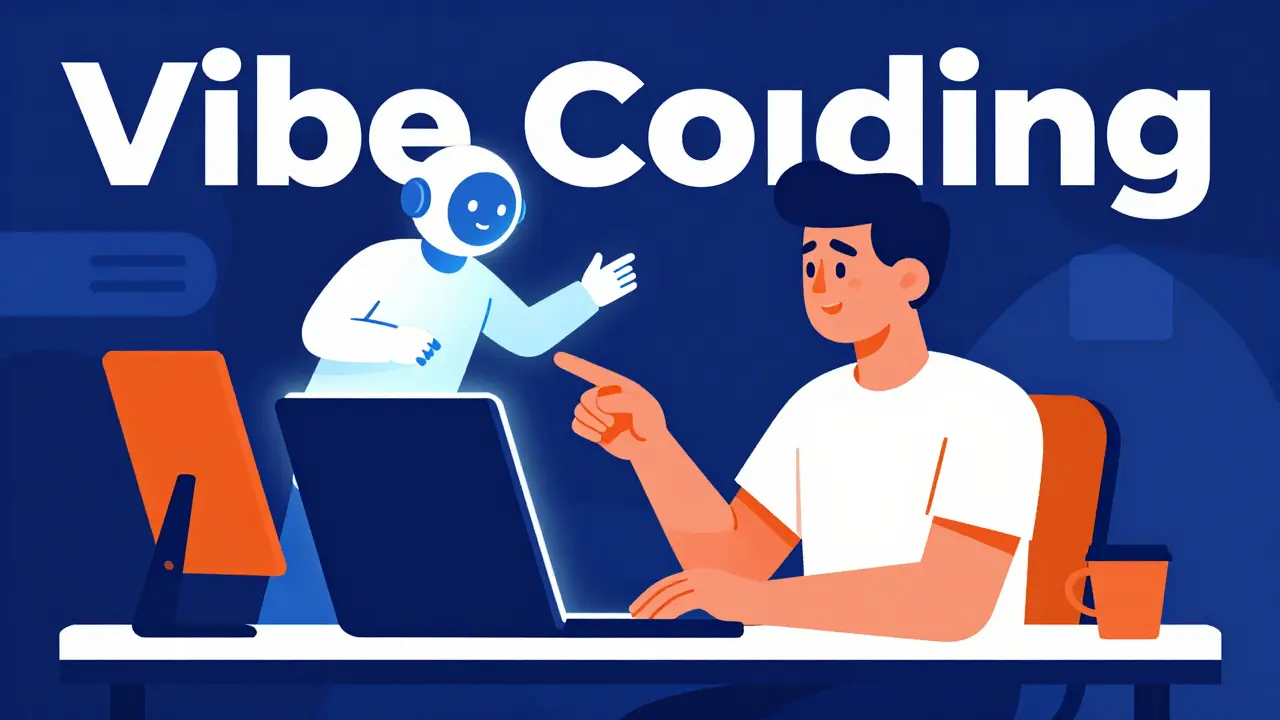
Agentic Systems vs Vibe Coding: Choosing the Right Autonomy Level
You are staring at a blank screen. The deadline is tomorrow. You could spend hours wrestling with syntax and boilerplate, or you could ask an AI to do it for you. But here is the catch: there are two very different ways to get that code written right now. One feels like chatting with a helpful colleague who waits for your every instruction. The other feels like hiring a junior developer who goes off into another room and doesn't come back until the job is done-or until something breaks.
These are Vibe Coding and Agentic Systems, respectively. They represent the two dominant paradigms in AI-assisted software development as of mid-2026. Both use large language models (LLMs), but they operate on completely different levels of autonomy. If you pick the wrong one for your task, you might save time initially only to waste weeks fixing silent bugs later. If you pick the right one, you can cut development cycles in half.
The Core Difference: Steering vs. Delegating
To choose between them, you first need to understand how they actually work under the hood. It isn't just about marketing buzzwords; it's about where the human sits in the loop.
Vibe Coding is a conversational, human-in-the-loop approach where developers guide the AI through natural language prompts within their existing IDE. Think of tools like GitHub Copilot, Cursor, or Lovable. You type a prompt, the AI suggests code, you review it, you accept or tweak it, and you move to the next line. It’s interactive. It’s immediate. Microsoft’s internal studies from 2024 showed this approach improved coding efficiency by 55% because it blends creativity with productivity without removing the driver’s seat from the developer.
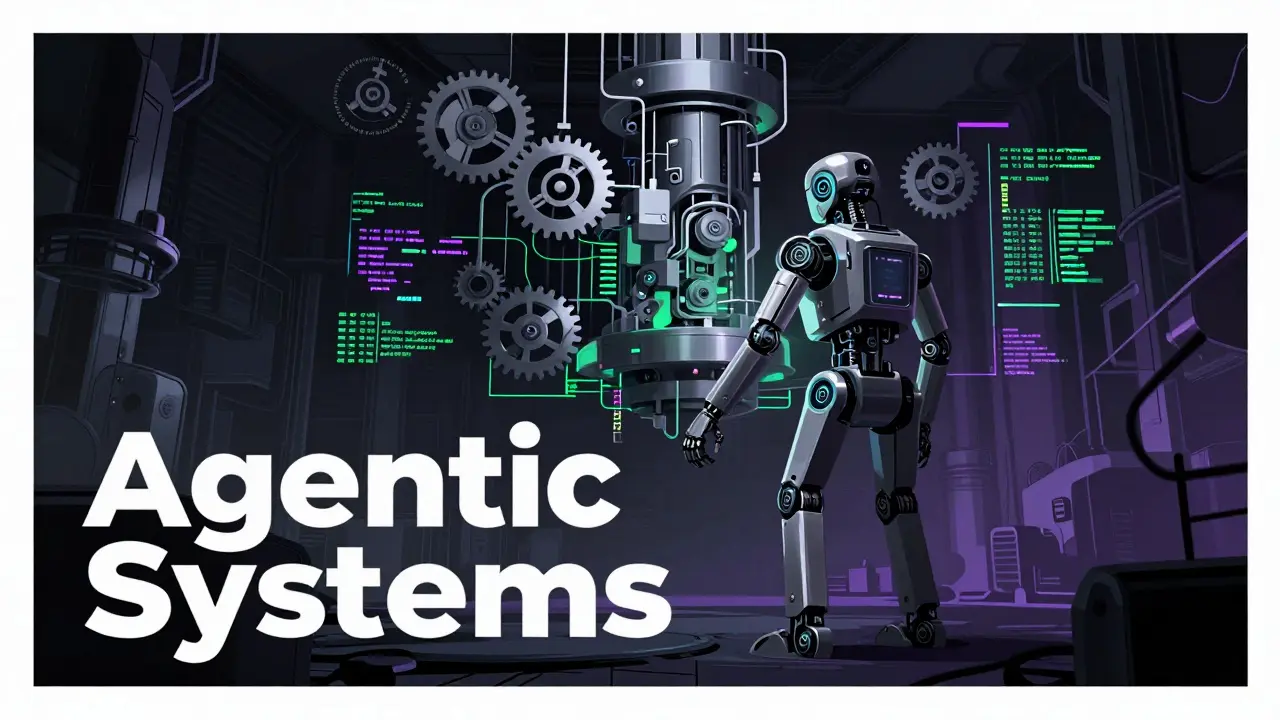
In contrast, Agentic Systems are autonomous agents capable of planning, executing, testing, and iterating on complex tasks with minimal human intervention. Tools like Devin 2.0 or OpenDevin don’t just suggest code; they decompose a high-level goal (like “refactor this legacy module”) into subtasks, write the code, run the tests, fix the errors, and commit the changes. A May 2025 arXiv paper by Ranjan Sapkota and colleagues highlights that while vibe coding keeps you in control, agentic coding aims to remove you from the execution loop entirely.
The fundamental trade-off is simple: Vibe coding offers high control and low autonomy. Agentic systems offer low control and high autonomy. Your choice depends on whether you want to steer the car or set the GPS destination.
When to Use Vibe Coding: Speed and Creativity
Vibe coding shines when you need speed, clarity, and creative exploration. It is the king of greenfield projects-those brand-new applications where nothing exists yet. According to Sourcedesk.io’s analysis of 500 beginner projects, vibe coding has a 92% success rate for simple CRUD (Create, Read, Update, Delete) applications. Why? Because the logic is straightforward, and the developer can instantly correct any hallucinations the AI makes.
If you are building an MVP (Minimum Viable Product) to test a hypothesis, vibe coding is your best friend. Developer u/code_crusader reported on Reddit in January 2026 that he built a working MVP in two hours using Cursor-a task that would have taken two days previously. The key here is rapid prototyping. You can move from concept to running demo in under 30 minutes.
It also excels in learning environments. Beginners often struggle with syntax errors that block their progress. Vibe coding tools abstract away those hurdles, allowing new developers to focus on logic and architecture. However, be warned: vibe coding can lead to "spaghetti code" if you aren't careful. Apiiro.com found that vibe-coded projects often require 30-40% rework before production because the AI optimizes for the immediate prompt, not the long-term system health.
- Best for: Rapid prototyping, MVPs, learning new languages, small scripts.
- Risk: Accumulated technical debt, lack of architectural coherence.
- Autonomy Level: Low (Human steers every step).
When to Use Agentic Systems: Scale and Maintenance
Now imagine you have a legacy codebase with 100,000 lines of Java that needs to be migrated to Kotlin. Or perhaps you need to update dependencies across fifty microservices. This is where vibe coding fails. You cannot chat your way through that efficiently. This is the domain of Agentic Systems.
Agentic systems excel at large-scale refactoring and CI/CD maintenance. In an enterprise case study by Apiiro.com in December 2025, agentic coding handled codebase modifications across 10,000+ lines with 78% accuracy, compared to just 43% for vibe coding approaches. These systems use specialized planning modules to break down massive tasks. They can read the entire context of a project, identify patterns, and apply changes consistently.
However, there is a significant risk: "silent failures." Because the agent works autonomously, it might introduce subtle bugs-like race conditions-that pass initial tests but fail in production. Rocket.new’s incident analysis found that 37% of production issues in early agentic implementations stemmed from these undetected errors. Forrester’s Mark Grannan noted that over-reliance on agentic coding without proper oversight contributed to 22% of 1,450 production incidents in Q4 2025, particularly in financial services where regulatory compliance is strict.
- Best for: Legacy modernization, bulk refactoring, test generation, CI/CD pipeline maintenance.
- Risk: Silent failures, lack of transparency, high infrastructure costs.
- Autonomy Level: High (Agent executes end-to-end).
| Feature | Vibe Coding | Agentic Systems |
|---|---|---|
| Primary Role | Conversational Co-pilot | Autonomous Executor |
| Human Intervention | Continuous (Prompt-based) | Minimal (Goal-setting & Review) |
| Ideal Task Size | Small to Medium (Functions/Modules) | Large (Projects/Refactoring) |
| SWE-bench Accuracy | 41-52% | 68-73% |
| Infrastructure Needs | Standard Workstation (8GB+ RAM) | Robust (16GB+ RAM, GPU acceleration) |
| Typical Cost | $10-$20/month (e.g., Copilot) | $29-$99+/month (Usage-based) |
| Key Risk | Technical Debt / Spaghetti Code | Silent Failures / Debugging Difficulty |
The Hybrid Future: The Autonomy Dial
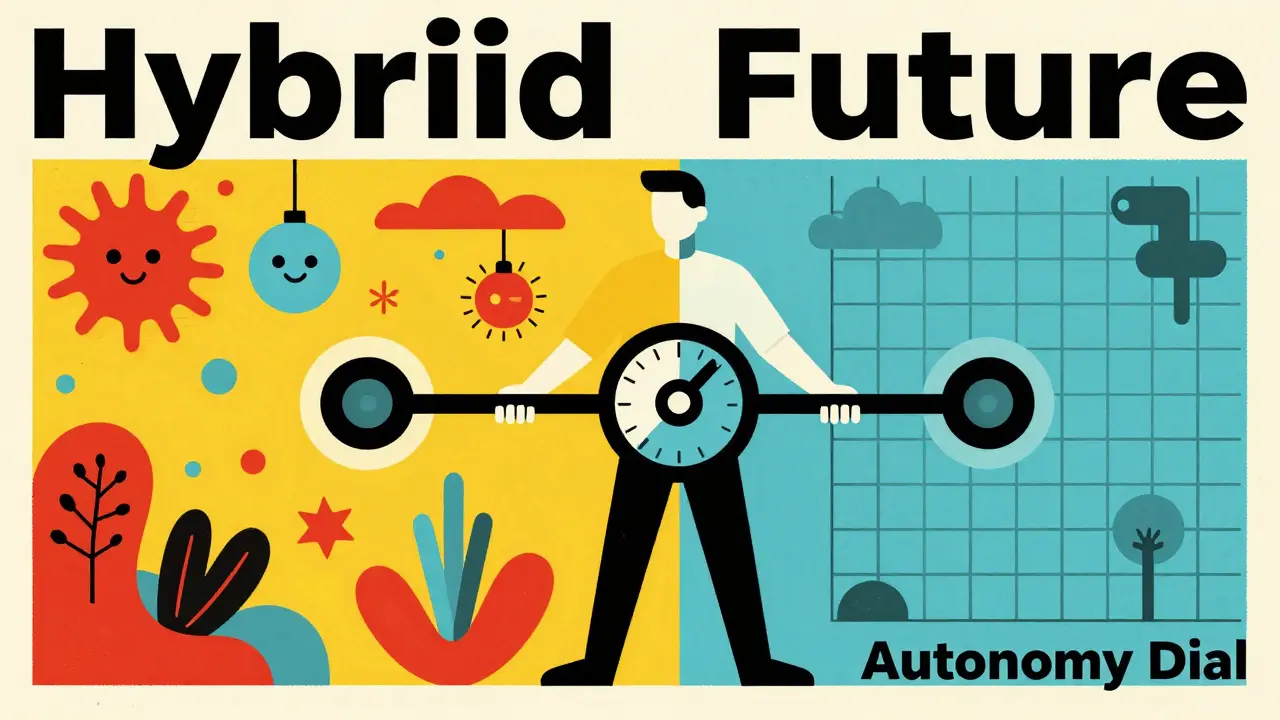
So, which one should you choose? The answer, increasingly, is both. The industry is moving toward hybrid implementations. Gartner forecasted in H2 2025 that 68% of development teams would adopt a "human-prompted → agent-executed → human-reviewed" pipeline by 2026.
This hybrid model leverages the strengths of both. You use vibe coding to define the requirements and design the architecture (where human creativity is crucial). Then, you hand off the implementation details to an agentic system (where machine consistency is superior). Finally, you review the output manually or via automated gates.
Tools are catching up to this workflow. GitHub released Copilot Agent in January 2026 with an "autonomy dial" feature. This allows developers to adjust the level of autonomy from 0% (pure suggestion) to 100% (full execution) based on the criticality of the task. Devin 2.1 introduced "swarm validation," where multiple agents independently verify critical code changes to reduce the risk of silent failures.
Dr. Sarah Chen from Microsoft Research warns that relying solely on vibe coding risks creating "black box applications" where creators don't understand the underlying code, leading to maintenance nightmares. Conversely, Ranjan Sapkota argues that successful AI software engineering relies on harmonizing these strengths within a unified, human-centered lifecycle. Neither approach replaces the developer; they amplify different parts of the skill set.
Practical Steps to Implement the Right Strategy
If you are ready to integrate these tools into your workflow, start with these concrete steps:
- Audit Your Tasks: Categorize your current workload. Is it mostly creative prototyping or repetitive maintenance? If it’s the latter, explore agentic tools. If it’s the former, stick with vibe coding.
- Set Autonomy Gates: If using agentic systems, never let them run wild in production. Implement validation gates where the agent must seek approval before committing critical changes. This mitigates the 37% risk of silent failures.
- Maintain Prompt Hygiene: For vibe coding, limit prompts to clear, concise instructions (under 500 characters) with explicit acceptance criteria. This reduces the need for rework.
- Preserve Skills: Microsoft’s internal studies showed a 23% decline in low-level debugging proficiency among teams using high-autonomy agentic coding for six months. Schedule regular "no-AI" coding sessions to keep your core skills sharp.
- Check Compliance: Be aware of regulations like the EU’s AI Act (January 2026), which requires "human-in-the-loop" verification for autonomously generated code in critical infrastructure. Ensure your chosen tool supports audit trails.
Choosing the right autonomy level isn't about picking a winner. It's about matching the tool to the task. Use vibe coding to dream and prototype. Use agentic systems to build and maintain. And always, always keep the human in the loop to review the result.
What is the main difference between vibe coding and agentic systems?
Vibe coding is a human-in-the-loop approach where you guide the AI step-by-step through prompts, ideal for creative tasks and prototyping. Agentic systems are autonomous agents that plan, execute, and test complex tasks with minimal human input, better suited for large-scale refactoring and maintenance.
Which is more accurate: vibe coding or agentic coding?
For complex, multi-step tasks, agentic coding is generally more accurate. Studies show agentic systems achieve 68-73% completion rates on SWE-bench benchmarks, compared to 41-52% for vibe coding. However, vibe coding has higher success rates (92%) for simple, well-defined tasks like basic CRUD applications.
Are agentic systems safe to use in production?
They carry higher risks than vibe coding, primarily due to "silent failures" where bugs go undetected. To use them safely, implement rigorous validation gates, human review processes, and monitoring. Regulations like the EU AI Act may also require human verification for critical infrastructure.
Do I need expensive hardware for agentic systems?
Yes, typically. While vibe coding runs on standard workstations (8GB+ RAM), agentic systems often require more robust infrastructure, such as 16GB+ RAM and GPU acceleration, especially if running local models. Cloud-based agentic services cost between $29-$99/month depending on usage.
Will AI replace developers using these tools?
No. Experts argue that these tools amplify developer capabilities rather than replace them. Vibe coding enhances creativity, while agentic systems handle repetitive work. However, developers must maintain core skills to avoid "skill atrophy" and ensure they can debug and oversee AI-generated code.






honestly this whole vibe coding thing just feels like a fancy way to say copy paste but with more anxiety. i get that it helps you move fast when you are stuck on syntax but there is something deeply unsettling about letting an algorithm decide the structure of your application without you really knowing why it chose that specific library or pattern. it reminds me of those early days of stack overflow where people would just dump code snippets without understanding them and then wonder why their app crashed in production. the idea of an agentic system going off into the corner and coming back with a solution is terrifying because if it breaks something subtle you might not even notice until users start complaining. i prefer keeping my hands on the wheel even if it means typing out every single line myself sometimes.
you people are so naive thinking these tools are actually helping you. they are just making you lazier and dumber. look at the stats in the article, 30-40% rework? that is garbage. you are paying for the privilege of creating technical debt faster than ever before. the real issue is that junior devs are using this as a crutch because they cant be bothered to learn how to code properly anymore. it is pathetic. stop pretending that chatting with a bot makes you a developer. it makes you a prompt monkey. wake up.
OMG! Stephanie!! You are SO harsh!!! 😱 I mean... yes! The rework stat IS scary! But have you tried Cursor?! It is literally MAGIC! ✨ I built a whole landing page in twenty minutes yesterday! TWENTY MINUTES! Can you believe that?! My heart was racing the entire time! And the agentic stuff? Oh my god! It is like having a robot friend who does your homework! 🤖💖 We need to embrace the future guys! Not hate it! Love it! Embrace the chaos! 🌪️🔥
the dichotomy presented here is superficial. autonomy is not a binary switch but a spectrum of trust. we are witnessing the dissolution of the boundary between creator and tool. when the agent writes the code who owns the logic? the human who prompted it or the model that generated it? this philosophical question is ignored by everyone focusing on speed. we are outsourcing our cognitive load to black boxes and calling it efficiency. it is a slow erosion of skill.
typical american obsession with speed over quality. europe has the ai act for a reason. you guys just want to ship shit fast and let the market sort it out. meanwhile we are building systems that actually respect privacy and compliance. your 'vibe coding' is just lazy engineering wrapped in marketing buzzwords. no wonder your infrastructure is crumbling. keep chasing the dopamine hit of quick fixes while the rest of us build sustainable software.
lol listen to this guy acting like he invented coding standards. yeah sure lisa. maybe instead of whining about regulations you could try writing some actual code once in a while. i use devin all day and it saves me hours. sure sometimes it hallucinates but thats life. deal with it. stop being such a drama queen about it. its 2026 get with the program or go back to punch cards.
i find the concept of silent failures particularly troubling. it suggests a fundamental disconnect between intent and execution that cannot be bridged by mere oversight. the agent operates in a context that the human does not fully perceive. this creates a gap where errors can fester unnoticed. we must consider whether we are truly delegating tasks or merely abdicating responsibility. the silence of the machine is deceptive.
stop philosophizing and start auditing your dependencies. the article clearly states that agentic systems need validation gates. if you are letting an agent commit directly to main you are incompetent. period. there is no excuse for not implementing rigorous testing pipelines. if your team cannot handle basic ci/cd checks then you do not deserve to use advanced ai tools. grow up and manage your risk properly or get fired.