
How to Score Third-Party Risk for AI Coding Vendors in 2026
Imagine you’re rolling out a new AI pair programmer to your engineering team. It’s fast, it writes clean code, and developers love it. But then the CISO asks a simple question: “What happens if this vendor leaks our proprietary source code into their training data?” If your answer is “we’ll check their SOC 2 report,” you might be missing half the picture. Traditional third-party risk scoring was built for software suppliers handling data or providing services. It wasn’t designed for tools that actively generate code, access repositories, and learn from your prompts.
In 2026, the landscape has shifted. With the EU AI Act now fully in effect and regulators demanding transparency on model governance, enterprises can no longer treat AI coding assistants like any other SaaS tool. You need a specialized approach to evaluate these vendors. This guide breaks down how to build a robust risk scoring framework specifically for AI coding providers, moving beyond generic IT checks to address the unique threats of generative AI in the software development lifecycle.
Why Generic Vendor Assessments Fail for AI Tools
Most organizations still rely on standard third-party risk management (TPRM) templates developed in the early 2010s. These focus heavily on ISO 27001 certification, basic encryption standards, and general data privacy. While essential, they often miss the specific mechanics of how an AI model operates. For an AI coding vendor, the risk isn't just about whether their servers are secure; it's about what happens inside the model.
Consider the difference between a traditional API provider and an LLM-based code assistant. A traditional provider sends data back and forth. An AI coding vendor ingests your code context, processes it through a neural network, and generates output. This introduces risks that don't exist in static software:
- Training Data Leakage: Does the vendor use your proprietary code snippets to fine-tune their base models? If so, your competitors could theoretically see patterns from your codebase in future outputs.
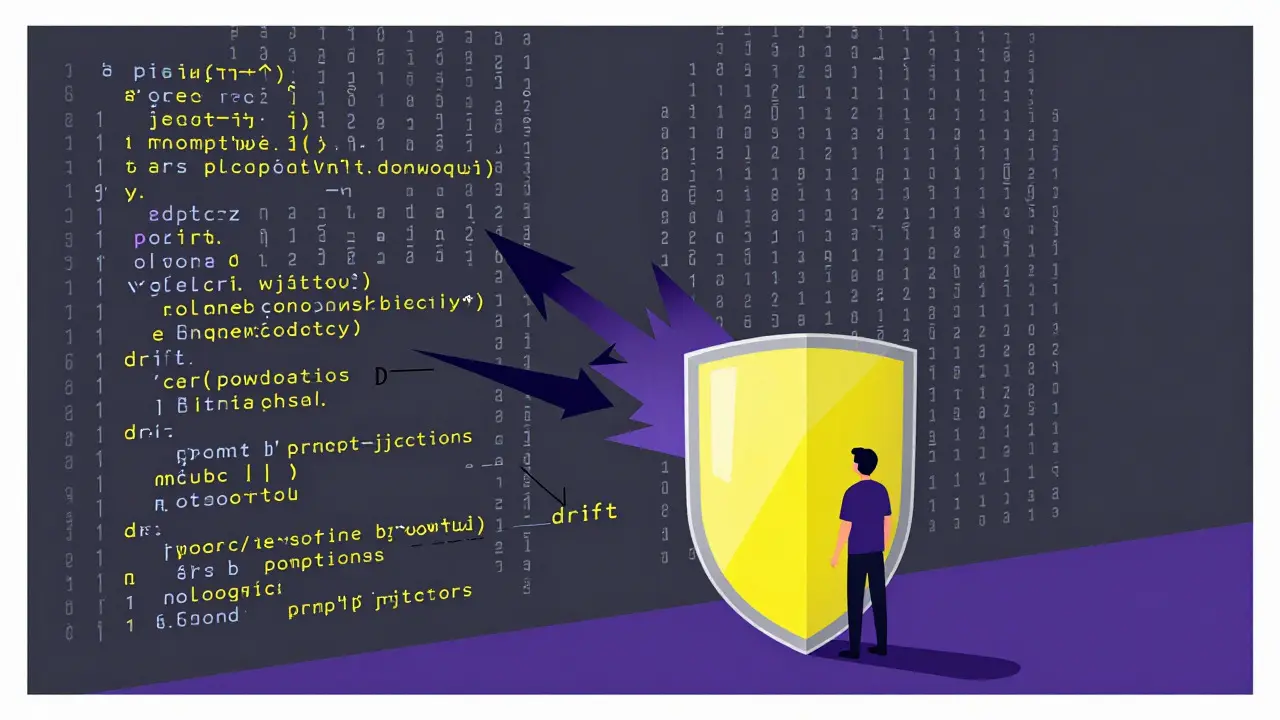
- Prompt Injection: Can a malicious comment in a repository file trick the AI into revealing secrets or executing unauthorized actions?
- Model Drift: When the vendor updates their underlying model, does the quality or security posture of generated code change unpredictably?
To score these risks accurately, you must extend your evaluation criteria to include model-specific attributes. This means looking at the vendor's Model Governance practices, not just their server infrastructure.
Core Dimensions of AI-Specific Risk Scoring
A mature scoring framework for AI coding vendors decomposes risk into distinct dimensions. Instead of a single "High/Medium/Low" label, you should assign weighted scores across five key areas. Here is how to structure them:
- Data Usage and Training Practices: This is the most critical factor for IP protection. You need explicit answers on whether customer data is used for training, how long it is retained, and if it is segregated from public datasets. Vendors who offer "zero-retention" modes or on-premise deployment options typically score lower on inherent risk.
- Integration Depth and Access Scope: How deeply is the tool embedded? A read-only browser extension poses less risk than a CI/CD pipeline plugin with write access to production branches. The more permissions the AI has, the higher the potential impact of a failure or breach.
- Code Security and Guardrails: Does the vendor provide automated checks for vulnerable code generation? Do they integrate with Static Application Security Testing (SAST) tools? Vendors that actively block insecure patterns (like hardcoded credentials) demonstrate stronger control environments.
- Regulatory Alignment: With the EU AI Act mandating transparency for high-risk AI systems, vendors must show compliance with documentation requirements. This includes maintaining logs of model decisions and providing explainability for why certain code was suggested.
- Operational Resilience: What happens when the AI goes down? Can you roll back to manual coding quickly? Does the vendor have clear incident response procedures for model hallucinations or bias issues?
Each dimension should be scored on a scale (e.g., 1-5), with weights adjusted based on your industry. For a fintech company, data usage might carry a 40% weight, while for a creative agency, operational resilience might be prioritized differently.
Gathering Evidence: Beyond the Questionnaire
Filling out a PDF questionnaire is no longer enough. To get a reliable risk score, you need hard evidence. AI-augmented TPRM platforms now automate much of this collection, but you still need to know what to look for.
Start with the standard baseline: SOC 2 Type II reports and ISO 27001 certificates. However, for AI vendors, dig deeper into the technical appendices. Look for details on data segregation architectures. Ask for their NIST AI RMF mapping. The National Institute of Standards and Technology’s AI Risk Management Framework provides a structured way to assess model reliability and safety. If a vendor can map their controls to the NIST AI RMF categories-Governance, Mapping, Measurement, and Management-they are likely more mature in their AI practices.
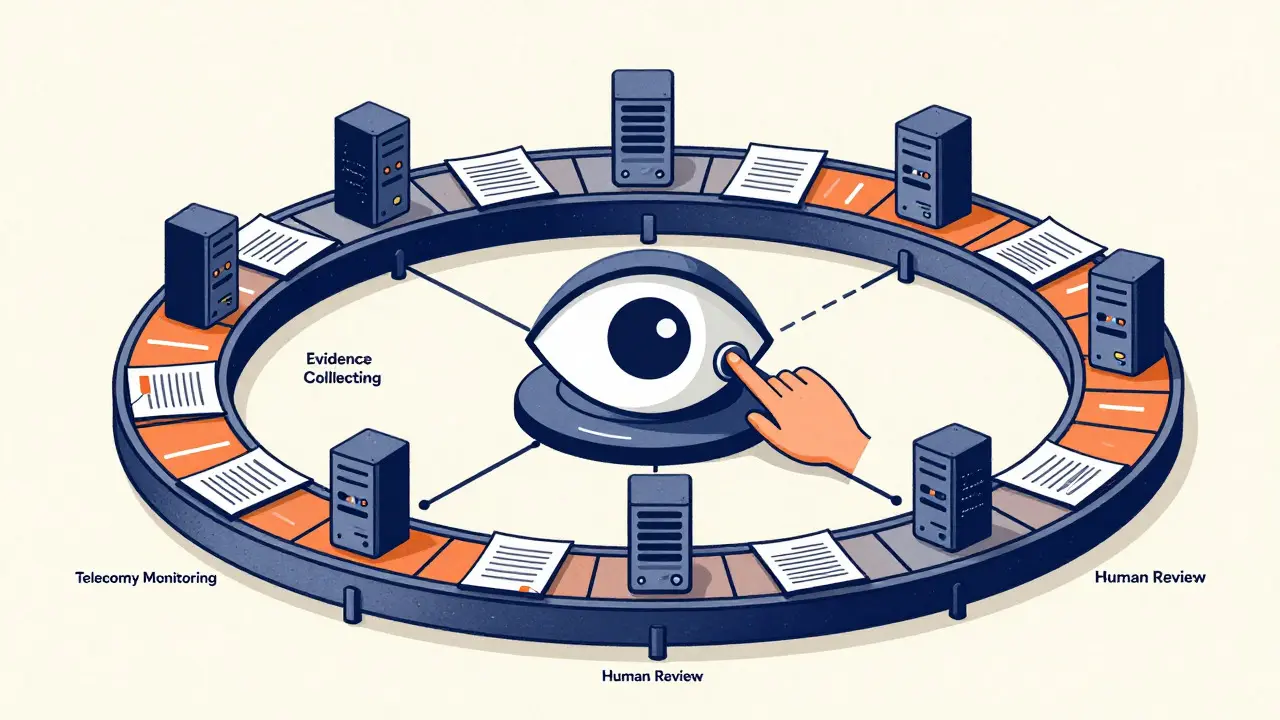
Beyond documents, utilize telemetry. Modern AI coding tools can export usage logs showing which repositories were accessed, what types of code were generated, and whether sensitive files were excluded from processing. Integrating this telemetry into your risk scoring process allows for continuous monitoring rather than annual snapshots. If you notice a spike in API calls to a non-production environment, that’s a red flag worth investigating immediately.
| Risk Dimension | Traditional Software Vendor | AI Coding Vendor |
|---|---|---|
| Data Handling | Encryption at rest/in transit, access controls | Training data exclusion, prompt confidentiality, retention policies |
| Security Controls | Penetration testing, vulnerability management | Prompt injection defenses, output filtering, model sandboxing |
| Compliance | SOC 2, GDPR, HIPAA | EU AI Act transparency, NIST AI RMF alignment, bias auditing |
| Operational Impact | Uptime SLAs, disaster recovery | Model rollback capabilities, human-in-the-loop workflows |
Implementing a Continuous Scoring Workflow
Risk scoring shouldn’t be a one-time event during procurement. It needs to be a continuous loop. Here is a practical workflow to implement this within your organization:
Step 1: Define Your Risk Thresholds Before scoring anything, agree on what constitutes acceptable risk. For example, if a vendor uses your code for training without opt-out, do you consider that a dealbreaker or a manageable risk? Document these thresholds clearly so that scoring is consistent across teams.
Step 2: Automate Evidence Collection Use TPRM platforms that can automatically pull SOC 2 reports and parse questionnaire responses. Many modern tools use AI to normalize vendor answers, ensuring that two different vendors describing the same control receive similar scores. This reduces bias and speeds up the initial assessment.
Step 3: Integrate Telemetry Data Connect your internal observability tools to your TPRM platform. If your AI coding tool integrates with GitHub or GitLab, ensure that metadata about file access is captured. This real-world usage data validates whether the vendor’s stated controls match their actual behavior.
Step 4: Dynamic Re-scoring Set triggers for re-evaluation. If a vendor changes their privacy policy, releases a new major model version, or faces a public security incident, their risk score should update automatically. This keeps your oversight current without requiring manual intervention for every minor change.
Step 5: Human Review and Decision Finally, route high-risk scores to a cross-functional committee including legal, security, and engineering leaders. AI helps identify anomalies, but humans make the final call on whether to onboard, remediate, or replace a vendor.
Contractual Levers for Better Risk Scores
Your risk score is only as good as the contract behind it. If a vendor scores poorly on data usage but refuses to sign a clause guaranteeing zero-training, their effective risk remains high regardless of their technical controls. Use contracts to enforce better practices.
Include specific AI addenda in your vendor agreements. Key clauses to negotiate include:
- Right to Audit Model Updates: Require notification and brief impact analysis whenever the vendor swaps out their foundation model.
- IP Ownership Guarantee: Explicitly state that all generated code belongs to the client, free from vendor licensing restrictions.
- Liability for Hallucinations: Define responsibility if AI-generated code contains critical vulnerabilities that pass standard tests but fail in production.
- Exit Strategy: Ensure you can export all data and configurations if you decide to terminate the relationship.
Vendors willing to accept these terms demonstrate higher governance maturity and should receive a boost in their residual risk score. Those who resist may indicate a lack of confidence in their own controls.
Common Pitfalls to Avoid
Even with a solid framework, organizations often stumble on execution. Watch out for these common mistakes:
Over-reliance on Certifications: A SOC 2 report is a snapshot in time. It doesn’t tell you how the vendor handles a novel threat like prompt injection. Always supplement certifications with AI-specific technical reviews.
Ignoring Developer Feedback: Engineers are the first line of defense. If developers complain that the AI frequently suggests outdated libraries or insecure patterns, that’s a signal of poor model maintenance. Incorporate qualitative feedback into your risk assessment.
Static Scoring: The AI landscape changes monthly. A vendor that was low-risk in January might become high-risk in June if they release a new feature that expands data access. Keep your scoring dynamic.
Frequently Asked Questions
What is the biggest risk associated with AI coding vendors?
The primary risk is intellectual property leakage through model training. If a vendor uses your proprietary code to improve their general-purpose models, your competitive advantage could be diluted. Ensuring strict data segregation and zero-retention policies is critical to mitigating this.
How often should I re-score my AI coding vendors?
Ideally, continuously via automated monitoring of news feeds, breach databases, and usage telemetry. However, a formal deep-dive reassessment should occur at least annually or whenever the vendor makes significant changes to their product architecture, pricing model, or privacy policy.
Do I need a separate risk framework for AI vendors compared to regular SaaS?
Yes. While you can start with your existing TPRM template, you must add specific sections for model governance, training data practices, and output reliability. Standard IT security questions do not adequately cover the probabilistic nature of large language models.
How does the EU AI Act affect my vendor risk scoring?
The EU AI Act requires transparency and documentation for AI systems used in regulated sectors. When scoring vendors, check if they maintain the necessary technical documentation and logging capabilities to comply. Non-compliant vendors pose a regulatory risk to your organization if you operate in the EU market.
Can AI tools help me score other AI vendors?
Yes, many TPRM platforms now use AI to automate the review of questionnaires and detect inconsistencies in vendor responses. This speeds up the process and ensures consistency. However, always keep a human in the loop for final validation, especially for complex integration scenarios.