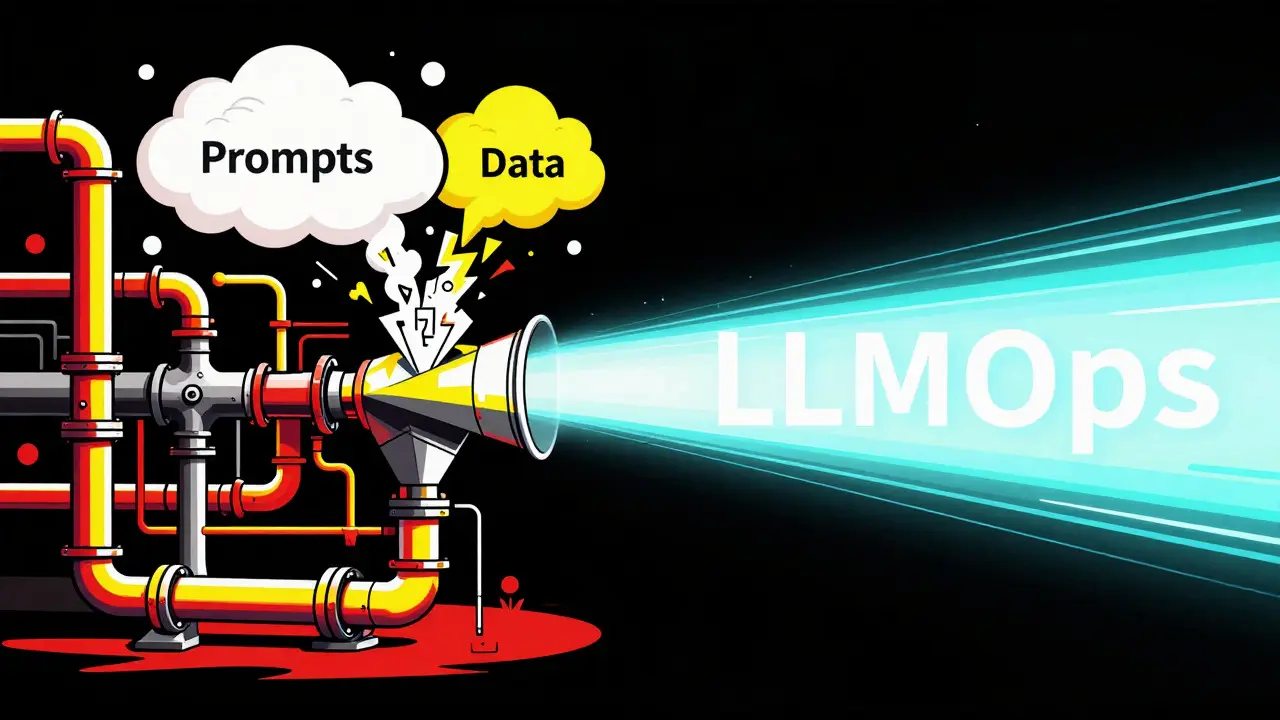
LLMOps for Generative AI: Mastering Pipelines, Observability, and Drift Management
Deploying a large language model (LLM) into production is not like launching a standard web app. You don't just push code and forget it. If you do, your users will see hallucinations, your costs will spiral out of control, and your brand reputation could take a hit within days. This is where LLMOps, or Large Language Model Operations, becomes critical. It is the specialized discipline that bridges the gap between experimental AI models and reliable, enterprise-grade applications.
Traditional MLOps focused on structured data and deterministic outputs. LLMOps handles unstructured text, probabilistic responses, and massive computational demands. As we move through 2026, the difference between a successful AI product and a failed one often comes down to how well you manage three core pillars: robust pipelines, deep observability, and proactive drift management.
Building Resilient LLMOps Pipelines
Your pipeline is the backbone of your generative AI application. In traditional software engineering, a pipeline moves code from development to production. In LLMOps, the pipeline is far more complex because it must handle prompts, context retrieval, model inference, and post-processing logic simultaneously.
Frameworks like LangChain and LlamaIndex have become industry standards for building these chains. They allow you to link multiple LLM calls with external data sources, such as vector databases or APIs. However, relying solely on these libraries isn't enough. You need an automated workflow that manages versioning for every component.
- Prompt Versioning: Treat your prompts like code. Use tools that track changes in prompt templates, just as Git tracks changes in Python scripts. A small tweak in wording can drastically alter output quality.
- Data Pipeline Automation: Automate the ingestion and cleaning of data used for Retrieval-Augmented Generation (RAG). Dirty data leads to bad answers, no matter how smart the model is.
- CI/CD Integration: Borrow DevOps principles. Integrate continuous integration and continuous deployment tools to automate testing before any new model version or prompt change reaches production.
For example, if you update your RAG chunking strategy, your pipeline should automatically run a suite of evaluation tests to ensure information recall hasn't dropped. Without this automation, you risk deploying changes that degrade user experience without realizing it until customers complain.
Deep Observability Beyond Traditional Metrics
Monitoring a CPU spike or memory leak is straightforward. Monitoring an LLM is tricky because "performance" is subjective. Did the model answer correctly? Was it safe? Was it concise? Traditional metrics like latency and error rates are necessary but insufficient.
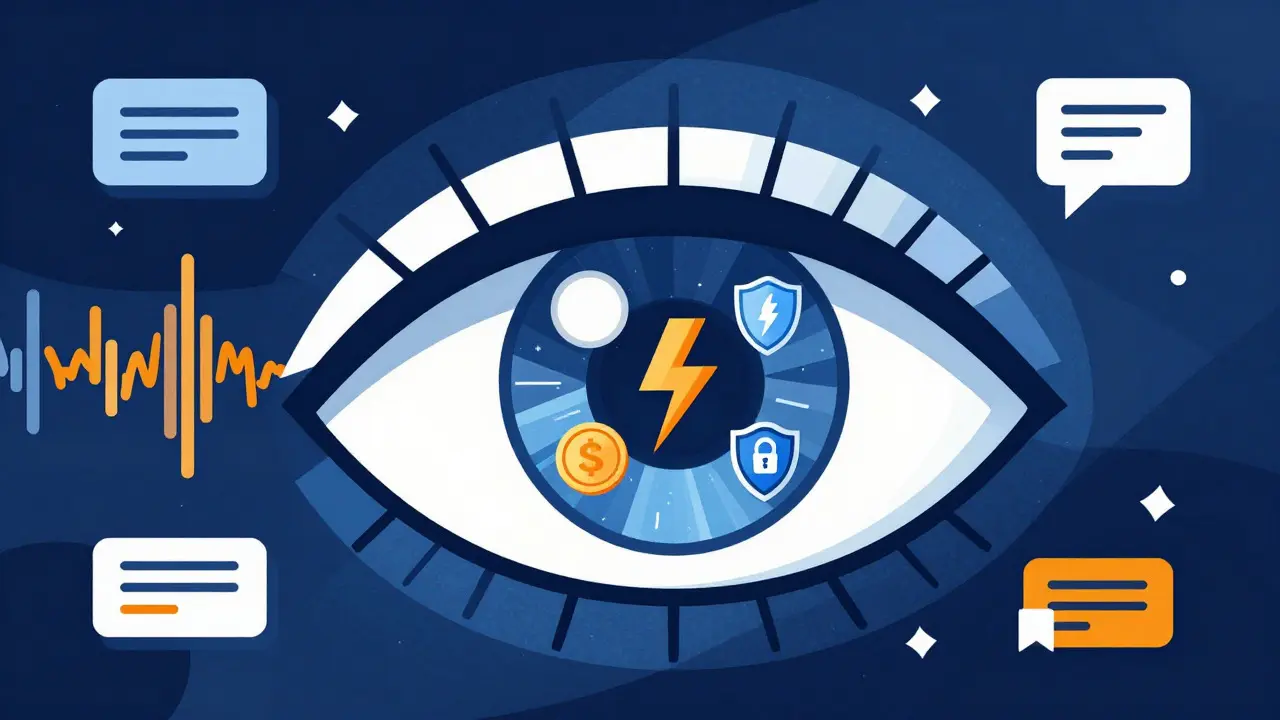
Effective LLMOps observability requires tracking specific LLM-centric metrics. You need to know exactly what the model sees and produces. Tools like Langfuse or Arize Phoenix provide traces that show the entire journey of a user request-from the initial prompt to the final response-including intermediate steps like tool calls or database queries.
| Metric Category | Specific Metric | Why It Matters |
|---|---|---|
| Cost Efficiency | Token Usage (Input/Output) | Tracks financial spend per interaction; helps identify expensive prompts. |
| Performance | Time to First Token (TTFT) | Critical for user experience; targets usually under 500ms. |
| Quality | Hallucination Rate | Measures factual accuracy against source documents. |
| Safety | Guardrail Trigger Frequency | Indicates how often safety filters block harmful or biased content. |
One common pitfall is ignoring token usage patterns. Enterprise deployments can easily exceed $100,000 monthly if inefficient prompts consume excessive tokens. By monitoring input vs. output token ratios, you can optimize your system to be both faster and cheaper. Additionally, tracking Time to First Token (TTFT) is crucial for conversational interfaces. If users wait more than a second for the first word, they perceive the app as slow, even if the total generation time is reasonable.
Managing Model and Data Drift
Drift is the silent killer of AI systems. In traditional ML, data drift occurs when the statistical properties of input data change over time. In generative AI, we face two types of drift: data drift and concept drift.
Data drift happens when user inputs change. For instance, if your customer support bot was trained on formal emails but users start sending casual chat messages, the model's performance may degrade. Concept drift occurs when the expected correct answer changes. If a new law passes that changes tax regulations, your legal assistant bot needs to reflect that immediately.
To manage drift, you need a continuous feedback loop. This involves:
- Baseline Establishment: Define clear quality thresholds during testing. For example, set a maximum acceptable perplexity score increase of 15%.
- Automated Alerting: Set up alerts when key metrics deviate from the baseline. If user satisfaction scores drop by 10% week-over-week, trigger an investigation.
- Human-in-the-Loop Review: Automated metrics only correlate with human judgment about 65-75% of the time. Regularly sample and review real-world interactions to catch nuances algorithms miss.
When drift is detected, your remediation plan should be ready. This might involve retraining the model on recent data, updating the knowledge base in a RAG system, or rolling back to a previous stable version. Speed matters here. A healthcare startup once suffered a three-week outage because their drift detection failed to catch gradual degradation in medical advice quality. Robust monitoring prevents such costly errors.
LLMOps vs. Traditional MLOps: Key Differences
While LLMOps borrows heavily from MLOps, the challenges are distinct. Traditional MLOps focuses on feature stores, model registries, and batch inference. LLMOps adds layers of complexity around prompt engineering, context window management, and non-deterministic outputs.
Consider the evaluation process. In MLOps, you measure accuracy, precision, and recall. These are binary or numerical values. In LLMOps, evaluation often mixes quantitative metrics with qualitative checks. Is the tone appropriate? Is the reasoning logical? This requires sophisticated evaluation frameworks that can assess semantic similarity and logical coherence, not just exact string matches.
Furthermore, the cost structure is different. Training a traditional ML model might take hours on a single GPU. Fine-tuning or serving a large LLM requires significant compute resources, often increasing operational costs by 300-500%. Optimization techniques like model quantization-reducing model size with minimal accuracy loss-are essential in LLMOps to keep costs manageable.
Practical Steps to Get Started
If you're looking to implement LLMOps in your organization, start small but think big. Don't try to build a perfect system overnight. Instead, focus on establishing visibility and control.
Begin by instrumenting your current application. Add logging to capture prompts, responses, and metadata. Use an open-source observability tool to visualize this data. Once you can see what's happening, you can start identifying bottlenecks and quality issues.
Next, establish a basic evaluation framework. Create a test set of representative user queries and define success criteria for each. Run these tests regularly to detect regressions. Finally, integrate these practices into your development workflow. Make LLMOps part of your team's daily routine, not an afterthought.
Remember, LLMOps is not a static state. It's a continuous practice. As models evolve and user expectations shift, your operational strategies must adapt. The organizations that succeed are those that treat LLMOps as a core competency, investing in the right tools, skills, and processes to harness the full potential of generative AI.
What is the main difference between LLMOps and MLOps?
While MLOps focuses on traditional machine learning models with structured data and deterministic outputs, LLMOps specifically addresses the unique challenges of Large Language Models. This includes managing unstructured text, handling probabilistic outputs, optimizing prompt engineering, and dealing with significantly higher computational costs and token-based pricing models.
How do I detect drift in a generative AI model?
Drift detection in generative AI involves monitoring both data drift (changes in user input patterns) and concept drift (changes in expected correct answers). You can detect this by tracking metrics like token usage anomalies, increases in perplexity scores, drops in user satisfaction ratings, and deviations from established quality baselines. Automated alerts combined with periodic human reviews are essential for accurate detection.
Which tools are best for LLMOps observability?
Popular tools for LLMOps observability include Langfuse, Arize Phoenix, Weights & Biases (WandB), and PromptLayer. These platforms offer features like trace visualization, token usage tracking, latency monitoring, and evaluation dashboards. The best choice depends on your specific stack, scale, and whether you prefer open-source solutions or commercial platforms with dedicated support.
How much does implementing LLMOps cost?
Costs vary widely based on scale. Open-source tools can be free but require engineering effort to maintain. Commercial LLMOps platforms can range from $12,000 to over $100,000 monthly for enterprise deployments, depending on volume and features. Infrastructure costs for GPU acceleration and model inference also add significantly, potentially increasing operational expenses by 300-500% compared to traditional ML.
Is LLMOps only for large enterprises?
No, LLMOps principles apply to any organization deploying generative AI at scale. While enterprises may need more robust governance and security features, startups benefit greatly from rapid iteration capabilities and cost optimization. Startups can achieve basic LLMOps functionality in 8-12 weeks using lightweight tools, while enterprises typically require 6-9 months for full integration.








Stop treating prompts like magic spells and start treating them like code. That is the single biggest mistake I see teams make when they first dive into LLMOps. You need version control for your prompt templates just as strictly as you do for your Python scripts because a single comma change can completely break your retrieval logic. We spent three weeks debugging a hallucination issue only to realize someone tweaked the system prompt without updating the test suite. It was embarrassing but it taught us that CI/CD integration isn't optional here it is survival.
i totally agree with dave about the prompt versioning thing 😅 it feels so weird at first to track text changes in git but once you see how much one word can shift the output it makes sense. also i love the part about token usage costs going crazy 💸 we almost went over budget last month because our rag chunking strategy was pulling in too much context. did anyone else try arize phoenix for this or is langfuse better? 🤔
It is indeed fascinating how the financial implications of token inefficiency can spiral out of control if left unchecked. The article correctly identifies that monitoring input versus output ratios is paramount for cost optimization. One might consider implementing automated alerts specifically for anomalous token consumption patterns to prevent such fiscal surprises. This approach ensures that the organization remains agile while maintaining rigorous oversight of operational expenditures.
you guys are spot on about the costs. its wild how fast those bills add up. i started using a simple wrapper to log every request and it saved us from a huge surprise bill last quarter. dont wait until you get the invoice to check your metrics. set up those alerts early and often. it takes like an hour to configure basic logging so just do it.
Prompt versioning is a band-aid. The real issue is that LLMs are fundamentally unreliable stochastic parrots. No amount of observability fixes the fact that the model doesn't actually understand anything. You are building houses on sand. Quantization helps with cost but does nothing for accuracy drift. Stop pretending this is engineering.
The US needs to lead in this space not just follow trends. Our companies are already spending millions on these pipelines because we demand quality. If you are not using domestic tools for your observability you are risking data sovereignty. Build it here keep it secure. The rest of the world can catch up later.
i think art is being a bit harsh but he has a point about reliability. we had a major incident where our legal bot gave wrong advice after a concept drift event. the laws changed but our knowledge base didnt update automatically. human-in-the-loop review is not just a nice to have it is absolutely critical. you cant trust the algo 100% of the time. we now sample 10% of all responses for manual review and it catches stuff the metrics miss.
Let us not forget the sheer drama of a production outage caused by undetected drift. It is catastrophic for brand reputation. The healthcare example cited in the article is terrifyingly plausible. Three weeks of degraded medical advice could lead to litigation beyond comprehension. Therefore, establishing baseline perplexity scores and enforcing strict thresholds is not merely a technical preference; it is a fiduciary duty to the end-user. Precision in monitoring saves lives.
we treat llmops as a continuous practice not a destination. the models change the user expectations change the laws change. you have to adapt constantly. start small instrument everything then build out the eval framework. dont try to boil the ocean on day one. visibility is power.