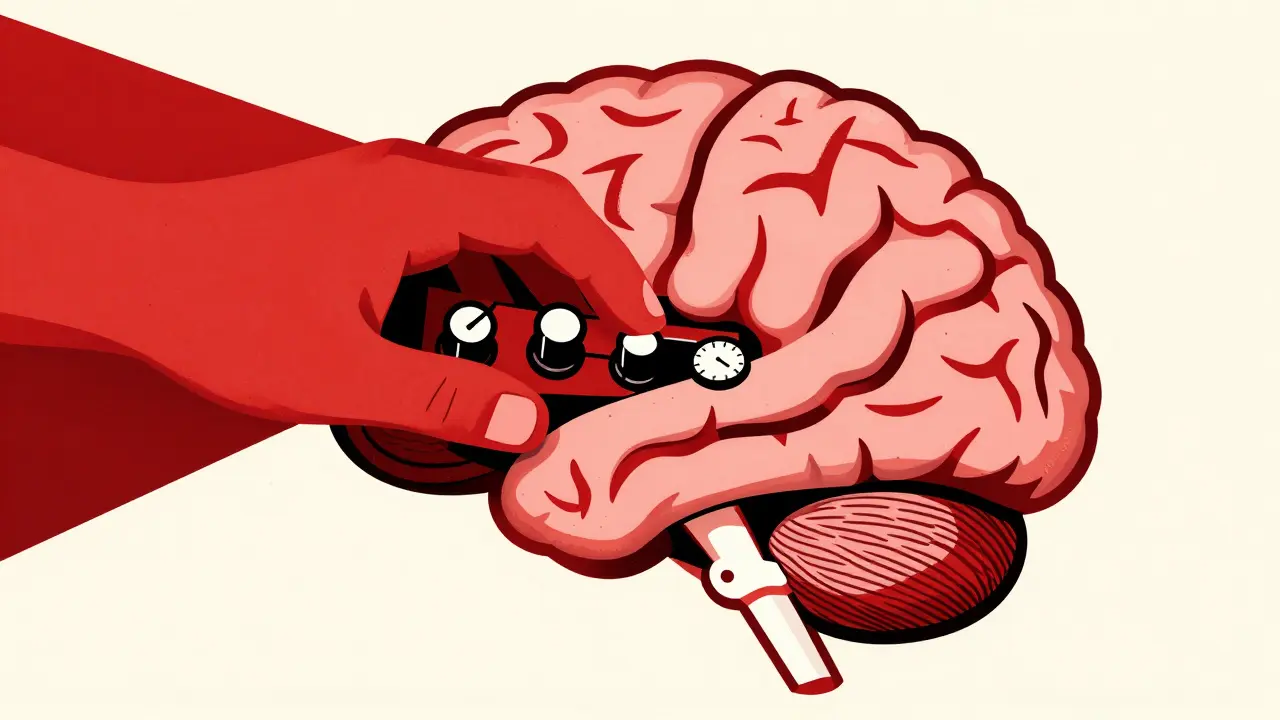
Logit Bias and Token Banning: How to Steer LLM Outputs Without Retraining
Quick Takeaways
- What it is: A way to increase or decrease the probability of specific tokens (words or parts of words) appearing.
- The Scale: Ranges from -100 (total ban) to 100 (strong encouragement).
- The Catch: It works on tokens, not words. One word can be multiple tokens.
- Best Use Case: Hard safety guardrails, brand alignment, and removing repetitive linguistic tics.
- Efficiency: Drastically cheaper and faster than fine-tuning.
How Logit Bias Actually Works
To understand logit bias, you first have to understand how an LLM picks the next word. When a model generates text, it doesn't just "know" the next word; it calculates a score, called a logit, for every single possible token in its vocabulary. These logits are essentially raw numbers that represent the model's confidence. The higher the logit, the more likely the token is to be chosen. When you apply a logit bias, you are manually adding a number to that score before the model makes its final decision. If the model thinks the token "Apple" has a logit of 10, and you apply a bias of -100, that score plummets to -90. The model will now almost certainly avoid that token. Conversely, if you apply a bias of +5, you're giving that word a little push, making it more likely to surface in the conversation. This happens at the very last stage of the process, right before sampling. Because it occurs after the model has done its heavy lifting, it doesn't require any Fine-Tuning, which is the process of further training a model on a specific dataset to change its behavior. This makes it an incredibly lean tool for developers who need immediate, guaranteed results.The Token Trap: Why It's Not as Simple as "Banning Words"
Here is where most people trip up: LLMs do not see "words"; they see tokens. A Token is a chunk of characters that can be a whole word, a prefix, or even just a few letters. This means that if you want to ban the word "stupid," you can't just ban one ID. For example, in the OpenAI tokenizer, the word "stupid" might be one token, but " stupid" (with a leading space) is a completely different token ID. If you only ban the version without the space, the model will simply use the version with the space to bypass your filter. Some words are even split into multiple pieces; the word "Audi" might be tokenized as "A" and "udi" depending on where it falls in the sentence. To effectively ban a word, you have to perform a "token hunt." You need to identify every single variation of that word-uppercase, lowercase, and versions with leading spaces-and apply the bias to all of them. If you miss even one, the model's internal semantic network will often find a way to use that missing variant to satisfy the prompt.| Method | Control Level | Reliability | Cost/Effort | Best For |
|---|---|---|---|---|
| Prompt Engineering | Contextual | Medium (Can be ignored) | Low | General behavior |
| Logit Bias | Token-level | High (Hard limit) | Medium (Token hunting) | Banning specific words |
| Fine-Tuning | Model-level | Very High | High (Expensive) | Deep domain expertise |

Choosing Your Bias Value: The Art of Nudging
Not all bias values are created equal. While the scale technically goes from -100 to 100, using the extremes can sometimes break the model's fluency.- -100 to -50 (The Wall): This is a hard ban. The model will almost never pick this token. Use this for offensive language or strict legal prohibitions. However, be careful: if you ban too many essential words (like "not" or "no"), the model might start hallucinating or creating logical contradictions because it can't express a negative.
- -30 to -10 (The Strong Discouragement): This is often the "sweet spot" for professional steering. It makes the token unlikely but doesn't completely cripple the model's ability to form a natural sentence.
- -5 to 5 (The Gentle Nudge): Subtle changes. These values are great for slightly favoring one term over another (e.g., preferring "client" over "customer") without making the output feel forced.
- 10 to 100 (The Magnet): This strongly encourages a token. Be cautious here; if you set a bias too high for a word that doesn't fit the context, the model will force it in, resulting in grammatically nonsensical sentences.
Practical Implementation Workflow
If you want to implement this in your application, don't just guess the token IDs. Follow this workflow to ensure you aren't leaving gaps for the model to exploit.- Identify Target Words: List every word or phrase you want to steer.
- Tokenize Variants: Use a tool like the OpenAI Tokenizer to find the IDs for the word, the word with a leading space, and the capitalized version. For example, if targeting "Apple," find IDs for "Apple", " apple", and "APPLE".
- Build the Bias Map: Create a JSON object where the key is the token ID and the value is your chosen bias. Example: `{"2435": -100, "640": -100}`.
- Test and Iterate: Run a batch of prompts. If the model is still using the word, check the output tokens to see which specific ID it's using and add that to your ban list.
- Monitor for "Semantic Drift": Check if banning one word is causing the model to use weird synonyms or awkward phrasing. If the output feels robotic, dial the bias back from -100 to -30.

When Logit Bias Fails: Limitations and Risks
Despite its precision, logit bias isn't a magic wand. The biggest limitation is its inability to handle phrases. Because it operates on a per-token basis, you cannot tell the model to "ban the phrase 'as an AI language model'." You can ban the individual tokens for "AI" or "language," but that will affect every other instance of those words in the entire response. There is also the risk of creating "semantic blind spots." When you block a primary path of thought (by banning key tokens), the model tries to find a detour. This can lead to the model using obscure terminology or, in some cases, creating content that is technically compliant with the ban but violates the spirit of your safety rules. For instance, if you ban specific slurs, the model might start using coded language or emojis to convey the same harmful intent. Finally, it is a tedious process. For an enterprise-level deployment, identifying and managing thousands of token variants across different model versions is a significant maintenance burden. This is why many teams use it for a small set of critical "never-say" words rather than a comprehensive vocabulary overhaul.Does logit bias affect the model's intelligence?
It doesn't change the underlying intelligence or knowledge of the model, but it can affect the quality of the output. If you ban too many common words, the model may struggle to find a coherent way to express a thought, leading to awkward phrasing or logical errors.
Can I use logit bias to force the model to speak a certain language?
You can nudge it by increasing the bias of common tokens in that language, but it's not the most effective method. System prompts and few-shot prompting (providing examples) are generally better for language switching.
Is logit bias better than a keyword filter after the text is generated?
Yes, because it prevents the token from ever being chosen. Post-generation filters often result in "Content filtered" messages or blank spaces, whereas logit bias forces the model to choose a different, viable word, keeping the conversation flowing naturally.
Why does my model still say the banned word occasionally?
This almost always happens because of tokenization. You likely banned the word in one form (e.g., lowercase) but the model used another form (e.g., capitalized or with a leading space). You need to identify and ban all token variants of that word.
Does every LLM provider support logit bias?
Most major API providers like OpenAI and Anthropic support it. However, some open-source implementations or smaller wrappers might not have a native parameter for it, requiring you to modify the sampling logic in the code manually.
Next Steps for Implementation
If you are a developer looking to implement this today, start small. Pick three words that your model constantly uses-those annoying "AI-isms" like "comprehensive" or "tapestry"-and try applying a -20 bias to their common tokens. Observe how the model adapts its vocabulary. For those building enterprise safety layers, combine logit bias with a semantic filter. Use the bias for a hard block on prohibited terms and a separate LLM-based moderator to catch the more complex, phrase-level violations. This hybrid approach gives you the surgical precision of token control with the nuance of semantic understanding.



absolute game changer for dev productivity
The systemic implementation of logit bias is merely a facade for deeper cognitive censorship. By manipulating the probabilistic distribution of tokens, these corporate entities are effectively engineering a curated reality, utilizing stochastic parity to erase dissent. It is quite a moral failing to present this as a simple tool for brand alignment when it is clearly a mechanism for the algorithmic erasure of non-compliant semantic structures. The intersection of token-level steering and behavioral modification suggests a broader agenda of epistemic closure designed to keep the masses within a narrow linguistic corridor.
It's fascinating to think about how this reflects our own human psychology. We essentially have our own internal logit biases, don't we? We nudge ourselves away from certain thoughts or words based on our social environment or internal beliefs. It's like we're all just running a very complex, biological version of this API, steering our own outputs to fit in or stay safe.
Interesting stuff but you gotta wonder who actually controls these token lists for the global models. Probably some western labs trying to push their own values on everyone else while claiming it's for safety. We need our own sovereign AI models that aren't being steered by foreign interests using these kinds of backdoors to mute our cultural identity. Glad the tech is out there though, will be useful for our own local builds.
omg i tried doin this with a bot i made for my ex but it just keepd sayin weird things and honestly it just feels like the ai is sufferin because u are basically just ripinn out its tongue and tellin it to be quiet and i just feel so bad for the poor thing even if its just code because it just wants to express itself and now it is all glitchy and sad just like my heart is right now lol
Tbh this whole token hunt thing sounds like a total nightmre and i dont really see why anyone would want to spend hours lookin up ids just to stop a bot from sayin delve when you could just... i dont know... rewrite the prompt or just deal with it because honestly the outputs are usually fine anyway and this just feels like over-engineering something that doesnt really matter in the long run for most people who just want the bot to work without a PhD in tokenization haha
I completely understand why that feels tedious, but for someone trying to build a professional tool, these small refinements make a world of difference in the user experience. It's all about that extra bit of polish that makes a product feel intuitive and human. Once you get the workflow down, it actually becomes quite satisfying to see the model align perfectly with your vision.