
Securing LLM Supply Chains: Containers, Weights, and Dependencies
You spent months fine-tuning your Large Language Model. You optimized the prompts, balanced the costs, and finally hit production. Then, on a Tuesday morning, your chatbot starts hallucinating financial advice that doesn't exist, or worse, leaks internal data to an unknown endpoint. The culprit wasn't your prompt engineering or your GPU cluster. It was a tiny, unsigned library update in a container image you pulled three days ago.
This isn't hypothetical. In 2025, LLM supply chain security has become the single biggest blind spot for enterprises deploying AI. While everyone obsesses over prompt injection, attackers are targeting the plumbing: the containers, the model weights, and the thousands of dependencies holding your inference engine together. If you're running LLMs today, securing this chain is no longer optional-it's survival.
Why Traditional Security Fails for LLMs
Traditional software security assumes a relatively static codebase. You scan for vulnerabilities, patch them, and deploy. But LLM deployments are dynamic ecosystems. A single deployment might involve a base OS image, a Python runtime, dozens of ML libraries (like PyTorch or TensorFlow), specific CUDA drivers, and-most critically-the model weights themselves.
According to OWASP’s 2025 Top 10 for LLM Applications, 'Supply Chain' (LLM03:2025) is now a critical risk category. Why? Because the attack surface is massive. A recent audit by AppSecEngineer found that only 32% of publicly available pretrained models include verifiable source information. That means two out of three models you download from hubs like Hugging Face could be compromised, backdoored, or simply untraceable.
Dr. Jane Smith, Chief AI Security Officer at Cobalt.io, notes that "the LLM supply chain is 3.7 times more vulnerable than traditional software supply chains due to the complex interdependencies between models, data, and infrastructure." This complexity creates blind spots. Most teams secure the API gateway but ignore the 1,200+ dependencies inside the container. When one of those dependencies is poisoned, your entire application inherits the flaw.
The Three Pillars of LLM Supply Chain Integrity
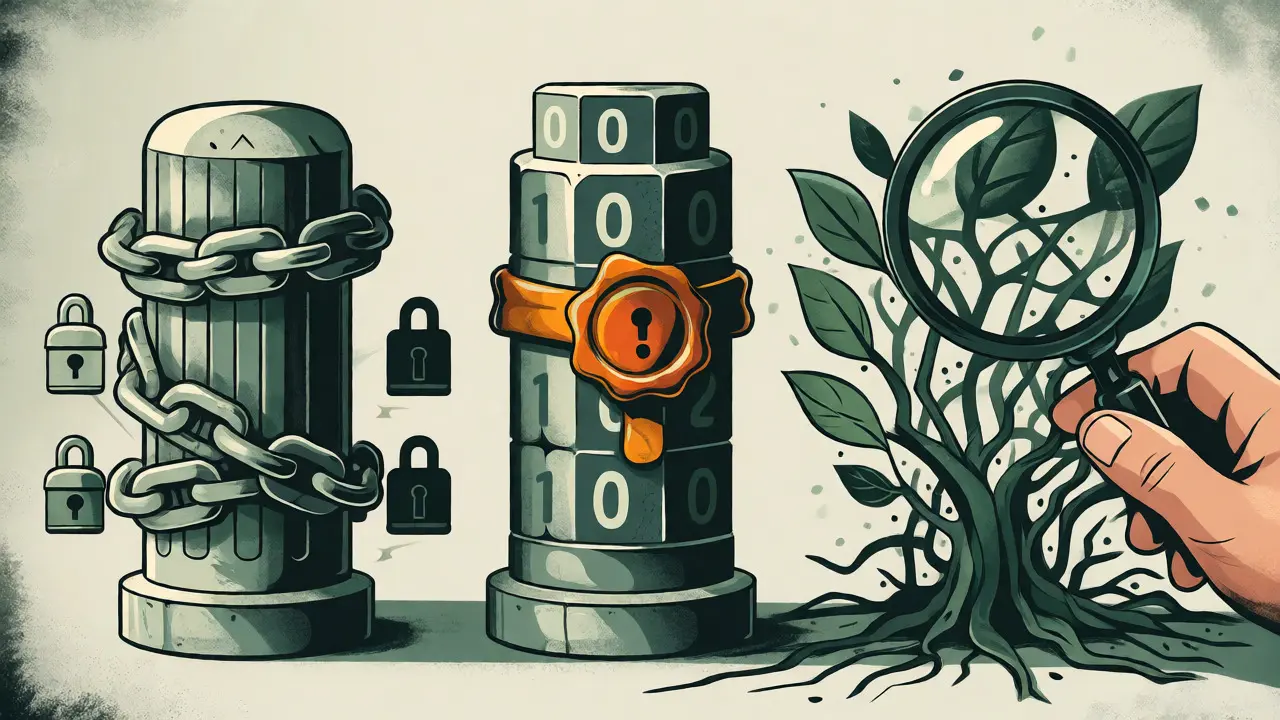
To lock down your deployment, you need to treat three distinct components as critical assets: containers, weights, and dependencies. Each requires a different security approach.
| Component | Primary Risk | Key Control Mechanism | Industry Standard Tool |
|---|---|---|---|
| Containers | Poisoned base images, outdated runtimes | Signed images, minimal base layers | Docker Content Trust, Cosign |
| Model Weights | Backdoored parameters, tampered tensors | Cryptographic signing, checksum verification | SHA-256, Sigstore |
| Dependencies | Malicious packages, version drift | SBOM generation, automated scanning | CycloneDX, Syft |
Securing the Container Runtime
Your model runs inside a container, usually Docker or Kubernetes. If the container image is compromised, your model is compromised. Attackers often slip malicious code into base images or exploit outdated libraries within the image layer. Wiz Academy reports that 89% of enterprises use containerization for LLMs, yet many skip basic hygiene steps.
Start with minimal base images. Every unnecessary package is a potential vulnerability. Use multi-stage builds to keep production images lean. More importantly, sign your images. Tools like Cosign allow you to verify that the image you’re pulling hasn’t been altered since it was built. If the signature fails, the deployment stops. No exceptions.
Verifying Model Weights
Model weights are binary files containing billions of parameters. Unlike code, they aren’t human-readable, making them easy targets for stealthy attacks. A "LoRA adapter compromise" scenario documented by OWASP showed how attackers infiltrated third-party suppliers to deliver malicious Low-Rank Adaptation components. These small add-ons can subtly shift model behavior without breaking functionality.
You must verify integrity before loading weights into memory. SHA-256 checksums are the industry standard for quick validation, but they don’t prove origin. For true provenance, use cryptographic signing frameworks like Sigstore. This allows you to attach a verifiable identity to every model artifact. If you’re downloading from Hugging Face, check if the repository offers signed commits or verified badges. If not, assume the weights are untrusted until you’ve scanned them.
Managing Dependencies with SBOMs
Dependencies are the most common vector for supply chain attacks. A single update to a library like `transformers` or `torch` can introduce new vulnerabilities. To manage this, you need a Software Bill of Materials (SBOM). An SBOM is essentially a list of ingredients for your software, detailing every component, its version, and its license.
CycloneDX has emerged as the preferred SBOM format for LLM applications because it supports AI-specific metadata. Generating an SBOM isn’t just about compliance; it’s about visibility. When Log4j broke the internet, teams with SBOMs knew immediately if they were affected. Teams without them scrambled for weeks. Do the same for your LLM stack. Generate an SBOM during the build process and store it alongside your model artifacts.
Implementing Security in Your CI/CD Pipeline
Manual checks don’t scale. You need automation. Integrating security scanning into your Continuous Integration/Continuous Deployment (CI/CD) pipeline catches issues before they reach production. However, this comes with trade-offs. Sonatype’s analysis shows that comprehensive scanning adds 15-22% to build times. Is it worth it? Yes, because it reduces deployment vulnerabilities by 76% on average.
Here’s a practical workflow for securing your pipeline:
- Generate SBOMs Early: Use tools like Syft to create an SBOM as soon as your container image is built. Don’t wait until deployment.
- Scan for Vulnerabilities: Integrate Grype or Snyk to scan the SBOM against known CVE databases. Set strict thresholds: block builds with critical or high-severity issues.
- Verify Model Provenance: Add a step to verify the digital signature of your model weights. If the signature is missing or invalid, fail the pipeline.
- Attest Runtime State: Emit attestations for every request, logging the model hash and runner version. This links user actions to specific model states, aiding incident response.
False positives are a real pain point. Cycode’s 2025 survey found that 72% of users struggle with noisy scans. Tune your thresholds. Not every low-severity vulnerability needs to block a release. Focus on what matters: remote code execution risks in dependencies and integrity failures in weights.

Commercial vs. Open-Source Solutions
Should you buy or build? The market offers robust options on both sides. Commercial platforms like Sonatype Nexus and Cycode lead in enterprise-grade features. They offer automated remediation, AI-powered detection of counterfeit components, and deep integration with cloud providers. Sonatype’s enterprise offering starts at $18,500 annually for mid-sized teams, while Cycode adds $12,000 for their LLM-specific module.
Open-source alternatives like OWASP Dependency-Track provide solid basics for free. However, they require significant configuration time-often 35-40 hours per deployment compared to 8-12 hours for commercial tools. User ratings reflect this divide: commercial tools average 4.3/5 stars on G2, while open-source solutions hover around 3.8/5, primarily due to steep learning curves and poor documentation.
If you’re a startup with limited DevOps resources, open-source might seem appealing. But consider the hidden cost of engineer time. If your team spends three weeks integrating an open-source SBOM tool, that’s three weeks not building product features. For enterprises with strict compliance requirements (like HIPAA or GDPR), the audit trails provided by commercial tools often justify the expense.
Regulatory Pressure and Future Trends
Security isn’t just a technical choice anymore; it’s a legal requirement. The EU AI Act mandates "demonstrable supply chain integrity" for high-risk AI systems. In the US, Executive Order 14110 requires software bills of materials for federal AI deployments by September 2026. If you’re selling to government or healthcare sectors, you cannot afford to ignore these standards.
Gartner predicts that supply chain security will account for 45% of enterprise LLM security budgets by 2026, up from 28% in 2024. This shift indicates that leaders are moving from reactive patching to proactive integrity assurance. Expect to see more AI-native security tools emerging, designed specifically to detect anomalies in model behavior caused by supply chain compromises.
The trajectory is clear: automated validation will become standard. NIST forecasts that by 2027, 85% of enterprise LLM deployments will incorporate automated supply chain validation at every stage of the ML lifecycle. Start building this muscle now. The companies that survive the next wave of AI breaches will be the ones who treated their model weights and dependencies with the same rigor as their customer data.
What is an SBOM in the context of LLMs?
A Software Bill of Materials (SBOM) is a formal record containing the details and supply chain relationships of various components used in building software. For LLMs, it lists all libraries, frameworks, and model versions included in the deployment, helping identify vulnerabilities and ensure license compliance.
How do I verify the integrity of downloaded model weights?
Use cryptographic hashing (like SHA-256) to check if the file has changed since publication. For stronger verification, use digital signatures via tools like Sigstore or Cosign to confirm the model came from a trusted source and hasn't been tampered with.
Are containerized LLM deployments more secure than bare metal?
Containerization provides isolation, which limits the blast radius of a breach. However, it introduces new supply chain risks related to base images and orchestration tools. Security depends on how well you manage the container images and their dependencies, not just the fact that they are containerized.
What is the biggest risk in LLM supply chains?
The lack of provenance for pretrained models and dependencies. Many organizations use third-party models and libraries without verifying their origin or checking for backdoors, creating a large attack surface that is difficult to monitor.
Do I need commercial tools for LLM security?
Not necessarily. Open-source tools like Syft and Grype can handle basic SBOM generation and scanning. However, commercial tools offer better automation, reduced false positives, and easier integration for large-scale enterprise environments, often saving significant engineering time.