Streaming vs Batch Responses in Generative AI: Impact on Accuracy and UX
You type a prompt into your favorite AI chatbot. Do you want to stare at a blinking cursor for thirty seconds while the system thinks? Or do you prefer watching words appear one by one, like a typewriter from the 1950s? This isn't just a preference for aesthetics. The way an Generative AI is a class of artificial intelligence systems capable of creating new content such as text, images, or code based on patterns learned from vast datasets delivers its answer-streaming versus batch processing-changes how accurate that answer feels and whether you trust it.
We often assume the model's brain works the same regardless of how fast the text hits our screen. But the delivery mechanism shapes the user experience (UX) and even influences the perception of accuracy. In this guide, we break down why streaming dominates modern interfaces, where batch processing still holds value, and how these methods impact the dreaded issue of hallucination is an error in which a generative AI model generates false, nonsensical, or irrelevant information presented as fact.
The Mechanics: How Streaming and Batch Processing Work
To understand the impact, we first need to look under the hood. Large Language Models (LLMs) generate text token by token. A token can be a word, part of a word, or punctuation. The difference between streaming and batch lies in when the server sends these tokens to your browser.
Batch processing is a data handling method where inputs are collected and processed together as a single group before any output is returned to the user. In this mode, the AI model completes the entire generation process internally. It calculates every token, finishes the thought, checks for stop sequences, and then sends the full response all at once. You get zero feedback until the job is done.
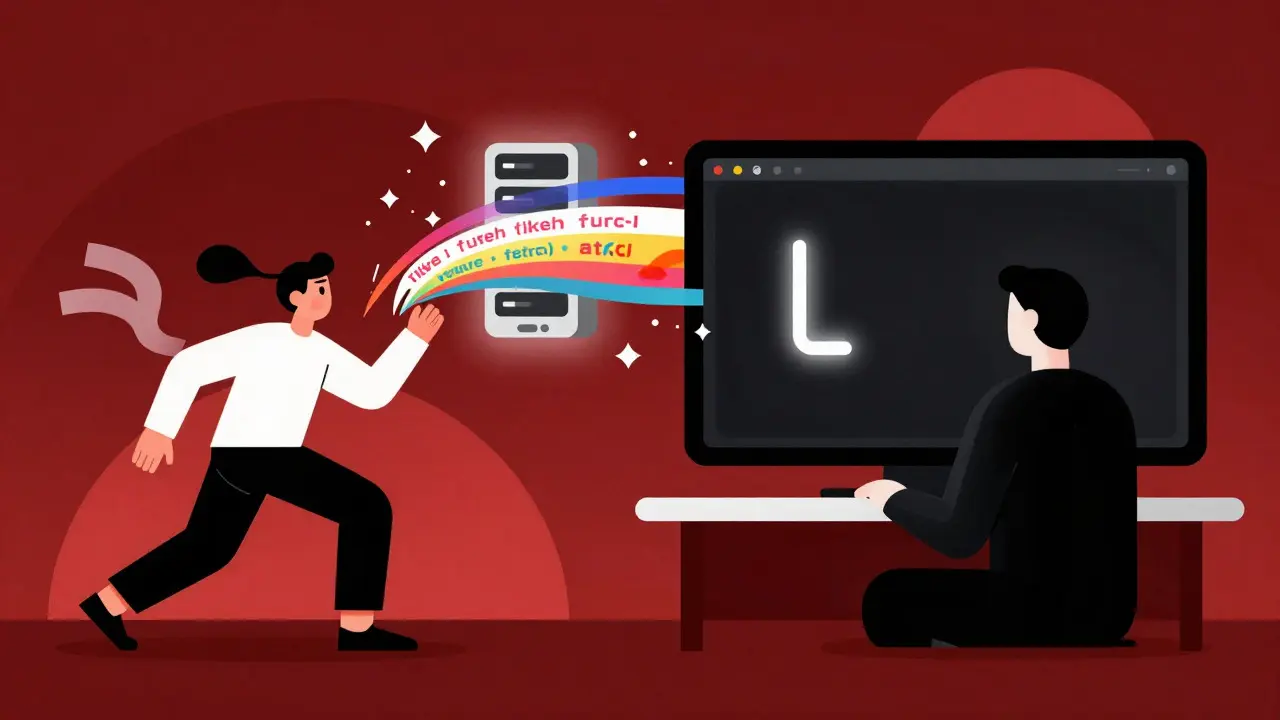
Streaming is a data transmission technique where content is sent in continuous small chunks as soon as it is generated, allowing users to see partial results immediately. Here, the server opens a persistent connection (often using Server-Sent Events or WebSockets). As soon as the model predicts the next token, it ships it to your device. You start reading sentence one while the model is still calculating sentence three.
User Experience: Perception of Speed vs. Actual Latency
Human psychology plays a huge role here. We hate waiting. But more specifically, we hate *uncertain* waiting. When you use batch processing, the initial delay-known as Time to First Token (TTFT)-can feel agonizing. If the model takes four seconds to think, those four seconds feel like ten because there is no visual progress.
Streaming tricks the brain. By showing the first word almost instantly, the interface signals that "work is happening." Even if the total time to complete the response is identical, users perceive streaming as significantly faster. This is crucial for conversational AI, where flow matters. Imagine talking to a human who stares at you silently for ten seconds before answering. It’s awkward. Streaming mimics natural conversation rhythm, reducing bounce rates and keeping users engaged.
However, streaming introduces its own UX challenges. Because the text appears incrementally, the layout might shift as sentences grow. If the AI changes its mind mid-sentence (which happens less now but used to be common with early autoregressive models), the UI must handle backspacing or corrections gracefully. Poorly implemented streaming can lead to jittery interfaces that distract from the content.
Impact on Accuracy and Hallucination Risk
Does the delivery method change the factual accuracy of the answer? Technically, the underlying model weights and probabilities remain the same. Whether you stream or batch, the model uses the same neural network to predict the next token. So, the raw probability of a hallucination doesn't inherently change based on the transport layer.
But context matters. There are two ways delivery impacts perceived and actual accuracy:
- Early Termination Errors: In streaming, users often interrupt the AI if they see the answer going off-track. This allows for immediate correction. In batch mode, you might wait 30 seconds only to read a completely wrong paragraph. Streaming enables real-time human-in-the-loop verification, effectively reducing the impact of errors.
- Coherence Checks: Some advanced pipelines use a "draft-and-review" approach. In pure streaming, the model commits to a path immediately. In a hybrid batch-like scenario, the system could theoretically generate multiple endings, score them for coherence, and pick the best one before showing it to you. While rare due to latency costs, true batch processing allows for post-generation validation steps that streaming skips to prioritize speed. This means batch *could* offer slightly higher structural accuracy if paired with robust validation layers, though at the cost of instant gratification.
Regarding hallucinations specifically, streaming makes them visible earlier. If an AI starts making up a citation, you see it happen. With batch, you get the whole fabricated story at once. Early detection helps users spot inconsistencies faster, mitigating the risk of accepting false information as truth.
Technical Trade-offs: Infrastructure and Cost
Choosing between these methods isn't just about UX; it's about engineering constraints. Streaming requires maintaining open connections. For thousands of concurrent users, this demands significant server resources. Each active stream consumes memory and CPU cycles to manage the state of the ongoing generation.
Batch processing is easier to scale horizontally. You queue requests, process them in bulk, and return results. It’s efficient for background tasks, like generating weekly reports or summarizing large documents where immediate feedback isn't needed. The infrastructure overhead is lower per request because the connection drops immediately after sending the payload.
Cost-wise, both methods typically charge per token generated. However, streaming can increase operational costs due to the complexity of managing websockets or SSE endpoints. If your application needs to handle millions of daily queries, the stability of batch processing might outweigh the UX benefits of streaming for non-critical paths.
| Feature | Streaming | Batch Processing |
|---|---|---|
| Time to First Token (TTFT) | Low (milliseconds) | High (seconds to minutes) |
| User Engagement | High (interactive feel) | Lower (passive waiting) |
| Infrastructure Complexity | High (stateful connections) | Low (stateless requests) |
| Error Correction | Real-time interruption possible | Post-completion review only |
| Best Use Case | Chatbots, creative writing | Data analysis, bulk reporting |
When to Use Which Approach
There is no one-size-fits-all answer. Your choice depends on the job-to-be-done.
Use streaming when:
- The interaction is conversational (chatbots, virtual assistants).
- Users need to provide feedback mid-generation (e.g., "stop," "change tone").
- Perceived speed is critical for retention (marketing tools, social media helpers).
- The output length is unpredictable and potentially long.
Use batch processing when:
- Accuracy and completeness are paramount over speed (legal document review, financial summaries).
- The task is asynchronous (email newsletters, scheduled reports).
- You need to run post-processing validations before showing the user anything.
- Resource optimization is a priority during peak traffic loads.

Hybrid Approaches: Getting the Best of Both Worlds
Many modern platforms adopt a hybrid strategy. They might stream the first few tokens to satisfy the user's impatience, then switch to a buffered mode if the response becomes complex. Alternatively, they use speculative decoding-a technique where a smaller, faster model drafts the response, and the larger, slower model verifies it in parallel. This reduces latency without sacrificing the accuracy benefits of deeper processing.
Another trend is "progressive enhancement." The UI shows a skeleton loader or a brief summary via batch processing while the detailed explanation streams in. This balances the need for immediate acknowledgment with the desire for comprehensive detail.
Conclusion: Prioritize Context Over Convention
Streaming has become the default for consumer-facing AI because it feels alive. It reduces the anxiety of waiting and allows for dynamic interaction. However, don't force streaming everywhere. If your app generates a JSON object for an API or a monthly tax report, batch processing is cleaner, cheaper, and less prone to display glitches.
Remember, the goal isn't just to show text faster. It's to build trust. If streaming leads to fragmented thoughts or UI chaos, you lose credibility. If batch processing leaves users hanging, you lose engagement. Measure your specific use case, test both approaches with real users, and choose the method that aligns with their expectations for speed and reliability.
Does streaming reduce hallucinations in AI?
Not directly. The model's internal logic remains the same. However, streaming allows users to detect and interrupt hallucinations earlier, preventing the waste of time reading a fully formed incorrect answer. It improves the *management* of errors rather than the *prevention* of them.
Is batch processing more accurate than streaming?
Potentially, if you implement post-generation validation. Batch processing gives you the chance to check the entire output for consistency, facts, or formatting before displaying it. Streaming commits to the output token-by-token, leaving less room for holistic quality checks unless you buffer the response entirely, which defeats the purpose of streaming.
Why does my AI chatbot feel slow even with streaming?
This is usually due to high Time to First Token (TTFT). Even with streaming, if the model takes several seconds to calculate the very first word, the user experiences a delay. Optimizing TTFT involves improving server proximity, using faster hardware, or optimizing the model's inference engine.
What is the cost difference between streaming and batch?
Most providers charge by the number of tokens generated, so the base cost is identical. However, streaming can incur higher infrastructure costs due to the need for persistent connections and state management. Batch processing is generally cheaper to host at scale because it uses standard HTTP requests that drop immediately after completion.
Can I switch between streaming and batch dynamically?
Yes. Many APIs allow you to toggle a `stream` parameter. You can design your application to use streaming for short, interactive prompts and automatically switch to batch mode for long, complex queries where accuracy and structure are more important than instant feedback.




Let's be real, the whole 'streaming feels faster' argument is just a psychological trick to mask terrible backend latency. You're not actually saving time, you're just distracting the user with a typewriter effect so they don't notice their GPU is choking on token generation.
I've been working with LLM APIs since before ChatGPT went mainstream and honestly, batch processing is still superior for anything that requires actual coherence. When you stream, you commit to tokens probabilistically without seeing the forest for the trees. It's like writing an essay while someone reads it out loud before you finish the sentence. If the model starts hallucinating in paragraph two, you have to stop it, but by then you've already wasted compute cycles generating garbage.
The article mentions 'draft-and-review' as a rare hybrid approach, but that's because it's expensive. Most companies are too cheap to implement proper validation layers. They'd rather give you a fast, slightly wrong answer than a slow, correct one because retention metrics depend on perceived speed, not accuracy. It's a band-aid solution for bad infrastructure.
Also, the claim that streaming reduces hallucination risk by allowing early termination is weak. Users aren't proofreading experts. They see a confident-sounding sentence and assume it's true. If the AI starts making up citations, most people won't catch it until they click the link and find a 404 error. Streaming just makes the failure mode more visible, not less frequent.
We need better models, not fancier delivery mechanisms. Until we solve the root cause of why these networks predict nonsense, streaming is just aesthetic sugar coating.
Haha, Chandan, you sound like a man who hasn't used a modern chatbot in the last six months. The 'typewriter effect' isn't a distraction, it's a feature. It keeps the user engaged. Think about it: if you stare at a blank screen for 30 seconds, you think the app crashed. You refresh. You lose the context. With streaming, you start reading immediately. Your brain gets hooked.
I'm building a few SaaS tools right now and the difference in bounce rates is night and day. Batch processing feels dead. It feels like talking to a wall. Streaming feels like talking to a person who is thinking out loud. That connection matters.
And regarding your point about hallucinations? Sure, the model might be wrong, but if I can interrupt it halfway through a rambling excuse, I save time. In batch mode, I wait for the whole lie to finish before I realize it's useless. Streaming gives me control. It puts the human back in the loop.
Plus, let's talk about cost. You mentioned expense, but maintaining open WebSocket connections for millions of users is a nightmare for DevOps. But hey, maybe you prefer your servers crashing under load while users wait forever. Just saying. We should collaborate on this topic sometime, I think you're missing the UX perspective entirely.
Both of you are missing the point. Streaming is overrated because it exposes the model's indecisiveness. Have you ever seen a UI jitter when the model backspaces? It looks unprofessional. It makes the AI look stupid.
Batch processing allows for post-processing. You can run the output through a regex check or a secondary classifier to ensure formatting is correct. Try doing that with a stream. You can't. You either buffer it (defeating the purpose) or you accept messy output.
I use batch for all my coding assistants. Why? Because I want the code block to appear complete and formatted. I don't want to watch it write line by line and hope it doesn't forget to close a bracket. If it takes 5 seconds, fine. Give me quality, not speed. The industry is obsessed with TTFT (Time To First Token) because it's an easy metric to game, not because it improves the product. It's vanity engineering.
Interesting points from everyone here. I think the key is context as the OP mentioned. For creative writing or casual chat streaming is king. But for technical tasks like code generation or data extraction batch is often safer.
I've found that many developers default to streaming because it's the trendy option but they don't consider the downstream effects on their frontend state management. Handling partial JSON streams is a pain in the neck. If you're parsing structured data you really want the full payload.
Also Brannen you make a good point about formatting. A lot of new frameworks handle backspacing poorly which leads to that jittery UI experience. It breaks immersion. So maybe the solution isn't one or the other but smarter buffering strategies where you stream text but buffer code blocks until they are complete. That seems like a solid middle ground for most apps
I just love how we're debating this like it's a war. Honestly, I just want my AI to work without lagging. Whether it streams or batches doesn't matter to me as long as the answer is right. But I do appreciate the insight on why streaming feels faster. It does feel more alive.
I noticed that when I use batch mode for long reports, I tend to skim them less carefully because I expect perfection. With streaming, I read along as it happens and catch errors earlier. Maybe that's just me though. Good read overall!
True. Sometimes simple is best.