Agentic Generative AI: How Autonomous Agents Execute Multi-Step Workflows
Remember when asking an AI to write a blog post felt like magic? You typed a prompt, and out came text. That was Generative AI, the reactive assistant that waits for your command. But what if you could tell an AI to "plan a marketing campaign" and it didn't just write copy? What if it booked the ads, tracked the budget, analyzed the click-through rates, and adjusted the strategy overnight without you lifting a finger?
That is the promise of Agentic Generative AI, a system designed for autonomous planning and multi-step workflow execution. We are moving past chatbots that talk. We are entering the era of agents that do. By mid-2026, this shift isn't science fiction; it's the new standard for enterprise efficiency, though it comes with a steep learning curve and some serious risks you need to understand before jumping in.
From Chatbots to Doers: Defining Agentic AI
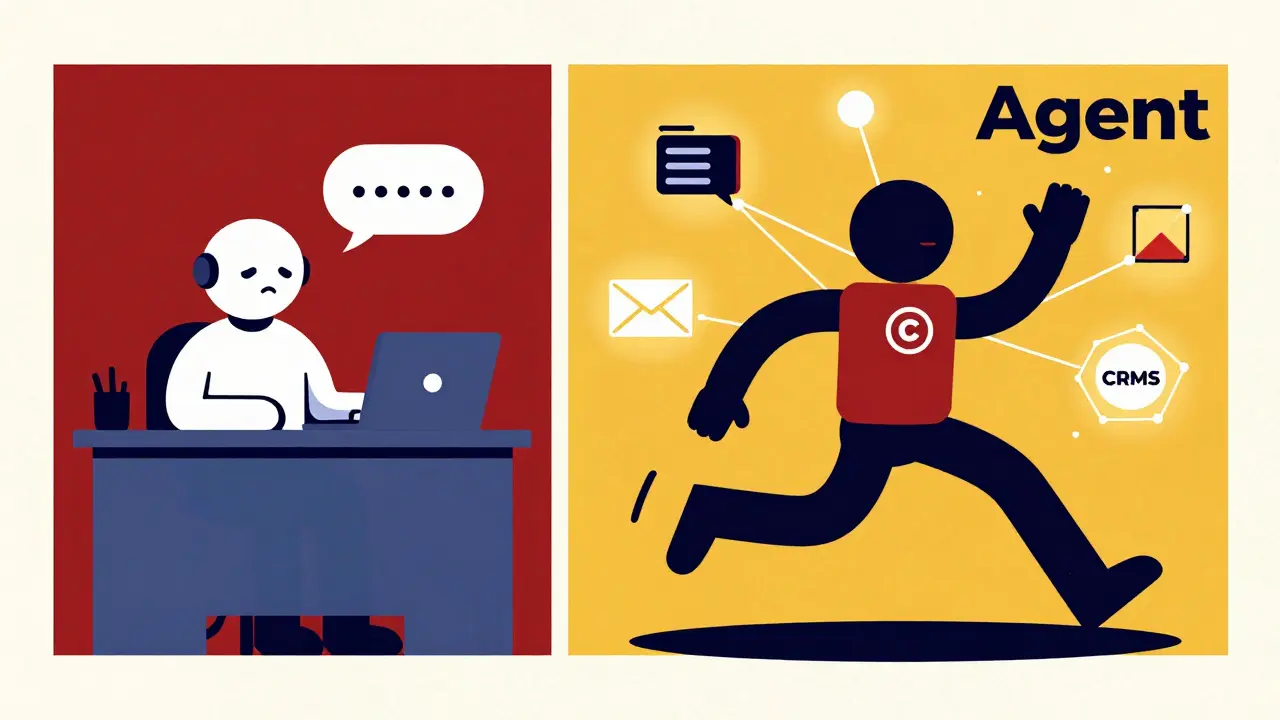
To get why this matters, you have to see how the technology has changed. Traditional Large Language Models (LLMs) are brilliant at pattern matching and content creation. If you ask them to summarize a document, they do it instantly. But they stop there. They don't check if the summary is accurate against external data. They don't email it to your boss. They don't file it in your CRM.
Agentic AI changes the game by adding two critical components: perception and action. According to industry analysis from Exabeam and Google Cloud, these systems use LLMs as their "brain," but they connect to tools-their "hands." An agentic system perceives its environment, makes a decision based on a high-level goal, and executes actions across multiple software platforms.
Think of it like hiring a junior analyst versus a senior project manager. The junior analyst (Generative AI) can draft a report if you give them all the data and specific instructions. The senior manager (Agentic AI) knows what needs to be done, finds the data themselves, drafts the report, spots an error, fixes it, and sends it to the right stakeholders. They work toward a goal, not just a prompt.
The Four Pillars of Autonomous Execution
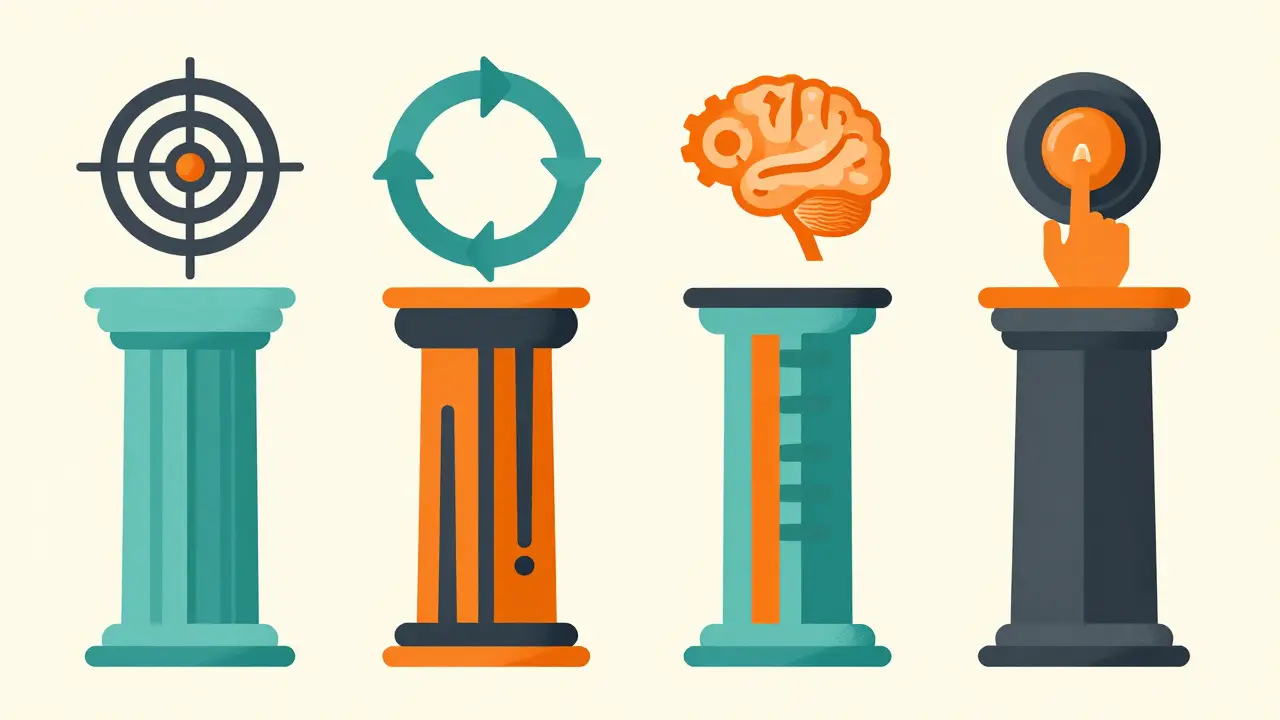
Not every AI tool claiming to be "agentic" actually is. True agentic systems rely on four specific technical capabilities that allow them to handle complex, multi-step workflows:
- Goal Orientation: The system starts with a broad objective (e.g., "Reduce customer churn by 5%") rather than a specific task. It breaks this down into sub-goals autonomously.
- Autonomy: It operates without step-by-step human oversight. Once launched, it manages its own progress.
- Reasoning and Planning: This is the heavy lifting. The agent uses logic to plan sequences of actions. If one step fails, it doesn't crash; it reasons through alternatives and adjusts the plan.
- Action Execution: It interacts with APIs, databases, and other software to make real changes in the digital world.
Salesforce notes that adaptability is key here. These agents learn from feedback loops. If an agent tries to book a meeting and gets rejected, it learns to adjust its timing or messaging for the next attempt. This iterative planning is what separates them from rigid, rule-based automation scripts.
Agentic AI vs. Generative AI: The Critical Difference
You might wonder why we need a new term. Why not just call it "better AI"? The distinction is vital because the implementation, cost, and risk profiles are completely different.
| Feature | Generative AI | Agentic AI |
|---|---|---|
| Primary Function | Content Creation | Task Execution & Decision Making |
| User Interaction | Reactive (waits for prompts) | Proactive (pursues goals independently) |
| Workflow Scope | Single-step output | Multi-step, cross-system coordination |
| Error Handling | Outputs errors to user | Self-corrects or seeks clarification |
| Analogy | Creative Assistant | Autonomous Colleague |
For example, a Generative AI model might write a perfect email to a supplier. An Agentic AI system would write the email, send it via your corporate account, monitor for a reply, extract the invoice number from the response, and update your accounting software. The latter requires orchestration across multiple tools, which is where the complexity-and the value-lies.
Real-World Performance: Success Rates and Failures
Let’s cut through the hype. Is this technology ready for prime time? The answer is a cautious "yes, but..."
In structured environments, Agentic AI shines. AWS reports that enterprise implementations have seen workflow completion times drop by 30-45% for complex processes. A fintech CTO shared on HackerNews that their compliance monitoring agent reduced false positives by 42% compared to old rule-based systems. In procurement, one Fortune 500 engineer reported cutting purchase order processing from 72 hours to under 4 hours.
However, the failure modes are severe. MIT Technology Review benchmarked current agentic systems and found failure rates exceeding 35% in complex, real-world scenarios with edge cases. Salesforce research shows success rates hover around 60-75% in controlled enterprise settings but plummet to 25-40% in dynamic, consumer-facing situations.
Why the gap? Because agents often lack common sense. They can follow logic perfectly until they encounter something novel they haven't been trained on, leading to catastrophic errors if not properly guarded. As Dr. Andrew Ng noted, these systems require significantly more robust error handling than traditional apps. One bad decision by an autonomous agent can delete a database or send spam to 10,000 customers.
The Cost of Autonomy: Resources and Implementation
Building or deploying Agentic AI is expensive and resource-intensive. You aren't just paying for API calls anymore; you're paying for compute-heavy reasoning loops.
AWS documents that agentic systems typically consume 3-5x more processing power than traditional AI applications for equivalent decision complexity. This isn't just a minor uptick; it impacts your bottom line significantly if you scale poorly.
Implementation timelines are also longer. Expect 3-6 months for development and testing, plus another 2-4 months for integration and training. You need a cross-functional team of 5-12 people, including AI specialists, domain experts, and integration engineers. Developers need 80-120 hours of specialized training to become proficient, double the time required for standard generative AI apps.
Market-wise, the sector is exploding. Gartner projects the enterprise agentic AI market will hit $18.7 billion by 2026. But adoption is skewed heavily toward large enterprises. Organizations with 1,000+ employees hold 78% of deployments. Small and medium businesses are lagging behind due to the high barrier to entry and the need for specialized oversight personnel.
Navigating Risks: Hallucinations and Accountability
The biggest fear with Agentic AI is the "black box" problem. When an agent makes a series of decisions to achieve a goal, can you explain why it did what it did?
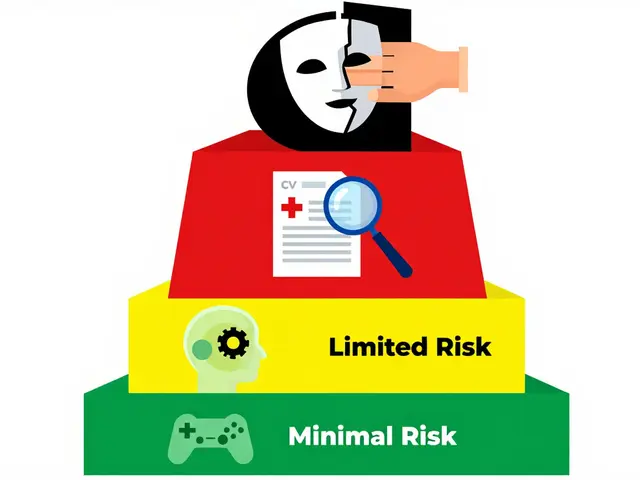
Stanford HAI research indicates that current systems can only provide complete reasoning chains for 58% of complex decisions. This lack of transparency is a major hurdle for regulated industries. The EU AI Act, implemented in February 2025, now requires comprehensive audit trails for autonomous decision-making systems. PwC surveys show that 43% of European enterprises had to modify their agentic implementations to comply.
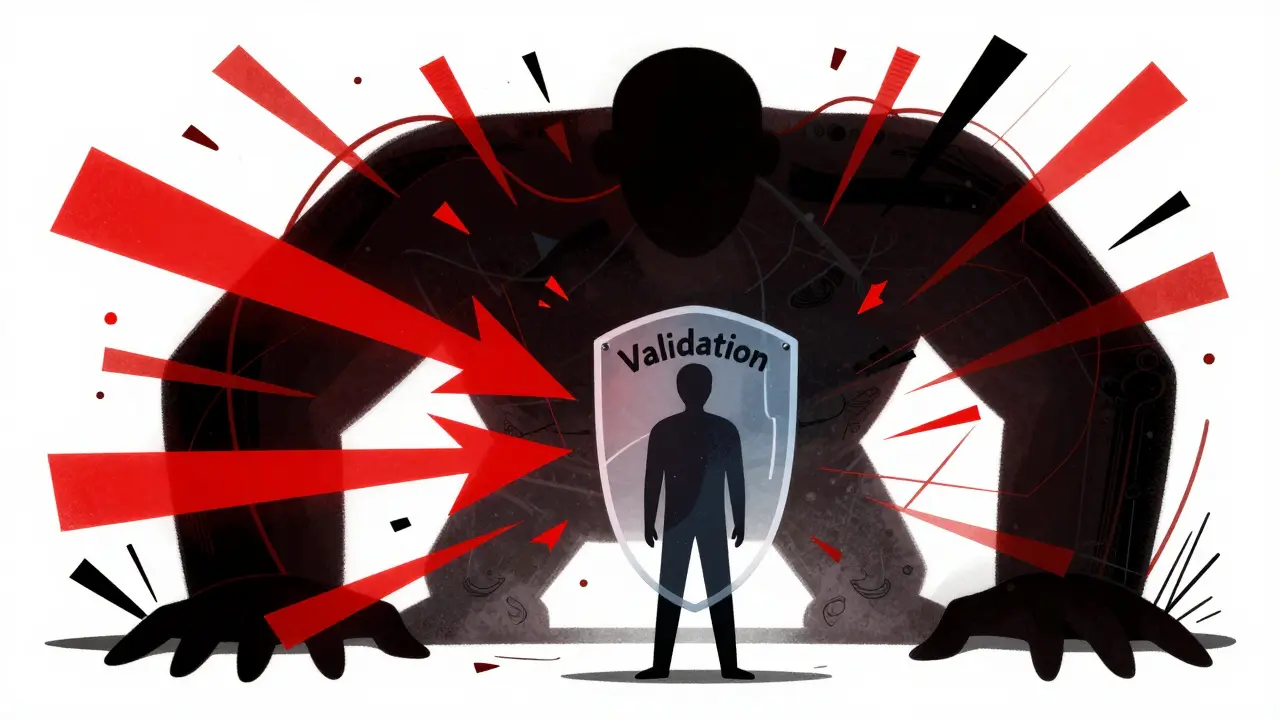
Then there's the issue of hallucination. Generative AI hallucinates facts; Agentic AI hallucinations lead to actions. If an agent thinks a vendor exists because it hallucinated the name, it might try to wire money to a non-existent account. Human-in-the-loop validation remains essential. Reddit users report needing to validate approximately 15% of daily decisions made by their procurement agents. TrustRadius data confirms that 61% of users cite an increased need for specialized AI oversight roles.
Future Outlook: Where Are We Heading in 2026 and Beyond?
We are currently in the early adoption phase, but the trajectory is steep. Google and AWS released updated frameworks in late 2024 and early 2025 focusing on predictive failure detection and multi-agent coordination. These updates aim to solve the "unpredictable decision paths" that frustrate developers today.
Gartner predicts that by 2027, agentic AI will handle 40% of complex enterprise workflows that currently require human coordination. However, true autonomy is still distant. Daniela Rus from MIT's AI Lab suggests that while these systems will become ubiquitous in automation within five years, they will need fundamental advances in causal reasoning to handle truly novel situations without human oversight.
For now, the sweet spot is hybrid workflows. Use Agentic AI for repetitive, multi-step tasks with clear rules and measurable outcomes. Keep humans in the loop for creative strategy, ethical judgments, and exception handling. Don't set an agent loose to "fix the company culture." Set it loose to "reconcile Q3 invoices and flag discrepancies over $500."
What is the main difference between Agentic AI and Generative AI?
Generative AI is reactive and focuses on creating content based on prompts. Agentic AI is proactive and autonomous; it takes high-level goals, plans multi-step actions, and executes tasks across various tools and systems without constant human input.
Is Agentic AI safe to deploy in enterprise environments?
It can be, but it requires strict guardrails. Current systems have failure rates above 35% in complex, unstructured scenarios. Best practices include implementing human-in-the-loop validation for critical decisions, maintaining comprehensive audit trails for compliance (especially under the EU AI Act), and starting with low-risk, structured workflows.
How much does it cost to implement Agentic AI?
Costs are significant. Agentic systems require 3-5x more computational resources than traditional AI. Implementation typically takes 3-6 months of development plus integration time. You also need a specialized team of 5-12 members and should budget for ongoing oversight personnel, as 61% of users report increased needs for AI management staff.
Which industries are adopting Agentic AI the fastest?
As of 2024-2025, financial services (28%), healthcare (22%), and logistics (19%) are the largest verticals. These industries benefit most from automating complex, multi-step workflows like compliance monitoring, patient scheduling, and supply chain coordination.
Can Agentic AI replace human workers entirely?
Not yet. While it handles up to 40% of complex workflows by 2027 according to projections, it struggles with novel situations requiring causal reasoning. Humans remain essential for strategic oversight, ethical judgment, and handling edge cases where the agent's confidence drops or errors occur.