Capacity Planning for Seasonal Peaks in Large Language Model Usage
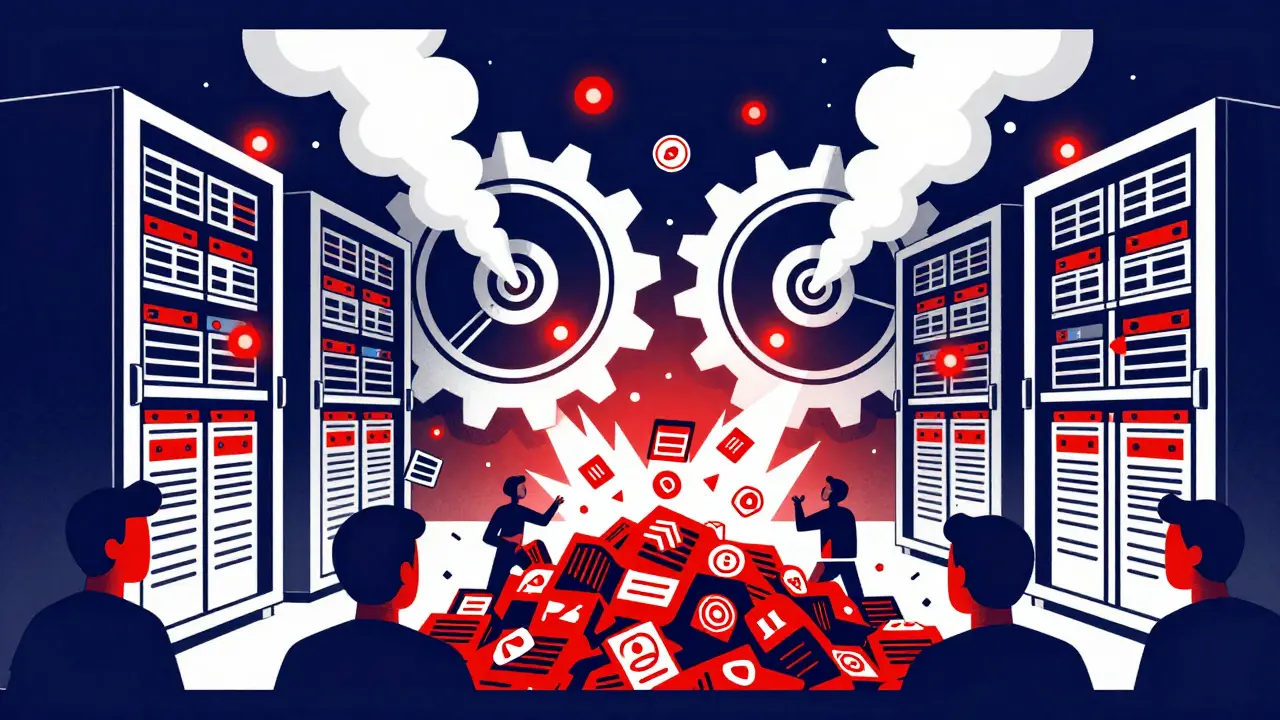
Picture this: it’s November. Your marketing team launches a new feature that uses Large Language Models is a type of artificial intelligence system designed to understand and generate human-like text based on the input it receives. Suddenly, your API latency spikes from 200 milliseconds to five seconds. Users complain. Support tickets flood in. You check your dashboards and realize you’ve hit your rate limits or run out of available GPU accelerators is specialized hardware processors optimized for parallel computing tasks required by AI workloads.. This isn’t just a bad day; it’s a predictable seasonal peak that caught you off guard.
Planning for these surges is no longer optional if you are running production LLM services. Unlike traditional web traffic, which might spike during Black Friday sales, LLM demand is driven by complex factors like model releases, academic exam seasons, or viral social media trends. If you don’t plan for them, you either pay massive overage fees or lose customers to degraded performance. Let’s break down how to build a resilient infrastructure that handles these peaks without breaking the bank.
Why LLM Capacity Planning Is Different
You might think capacity planning for LLMs is just like planning for any other cloud service. It’s not. The core difference lies in the unit of measurement. In traditional web apps, you count requests per second (RPS). In LLMs, you must count tokens processed per second is the primary metric for measuring LLM inference throughput, representing the number of word pieces handled by the model..
A single request can vary wildly in cost. A user asking "What is the capital of France?" consumes far fewer resources than a developer uploading a 50-page codebase for analysis. Research shows that compute needs for inference scale linearly with request volume but can vary by up to 100x depending on sequence length and batch size. If you only monitor RPS, you will miss the real bottleneck: memory bandwidth and attention computation.
Furthermore, LLM workloads are heavily dependent on expensive hardware. You aren’t just renting generic CPU cores; you are competing for scarce NVIDIA H100s or Google TPU v4 chips. These accelerators have long procurement lead times. When a peak hits, you can’t just spin up more instances instantly if the supply chain doesn’t have them ready. This scarcity makes accurate forecasting critical.
The Forecasting Layer: Predicting the Spike
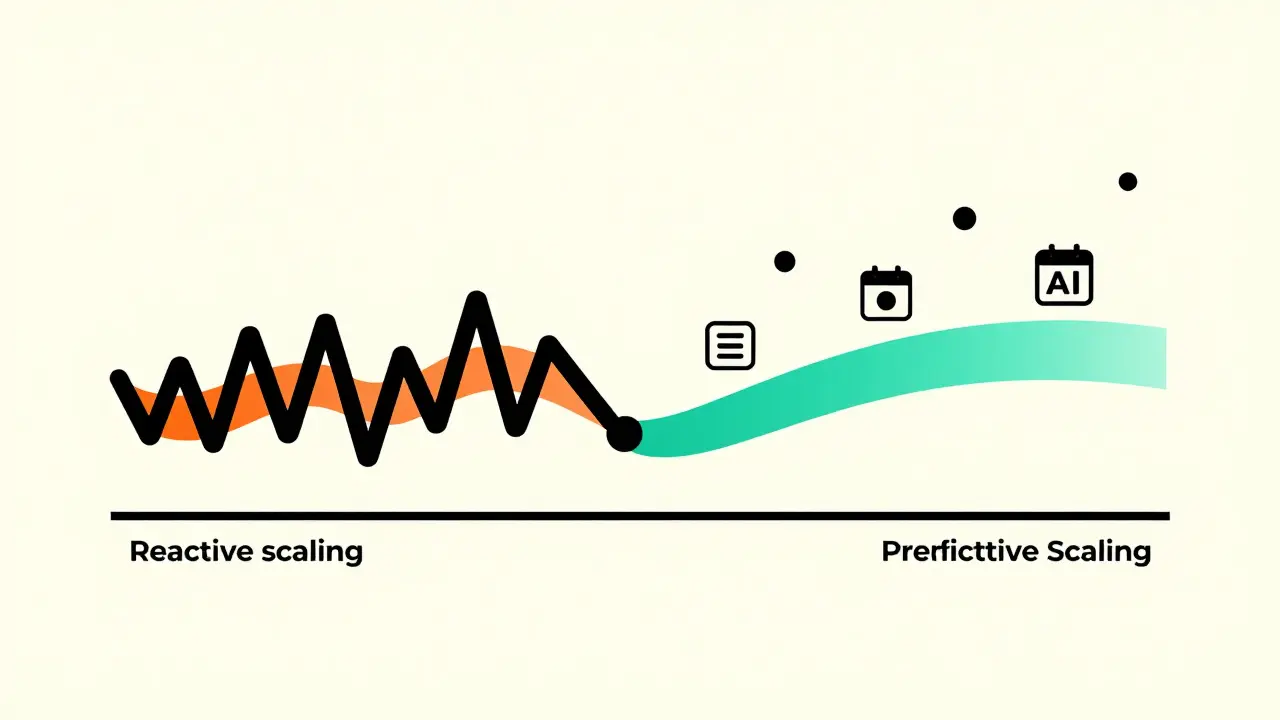
To handle peaks, you need to see them coming. Reactive scaling-adding GPUs after users start complaining-is too slow because loading a 70-billion-parameter model into memory takes tens of seconds. You need predictive scaling.
Start by collecting at least 12 to 24 months of historical data. Track not just requests, but tokens per request, model mix, and user segments. Then, layer in business intelligence. Are you launching a product next month? Is tax season approaching for your financial assistant app? Are students returning to school?
Use time-series models like Prophet is an open-source forecasting tool developed by Facebook for analyzing time series data with strong seasonal effects or LSTM networks to generate hourly forecasts for the next 72 hours. Industry benchmarks suggest these models can achieve 85-90% accuracy for short-term load predictions. By provisioning resources 15 to 30 minutes before the expected surge, you avoid cold-start latency and reduce infrastructure costs by roughly 40% compared to purely reactive methods.
- Macro Trends: Year-over-year growth and major marketing schedules.
- Micro Patterns: Time-of-day usage, device mix, and even weather patterns.
- Real-Time Corrections: Minute-by-minute adjustments to align predictions with actual incoming traffic.
Architectural Patterns for Peak Resilience
Once you know when the peak is coming, you need architecture that can absorb it. Here are three proven patterns used by top-tier providers.
1. Workload Segmentation and Routing
Not all traffic is equal. During a peak, segment your workloads. Separate steady API inference from spiky product-launch traffic and batch offline processing. Use routing systems like Ray Serve or Kubernetes-based load balancers to direct traffic intelligently.
If capacity is tight, route low-priority or cost-sensitive requests to smaller, faster models (e.g., a 7B parameter model instead of a 70B one). Offload long-context requests to specialized clusters with higher memory availability. This prevents a few heavy requests from clogging the entire pipeline.
2. Token-Aware Scheduling
Advanced capacity planning uses token-aware metrics. Your scheduler should prioritize shorter prompts and responses to keep average latency low during peaks. Enforce hard per-request token limits to prevent pathological cases where a single user hogs resources with a massive context window. Consider queuing very long requests and sending them to dedicated batches rather than blocking real-time inference queues.
3. Admission Control and Tiered SLAs
You cannot serve everyone equally during a severe peak. Implement admission control and rate limiting. Define clear Service Level Agreements (SLAs) for different user tiers. Premium or enterprise customers should get priority access, while free users may experience throttling or wait times. This governance ensures your most valuable revenue streams remain stable even when overall capacity is strained.

Comparing Hosting Strategies
| Strategy | Control Over Capacity | Cost Efficiency | Complexity | Best For |
|---|---|---|---|---|
| Hyperscale Providers (e.g., Azure OpenAI) | Low (Shared Tenant) | High (Pay-per-use) | Low | Teams without dedicated infra teams |
| Dedicated Cloud Clusters | Medium | Medium | Medium | Enterprises needing compliance/isolation |
| Self-Hosted On-Premise | High | Variable (High CapEx) | High | Organizations with predictable, massive peaks |
Hyperscalers offer ease of use but suffer from shared-tenant unpredictability. During global events, everyone’s traffic spikes simultaneously, leading to opaque capacity constraints. Self-hosting gives you full control to overprovision for known seasonal windows, but you bear the risk of idle capacity outside those peaks. Choose based on your risk tolerance and budget.
Practical Steps to Implement Today
You don’t need a perfect system overnight. Start with these actionable steps:
- Benchmark Your Models: Measure tokens per second for each model on your target hardware under realistic batch sizes. This is your baseline capacity unit.
- Build Scenario Models: Create low, medium, and high demand scenarios using forecast confidence intervals (e.g., 95th percentile). Design for 1.5 to 3x above expected peak depending on your SLA requirements.
- Automate Pre-Warming: Ensure your autoscaling policies account for model loading time. Trigger scaling events before the traffic arrives, not after.
- Integrate Business Calendars: Require capacity impact assessments for new features or campaigns. Marketing and engineering must talk about resource needs.
- Post-Mortem Every Peak: After each seasonal event, analyze forecast error, utilization rates, and SLA adherence. Use this data to refine your models for next year.
By treating LLM capacity as a dynamic, forecast-driven discipline rather than a static resource allocation problem, you turn potential outages into smooth, scalable experiences. The key is starting now, before the next viral moment hits.
How far in advance should I forecast LLM capacity needs?
For immediate operational scaling, aim for 72-hour forecasts with hourly granularity. For broader infrastructure procurement and budgeting, use monthly or quarterly forecasts aligned with business calendars. Leading implementations provide usable forecasts 60-90 days ahead for major seasonal events.
What is the biggest mistake companies make in LLM capacity planning?
The most common mistake is relying solely on Requests Per Second (RPS) instead of Tokens Per Second. Because LLM inference costs vary drastically based on prompt and response length, RPS metrics fail to capture the true computational load, leading to unexpected bottlenecks during peaks.
Can predictive scaling really reduce costs?
Yes. By pre-provisioning resources 15-30 minutes before expected surges, organizations can avoid the premium prices of spot-market GPU rentals and reduce idle waste. Industry data suggests this approach can cut infrastructure costs by approximately 40% compared to purely reactive autoscaling.
How do I handle cold-start latency during sudden spikes?
Cold starts occur when new GPU instances must load large model weights into memory. To mitigate this, use predictive scaling to warm up instances before traffic arrives. Additionally, keep a small pool of always-on replicas for emergency burst capacity and use efficient inference engines like vLLM that optimize memory management.
Should I use hyperscale APIs or self-host for seasonal peaks?
It depends on your control needs. Hyperscale APIs are easier but offer less guarantee during global peaks due to shared tenancy. Self-hosting provides full control to overprovision for known peaks but requires significant capital expenditure and operational expertise. Many enterprises use a hybrid approach, keeping core traffic on managed APIs and bursting to dedicated clusters for extreme peaks.




Token-aware scheduling is the only way to survive these spikes.
Oh, wow! Just wow!!! The way you explain this is just... *chef's kiss*! But let me tell you something, darling, because I've been in the trenches of tech support hell (and yes, I know what that smells like, it's burnt GPUs and tears), this article is missing the human element entirely!! You talk about 'tokens' like they're little birds flying around, but have you ever tried to explain to a CEO why his marketing campaign just cost him $50k in overage fees because he didn't read a blog post?? It's not just about the hardware, it's about the ego!!! And don't get me started on the 'predictive scaling' nonsense. Predicting? Really? We live in a world where TikTok trends change every 15 minutes, and you think a Prophet model is going to save us from the chaos of human behavior?? Please!! It's all a big mess, and we're all just dancing on the edge of a volcano made of silicon and regret!!!
It is imperative to acknowledge the significance of historical data collection as outlined in the text. The integration of business intelligence with time-series models such as LSTM networks provides a robust framework for forecasting. One must ensure that the procurement lead times for NVIDIA H100s are accounted for in the strategic planning phase. The distinction between Requests Per Second and Tokens Per Second is critical for accurate capacity assessment. Organizations should prioritize the implementation of token-aware metrics to mitigate latency issues during peak periods. Furthermore, the adoption of workload segmentation allows for efficient resource allocation. It is recommended to establish clear Service Level Agreements for different user tiers to maintain stability. The use of predictive scaling can reduce infrastructure costs by approximately 40%. Therefore, a proactive approach to capacity planning is essential for operational resilience.
I totally agree with the point about routing low-priority requests to smaller models. It’s a smart move to keep the pipeline from clogging up. We’ve seen similar results when we offload long-context requests to specialized clusters. It really helps in maintaining performance for our premium users during high traffic periods.
The entire premise of relying on hyperscale providers is fundamentally flawed due to the inherent lack of transparency in shared-tenant environments. It is evident that corporate entities are deliberately obscuring the true computational load metrics to maximize profit margins at the expense of service reliability. The suggestion to use 'Prophet' or 'LSTM' networks is merely a sophisticated veneer for what is essentially guesswork disguised as science. One must consider the possibility that these 'seasonal peaks' are artificially induced to justify excessive capital expenditure on GPU accelerators. The jargon-heavy discourse surrounding 'token-aware scheduling' serves to obfuscate the simple truth: the system is designed to fail under pressure unless one pays a premium for dedicated resources. This is not engineering; it is economic coercion masked as technical necessity. The reliance on external APIs creates a single point of failure that compromises data sovereignty and operational autonomy. It is naive to believe that any third-party provider will prioritize your traffic during a global surge. The only secure path is self-hosting, despite the high initial capital outlay, as it ensures complete control over the infrastructure lifecycle.
i mean like honestly who cares about the tokens if the whole thing is just gonna crash anyway its so frustrating trying to keep up with all this tech stuff and i feel like im always behind and everyone else knows better and its just so exhausting dealing with the constant changes and updates and now this new stuff about gpu accelerators which sounds scary and expensive and i dont even know what half of those words mean but sure lets pretend were all experts at predicting the future with some magic math formulas that probably dont work anyway because nothing ever goes right and its always the same old story of paying more money for less service and i just want to sleep and forget about it but cant because the notifications keep coming and its just too much sometimes really
great tips here especially the part about pre-warming instances makes sense to avoid cold starts we need more automation in this space
There is a philosophical depth to the concept of capacity planning that extends beyond mere technical metrics. It reflects our relationship with uncertainty and our desire for control in an unpredictable world. The act of forecasting is not just about numbers; it is about anticipating the collective behavior of humanity. When we speak of 'seasonal peaks,' we are acknowledging the rhythms of life-exam seasons, holidays, viral moments-that define our shared experience. The challenge lies in balancing efficiency with empathy, ensuring that our systems serve people rather than constrain them. Perhaps the true measure of resilience is not how well we handle the peak, but how gracefully we degrade when the peak exceeds our expectations.
This is a fantastic overview of the challenges involved in LLM capacity planning. The emphasis on moving from RPS to tokens per second is crucial for anyone building production-grade AI services. I found the section on architectural patterns particularly insightful, especially the idea of workload segmentation. It’s encouraging to see practical steps that teams can implement immediately to improve their infrastructure resilience. Great work!
While the technical advice is sound, one must consider the geopolitical implications of relying on foreign hardware suppliers. The scarcity of NVIDIA chips is not just a market issue but a strategic vulnerability. Domestic manufacturing capabilities must be prioritized to ensure national security in the realm of artificial intelligence. However, the friendly tone of the article is appreciated, and the points regarding admission control are valid for maintaining service integrity during high-demand periods.