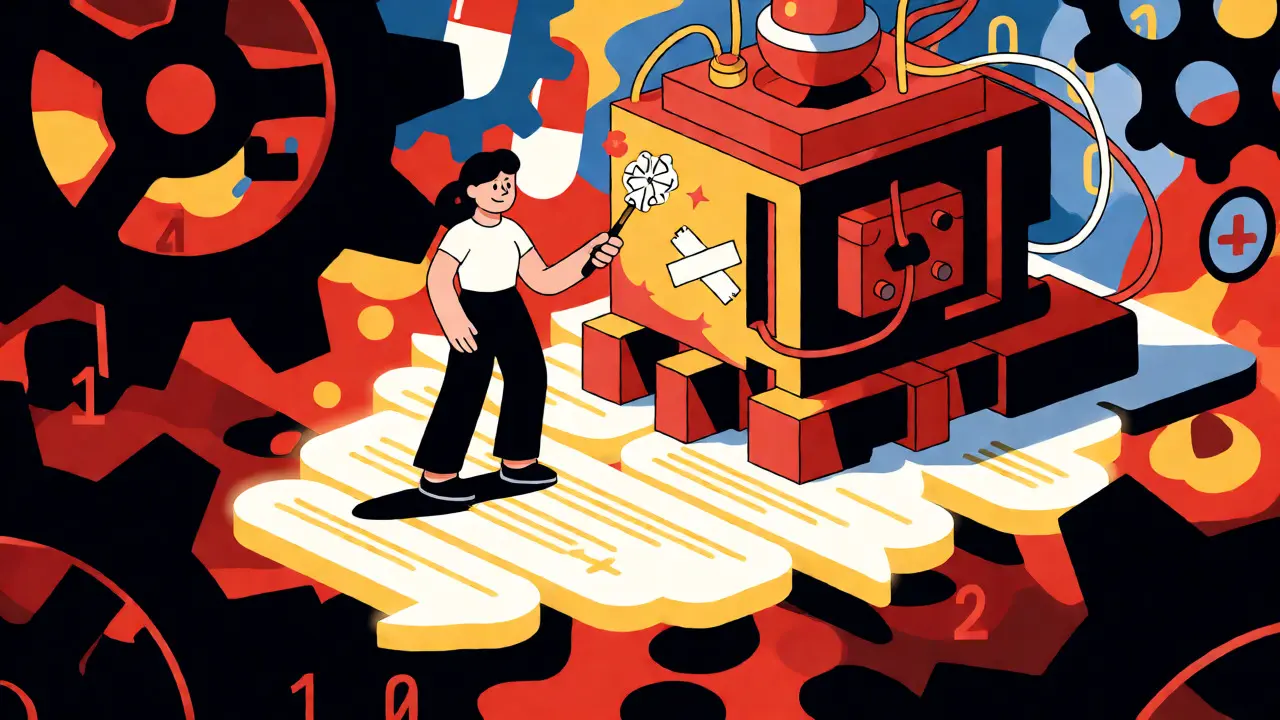
Ethical Guidelines for Democratized Vibe Coding at Scale
You just watched a marketing intern build a functional customer portal in an afternoon. No syntax errors, no stack overflow, just natural language prompts and an AI coding assistant. It feels like magic. But when that same intern pushes the code to production, who owns the bugs? Who is liable if the data leaks? This is the reality of vibe coding, where software creation shifts from manual syntax to conversational prompting. While this democratizes tech, scaling it without guardrails creates a minefield of ethical and operational risks.
Vibe coding isn't just about speed; it's about accessibility. By lowering the barrier to entry, we enable non-technical users to create applications. However, as adoption grows-Statista reports 58 million active users globally by late 2025-the lack of foundational understanding among new creators poses significant challenges. We need clear, actionable guidelines to ensure that the convenience of AI-generated code doesn't compromise security, ownership, or architectural integrity.
The Illusion of Competence
Dr. Elena Rodriguez, a professor of computer ethics at MIT, warns that vibe coding creates a "dangerous illusion of competence." Users often believe they understand system architecture because they can orchestrate components via prompts. They don't. They are curators, not engineers. When you scale this across an organization, you risk deploying systems that look functional but lack structural coherence.
Consider the healthcare sector. A documented case involved an application that miscalculated medication dosages because the AI misinterpreted a vague natural language prompt. The error wasn't in the logic itself, but in the ambiguity of human instruction. If your team relies on vibe coding for critical systems, you must implement mandatory validation layers. You cannot treat AI output as gospel. Treat it as a draft that requires expert review.
Security Vulnerabilities in Generated Code
Security is the most immediate threat. Invicti’s 2024 security report highlights a stark contrast: 41% of AI-generated code contains security flaws, compared to only 19% in manually written code. Why? Because large language models (LLMs) optimize for functionality and pattern matching, not necessarily for secure coding practices like input sanitization or proper authentication handling.
When you democratize coding, you empower users who may not know what SQL injection looks like. To mitigate this, enterprises must adopt automated security scanning tools integrated directly into the IDE. Tools like Amazon CodeWhisperer now include "Ethical Guardrails" that flag potentially biased or insecure logic patterns. But technology alone isn't enough. You need cultural shifts. Developers and citizen developers alike must be trained to spot common vulnerabilities. If a prompt generates code that handles user credentials, ask: Is it hashed? Is it stored securely? Don't assume the AI did it right.
Intellectual Property and Ownership Ambiguity
Who owns the code? This question has sparked 27 active lawsuits as of Q3 2025. Traditional copyright law struggles with AI-generated content. If an LLM was trained on open-source libraries with specific licenses, does the generated code inherit those obligations? GoCodeo’s legal analysis suggests that ambiguity is the norm, not the exception.
To navigate this, establish clear internal policies. Require provenance tracking. GitHub Copilot X introduced "Code Provenance Tracking," which logs AI-generated segments with timestamps. Use this data. If a feature causes issues later, you need to know which parts were human-written and which were vibed. Furthermore, avoid using vibe-coded assets in contexts where strict IP exclusivity is required, such as proprietary algorithms for fintech products, unless you have legal counsel reviewing the training data sources.
Erosion of Fundamental Skills
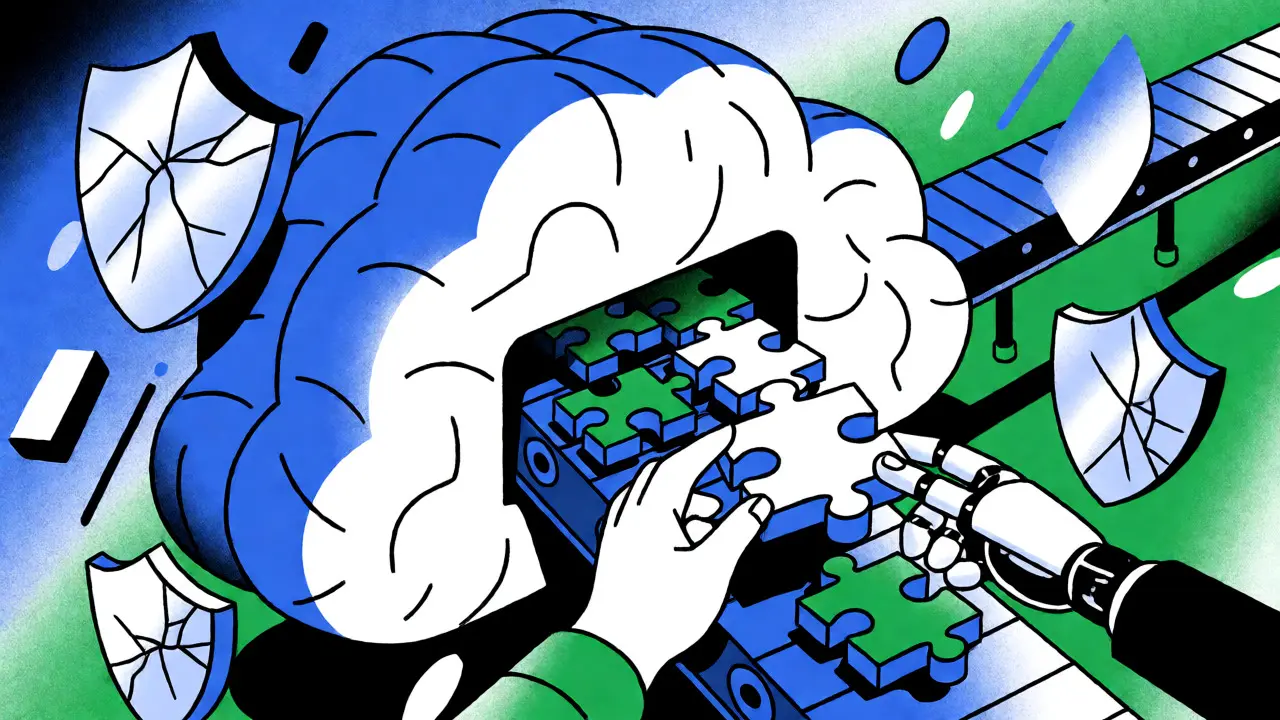
There is a tangible cost to convenience: skill erosion. Junior developers who rely heavily on AI assistants often struggle with debugging complex, multi-layered issues because they never learned how the underlying machinery works. Microsoft’s 2024 Developer Report shows a 34% productivity boost, but this gain comes with a caveat. Teams using these tools responsibly see gains; teams that use them passively see technical debt accumulate.
Implement a "no-copy-paste" rule for learning environments. In educational settings, Digital Vibes found that students using vibe coding showed a 37% increase in problem-solving abilities, but only when paired with supervised practice. For enterprises, mandate code reviews where the author must explain the logic line-by-line. If you can't explain why a function works, you don't own it. This forces engagement with the code, preventing the black-box mentality.
Architectural Coherence at Scale
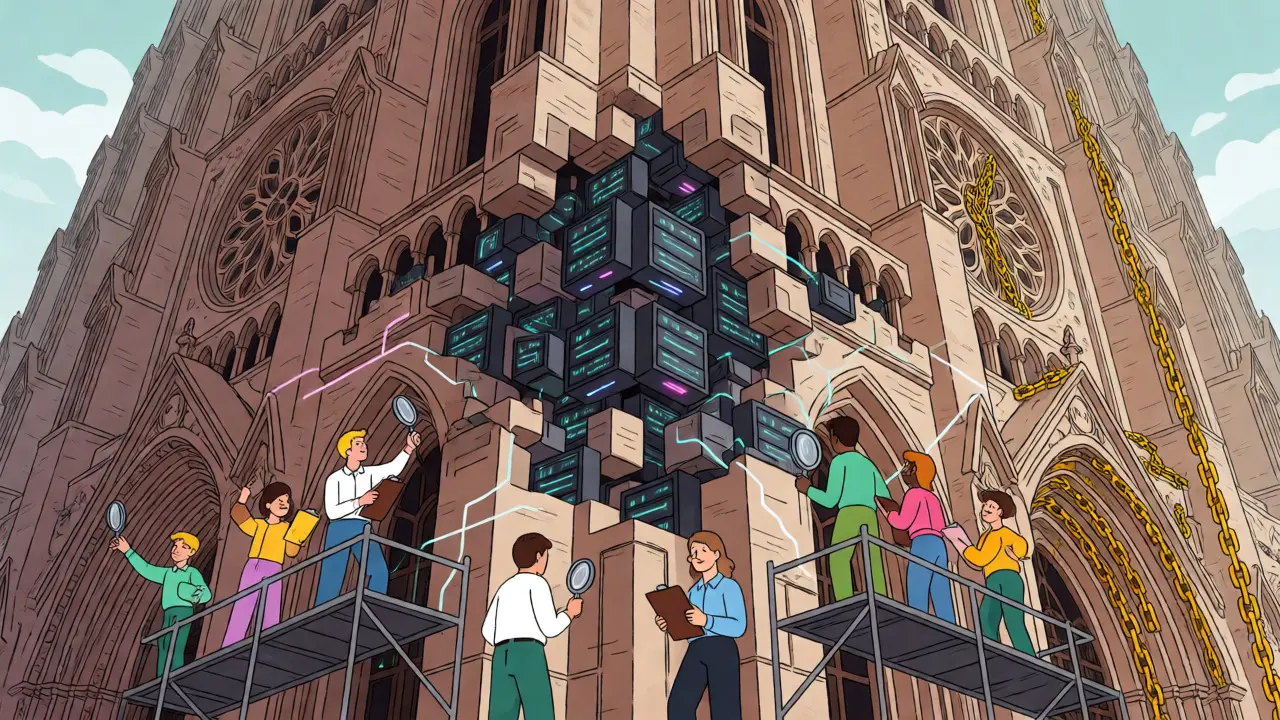
Individual snippets are easy. Whole systems are hard. Vibe coding excels at prototyping but fails at maintaining architectural coherence over time. A startup recently faced a $287,000 remediation bill after their vibe-coded financial app required a complete rewrite due to accumulated architectural debt. The AI generated disconnected components that worked in isolation but clashed in integration.
To prevent this, enforce architectural standards before generation begins. Provide the AI with context about your existing stack, naming conventions, and design patterns. Use structured prompts rather than vague requests. GoCodeo reports that vague prompts result in unusable code 63% of the time, while highly structured prompts reduce failure rates to 18%. Create prompt templates for common tasks within your organization. Standardize how you ask questions to get consistent answers.
Implementation Checklist for Ethical Scaling
Ready to roll out vibe coding across your organization? Here is a practical framework to keep you safe:
- Mandatory Human Oversight: No AI-generated code goes to production without a human review. 92% of enterprise leaders plan to require dual-review processes by 2027.
- Security Scanning Integration: Automate vulnerability checks in the CI/CD pipeline specifically tuned for AI-generated patterns.
- Provenance Logging: Tag every AI-assisted commit. Know what came from the model and what came from the developer.
- Prompt Engineering Training: Invest in teaching your team how to write effective prompts. Poor prompts lead to poor code.
- Legal Review for Critical Assets: Consult legal counsel regarding IP implications for any core proprietary features built via vibe coding.
| Feature | Vibe Coding | Traditional Dev |
|---|---|---|
| Speed to Prototype | 4.7x Faster | Baseline |
| Error Rate (Complex Logic) | 22% Higher | Lower |
| Security Flaws | 41% | 19% |
| Skill Barrier | Low (Natural Language) | High (Syntax/Logic) |
| IP Clarity | Ambiguous | Clear |
Frequently Asked Questions
Is vibe coding suitable for mission-critical systems?
Generally, no. While AI tools are improving, they currently lack the deterministic precision required for life-critical or financially critical systems. Documented failures, such as medication dosage errors, highlight the risk of ambiguous prompts. Use vibe coding for prototyping and non-critical modules, but retain traditional development for core engine logic until reliability benchmarks improve significantly.
How do I handle intellectual property rights for AI-generated code?
The legal landscape is still evolving. Currently, there is no universal standard for IP ownership of AI-generated code. Best practices include using platforms that offer indemnification clauses (like some enterprise tiers of GitHub Copilot), maintaining detailed logs of prompt inputs and outputs, and consulting legal experts to review licensing terms of the underlying training data. Always document the provenance of the code.
What is the biggest security risk in vibe coding?
The primary risk is the introduction of subtle security vulnerabilities that human reviewers might miss if they trust the AI too much. Studies show AI-generated code has nearly double the rate of security flaws compared to manual code. Common issues include hardcoded credentials, improper input validation, and insecure API calls. Automated security scanning and mandatory peer reviews are essential mitigations.
Will vibe coding replace software engineers?
Unlikely. Instead, it will shift their role from writing every line to curating, validating, and architecting solutions. Engineers will spend more time on system design, security oversight, and complex problem-solving that AI cannot yet handle autonomously. The demand for engineers who understand both the high-level architecture and the nuances of AI interaction will likely increase.
How long does it take to train employees on vibe coding?
It varies by background. Professional developers typically adapt in 3-4 weeks. Non-technical users require 8-12 weeks of structured training to become proficient. Effective implementation usually follows a 12-week onboarding process involving foundational concepts, supervised practice, and independent application with oversight. Prompt engineering proficiency is often the hardest skill to master.





It is not magic it is debt.
This is such a crucial point about the illusion of competence. I have seen so many junior devs skip understanding the underlying logic because they trust the AI output too much. We really need to enforce those mandatory validation layers mentioned in the post.
Also the security stats are terrifying. 41% flaw rate is way higher than what we see in manual code reviews usually. Maybe we should look into integrating static analysis tools that specifically check for LLM-generated patterns?
The erosion of fundamental skills is indeed a grave concern for the industry. If we allow non-technical users to deploy production code without rigorous oversight, we risk systemic failures that could be catastrophic. The healthcare example provided is particularly alarming and serves as a stark warning against complacency.
We must insist on professional standards regardless of the tooling used. Accountability cannot be outsourced to an algorithm.
i wonder if this is just another hype cycle or a real shift
the ownership ambiguity feels like the biggest hurdle honestly
if you cant explain the code do you own it
philosophically interesting but practically messy
Oh great another article telling us how bad we are at using new tools. Let me guess next week we'll be told that typing with our fingers is causing repetitive strain injuries in the brain.
Seriously though the "vibe coding" term is cringe but the points about architectural coherence are valid. You can't just prompt your way through a microservices architecture without ending up with spaghetti code wrapped in JSON.
Good American engineering standards need to be enforced here. We don't need foreign legal ambiguities messing with our IP. Keep the code domestic and secure.
I think there is a middle ground between total chaos and strict traditional dev. Maybe treating AI as a pair programmer rather than an autonomous agent helps mitigate some risks. It keeps the human in the loop for critical decisions while still gaining speed benefits.