From Rule-Based NLP to Large Language Models: A 30-Year Evolution
Remember when talking to a computer meant typing exact commands or getting weird answers from ELIZA? It felt like magic in the 1960s, but it was just pattern matching. Fast forward to today, and we’re chatting with models that can write code, solve math problems, and even reason through complex logic. This shift didn’t happen overnight. It’s the result of a massive journey in Natural Language Processing (NLP), moving from rigid rules to flexible, data-driven learning.
The Era of Hand-Coded Rules
In the early days, from the 1950s through the 1980s, NLP was all about explicit instructions. Engineers wrote thousands of if-then statements to teach computers how to handle language. Think of it as building an elaborate flowchart for every possible sentence structure. If you said "I am sad," the system might respond, "Why are you sad?" It worked for simple scripts, but it broke down quickly with real-world messiness.
Rule-based systems were brittle. Every new slang term, typo, or grammatical variation required a human expert to write a new rule. You couldn't scale this approach to handle the entire internet's vocabulary. These systems lacked context; they didn't understand meaning, only patterns. While they proved that human-computer dialogue was possible, they hit a hard ceiling on capability.
Statistics Take Over
By the 1980s, researchers realized hand-coding wasn't sustainable. They shifted to statistical methods. Instead of telling the computer what to do, they showed it examples. The star of this era was the N-gram model. It predicted the next word based on the previous few words by counting sequences in huge text databases.
This probabilistic approach was a game-changer. It handled variations better than rules because it learned likelihoods rather than absolutes. Early machine translation and speech recognition tools started working decently. But there was a catch: the "curse of dimensionality." As you looked at longer phrases, the number of unique combinations exploded, making calculations impossible. Plus, these models struggled to connect words that were far apart in a sentence. They had short memories.
Neural Networks Enter the Chat
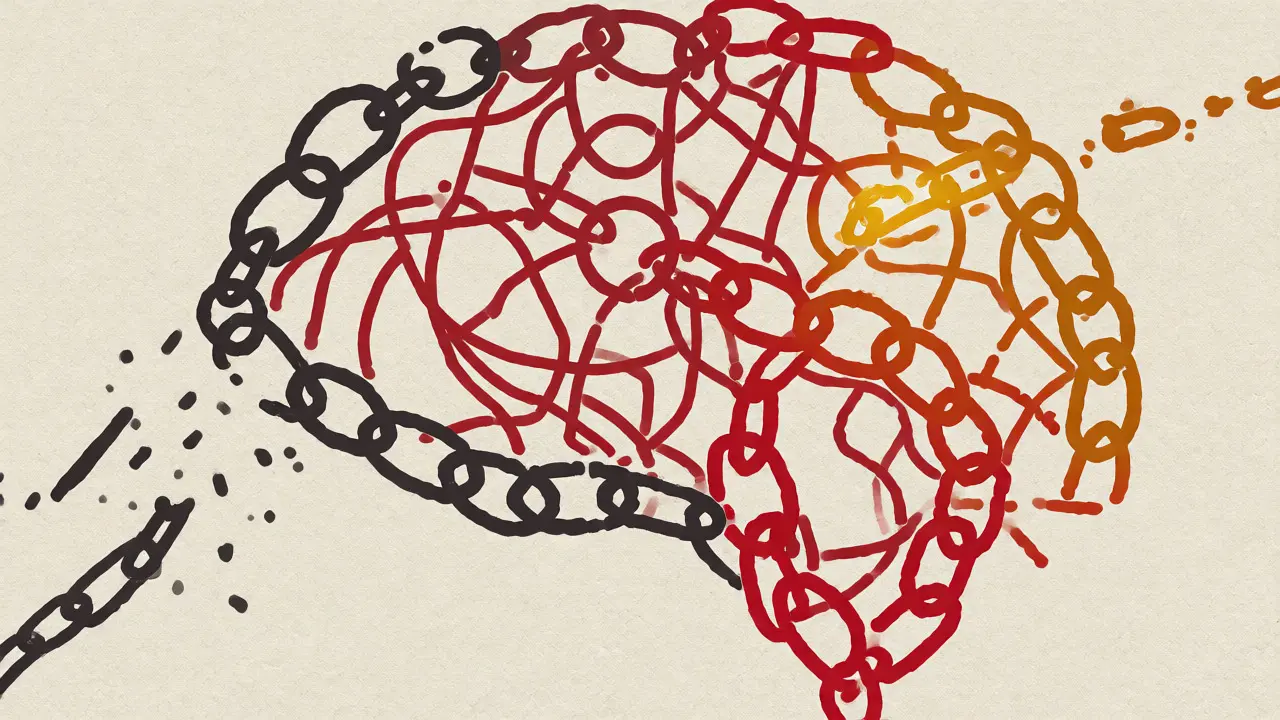
The 1990s brought neural networks into the mix. Initially, simple architectures like multilayer perceptrons tried to map inputs to outputs directly. But language is sequential-you need to remember the beginning of a sentence to understand the end. That’s where Recurrent Neural Networks (RNNs) came in. They introduced loops that let information persist across time steps.
RNNs were promising but flawed. They suffered from vanishing gradients, meaning the network forgot earlier parts of long sentences. Imagine trying to summarize a book while forgetting the first chapter halfway through. That was RNNs in a nutshell. Then, in 1997, Long Short-Term Memory (LSTM) networks arrived. LSTMs added "gates" that controlled what information to keep, forget, or output. This allowed models to retain context over much longer sequences, making practical applications like translation viable.
The Transformer Revolution
If you want to pinpoint the moment everything changed, look no further than 2017. Google published "Attention Is All You Need," introducing the Transformer architecture. Unlike RNNs, which processed text one word at a time, Transformers processed entire sequences in parallel using attention mechanisms.
This design removed the bottleneck of sequential processing. Attention allowed the model to focus on relevant parts of the input regardless of distance. Suddenly, training became faster and more scalable. This architecture became the backbone for virtually every modern AI breakthrough. It solved the long-range dependency problem that plagued previous models and unlocked the potential for massive scaling.
Scaling Up: From BERT to GPT-5
With Transformers in place, the race was on to build bigger models. In 2018, Google released BERT, which understood context bidirectionally. Meanwhile, OpenAI launched the GPT series. GPT-1 showed that pre-training on diverse text could help with multiple tasks. GPT-2 generated text so coherent it raised safety concerns. Then came GPT-3 in 2020 with 175 billion parameters, enabling essay writing and code generation with minimal tweaking.
Today, in 2026, we’re seeing staggering scale. Models like GPT-4 and Claude 3 boast trillions of parameters. But size isn't everything. The introduction of reasoning-focused models like o1 and DeepSeek R1 marks a new phase. These systems use reinforcement learning to improve their thinking process, not just their output. GPT-5, released recently, features a 400K token context window and significantly reduced hallucination rates, showing that we’re moving toward reliable, reasoning-capable AI.
| Phase | Key Technology | Main Limitation | Breakthrough |
|---|---|---|---|
| 1950s-1980s | Rule-Based Systems | Lack of flexibility/scalability | Proof-of-concept dialogue |
| 1980s-2000s | N-grams / Statistics | Curse of dimensionality | Data-driven probability |
| 1990s-2010s | RNNs / LSTMs | Vanishing gradients | Sequential memory |
| 2017-Present | Transformers | Computational cost | Parallel processing & Attention |

How Modern LLMs Are Trained
Training a modern Large Language Model isn't just about feeding it text. It’s a multi-stage pipeline. First comes pre-training, where the model learns general language patterns from massive datasets including books, code, and websites. It predicts the next token, learning grammar and facts along the way.
Next is Supervised Fine-Tuning (SFT), where humans curate high-quality examples to shape behavior. Finally, Reinforcement Learning from Human Feedback (RLHF) aligns the model with human preferences. Humans rank responses, and a reward model guides the AI to prefer helpful, safe answers. Newer techniques like Direct Preference Optimization (DPO) simplify this by skipping separate reward models, making alignment more efficient.
Frequently Asked Questions
Why did rule-based NLP fail?
Rule-based systems failed because they couldn't scale. Every linguistic variation required manual coding, making them brittle and unable to handle the complexity and ambiguity of natural human language.
What is the main advantage of Transformers over RNNs?
Transformers process entire sequences in parallel rather than sequentially. This allows for much faster training and better handling of long-range dependencies in text compared to Recurrent Neural Networks.
Do larger models always perform better?
Not necessarily. While scaling helps, recent research like Chinchilla scaling laws suggests optimal performance requires balancing model size with training data volume. Efficient training and architectural improvements often matter more than raw parameter count.
What is RLHF in LLM training?
RLHF stands for Reinforcement Learning from Human Feedback. It involves human annotators ranking model outputs, which trains a reward model to guide the LLM toward generating responses that humans find helpful and safe.
Can current LLMs truly reason?
Modern reasoning models demonstrate advanced capabilities by generating chain-of-thought explanations and verifying their own steps. However, debate continues on whether this constitutes true reasoning or sophisticated pattern matching enhanced by specific training techniques.