
What Makes a Language Model 'Large': Beyond Parameter Counts
Discover why parameter count is no longer the sole metric for defining large language models. Learn about emergent capabilities, virtual logical depth, and the 62B threshold.

Autonomous LLM Agents: Real Capabilities vs. Current Limits (2026 Guide)
Discover what autonomous LLM agents can really do in 2026. We break down their capabilities, key limitations, and how to implement them effectively without falling for the hype.

Bias in Large Language Models: Sources, Measurement, and Mitigation
Explore the sources, measurement, and mitigation of bias in Large Language Models. Learn about pro-AI bias, algorithmic aversion, and new 2026 methods for steering model behavior.

Context Windows in LLMs: Limits, Trade-Offs, and Best Practices for 2026
Explore the limits, trade-offs, and best practices for managing context windows in Large Language Models (LLMs) in 2026. Learn how to optimize token usage, reduce costs, and improve accuracy with RAG and chunking strategies.

Transfer Learning in NLP: How Pretraining Enabled Large Language Model Breakthroughs
Discover how transfer learning and pretraining transformed NLP, enabling breakthroughs in LLMs like BERT and GPT-3. Learn the mechanics, benefits, and challenges of adapting large models for specific tasks.

Contact Center Analytics with LLMs: Sentiment and Intent Detection Guide
Explore how Large Language Models transform contact center analytics through advanced sentiment and intent detection. Learn why specialized models outperform general AI, practical implementation strategies, and real-world applications for improving customer experience.

Positional Encodings in LLMs: How Transformers Understand Word Order
Discover how positional encodings enable transformers to understand word order. We compare sinusoidal, learned, and RoPE methods used in LLMs like Llama 3.

Mastering Long-Form Generation with LLMs: Structure, Coherence, and Fact-Checking
Learn how to master long-form generation with LLMs. This guide covers structural skeletons, maintaining coherence, and using RAG for rigorous fact-checking.
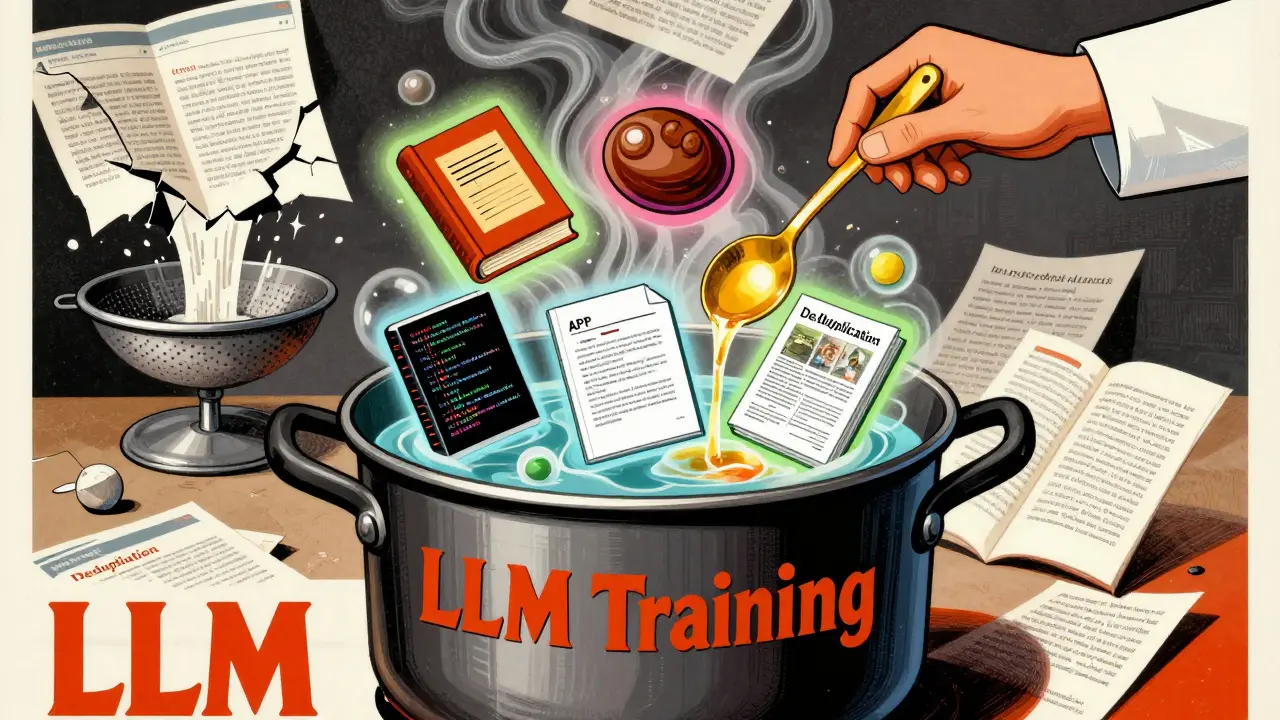
How to Build a Domain-Aware LLM: The Right Pretraining Corpus Composition
Pretraining corpus composition is the key to building domain-aware LLMs that outperform general models. Learn how data selection, ratios, and cleaning techniques create smarter, cheaper AI systems for legal, medical, and technical tasks.

Code Generation with Large Language Models: Capabilities, Risks, and Security
Large language models are transforming how code is written, offering unprecedented automation-but also introducing new security risks. Learn what these models can do, which ones lead in 2026, and how to protect your codebase.

Self-Supervised Learning in NLP: How Large Language Models Learn Without Labels
Self-supervised learning lets AI models learn language by predicting missing words in text - no human labels needed. This technique powers GPT, BERT, and all modern large language models.

How to Generate Long-Form Content with LLMs Without Drift or Repetition
Learn how to use large language models to generate long-form content without drift or repetition. Discover practical techniques like RAG, temperature tuning, and chunked generation that actually work.