Vocabulary Size in LLMs: Why Bigger Is Often Better for Accuracy
You might think that a model with more words to choose from is automatically smarter. It’s intuitive, right? But in the world of Large Language Models, vocabulary size isn't just about how many words the AI knows. It's about how efficiently it can break down and understand human language. For years, developers stuck to safe, small vocabularies around 32,000 tokens. But new research suggests we've been leaving performance on the table. If you're building or fine-tuning an LLM, understanding this hidden lever could be the difference between a sluggish response and a razor-sharp answer.
The Hidden Cost of Small Vocabularies
Think of vocabulary size as the dictionary your model uses to read text. Most modern models use a technique called Byte Pair Encoding (BPE). This method breaks rare words into smaller chunks so the model doesn't need a separate entry for every possible spelling error or obscure term. A small vocabulary means the model has to chop up common phrases into many tiny pieces. This increases the number of tokens per sentence. More tokens mean more computation, slower inference, and higher costs.
Recent studies, including work by Takase et al. presented at ACL 2025, show that larger vocabularies significantly reduce this overhead. When you increase the vocabulary size, you lower the "tokenization fertility." That’s a fancy way of saying each token carries more information. Instead of breaking "unbelievable" into three pieces, a larger vocabulary might handle it as one or two. This reduces the sequence length the model has to process, which directly impacts speed and memory usage.
Industry Standards Are Shifting
For a long time, the industry standard hovered around 32,000 to 50,000 tokens. Models like LLaMA and Mistral stuck to this conservative approach. They prioritized keeping the embedding layer small to save memory. But look at what Google did with Gemma. They expanded the vocabulary to 256,000 tokens. GPT-4 sits somewhere in the middle at roughly 100,000. Why the disparity?
It comes down to trade-offs. A larger vocabulary requires more parameters in the embedding layer. In some cases, like Gemma 2B, nearly a quarter of all parameters are dedicated just to storing these word representations. This eats up VRAM during training and inference. However, the payoff is often worth it for complex tasks. Developers report that switching from a 32k model to a 256k model can cut latency by over 20% for languages with rich morphology, like Japanese or Finnish, because fewer tokens need to be processed.
| Model | Vocabulary Size | Primary Benefit | Drawback |
|---|---|---|---|
| LLaMA / Mistral | ~32,000 | Low memory footprint | Higher token count per input |
| GPT-4 | ~100,000 | Balanced efficiency and coverage | Proprietary implementation details |
| Gemma | 256,000 | Excellent multilingual support | Larger embedding layer size |
| Experimental | 500,000+ | Minimal OOV issues | Diminishing returns; high compute cost |

Why Bigger Vocabularies Improve Accuracy
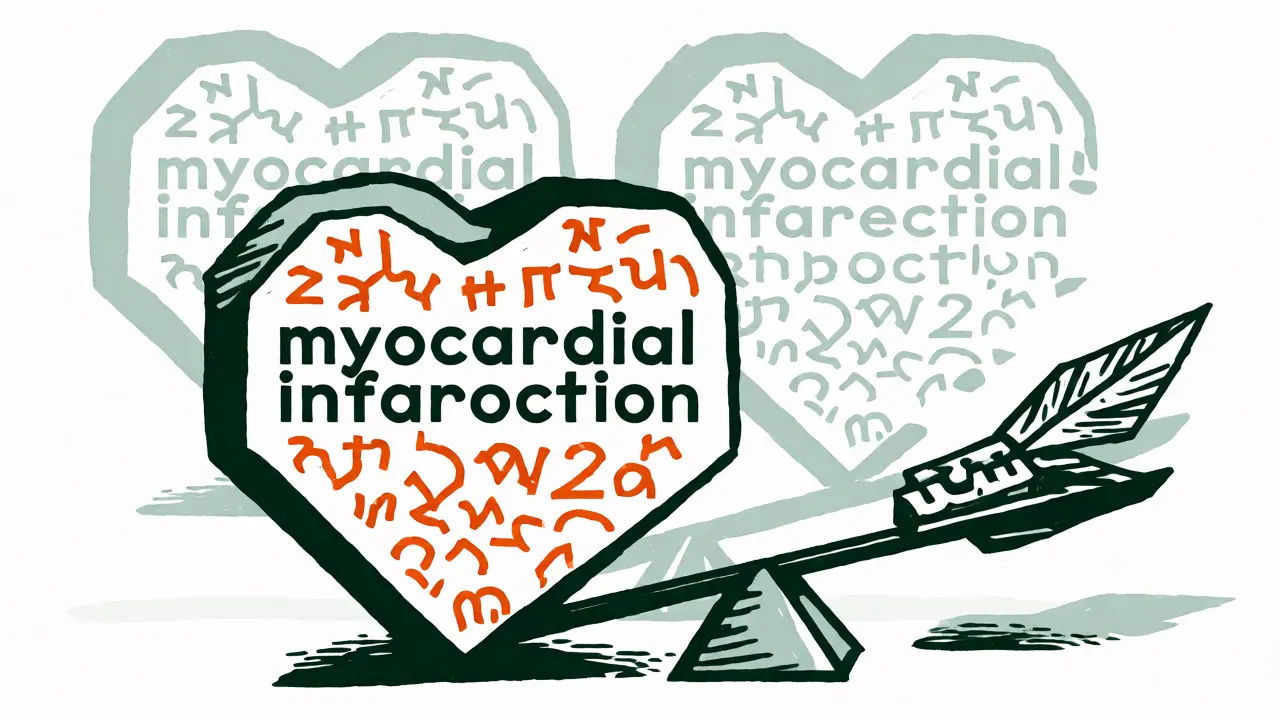
Accuracy isn't just about getting the right fact; it's about understanding nuance. Out-of-vocabulary (OOV) tokens are the enemy here. When a model encounters a word it hasn't seen before, it has to guess based on character fragments. This fragmentation loses meaning. A medical term like "myocardial infarction" might get split into meaningless chunks in a small vocabulary, confusing the model. With a larger vocabulary, specialized terms stay intact, preserving their semantic weight.
Data backs this up. Research indicates that increasing vocabulary size from 32k to 100k can decrease perplexity-a measure of how well a model predicts text-by 5-15%. In multilingual settings, the gains are even sharper. Low-resource languages benefit massively because they often have complex word formations that small vocabularies struggle to encode. One study showed a 63% reduction in OOV rates for low-resource languages when moving to a 500k vocabulary. That’s a huge leap in reliability for global applications.
The Computational Trade-Off
So, why not just go as big as possible? Because physics still applies. The embedding layer grows linearly with vocabulary size. If you double the vocabulary, you double the memory needed to store those embeddings. For massive models, this is manageable. For smaller, edge-deployed models, it can be a dealbreaker. You might find yourself running out of GPU memory just trying to load the weights.
There’s also the issue of "vocabulary bloat." If you include too many rare tokens, they don’t get trained enough. The model sees them once or twice in billions of training examples and never learns their true context. These under-trained tokens can actually hurt performance, adding noise rather than signal. The NeurIPS 2024 paper on scaling laws suggests there’s an optimal sweet spot. Beyond a certain point, usually around 256k to 500k depending on the model size, the benefits plateau or reverse.
Practical Tips for Choosing Your Vocabulary
If you’re selecting a pre-trained model, check the tokenizer config. Don’t assume bigger is always better for your specific task. Here is a quick heuristic:
- Multilingual Apps: Look for vocabularies above 100k. Gemma-style sizes are great here.
- Code Generation: Larger vocabularies help preserve syntax tokens, improving code accuracy by up to 7%.
- English-Only Chatbots: A 32k-50k vocabulary is often sufficient and cheaper to run.
- Specialized Domains: Consider custom tokenization if standard vocabularies fail on your jargon.
Remember, fine-tuning a model with a huge vocabulary requires more VRAM. If you’re working with consumer GPUs, stick to smaller models with moderate vocabularies, or use quantization techniques to squeeze that memory usage down.
Frequently Asked Questions
Does a larger vocabulary always make an LLM faster?
Not necessarily. While larger vocabularies reduce the number of tokens needed to represent text (which speeds up processing), they increase the size of the embedding layer. This can slow down loading times and require more memory bandwidth. The net effect depends on whether your bottleneck is sequence length or memory access.
What is 'tokenization fertility'?
Tokenization fertility refers to the average number of characters represented by a single token. High fertility means each token covers more characters, leading to shorter sequences and more efficient processing. Larger vocabularies generally increase tokenization fertility.
Can I change the vocabulary size of a pre-trained model?
You can expand the vocabulary, but you must retrain or fine-tune the model to learn the new embeddings. Simply adding tokens without training leaves them as random vectors, which degrades performance. Shrinking a vocabulary is much harder and usually requires retraining from scratch.
Why do some models stick to 32k tokens?
Smaller vocabularies keep the model lightweight and fast to deploy, especially on devices with limited memory. For English-centric tasks where computational efficiency is paramount, 32k is often a good compromise between accuracy and resource usage.
How does vocabulary size affect multilingual performance?
Multilingual models benefit greatly from larger vocabularies because they need to cover diverse writing systems and morphologies. A small vocabulary forces non-Latin scripts to be broken into many small tokens, losing structural information. Larger vocabularies allow for more natural representation of complex words across languages.