Generative AI in Procurement: Automating Vendor Assessments and Clause Libraries
Imagine reviewing a hundred-page vendor agreement in four hours instead of three days. Or spotting a hidden financial risk in a supplier’s background before they even sign the deal. This isn’t science fiction anymore. It is what Generative AI is doing for procurement teams right now. As of July 2026, the technology has moved past the hype cycle and into daily operations for many large organizations. But if you are just starting to look at this, it can feel overwhelming. Where do you start? How do you trust the machine with your legal liabilities?
The short answer is that Generative AI acts as a powerful assistant, not a replacement for your judgment. It handles the heavy lifting of reading, sorting, and flagging issues, while you focus on strategy and negotiation. In this guide, we will break down how to use these tools for two critical tasks: assessing vendors and building smarter clause libraries.
Why Procurement Is Shifting to AI Now
You might be wondering why everyone is talking about this suddenly. The shift started around 2021-2022 when companies realized that traditional software wasn't enough. Old systems could store contracts, but they couldn't understand them. According to EY's 2025 Global CPO Survey, 80 percent of Chief Procurement Officers plan to deploy generative AI within the next three years. That is a massive number.
The driver here is volume. We are drowning in data. A typical mid-sized company manages thousands of contracts and hundreds of active suppliers. Manual review simply doesn't scale. When I talk to procurement leaders in Asheville and beyond, the common complaint is burnout from repetitive administrative work. Generative AI solves this by automating the boring parts-like checking for missing signatures or standard clauses-so humans can handle the complex negotiations.
| Feature | Traditional Contract Management | Generative AI Solutions |
|---|---|---|
| Analysis Method | Rule-based keyword matching | Contextual understanding (LLMs) |
| Risk Detection | Flags missing clauses only | Identifies subtle risks and suggests alternatives |
| Speed | Days to weeks per contract | Hours or minutes per contract |
| Vendor Insight | Static historical data | Real-time synthesis of news, finance, and social data |
| Accuracy | High for exact matches, low for nuance | ~95% accuracy with human oversight |
Transforming Vendor Assessments with AI
Vendor assessment used to mean asking for a spreadsheet, checking their website, and maybe calling a reference. Today, Generative AI can analyze over 200 data points in seconds. These include financial stability metrics like current ratios and debt-to-equity, operational performance indicators such as on-time delivery rates, and even reputational risks found in public records or social media.
Here is how it works in practice. You feed the AI system your supplier database. It then scans external sources-news feeds, court records, industry reports-to build a dynamic risk profile. For example, Conduent introduced real-time risk analysis capabilities in late 2025 that scan news hourly. If a key supplier gets involved in a lawsuit or faces a labor strike, the AI flags it immediately. In pilot programs, this reduced supply chain disruption risks by 22 percent.
But there is a catch. AI is only as good as the data it ingests. If your internal data is siloed across different departments, the AI will miss the big picture. Avant’s 2025 survey found that 68 percent of organizations struggle with data silos during implementation. To fix this, you need a clean, unified view of your supplier information before you let the AI loose on it.
- Financial Health: AI tracks changes in credit ratings and quarterly earnings automatically.
- Compliance Risks: It checks against updated regulatory lists (like sanctions or environmental violations) in real-time.
- Performance Trends: By analyzing past purchase orders and invoices, it predicts future reliability.
This doesn't replace your relationship managers. Instead, it gives them a superpower. They can walk into a negotiation knowing exactly where the vendor is vulnerable or strong, backed by hard data rather than gut feeling.
Building Smarter Clause Libraries
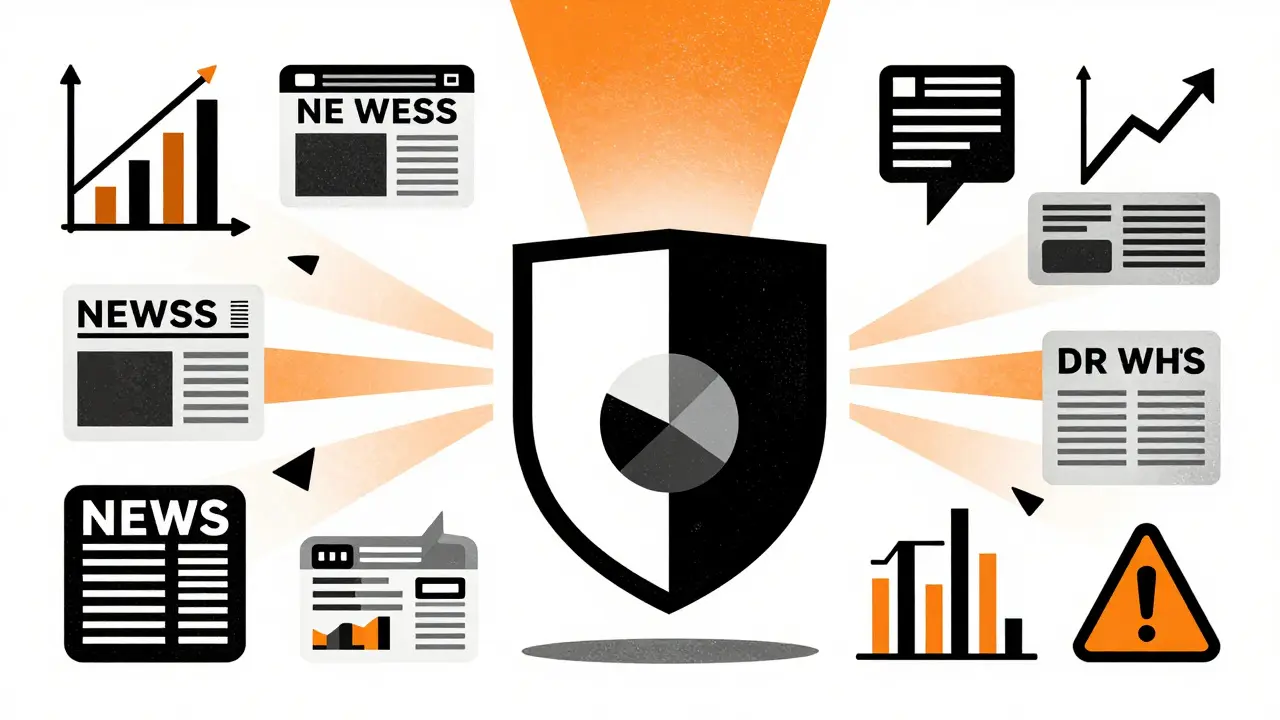
A clause library is a collection of pre-approved contract terms. Every organization should have one, but most are messy. They contain outdated language, conflicting versions, and redundant clauses. This is where Generative AI shines brightest.
Instead of manually tagging every clause in your history, the AI reads your entire archive of past contracts. It categorizes, tags, and scores each term against your predefined risk parameters. Gainfront’s EfficiencyAI, for instance, reduces contract review time by 70-85 percent while maintaining 95 percent accuracy in clause identification. That is a huge efficiency gain.
More importantly, the AI understands context. Traditional tools might flag a "limitation of liability" clause because it exists. Generative AI explains why that specific clause is risky in the current business context. It might say, "This clause limits liability to $10,000, which is below our standard threshold for high-risk IT services." Then, it suggests alternative wording that aligns with your company policy.
However, be careful with hallucinations. This is when the AI invents non-existent clauses or risks. A Trustpilot review from a Fortune 500 manager noted that early on, 40 percent of AI-flagged issues were false positives. This initially increased workload before the system was optimized. The solution? Human-in-the-loop validation. Always have a legal expert review the AI's suggestions, especially in the first few months.
Implementation: Getting Started Without the Headache
If you want to adopt this technology, don't try to boil the ocean. Start small. Here is a practical roadmap based on successful implementations in 2025 and 2026.
- Clean Your Data (Weeks 1-4): Gather your historical contracts into a single repository. Remove duplicates and redact sensitive personal data. The AI needs clean training material.
- Build the Baseline Library (Weeks 5-8): Use the AI to categorize your existing clauses. Identify gaps where you lack standard language. Create a draft library of approved terms.
- Train on Industry Nuances (Weeks 9-12): Fine-tune the model on your specific industry terminology. If you are in pharmaceuticals, the AI needs to know what "FDA compliance" means in your context. General models often miss these specifics.
- Establish Oversight Protocols (Ongoing): Define who approves AI-generated recommendations. Legal teams usually need 4-6 weeks of training to understand the tool's limitations, according to Ivalua's 2025 data.
Integration is another key factor. Most enterprise solutions connect via APIs to platforms like SAP Ariba, Coupa, or Oracle. Expect an implementation timeline of 8-12 weeks for a full enterprise deployment. Make sure your IT team is involved from day one to handle security protocols like ISO 27001 standards and role-based access controls.
Costs and Market Landscape in 2026
How much does this cost? It varies wildly based on size. The global market for AI in procurement hit $1.87 billion in 2024 and is projected to reach $7.34 billion by 2029. For mid-market companies, cloud-based solutions typically range from $15,000 to $50,000 annually. Enterprise solutions can cost between $100,000 and $500,000 per year, plus implementation fees that often equal 50-100 percent of the license cost.
Who are the players? You have established giants like Gainfront, Conduent, and Ivalua. Then there are specialized startups like ClauseBase and Evisort. Differentiation is no longer about who has the best algorithm-they all use transformer-based architectures like GPT-4 variants-but who has the best industry-specific training data. Choose a vendor that understands your vertical.
Risks and Regulatory Considerations
We cannot ignore the risks. Overreliance on AI can lead to standardized contracts that miss critical negotiation opportunities. Professor Michael Bennet from Harvard Law School warned in 2024 that without proper human oversight, there was a 12 percent increase in unfavorable terms in AI-drafted contracts. Always keep a human in the loop.
Regulations are also catching up. California mandated in January 2025 that all government procurement AI systems include human validation for contract deliverables. This addresses concerns about biases, hallucinations, and equitable outcomes. Even if you are not in California, this trend is likely to spread. Build governance frameworks now. Require GenAI subject matter experts to validate all major contract deliverables.
Future Outlook: Agentic AI and Beyond
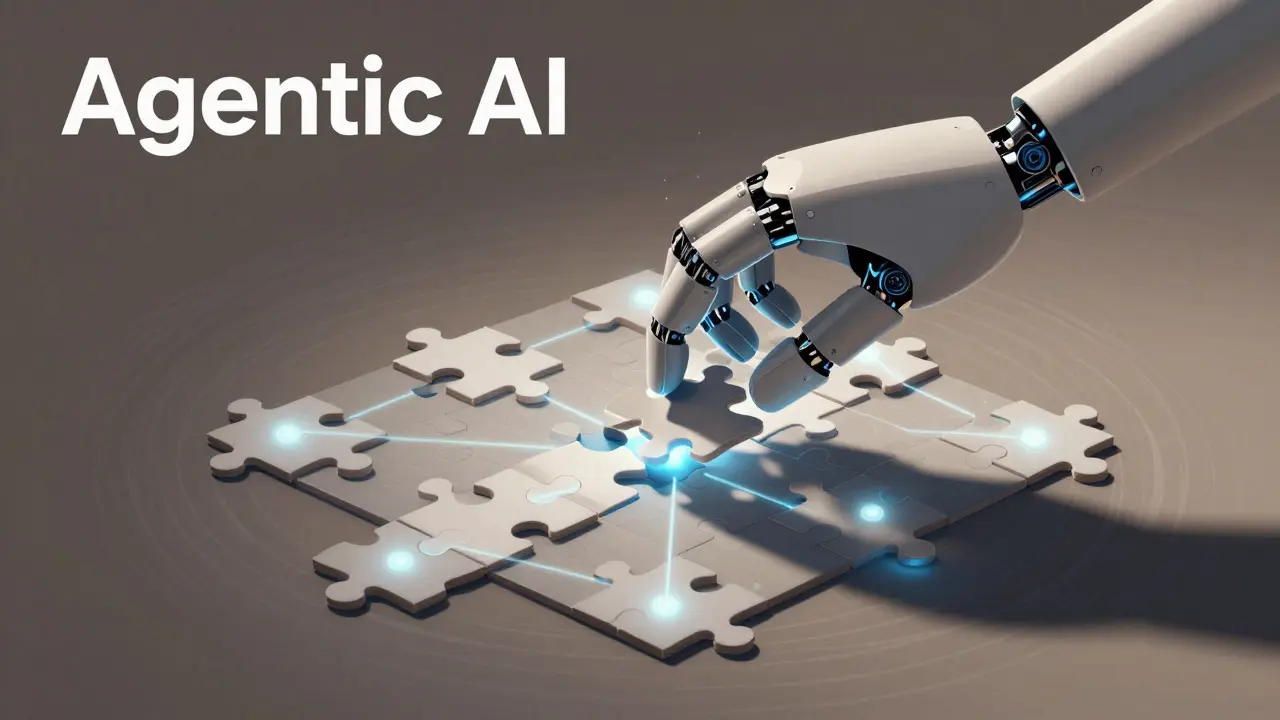
Where is this going? The next phase is "Agentic AI." Unlike current tools that wait for your command, agentic AI takes action. Hexaware launched a platform in September 2025 that autonomously routes contracts for approval and triggers renegotiation workflows based on risk thresholds. Imagine your AI noticing a price increase in a raw material and automatically initiating a renegotiation with your supplier. That is coming soon.
By 2028, Gartner predicts that 70 percent of organizations will use generative AI for vendor assessments and clause management. It will become the standard interface for procurement. Those who wait too long will fall behind in speed and risk mitigation.
Is Generative AI safe for handling confidential contract data?
Yes, if you choose enterprise-grade providers that follow ISO 27001 standards. Look for end-to-end encryption, role-based access control, and audit trails. Avoid using public, free-tier LLMs for proprietary legal documents, as your data may be used to train their models.
How long does it take to implement a Generative AI procurement tool?
For a basic setup, expect 4-8 weeks to build a clause library and train the model. Full enterprise integration with ERP systems like SAP or Oracle typically takes 8-12 weeks. Training staff adds another 2-6 weeks depending on complexity.
Can AI replace my legal team in contract reviews?
No. AI is an assistant, not a lawyer. It excels at identifying risks and suggesting language, but it lacks the nuanced judgment required for complex negotiations or ambiguous legal gray areas. Always maintain a "human-in-the-loop" process for final approvals.
What are the biggest pitfalls when using AI for vendor assessments?
The main pitfalls are data silos and false positives. If your internal data is fragmented, the AI’s insights will be incomplete. Additionally, early-stage models may flag irrelevant issues, increasing workload until the system is fine-tuned with feedback.
Which industries benefit most from AI in procurement?
Industries with high volumes of standard contracts, such as manufacturing, retail, and IT services, see the fastest ROI. Highly specialized sectors like aerospace or pharmaceuticals face more challenges due to complex regulatory frameworks, requiring extensive custom training of the AI models.