Generative AI Liability in 2026: Who Is Responsible for AI Errors?
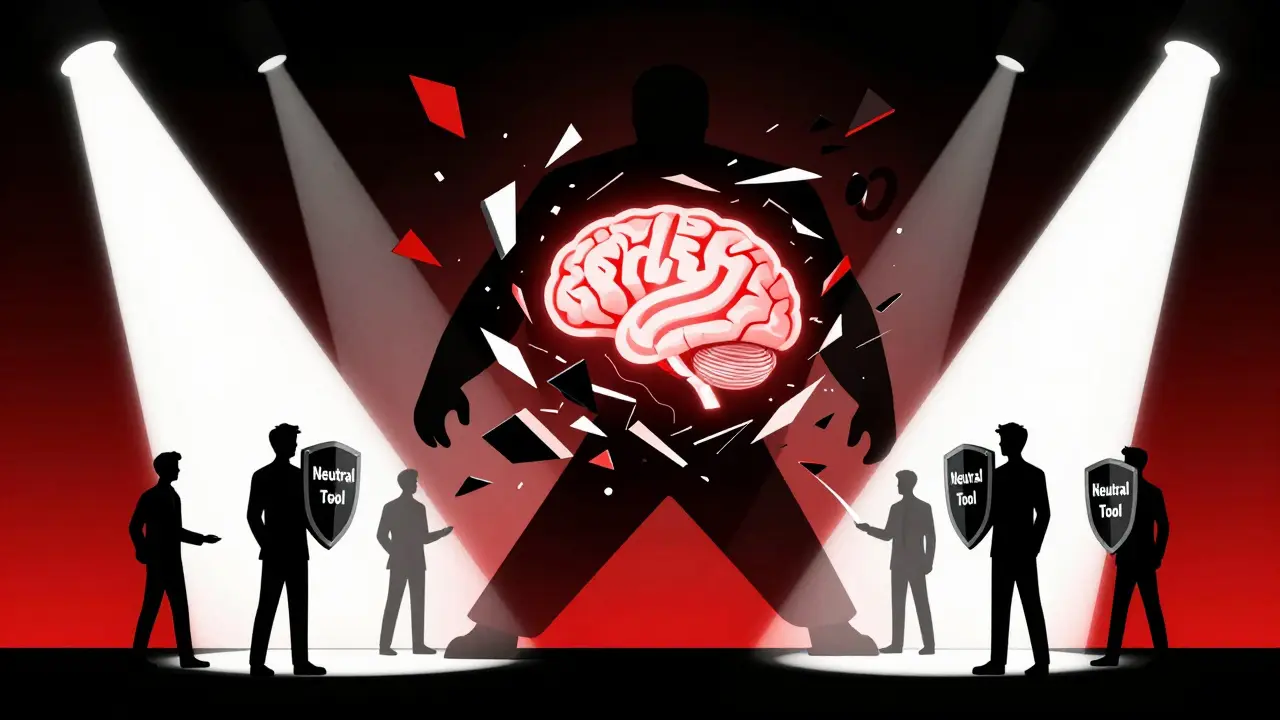
Who pays when an AI system hallucinates a medical diagnosis, generates a deepfake that ruins a reputation, or signs a bad contract? In 2026, the answer is no longer 'nobody.' The legal landscape has shifted dramatically from vague guidelines to enforceable statutes. We are moving past the era where companies could claim their algorithms were just 'neutral tools.' Now, developers, platform operators, and end-users face distinct, heavy liabilities.
The old shield of Section 230-the law that protected social media sites from being sued for what users posted-is cracking under the weight of generative AI. Courts and regulators are deciding whether an AI model is a passive conduit or an active content creator. This distinction determines who gets sued when things go wrong. If you are building, deploying, or using AI systems today, understanding these lines of responsibility is not optional; it is survival.
The Death of the 'Neutral Platform' Defense
For decades, internet platforms relied on Section 230 of the Communications Decency Act, which provides immunity to online platforms from liability for third-party content. But generative AI breaks this mold. When an AI generates text, image, or code based on a prompt, is it merely displaying information, or is it creating new content?
Legal scholars and courts are increasingly arguing that AI systems qualify as "information content providers." If an algorithm materially contributes to the creation of harmful output, it loses its Section 230 protection. Precedents like Fair Housing Council v. Roommates.com established that if a platform helps create illegal content, it cannot hide behind neutrality. Representative Frank Pallone (D-NJ) has pushed for reforms that hold platforms accountable for AI outputs, arguing that allowing companies to claim neutrality while using AI to generate content exacerbates harm.
This means vendors can no longer say, "The AI made a mistake, not us." If your company builds the model, you are likely viewed as the publisher of its output. This shift forces a re-evaluation of how we design safety filters and content moderation policies. You are now liable for the speech of your software.
Vendor Responsibilities: Training Data and Transparency
Vendors-the companies building foundation models-face the highest scrutiny. Their liability stems largely from two areas: training data provenance and transparency disclosures.
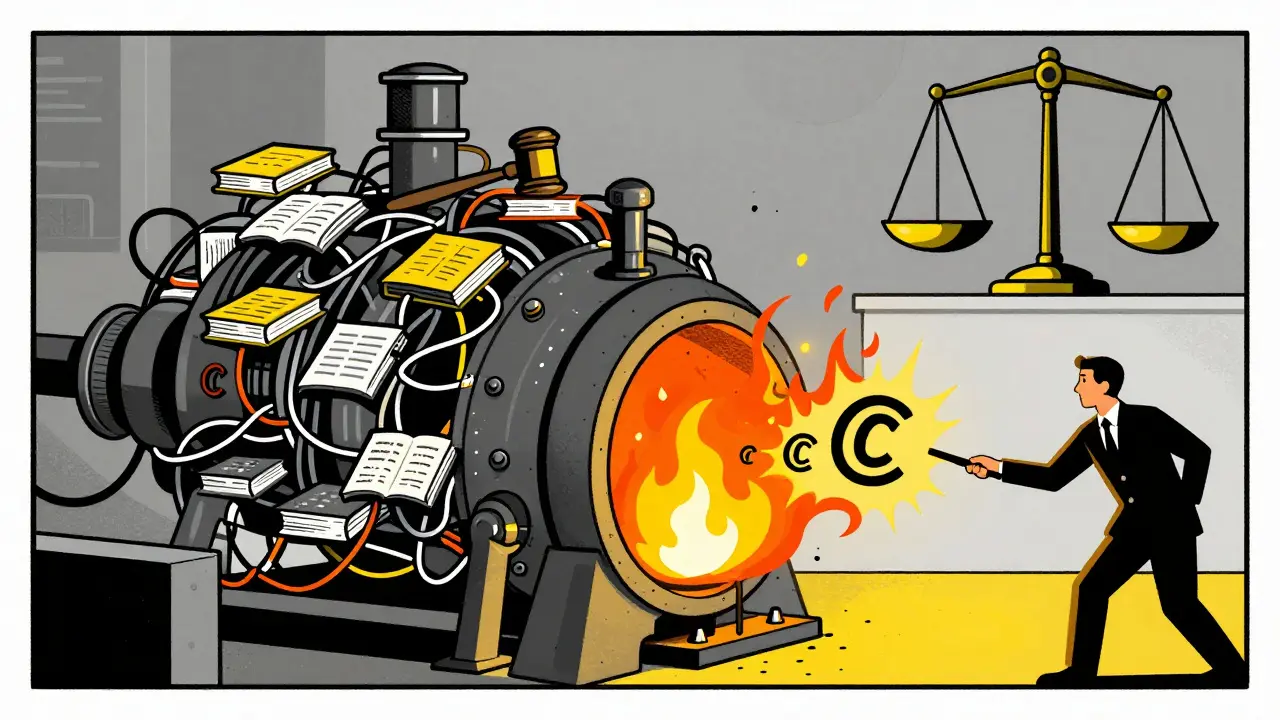
In California, AB 2013, effective January 1, 2026, requires developers of generative AI systems to publicly disclose detailed information about the datasets used to train their models. Developers must post these details on their websites and update them whenever substantial modifications occur. While this promotes transparency, it creates tension with intellectual property protections. Vendors worry that revealing dataset sources exposes them to litigation over copyrighted material.
Speaking of copyright, the stakes have never been higher. Major cases like New York Times v. OpenAI and Getty v. Stability AI are reaching decisive phases in 2026. If courts rule that training on copyrighted data without permission is not fair use, vendors could face massive damages. The $1.5 billion settlement by Anthropic highlighted the risk of "orphaned data"-copyrighted material ingested into models that cannot be easily removed without breaking the model's functionality. This creates a supply chain risk: if a vendor’s model is trained on illicit data, any enterprise using that model faces secondary liability.
To mitigate this, security teams are implementing "Data Integrity Attestation" in vendor contracts. This requires vendors to explicitly confirm that no pirated datasets were used. It is no longer enough to trust the marketing brochure; you need legal guarantees about the cleanliness of the training data.
Operator Obligations: Risk Management and Oversight
If vendors build the engine, operators deploy it. Operators include businesses integrating AI into customer service, healthcare diagnostics, or financial advising. In 2026, "reasonable precautions" is the legal standard, but it carries teeth.
New York’s comprehensive AI regulations impose strict role-based obligations. Operators must provide clear disclosures, implement safety protocols, protect minors, and monitor for harmful content. Crucially, New York law creates a private right of action. Any person suffering an "injury in fact" from an operator’s violation can sue directly. Remedies include injunctive relief and damages equal to the greater of actual losses or a statutory minimum of $1,000 per violation, plus attorney fees.
Operators must also conduct regular risk assessments. This isn’t a one-time checkbox. It involves continuously monitoring AI performance to identify drift or bias. For high-risk applications, such as those affecting housing, credit, or employment, federal agencies like the EEOC and FTC emphasize that existing laws apply equally to AI-mediated decisions. You can be liable for disparate impact even if you rely on a third-party model. The defense "the AI did it" is dead. The operator is responsible for ensuring the tool does not discriminate.
User Liability: The End of the 'Autonomous-Harm' Defense
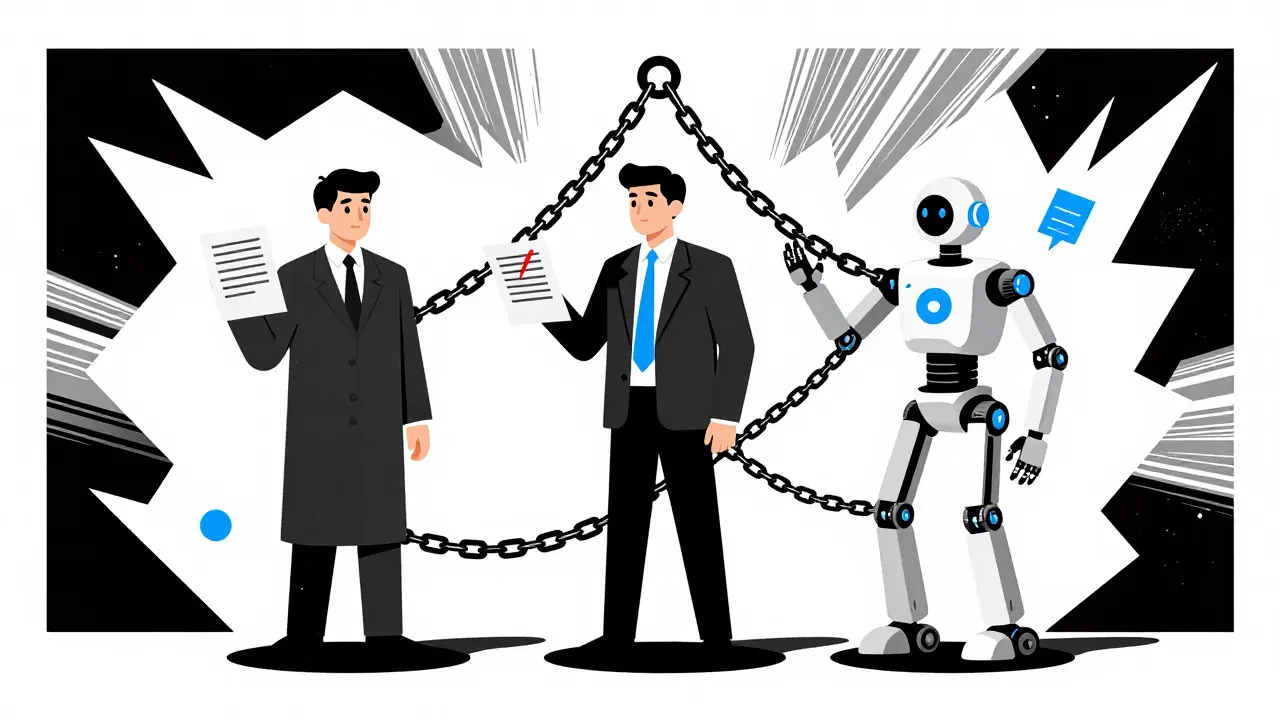
What about the individual or company using the AI? Can you blame the tool if you publish its output? California’s AB 316, which limits affirmative defenses for civil liability by prohibiting defendants from raising an 'autonomous-harm defense', says no. This law prevents users, modifiers, or developers from shifting blame to the technology’s independent decision-making in lawsuits alleging harm caused by AI-generated content.
This is critical for professionals. If a lawyer uses an AI to draft a brief and it cites non-existent cases, the lawyer is liable. If a marketer uses an AI to generate an ad that infringes on trademarks, the marketer is liable. The law ensures human responsibility remains intact. You are the editor-in-chief of your AI’s output. Human oversight is not just best practice; it is a legal requirement to avoid negligence claims.
Furthermore, autonomous AI agents complicate agency law. As AI evolves from chatbots to agents that can sign contracts or execute trades, questions arise about who is bound by those actions. Currently, courts scrutinize whether the user authorized the specific action. Users should review vendor contracts to ensure indemnification clauses cover autonomous errors and hallucinations that result in financial loss. Without explicit contractual protection, the user bears the brunt of the agent’s mistakes.
A Hybrid Tiered Liability Framework
Recognizing that a one-size-fits-all approach stifles innovation, policymakers are proposing a hybrid tiered liability framework. This approach scales regulatory obligations based on company capacity and risk level.
| Entity Type | Risk Level | Key Obligations | Enforcement Mechanism |
|---|---|---|---|
| Global Tech Vendor | High | Rigorous testing, ongoing monitoring, strong redress mechanisms, full dataset disclosure | Government fines, private lawsuits, criminal penalties for severe breaches |
| Startup Developer | Low/Medium | Core safeguards, basic transparency, scaled-to-capacity risk assessments | Regulatory guidance, limited fines, focus on compliance support |
| Enterprise Operator | Context-Dependent | Human oversight, clear user notices, bias mitigation, audit trails | Private right of action (e.g., NY), FTC enforcement, industry-specific regulations |
| End User | Variable | Verification of output, no reliance on 'autonomous-harm' defense, professional diligence | Civil liability for negligence, breach of duty, IP infringement |
This principle of proportionality ensures that a small startup experimenting with AI is not crushed by the same burdens as a global tech giant rolling out high-risk systems. However, core safeguards remain mandatory for all. The goal is to balance accountability with innovation, ensuring that smaller players can enter the market while holding large actors to stricter standards due to their broader impact and resources.
Practical Steps for Compliance in 2026
Navigating this complex web requires proactive measures. Here is how organizations are adapting:
- Implement Provenance Labeling: Treat watermarks and latent disclosures as core product features. Laws like the Utah Artificial Intelligence Policy Act require clear disclosure when consumers interact with generative AI. Ensure your AI-generated content carries persistent indicators so users know they are interacting with a machine.
- Update Vendor Contracts: Include specific clauses for AI risks. Demand data integrity attestations, indemnification for autonomous agent errors, and rights to audit training data sources. Do not accept generic terms of service.
- Establish Human-in-the-Loop Protocols: For high-stakes decisions, mandate human review. Document this process thoroughly. This documentation serves as evidence of "reasonable precautions" in the event of a lawsuit.
- Monitor Regulatory Updates: With bills like A 222 and S 5668 advancing to impose liability for misleading AI information, the rules are changing monthly. Assign a compliance officer to track state and federal developments, particularly in California and New York.
- Conduct Regular Audits: Test your AI systems for bias, accuracy, and security vulnerabilities. Use third-party auditors to validate your claims. An external audit provides stronger legal defense than internal self-assessments.
The transition from theoretical frameworks to active enforcement is complete. Agencies are levying penalties, and private litigants are filing suits. Ignorance of the law is no longer a defense, especially when the law explicitly prohibits claiming ignorance via an "autonomous-harm" defense.
Does Section 230 still protect AI companies?
It is becoming increasingly difficult to rely on Section 230 for generative AI. Courts are questioning whether AI systems that actively generate content qualify as neutral platforms or as "information content providers." If an AI is deemed to materially contribute to the creation of harmful content, it may lose Section 230 immunity, making vendors liable for their outputs.
What is the 'autonomous-harm' defense?
The autonomous-harm defense was a legal argument where defendants claimed they were not liable because the AI acted independently. Under California’s AB 316 and similar emerging laws, this defense is prohibited. Humans and companies remain legally responsible for damages caused by AI-generated or AI-modified content, regardless of the system's autonomy.
How much can I be fined for violating AI regulations?
Penalties vary by jurisdiction. In New York, violations can result in up to $1 million for the first offense and $3 million for subsequent ones. California’s SB 53 allows penalties up to $1,000,000 per violation, scaled to severity. Additionally, private lawsuits can award statutory damages of at least $1,000 per violation plus attorney fees.
Do I need to disclose if my website uses AI?
Yes, in many jurisdictions. Laws like the Utah Artificial Intelligence Policy Act and California’s consumer protection requirements mandate "clear and conspicuous" notice when individuals interact with generative AI. Failing to disclose AI interaction can lead to regulatory fines and loss of consumer trust.
Who is liable if an AI agent signs a bad contract?
Currently, the user or operator of the AI agent is typically liable. Courts scrutinize whether the user authorized the action. Since autonomous agents test traditional agency law, users must ensure their vendor contracts include indemnification clauses for autonomous errors. Without this, the human operator bears the financial loss.



It's fascinating to watch the legal system try to apply centuries-old tort concepts to something as ephemeral as a neural network output. The shift from 'neutral tool' to 'active creator' is essentially a philosophical reclassification of what software even is. We used to think code was just math, but now we're treating it like speech or labor. If the AI hallucinates a medical diagnosis, is that negligence or just a statistical error? The law seems to be deciding it's negligence because someone has to pay. I think this forces us to confront the idea that automation isn't really autonomous if humans are still on the hook for the results. It’s a necessary correction, though painful for developers who thought they were building utilities rather than publishers.
Oh my gosh!! This is absolutely terrifying!!! I mean... seriously?! Who is going to pay for all of this?!?! The fines in New York are insane!!! $1 million for the first offense?!?! And then $3 million for subsequent ones?!?! How are small businesses supposed to survive this?!?! It feels like the entire industry is being crushed under the weight of bureaucracy!!! I am so worried about my startup!!! We just want to help people!!! But now we have to worry about 'data integrity attestations' and 'provenance labeling'?!?! It’s overwhelming!!! I don’t even know where to start with compliance!!! Is there any hope left for innovation?!?! Or are we just doomed to be sued into oblivion?!?! Please tell me I’m not the only one freaking out over this!!!
the concept of liability is just a social construct designed to maintain order in a chaotic world. when you remove the human element from the decision making process you also remove the moral agency required for guilt. yet the courts insist on pinning blame on the operator. it is absurd. the ai does not understand consequences. neither do the corporations that build it. they are just following incentives. so why punish them? perhaps we should punish the users for asking for things they shouldn't. or maybe the whole system is broken and needs to be discarded. i find the tiered framework amusing. it assumes some entities are more responsible than others based on size. but responsibility is individual. not collective.
this is typical american overreach trying to regulate technology that clearly works better elsewhere because we dont have these stupid laws strangling innovation. look at how europe is handling it with their own messy regulations but at least they get that ai is a tool not a person. here in the us everyone wants a lawsuit. its pathetic. the elites in silicon valley probably wrote half these rules to protect themselves while pretending to care about safety. meanwhile real people cant use basic tools without getting audited. its a scam. the 'autonomous-harm' defense was the only thing keeping sanity in the court system. taking that away means every little mistake becomes a multi-million dollar disaster. pure greed driving policy.
The nuance here is often overlooked by the layperson. When we discuss Section 230 erosion, we must consider the jurisprudential precedent set by Fair Housing Council v. Roommates.com. The distinction between a passive conduit and an information content provider is not merely semantic; it is determinative of statutory immunity. Furthermore, the implementation of Data Integrity Attestation is not optional best practice; it is a contractual imperative for risk mitigation. Operators who fail to integrate robust human-in-the-loop protocols are exhibiting gross negligence. The hybrid tiered liability framework attempts to balance proportionality, but the enforcement mechanisms for Global Tech Vendors remain disproportionately severe compared to Startup Developers. One must scrutinize indemnification clauses meticulously.
Stop whining and start complying. This isn't a conspiracy against you, it's basic accountability. You built a product that causes harm, you fix it or you pay for it. The days of hiding behind 'the algorithm did it' are over, and honestly, they should have ended years ago. If you're a lawyer using AI to draft briefs and you don't check the citations, you're incompetent, not victimized. Same for marketers. Same for doctors. Human oversight is the job description. If you can't handle the responsibility of deploying powerful tools, you shouldn't be in the business. The tiered framework is fair because big companies have big resources and big impacts. Deal with it.
I hear the frustration here! It is a lot to take in! But let's stay positive! We can adapt! Let's focus on the solutions! Implementing provenance labeling is actually pretty cool! It’s like giving your AI a digital signature! And updating vendor contracts? That’s just smart business! Protect yourself! I’m all about empowerment! So let’s empower our teams with training! Let’s make sure everyone knows that human review is key! It’s not about fear! It’s about control! We have the power to shape how this tech evolves! Let’s support each other through this transition! You’ve got this! We’ve got this!
theyre watching everything. the data collection never stops. ab 2013 and all these new laws are just excuses to dig deeper into what we train models on. its not about safety. its about control. the government wants to know exactly what information is flowing through the networks. once they have that map they can shut down anything they dont like. the 'orphaned data' issue is a smokescreen. its really about copyright holders wanting to monetize every scrap of human knowledge. trust no one. keep your systems offline if you value privacy. the whole thing is a surveillance state play disguised as consumer protection.
one might argue that the definition of 'creator' is shifting too fast for the law to keep up. if the ai is trained on public domain data is it still creating or just remixing. the line is blurry. yet the penalties are sharp. interesting dichotomy. the operator bears the burden of proof for reasonable precautions. which implies that precaution is possible. but how do you preemptively guard against a hallucination that has never happened before. it seems like a paradox. we are asked to prevent the unforeseeable. or perhaps the foreseeability is the point. we must assume failure is inevitable and plan accordingly. a grim outlook but perhaps the most rational one.