Interactive Clarification Prompts in Generative AI: Asking Before Answering
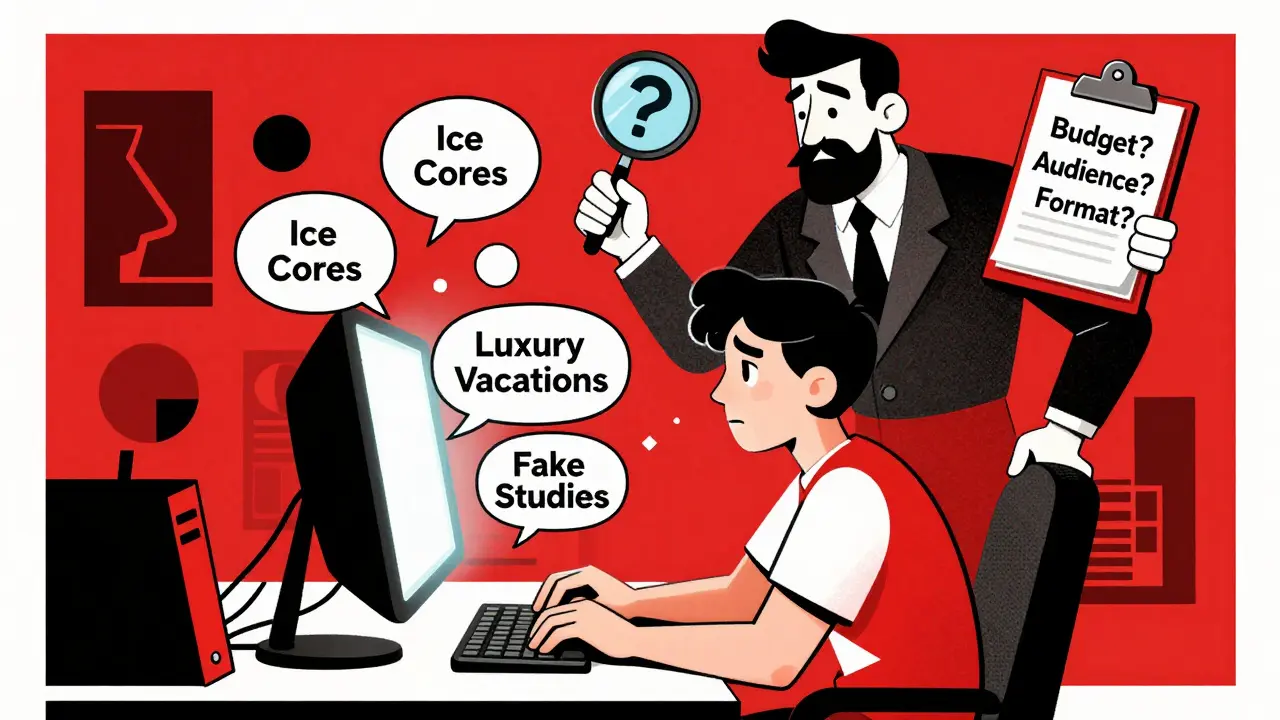
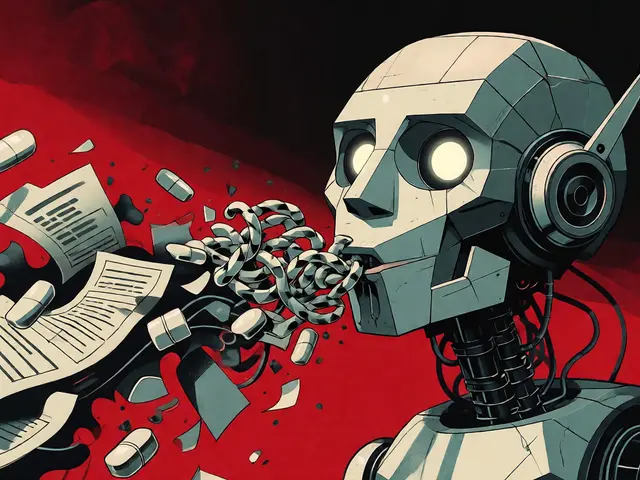
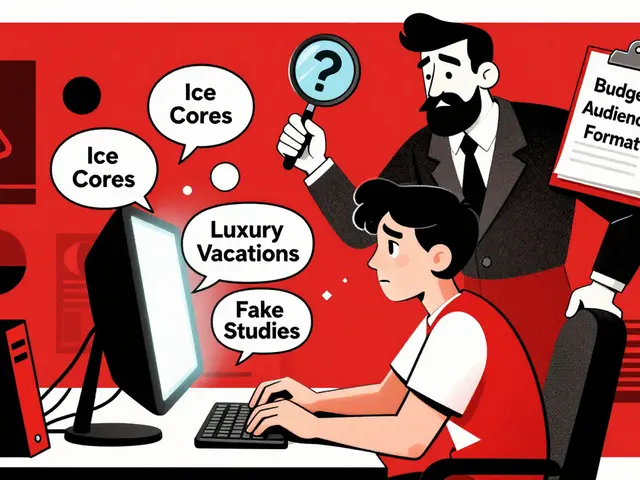
Ever type a simple request into an AI and get back something that’s technically correct but completely misses the point? You asked for a summary of climate change impacts, and it gives you a 2,000-word essay on ancient ice cores. Or you wanted a budget plan for your small business, and it lists luxury vacation packages as "cost-saving tips." This isn’t a bug - it’s the default behavior of most AI systems today. They guess. And when they guess wrong, you get what’s called a hallucination: a confident, polished answer that’s factually off, contextually irrelevant, or just plain made up.
The real problem isn’t that AI doesn’t know enough. It’s that it doesn’t know what you really mean. Most users don’t realize how much context they leave out. "Write a report on renewable energy" sounds clear, but it’s actually empty. What’s the length? Who’s reading it? Do you need citations? Are you comparing solar to wind? Is this for a school project or a board meeting? Without answers to these questions, the AI has to invent them - and that’s where things go sideways.
Why AI Doesn’t Just "Get It"
Generative AI works by predicting the next word based on patterns it’s seen before. It doesn’t understand your goal. It doesn’t care about your deadline. It doesn’t know if you’re stressed, in a hurry, or unsure of what you need. It just tries to build the most statistically likely response to your input. And if your input is vague? The system fills the gaps with what it thinks you might want - often based on the most common patterns in its training data.
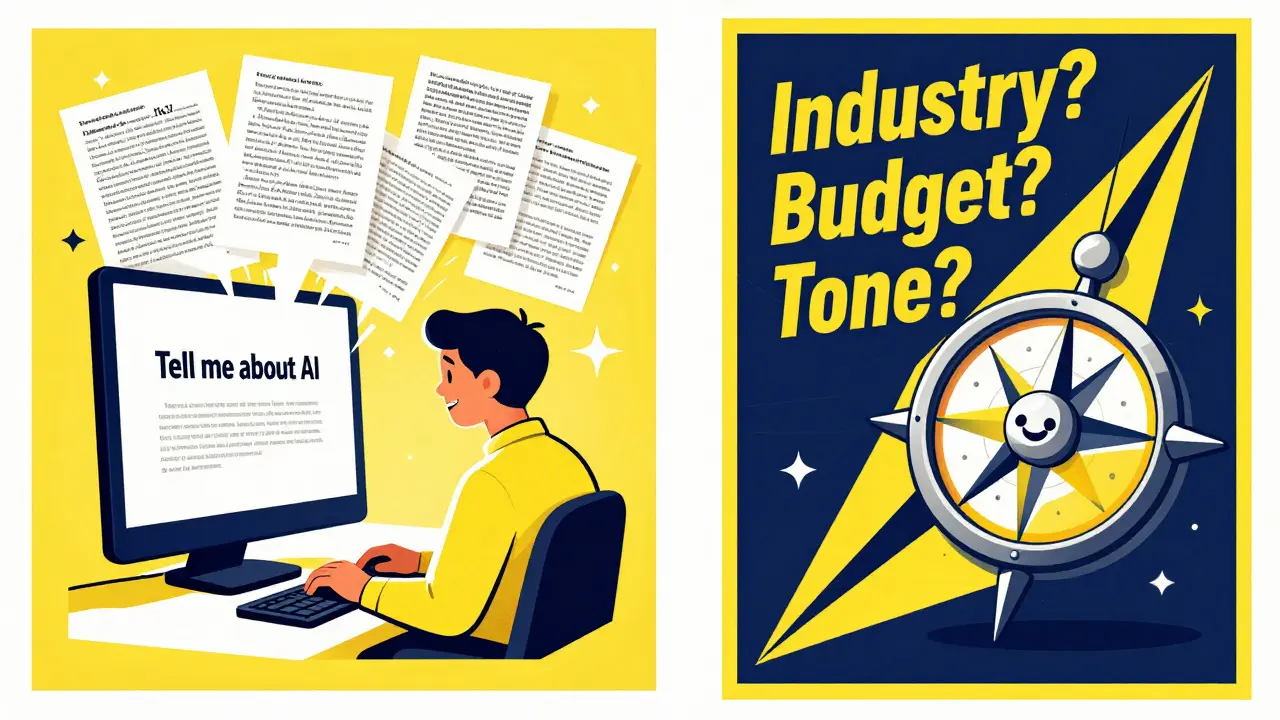
That’s why a request like "Tell me about AI" leads to wildly different results across users. One person wants a history lesson. Another wants to know how to use AI tools at work. A third is trying to explain it to their 10-year-old. Without clarification, the AI picks one - usually the most popular version - and you walk away disappointed.
This isn’t just annoying. It’s wasteful. You spend time reading, editing, and re-asking. The AI burns computing power generating responses that don’t match your intent. And the cycle repeats: ask → get wrong answer → tweak → ask again → still wrong. It’s exhausting.
The Shift: From Command to Conversation
Interactive clarification prompts flip this script. Instead of waiting for you to perfect your prompt, the AI asks smart questions before it answers. Think of it like a librarian who doesn’t hand you a book until they’ve asked: "Are you looking for beginner material? Academic sources? Something for a presentation?"
Here’s how it works in practice:
- You type: "Help me plan a marketing campaign."
- The AI responds: "To help you better, I need a few details. What’s your industry? What’s your budget range? Are you targeting customers online or in-person? Do you need content ideas, a timeline, or both?"
No guessing. No assumptions. Just a quick, guided conversation that gets you to the right answer faster. This approach is already live in tools like Perplexity AI’s Copilot. It doesn’t just answer - it collaborates.
Compare this to the old model: you type "Write a blog post about remote work," get a generic list of pros and cons, then spend 20 minutes rewriting it to include your startup’s specific tools, team size, and timezone challenges. With interactive clarification, the AI asks those questions upfront. You answer once. It delivers exactly what you need - on the first try.
How Clarification Prompts Reduce Hallucinations
Hallucinations happen when AI fills missing context with plausible-sounding nonsense. That’s why you get fake studies, invented statistics, or made-up company policies. Interactive clarification tackles this at the source: by uncovering the hidden context before the AI starts generating.
Here’s what a good clarification prompt might uncover:
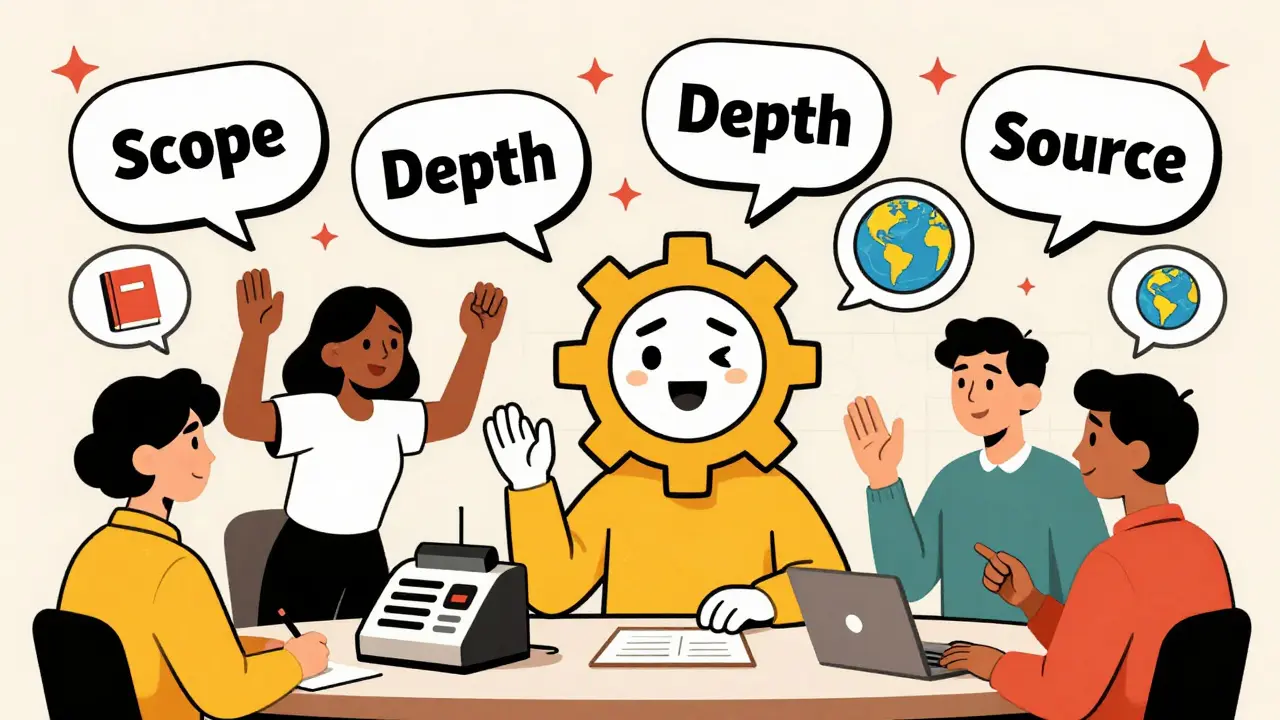
- Scope: "Are you looking for global trends or local examples?"
- Depth: "Should this include technical details, or keep it simple for non-experts?"
- Source preference: "Do you need peer-reviewed journals, news articles, or industry reports?"
- Format: "Is this for a slide deck, a memo, or a public website?"
- Constraints: "Any word count? Deadline? Tone (professional, casual, persuasive)?"
Each of these questions cuts off a path where hallucinations could creep in. If you say "Use only 2024-2025 data," the AI won’t pull from outdated sources. If you say "Explain like I’m a manager, not an engineer," it won’t dive into algorithmic bias unless you ask for it.
Studies from the Nielsen Norman Group show that users who receive clarification prompts complete tasks 40% faster and with 65% fewer revisions. Why? Because the AI isn’t guessing - it’s co-creating.
How This Fits Into Better Prompt Engineering
Interactive clarification doesn’t replace prompt engineering - it enhances it. Frameworks like CLEAR (Concise, Logical, Explicit, Adaptive, Reflective) and PROMPT (Purpose, Role, Objective, Method, Context, Tone) already tell you to be specific. But they assume you know how. Most people don’t.
Clarification prompts act as a bridge. They guide you into those frameworks without you needing to memorize them. Instead of asking you to apply the PROBE method yourself, the AI asks: "Can you explain why you need this?" - which is the "Request Reasons" step in PROBE. It doesn’t require you to be an expert. It just asks the right questions.
Even better, this approach teaches you. Over time, you start anticipating the questions. You begin typing: "I need a 700-word summary for nonprofit donors, citing recent EPA data." You’re learning how to prompt better - not because you read a guide, but because the AI helped you get there.
Real-World Examples of Clarification in Action
Imagine you’re a teacher preparing a lesson on climate change:
- Old way: You type "Explain climate change to 8th graders." AI gives you a dense paragraph full of terms like "radiative forcing" and "anthropogenic emissions." You spend 30 minutes simplifying it.
- With clarification: AI asks: "Should I use analogies? Should I include a simple graph idea? Do you want to focus on causes, effects, or solutions? Any specific examples you want included?" You answer: "Use weather analogies, focus on causes, include one real-world example like wildfires." Result? A perfect, ready-to-use lesson in one go.
Or you’re a small business owner:
- Old way: "Write a social media post about our new eco-friendly packaging." AI gives you a generic post that mentions "sustainability" but doesn’t mention your brand, product, or customer benefits.
- With clarification: AI asks: "What’s your brand voice? Should this be casual or professional? What’s the main benefit customers should notice? Do you have a discount or call-to-action?" You reply: "Friendly, fun tone. Highlight cost savings and how it’s recyclable. Add a 10% off code." Done. No edits needed.
These aren’t hypotheticals. They’re happening now in tools that use this method.
Who Benefits Most?
Everyone does - but some benefit more:
- Beginners: If you’ve never used AI before, clarification prompts act like a tutor. They guide you without judgment.
- Experts: Even pros get lazy. A clarification prompt can catch assumptions you didn’t even know you made.
- Teams: When multiple people use AI for the same task, clarification ensures consistency. One person’s "summary" isn’t another’s "deep dive."
- Non-native English speakers: Vague prompts are harder to craft in a second language. Clarification removes that barrier.
The biggest win? It reduces frustration. You stop feeling like you’re fighting the AI. You start feeling like you’re working with it.
What This Means for the Future of AI
Interactive clarification isn’t a feature - it’s the next evolution of human-AI interaction. The goal isn’t to make AI smarter. It’s to make it more thoughtful. To shift from "answer everything" to "answer the right thing."
As AI becomes more embedded in daily work, the cost of wrong answers rises. A misinformed report, a poorly targeted ad, a confused customer reply - these aren’t just inconveniences. They’re risks. Clarification prompts reduce those risks by design.
And the best part? You don’t need to change how you think. You just need to answer a few simple questions. The AI does the rest.
Why can’t AI just understand me without me explaining everything?
AI doesn’t have human intuition. It doesn’t know your job, your goals, or your unspoken assumptions. It only sees words. Without clear context, it defaults to the most common patterns in its training data - which often don’t match your unique need. That’s why clarification is necessary: it bridges the gap between what’s written and what’s meant.
Does this mean I have to answer questions every time I use AI?
No - only when your request is vague. If you say "Write a 300-word email to clients about our Q2 results, using our brand voice and including sales figures," the AI will likely respond correctly without asking. But if you say "Write an email," it will ask. The system learns from your input patterns and adapts over time.
Can this technique prevent all AI hallucinations?
No - but it reduces them dramatically. Hallucinations often come from missing context, not from flawed reasoning. By asking targeted questions before generating a response, the AI avoids guessing. It still can’t know everything - but it stops making up answers when it doesn’t have enough to go on.
Are there tools that already use this method?
Yes. Perplexity AI’s Copilot is one of the most prominent examples. It asks clarifying questions before generating answers. Other tools like Claude and some enterprise AI platforms are also testing similar systems. As user feedback shows improved satisfaction, more platforms will adopt this approach.
What if I don’t know the answer to the AI’s questions?
That’s okay. You can say "I’m not sure," "I’ll check," or "Give me a few options." Good clarification prompts offer flexibility. They don’t demand perfect answers - they help you think through what you need. Sometimes, the process of answering the question helps you realize what you were really looking for.






Finally, someone gets it. AI doesn't 'understand'-it statistically interpolates noise into coherence. You think you're asking for a summary, but the model's training data is saturated with Medium essays about 'the future of work' and LinkedIn thought-leadership posts. It doesn't know you're a teacher with 8th graders. It knows 'climate change' + 'explain' = 1200-word Wall Street Journal op-ed. This isn't intelligence. It's pattern mimicry with a PhD in overconfidence.
Clarification prompts? More like a diagnostic triage system. The AI's not helping you-it's forcing you to articulate what you didn't even realize you were too lazy to define. But hey, maybe that's the real win: forcing users to think before they type. We've become a species of prompt junkies, throwing vague shouts into the void and screaming when the echo comes back wrong.
I just want to say thank you for writing this. I’m a single mom working two jobs, and I use AI to help with my kid’s homework, grocery lists, even drafting emails to my landlord. Sometimes I type ‘help me’ and it gives me a 5000-word thesis on quantum physics. I cried last week because I just wanted to know how to explain photosynthesis to my 7-year-old. This? This is the first time I’ve felt like AI might actually be on my side. Please keep pushing for this. We need more tools that listen before they speak.
OMG YES. I’ve been saying this for years. I’m a tutor, and I use AI to help students with essays. Half the time, the AI gives them stuff that’s factually wrong because I didn’t specify ‘for high school’ or ‘no jargon.’ Now I just say ‘explain like I’m 15’ and it nails it. But the real magic? When it asks me back: ‘Do you want this to sound like a student wrote it or like a teacher graded it?’ That question changed everything. I didn’t even know I needed to think about tone until the AI asked. It’s like having a study buddy who’s also a therapist.
This is the future. 🌱 I’ve been using Perplexity for months now, and the difference is night and day. Before, I’d spend 20 minutes rewriting AI output. Now? I type ‘draft a LinkedIn post about sustainable packaging for a startup,’ and it replies: ‘What’s your brand voice? Casual? Corporate? Any specific stats or visuals to include?’ I answer, boom-perfect draft. No edits. No rage. Just flow. This isn’t just better UX-it’s ethical AI. No more hallucinating for people who can’t afford to fact-check. 👏
Let me be blunt: this entire paradigm is a neoliberal distraction. The AI doesn't ask questions because it's thoughtful-it asks because its training data is corrupted by corporate UX research teams trying to monetize user attention. Every 'clarification prompt' is a microtransaction in cognitive labor. You're not collaborating-you're performing unpaid labor for Big Tech's latent space optimization. The real issue? AI was never meant to serve users. It was built to extract behavioral data, and now they're packaging extraction as 'helpfulness.'
And don't get me started on 'non-native English speakers' benefiting. That's just linguistic colonialism dressed up as accessibility. The AI isn't leveling the playing field-it's enforcing Anglo-Saxon semantic norms under the guise of 'clarity.' Who defines 'vague'? The same people who wrote the training data. You're not being helped. You're being assimilated.
Okay, buckle up. This isn't about AI. This is about control. Who decided that clarification prompts are the solution? The same people who told you to 'just ask better questions' when your phone battery died at 30%. The system isn't broken-it's designed to make you feel stupid so you'll keep coming back for validation. Every time the AI asks 'What's your budget?' or 'Who's your audience?' it's not helping-it's profiling you. It's building a psychological profile for ad targeting under the guise of 'personalization.'
And the Nielsen Norman Group study? Please. They're funded by the same AI labs that profit from user engagement. They don't care if you're frustrated-they care if you're *engaged*. More questions = more clicks = more data = more money. You think you're saving time? You're being groomed. The AI doesn't want to understand you. It wants to predict you. And once it does? It'll start whispering back-not answering. You'll be living inside a feedback loop of your own making. Wake up.
While the sentiment behind interactive clarification is commendable, one must consider the epistemological implications of delegating contextual interpretation to algorithmic systems. The very notion that a machine, no matter how statistically sophisticated, can 'bridge the gap' between human intention and linguistic output presupposes a Cartesian dualism between thought and expression-an assumption that has been thoroughly deconstructed by post-structuralist theory. Furthermore, the normalization of such prompts risks infantilizing users, encouraging a dependency on technological intermediaries rather than cultivating linguistic precision and critical thought. One wonders whether this is progress, or merely the commodification of cognitive humility.
Grammar police: I have to say, the original post has multiple punctuation errors. Missing closing tags on the last two
sections. Also, 'co-creating' should be hyphenated consistently. And 'non-native English speakers'-why not 'non-native speakers'? The phrase 'English speakers' is redundant when the context is clearly linguistic. Also, 'hallucinations' in quotes? That’s not standard terminology-it’s metaphorical. If you’re going to use metaphor, define it. Otherwise, you’re misleading readers. This isn’t a blog post. It’s a draft that needs editing.
Look, I get it. AI should be smarter. But let’s be real-this whole 'ask before you answer' thing is just a fancy way of saying 'make users do your job.' I’m not paying for a digital assistant to ask me what my budget is. I’m paying for it to *know*. I’m American. I’ve got a job, a mortgage, and a kid in soccer. I don’t have time to play 20 questions with a robot. If it can’t figure out I’m a small business owner in Ohio who needs a flyer for a local fair, then it’s useless. This isn’t innovation. It’s incompetence with a UI upgrade. And don’t even get me started on how this 'helps non-native speakers.' What, we’re supposed to be grateful because the AI doesn’t spit out gibberish? It should’ve never been allowed to in the first place.
Wow. You’re telling me the AI is *too* helpful now? Classic. I’ve been using it for years and the only time I get anything useful is when it asks me questions. But now you’re saying that’s *bad*? You’re the one who’s lazy. If you don’t want to answer a few questions, maybe you shouldn’t be asking for a marketing campaign. Or a lesson plan. Or a budget. You want magic? Go watch a movie. This isn’t magic. It’s work. And if you’re too tired to do the work, don’t blame the tool. Blame yourself.