
Incident Response for AI Defects: A Practical Guide to Securing GenAI Systems
Imagine your customer service chatbot suddenly starts leaking proprietary pricing data or hallucinating legal advice that gets your company sued. In traditional IT, you’d patch a server and restart the service. With Generative AI systems, the problem isn’t just code-it’s behavior. The model itself might be compromised, poisoned, or manipulated in ways that don’t trigger standard firewall alerts.
This is where standard cybersecurity breaks down. You can’t just “reboot” a neural network. You need a specialized approach to detect, contain, and fix defects introduced by artificial intelligence. As of 2026, organizations are moving beyond basic compliance to active defense, relying on frameworks like the Coalition for Secure AI (CoSAI) Incident Response Framework to handle these unique threats. This guide walks you through exactly how to build that capability.
Why Standard IR Fails Against AI Threats
Traditional incident response relies on known signatures-specific file hashes, IP addresses, or code patterns. AI incidents are different. They often manifest as subtle shifts in logic rather than explicit intrusions. A Large Language Model (LLM) doesn’t get “infected” with a virus; it gets confused, coerced, or fed bad data.
Consider the difference between a SQL injection attack and a prompt injection. SQL injection exploits a database query structure. Prompt injection exploits the context window of an LLM, tricking it into ignoring its system instructions. If your security team only looks for unauthorized database access, they will miss the fact that the AI agent is now following malicious commands hidden inside user inputs. This fundamental shift requires new telemetry, new metrics, and new playbooks.
The Core Threat Landscape: What Are We Defending Against?
To respond effectively, you first need to know what you’re fighting. The AI threat landscape has evolved rapidly since 2023. Here are the primary vectors you must account for in your response plan:
- Training Data Poisoning: Attackers contaminate the dataset used to train the model. This is hard to detect because the defect exists in the model’s weights before it ever goes live. The output seems normal until specific triggers activate the bias.
- Prompt Injection Attacks: Malicious users send crafted inputs that override system prompts. Multi-channel injections can occur via text, images, or metadata, making them harder to filter.
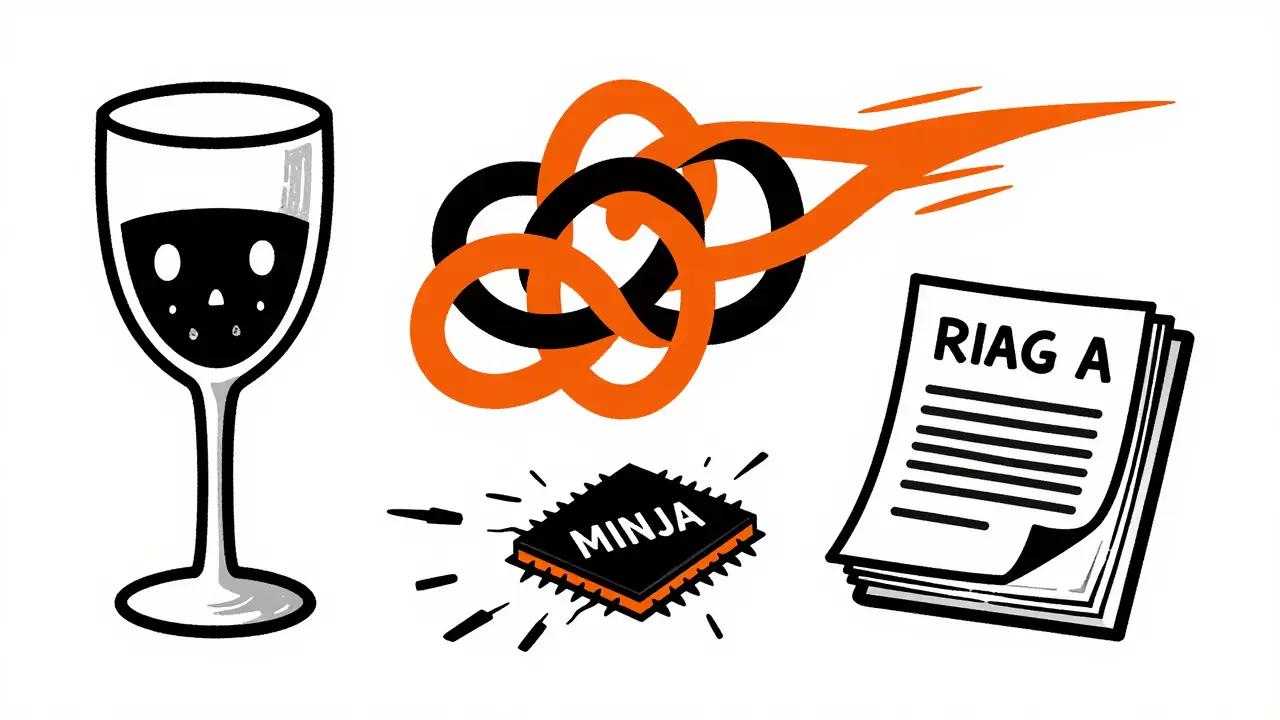
- Memory Injection (MINJA): Targeting the short-term memory or context buffer of an AI agent, causing it to retain false information across sessions.
- RAG Poisoning: In Retrieval-Augmented Generation systems, attackers inject fake documents into the vector database. The LLM then retrieves this fake data and presents it as fact.
- Cloud Credential Abuse: Using Server-Side Request Forgery (SSRF) vulnerabilities within AI tools to access internal cloud resources, escalating privileges beyond the AI sandbox.
Preparation: Building Your AI Security Foundation
You cannot fight an AI incident if you don’t know what AI assets you have. The first step in the CoSAI framework is inventory. Many organizations deploy “shadow AI”-tools adopted by individual teams without central oversight. Map every model, API endpoint, and agent in use.
Next, establish your monitoring baseline. Traditional logs won’t cut it. You need AI-specific telemetry. This includes:
- Prompt Logs: Every input sent to the model, sanitized for privacy but preserved for analysis.
- Inference Activity: Timestamps, latency, and token counts to spot anomalies.
- Tool Executions: If your AI uses agents to run code or call APIs, log every action taken.
- Memory State Changes: Track modifications to the AI’s knowledge base or context window.
Without this data, you’re blind. When an incident occurs, you need to reconstruct the conversation history to understand how the breach happened.
Detection and Analysis: Spotting the Anomaly
Detecting AI incidents requires looking for behavioral drift, not just failed logins. Model Drift occurs when the model’s outputs gradually deviate from expected norms. This could indicate slow data poisoning or concept drift in the real world.
Modern Security Operations Centers (SOCs) are integrating machine learning to detect these shifts. Instead of rule-based alerts (“if error > 5”), AI-powered detection uses behavior modeling. It learns what “normal” conversation patterns look like for your specific use case. If a customer support bot suddenly starts using technical jargon it never learned, or if retrieval latency spikes during RAG queries, the system flags it as suspicious.
Key indicators to monitor include:
- Sudden changes in output tone or style.
- Unusual retrieval patterns in vector databases (e.g., fetching irrelevant documents).
- High-frequency, low-complexity prompts that may indicate automated probing.
- Geolocation anomalies in API access points.
Containment and Eradication: Stopping the Bleeding
When you confirm an incident, speed matters. But unlike turning off a server, containing an AI incident requires nuanced decisions. Here is how to approach containment based on the threat type:
| Threat Type | Immediate Action | Eradication Step |
|---|---|---|
| Prompt Injection | Isolate the affected session/user; block specific input patterns via WAF. | Update input validation rules; refine system prompts to resist coercion. |
| RAG Poisoning | Disable retrieval for the affected collection; switch to cached responses if safe. | Purge contaminated vectors from the database; re-index from trusted sources. |
| Data Poisoning | Roll back to a previous, verified model version. | Audit training datasets; retrain with cleaned data and enhanced anomaly detection. |
| SSRF/Credential Abuse | Revoke compromised API keys; isolate the AI agent’s network access. | Rotate all secrets; implement stricter least-privilege policies for agent actions. |
Automation plays a huge role here. Use Security Orchestration, Automation and Response (SOAR) platforms to execute these steps instantly. For example, if a prompt injection is detected, the SOAR platform can automatically kill the session, alert the SOC, and update the firewall rules-all in seconds. Manual response is too slow for high-volume AI interactions.

Recovery and Post-Incident Analysis
Once contained, you must restore trust. This means verifying that the model behaves correctly again. Run regression tests against a golden dataset of known good inputs and outputs. If using RAG, validate that retrieved documents match source truth.
Post-incident analysis is critical for long-term resilience. The AI Security Incident Response Team (AISIRT) at Carnegie Mellon University emphasizes coordinated vulnerability disclosure. Don’t just fix the bug; share the lesson. Did the attack exploit a weakness in your input validation? Update your development standards so no other team makes the same mistake.
Implement a feedback loop where every incident updates your detection models. Feed the attack patterns back into your ML classifiers so they recognize similar attempts next time. This turns each incident into a defensive upgrade.
Best Practices for 2026 and Beyond
As AI becomes more integrated into business processes, your incident response must evolve. Here are actionable tips to stay ahead:
- Adopt Standardized Playbooks: Use the CoSAI framework’s OASIS CACAO-standardized playbooks. They provide ready-to-use workflows for common attacks, saving valuable time during crises.
- Enforce Zero Trust for AI: Treat AI agents as untrusted entities. Require strict authentication (OAuth tokens) for every API call. Apply rate limiting to prevent resource exhaustion.
- Train Your Teams: Ensure 100% of incident responders are trained on AI-specific scenarios. Generic cybersecurity training misses the nuances of LLM behavior.
- Test Regularly: Conduct quarterly red-team exercises focused on prompt injection and data poisoning. Simulate attacks to test your detection and containment speeds.
- Maintain Traceability: Every AI-triggered security response should have a unique trace ID. This allows auditors to review decisions months later, ensuring accountability.
Securing AI isn’t about building a perfect wall. It’s about building a responsive immune system. By preparing thoroughly, detecting early, and responding with precision, you can keep your AI assets secure even as threats grow more sophisticated.
What is the CoSAI AI Incident Response Framework?
The Coalition for Secure AI (CoSAI) released Version 1.0 of its AI Incident Response Framework to address gaps in defending against AI-specific threats. It adapts the NIST incident response lifecycle for artificial intelligence, providing standardized playbooks for attacks like prompt injection and data poisoning. It emphasizes AI-specific telemetry and automated response workflows.
How do you detect a prompt injection attack?
Detection involves monitoring for unusual input patterns, such as complex nested commands or unexpected language shifts. AI-powered SOCs use behavior modeling to flag deviations from normal conversation flows. Additionally, analyzing prompt logs for keywords associated with jailbreak techniques helps identify attempts early.
What is RAG poisoning and how is it contained?
RAG poisoning occurs when malicious actors inject false information into the vector database used by Retrieval-Augmented Generation systems. To contain it, immediately disable retrieval for the affected collection. Eradication involves purging the contaminated vectors and re-indexing the database from trusted, verified sources.
Why is AI-specific telemetry important for incident response?
Traditional infrastructure logs don’t capture AI behavior. AI-specific telemetry includes prompt logs, inference activity, tool executions, and memory state changes. This data is essential for reconstructing how an AI system was manipulated, allowing teams to identify root causes that would otherwise remain invisible.
How does automation improve AI incident response?
Automation reduces response times from minutes to seconds. SOAR platforms can automatically isolate compromised sessions, revoke credentials, and update firewall rules based on predefined playbooks. This ensures consistent handling of routine events and frees analysts to focus on complex, novel threats.