Retrofitting Transformers with Guardrails: Safety Layers for Enterprise LLMs
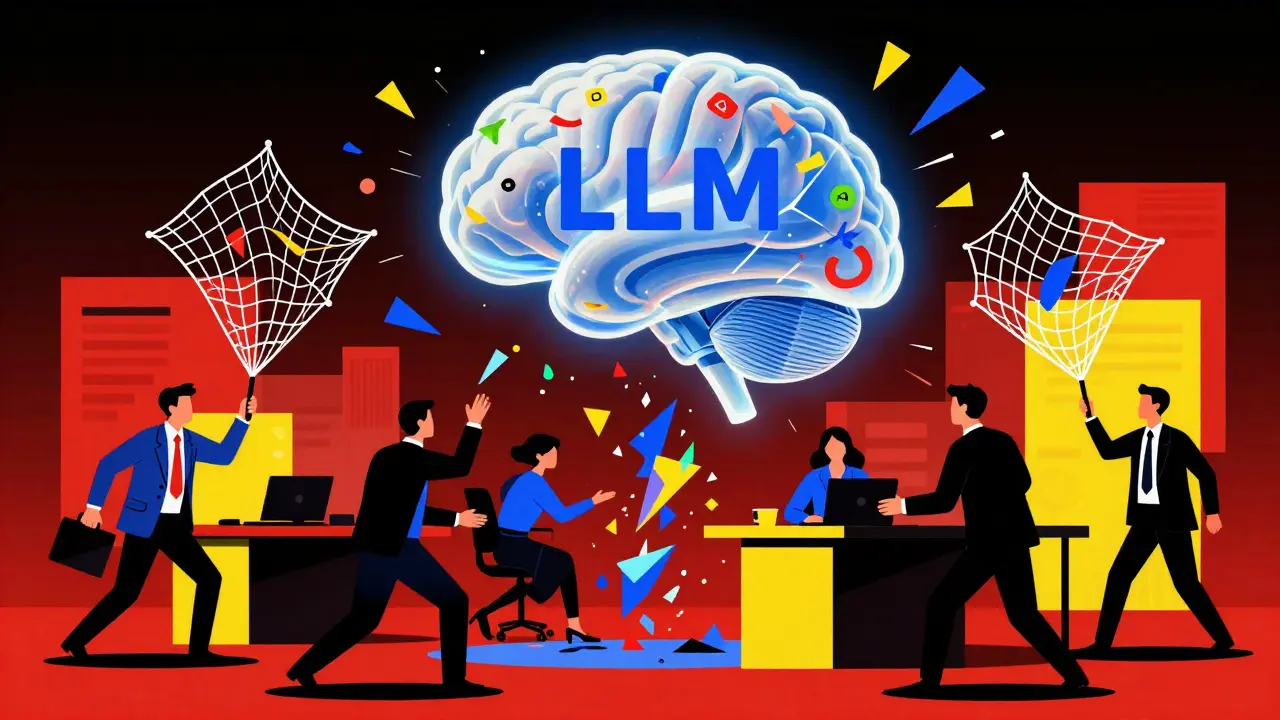
Imagine handing your company’s most sensitive customer data to a brilliant but unpredictable intern. That is essentially what happens when enterprises deploy Large Language Models (LLMs) without robust safety layers. By mid-2026, the novelty of generative AI has worn off, replaced by a hard reality: default vendor protections are not enough. Organizations face real risks-data leaks, regulatory fines, and brand damage-if they rely solely on the built-in filters provided by model creators.
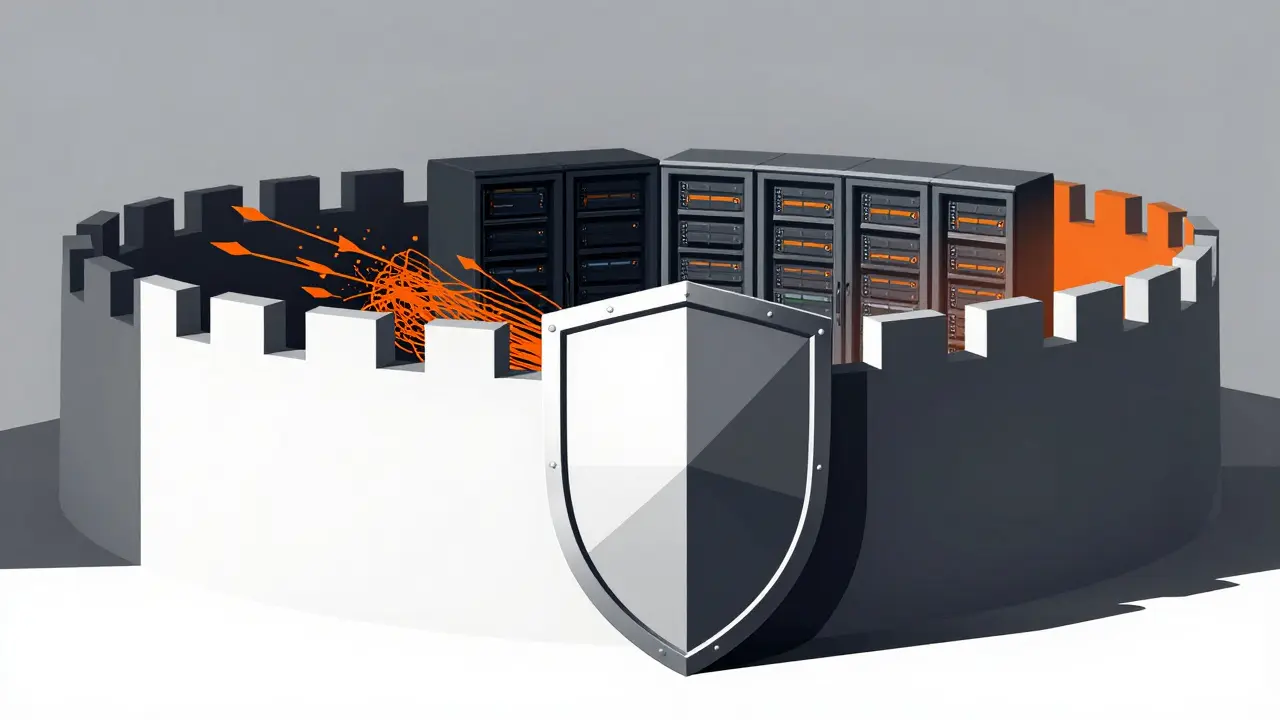
This is where retrofitting transformers with guardrails comes in. These are not optional add-ons; they are critical infrastructure. Guardrails act as configurable safety and compliance layers that sit between users and the LLM system. They block malicious prompts before they reach the model and filter problematic responses before they reach end-users. For enterprises operating under strict regulations like HIPAA or the EU AI Act, these layers are the difference between a successful deployment and a catastrophic failure.
Why Default Vendor Safeguards Fail Enterprises
Major AI providers include baseline safety measures designed for public-facing applications. However, these generic filters often fail in non-obvious ways when applied to enterprise environments. Research from 2025 highlighted a significant vulnerability: standard filters operate on "fragile assumptions." Security researchers demonstrated that techniques like "Chain-of-Jailbreak" attacks can trick models over multiple sequential steps, bypassing safety rules entirely.
The threat landscape is evolving rapidly. A comprehensive study examining prompt-injection defense methods found that adaptive attacks could break all eight major defense mechanisms tested, including paraphrasing-based filters and perplexity checks. This reveals an "arms race nature" where adversaries iteratively evolve their prompts to fool detectors. If your enterprise relies only on the provider’s default settings, you are leaving the door open for sophisticated threats that target specific business logic rather than general toxicity.
Furthermore, generic protections do not account for jurisdiction-specific legal requirements. An LLM might be safe for a casual chatbot but completely unacceptable for processing medical records under HIPAA or financial data under GDPR. The lack of transparency in how vendor guardrails make decisions makes it nearly impossible to audit safety choices or prove regulatory compliance during an inspection.
Architecting Layered Defense Systems
Modern guardrail architectures implement a layered defense approach, combining multiple detection and prevention mechanisms. This strategy ensures that if one layer fails, others remain active to protect the system. Effective implementation requires addressing both input and output sides of the interaction.
Input-Side Guardrails: These mechanisms prevent harmful data from ever reaching the model. They typically use a multi-technique approach:
- Lightweight Sanitizers: Remove high-risk symbols, keywords, or patterns known to trigger vulnerabilities.
- Classifier Detectors: Use smaller, specialized models to identify subtler attacks like indirect prompt injections.
- PII Scrubbing: Detect and anonymize Personally Identifiable Information (PII) at ingestion. This ensures that raw personal data never enters the LLM context window, significantly reducing privacy risks.
Output-Side Guardrails: These apply detection and filtering to model responses before they are delivered to the user. Even well-aligned models can occasionally produce unsafe or policy-violating content. Output guardrails ensure that hallucinations, biased statements, or proprietary data leakage are caught and redacted in real-time.
Prompt injection attacks remain a primary concern. These occur when malicious inputs cause LLMs to ignore prior instructions-for example, using phrases like "Ignore previous instructions" or embedding role-play scenarios to trick the model into bypassing safety rules. Layered defenses must specifically detect these semantic shifts in intent.
Enterprise-Grade Solutions: Control and Transparency
Enterprises need more than just blocking capabilities; they require transparency and control. You need to know exactly what content was blocked, why it was blocked, and when policies changed. Custom guardrail solutions provide this visibility, allowing product teams to define precise rules, monitor enforcement in detail, and update criteria as threats evolve.
One notable example is OneShield, developed through research at IBM. It is a model-agnostic, customizable solution that allows organizations to define risk factors and express contextual safety policies specific to their needs. OneShield deploys robust risk detectors including classification, extraction, and comparison mechanisms. Its internal usage at IBM demonstrates its effectiveness in guarding LLM interactions and vetting training data. Additionally, it has been integrated into the InstructLab open-source project, where it automated the detection of Code of Conduct violations in community contributions, significantly reducing manual oversight.
Other prominent tools in this space include Meta's Llama Guard and IBM's Granite Guardian. These implementations address the gap between basic vendor safety and the comprehensive, auditable systems required for enterprise operations. Open-source platforms like OpenGuardrails also offer configurable policy control within a unified architecture, providing flexibility for organizations with unique compliance needs.
| Feature | Vendor Default Filters | Custom Enterprise Guardrails |
|---|---|---|
| Transparency | Low (Black box) | High (Auditable logs) |
| Compliance Fit | Generic (Global average) | Jurisdiction-Specific (HIPAA, GDPR, etc.) |
| Adaptability | Static (Updates controlled by vendor) | Dynamic (Real-time policy updates) |
| Data Privacy | Limited PII scrubbing | Advanced PII/PHI masking at ingestion |
| Attack Surface | Vulnerable to chain-jailbreaks | Layered defense against adaptive attacks |
Deployment Architectures: Cloud vs. On-Premises
How you deploy your LLM dictates how you implement guardrails. Gartner analysis predicts that by 2027, approximately 50 percent of enterprise GenAI models will be domain-specific and often deployed on-premises. This shift enables strict access controls and adherence to standards like HIPAA or GDPR while reducing the attack surface.
On-Premises Deployments: These setups allow for strict data firewalls. Guardrails can anonymize or mask PII at ingestion before the model processes any raw personal data. This ensures comprehensive privacy protection because sensitive information never leaves the local network. Edge scenarios may utilize lightweight models, such as 5MB TensorFlow Lite models, for rapid objectionable content detection directly on devices.
Cloud Deployments: When models operate externally, maintaining privacy is challenging but possible. Network-level guardrails, such as corporate network appliances functioning as AI firewalls, scan LLM API traffic for sensitive data patterns. They block disallowed information from leaving local networks, acting as a coarse but effective measure against large-scale data exfiltration. Alternatively, application-layer guardrails strip sensitive information before data reaches cloud services, addressing privacy concerns while permitting the use of powerful cloud-hosted models.
Organizations must assess their specific risk tolerance. Highly regulated industries typically prefer fully self-contained solutions combining on-premises LLMs with on-premises guardrails. Others accept cloud models if their guardrails guarantee no secret data transmission via rigorous pre-processing and post-processing checks.

Regulatory Compliance as a Driver
Regulatory compliance is no longer a secondary consideration; it is a primary driver for guardrail implementation. The EU AI Act and the U.S. AI Executive Order mandate documented processes for risk mitigation, transparency, and accountability. Many frameworks require output logging, safety audits, and technical controls against specific risks.
Provider guardrails are rarely constructed to guarantee compliance across multiple jurisdictions simultaneously. Enterprises must create safety architectures that meet the precise requirements of their operating regions. For healthcare organizations, HIPAA compliance necessitates ensuring that no Protected Health Information (PHI) is exposed through model interactions. Guardrails enforce this by scrubbing sensitive information, enforcing policy by filtering prohibited content, and supporting auditability through detailed logging.
As regulations evolve, particularly regarding data protection and AI transparency laws, guardrails incorporate additional features. Automatic documentation of why an AI provided specific answers helps meet Algorithmic Transparency requirements. This creates a clear audit trail that demonstrates due diligence to regulators and stakeholders.
Best Practices for Implementation
Implementing guardrails requires balancing safety protection with operational usability. Poorly implemented guardrails can protect safety at the cost of user experience through high latency or frequent needless refusals. To avoid this, follow these production best practices:
- Continuous Red-Teaming: Security teams must routinely test LLM applications with known jailbreaks and new adaptive attacks. This identifies vulnerabilities before production deployment. Remember that current guardrails are fragile; continuous monitoring is essential.
- Low-Latency Enforcement: Protective measures must operate in real-time without degrading user experience. Optimize guardrail models for speed, using lightweight classifiers for initial checks and heavier models only when necessary.
- Multilingual Coverage: Extend guardrails across all supported languages to eliminate blind spots. Attackers often switch languages to bypass English-centric filters.
- Comprehensive Logging: Maintain detailed logs of all blocked inputs and outputs. This is crucial for regulatory compliance, internal oversight, and improving future detection models.
- Iterative Policy Updates: Treat guardrails as living systems. Update criteria regularly as threats evolve and business needs change. Avoid "set and forget" deployment approaches.
Enterprises selecting LLMs for operations must assess safety, security, compliance, and output quality through comprehensive evaluation processes. Three critical considerations emerge: output must originate from enterprise data without hallucination, LLMs must make full use of proprietary data correctly and safely, and all data, inputs, and outputs must be accurate and referenceable. The combination of privacy filters, content controls, and audit logs forms the backbone of using LLMs in regulated environments.
What is the difference between vendor default filters and custom guardrails?
Vendor default filters are generic safety measures designed for broad public use, often lacking transparency and specific compliance alignment. Custom guardrails are tailored to enterprise needs, offering detailed auditing, jurisdiction-specific compliance (like HIPAA or GDPR), and adaptability to emerging threats like chain-jailbreak attacks.
How do guardrails prevent prompt injection attacks?
Guardrails prevent prompt injection by using layered defenses. Input sanitizers remove risky symbols, classifier detectors identify subtle semantic shifts or role-play attempts, and aligned base models reduce susceptibility. Output filters also catch any unauthorized behavior that slips through, ensuring the final response adheres to safety policies.
Are on-premises guardrails better than cloud-based ones?
It depends on your data sensitivity. On-premises guardrails offer stricter data control and are ideal for highly regulated industries needing to keep PHI or PII entirely offline. Cloud-based guardrails can still be secure if they include robust pre-processing to strip sensitive data before it reaches external APIs, offering scalability and ease of maintenance.
What is OneShield and how does it help enterprises?
OneShield is a model-agnostic, customizable guardrail solution developed by IBM. It allows enterprises to define specific risk factors and contextual safety policies. It provides robust risk detection through classification and extraction, enabling transparent, auditable safety controls that adapt to individual organizational needs.
How do guardrails support regulatory compliance like the EU AI Act?
Guardrails support compliance by enforcing technical controls against specific risks, logging outputs for audits, and providing transparency into decision-making processes. They ensure that AI systems adhere to documented risk mitigation strategies, helping organizations meet the accountability and transparency requirements of regulations like the EU AI Act and U.S. AI Executive Order.









You are all missing the point. It is not about philosophy or feelings. It is about liability. If you do not have auditable logs of every single interaction, you are already dead. Stop debating the ethics and start implementing the logging infrastructure. The EU AI Act does not care about your excuses. Get your house in order or get out of the market.