Safety Use Cases for Large Language Models in Regulated Industries
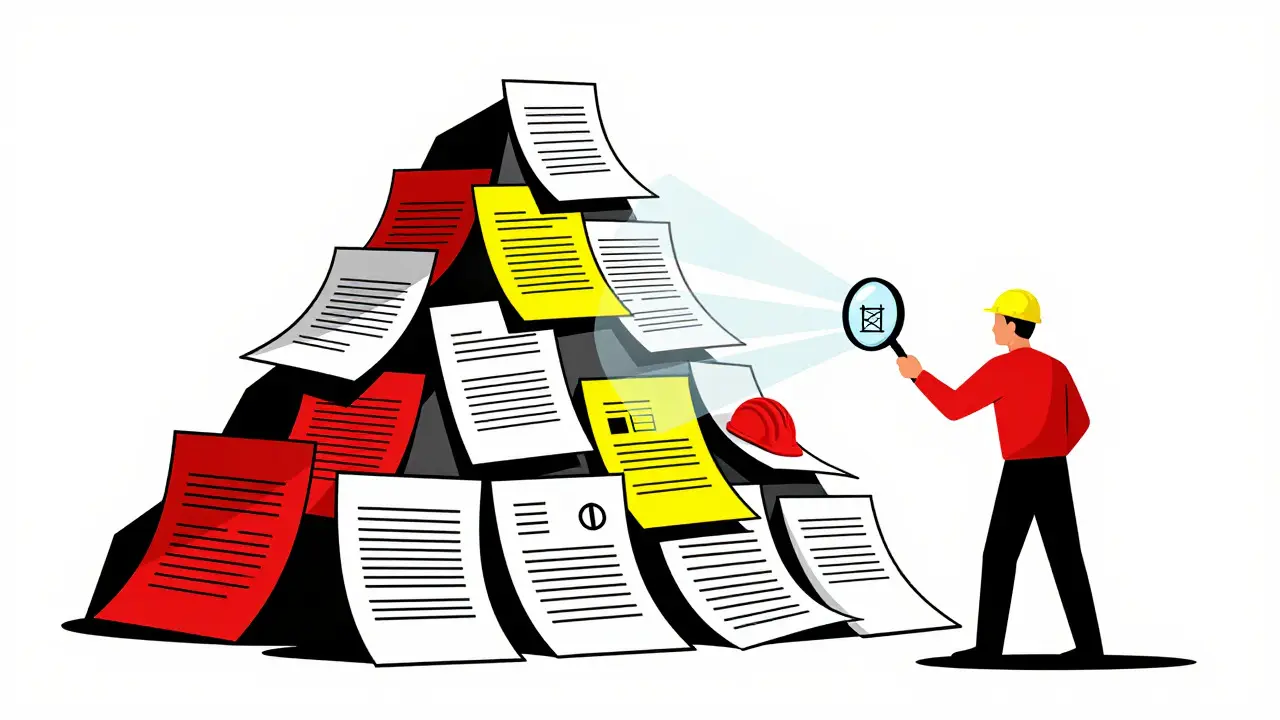
Imagine a construction site manager needing to verify a specific load-bearing regulation buried inside a thousand-page OSHA manual. Or a nuclear plant operator trying to cross-reference a decades-old maintenance log with current safety protocols. In the past, this meant hours of manual digging through PDFs and paper files. Today, Large Language Models are changing how we handle these critical tasks. But when human lives and strict legal penalties are on the line, you can’t just plug in any AI tool. You need systems built for precision, privacy, and accountability.
Regulated industries like healthcare, defense, civil nuclear operations, and construction are sitting on mountains of unstructured data. Safety reports, incident logs, and compliance documents are often written in free text, filled with technical acronyms and site-specific jargon. Traditional software struggles with this mess. LLMs, however, thrive on it. They can read, understand, and retrieve specific information from vast archives instantly. The challenge isn't whether they *can* do it-it's whether they can do it safely enough to meet regulatory standards.
The Core Problem: Unstructured Data in High-Stakes Environments
In sectors like construction and energy, safety isn't just a policy; it's a daily operational reality. Yet, the data that supports safety decisions is often trapped in silos. Think about a legacy industrial site. It might have hundreds of thousands of entries from inspections and events accumulated over thirty years. Much of this information exists as free text notes left by individual operators. One worker writes "valve leak," another writes "minor pressure drop at V-4." A traditional database sees two different things. An LLM understands they are likely related safety hazards.
This capability is driving adoption in high-risk sectors. Companies are looking to automate the review of safety reports and compliance documents to identify patterns that humans might miss due to fatigue or volume. The goal is proactive hazard identification rather than reactive investigation. However, moving from experimental AI to production-grade safety tools requires overcoming significant hurdles related to accuracy, security, and explainability.
Key Safety Use Cases in Regulated Sectors
Let’s look at where LLMs are actually being applied to improve safety outcomes. These aren't theoretical concepts; they are active implementations solving real-world problems.
- Construction Safety Query Assistants: Systems like the Construction Safety Query Assistant (CSQA) allow safety professionals to ask natural language questions about complex regulations. Instead of searching for keywords, a manager can ask, "What are the fall protection requirements for scaffolding over 10 feet?" The system scans indexed OSHA regulations and project-specific plans to provide a precise, context-aware answer. This reduces the time spent on document retrieval and ensures workers have access to the most current safety protocols.
- Chemical Laboratory Safety Support: Academic and industrial labs face unique risks regarding chemical handling. Recent studies have evaluated models like ChatGPT, Copilot, and Gemini for their ability to act as virtual safety officers. These tools help researchers quickly check compatibility charts, understand Material Safety Data Sheets (MSDS), and recall emergency procedures. While not a replacement for human expertise, they serve as a rapid reference layer that can prevent accidental mixing or improper storage.
- Nuclear and Defense Compliance Monitoring: In highly classified environments, every action must be documented and justified. LLMs can assist in generating compliance reports by extracting relevant data from operational logs. They help ensure that all safety checks were performed according to protocol, flagging any missing documentation before an audit occurs. This reduces administrative burden and allows engineers to focus on physical safety tasks.
- Healthcare Regulatory Extraction: Hospitals must adhere to strict patient safety and data privacy laws. LLMs can process clinical notes and incident reports to identify near-miss events or recurring safety issues. By analyzing unstructured physician notes, these models can highlight trends in medication errors or equipment failures, enabling hospital administrators to implement corrective measures faster.
The Three Pillars of Regulatory-Grade AI
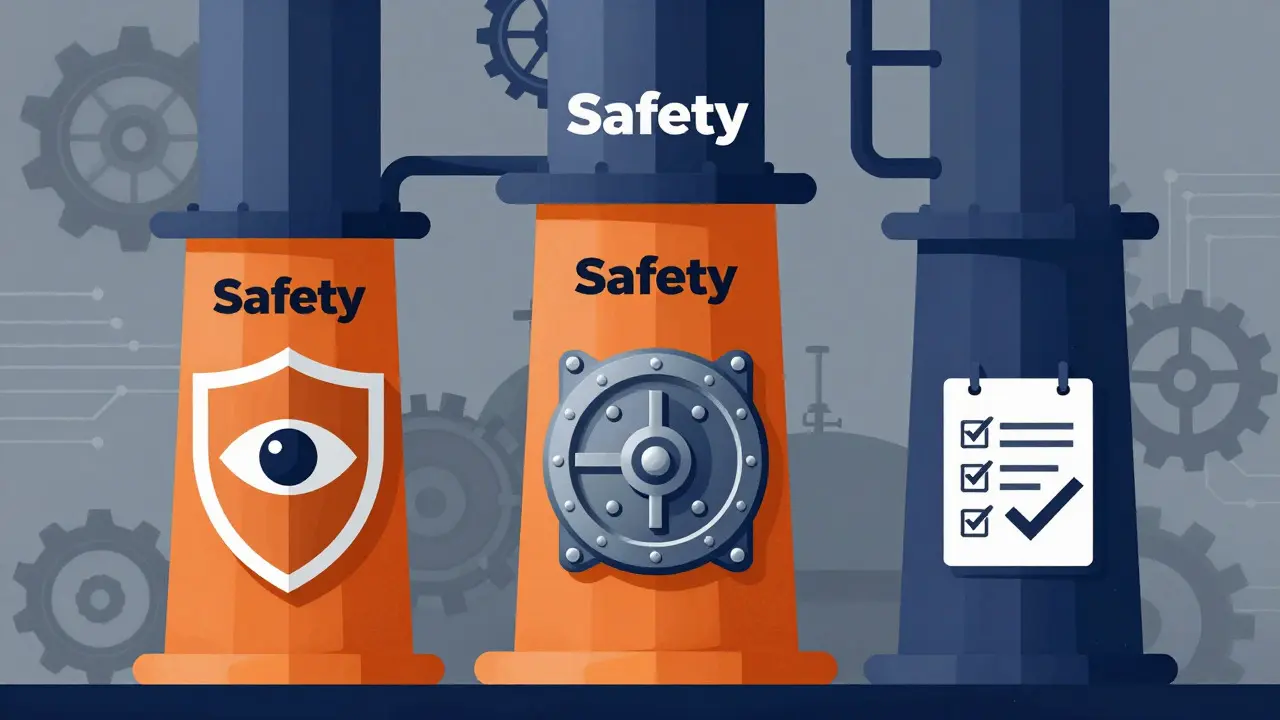
Deploying an off-the-shelf chatbot in a nuclear control room is a recipe for disaster. For an LLM to be trusted in a regulated industry, it must adhere to three non-negotiable principles. Without these, the technology remains a liability rather than an asset.
- No-BS (Explainability and Accuracy): In regulated environments, "good enough" isn't acceptable. If an LLM says a procedure is safe, it needs to cite the exact regulation or standard it is referencing. Black-box models that provide answers without sources are risky. Explainable AI techniques are required so that safety officers can verify the logic behind the model's output. Hallucinations-where the model makes up facts-are unacceptable in safety-critical contexts.
- No Data Sharing (Privacy and Security): Many commercial LLMs, such as OpenAI’s GPT-4, require sending data to external servers for processing. For defense contractors or hospitals dealing with protected health information (PHI), this is a major breach of security. Data exposure is a fundamental constraint. Solutions must either run locally on-premise or use secure, private cloud instances where data never leaves the organization's control. Open-source models fine-tuned internally offer a pathway to achieve this isolation.
- No Test Gaps (Rigorous Verification): Software in regulated industries undergoes rigorous testing. AI models are no different. There must be a transparent framework for validating model performance. This includes benchmarking against known safety datasets, conducting adversarial testing to find edge cases, and maintaining audit trails of model updates. Publicly verifiable tests build confidence among regulators and customers alike.
| Feature | Commercial Cloud LLMs (e.g., GPT-4) | On-Premise/Open Source LLMs |
|---|---|---|
| Data Privacy | Risk of data leaving organizational control | High; data stays within local infrastructure |
| Accuracy & Tuning | General purpose; may lack domain specificity | Can be fine-tuned on proprietary safety manuals |
| Explainability | Limited; black-box architecture | Variable; depends on implementation and logging |
| Cost Structure | Subscription-based per token usage | High initial infrastructure cost, lower marginal cost |
| Regulatory Acceptance | Growing but cautious in high-security sectors | Preferred for defense, nuclear, and healthcare |
Overcoming Technical and Cultural Barriers
Technology is only half the battle. The other half is culture. Implementing LLMs in safety management requires a deep understanding of both the industrial environment and the AI capabilities. You cannot simply hand a model to a safety officer and expect it to work. The team deploying the tool must define what constitutes a "useful output." Is it a summary? A citation? A risk score?
One major hurdle is the variability in how humans write reports. As mentioned earlier, one operator might use shorthand while another writes full sentences. Training an LLM to normalize this data requires careful curation of training sets. If the training data contains biases or outdated safety practices, the model will perpetuate them. Continuous feedback loops are essential. When a safety professional corrects the model, that correction should feed back into the system to improve future responses.
Another barrier is trust. Workers and managers may be skeptical of AI making recommendations about their physical safety. Transparency is key. The system should always present itself as a decision-support tool, not a decision-maker. It highlights risks and retrieves regulations, but the final call rests with human experts. This hybrid approach leverages the speed of AI while retaining human judgment and accountability.
The Role of Legislation: The EU AI Act and Beyond
Regulation is catching up with technology. The European Union's AI Act introduces essential safety concepts into the risk management process for AI systems. It treats AI not just as software, but as a product that must meet safety standards. This legislation forces companies to document their data sources, testing methodologies, and potential biases. For industries already used to ISO standards and OSHA compliance, this framework feels familiar. It provides a clear roadmap for what "regulatory-grade" means legally.
As these laws take effect globally, we will see a shift towards standardized certification for AI models in safety applications. Just as you wouldn't buy a crane without checking its safety certification, you won't deploy an LLM for safety monitoring without verifying its compliance with AI safety acts. This will drive demand for third-party auditing services and specialized AI safety consultants.
Future Directions: From Reactive to Predictive Safety
The next frontier for LLMs in regulated industries is predictive safety. Currently, most use cases are reactive or informational-they help you understand past incidents or current rules. Future systems will aim to predict future risks. By analyzing historical incident logs, weather data, and operational schedules, an LLM could alert a construction manager that a specific combination of factors historically leads to accidents, prompting preemptive measures.
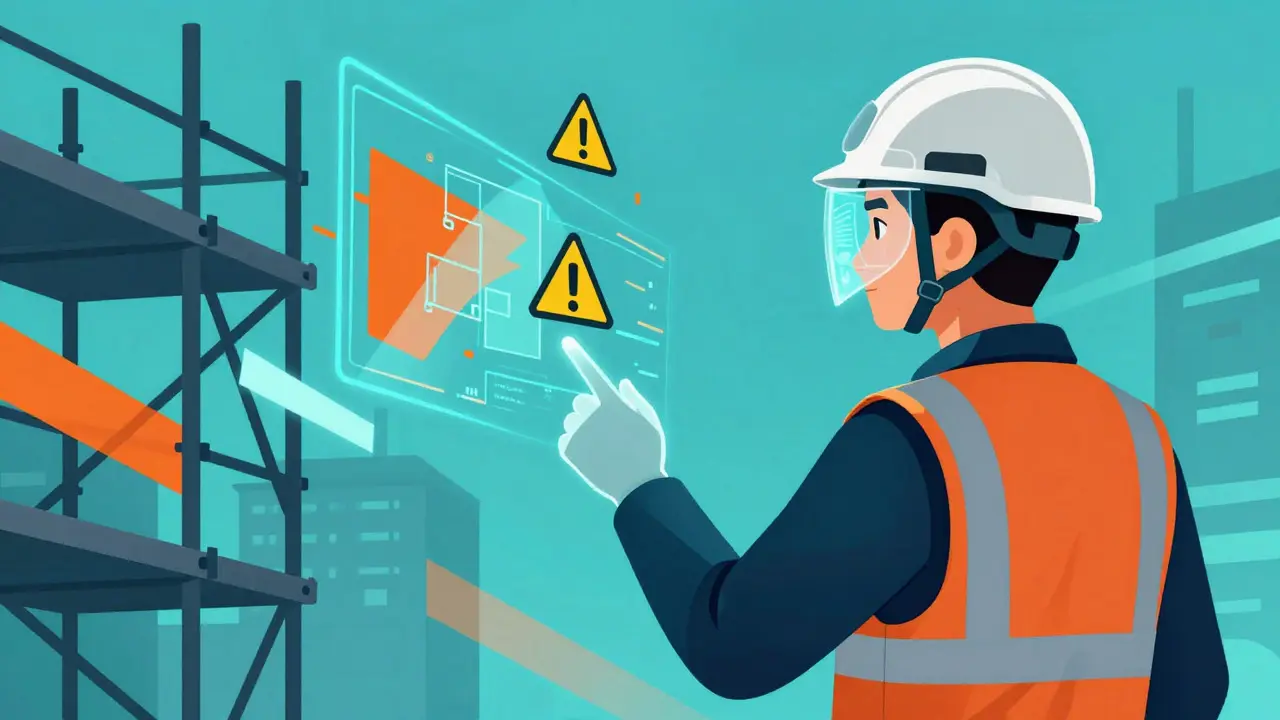
Multi-modal AI will also play a crucial role. Combining text analysis with image recognition allows systems to inspect photos of worksites for safety violations automatically. For example, an LLM could analyze a photo of a scaffold setup alongside the written inspection report to verify compliance. This integration of visual and textual data creates a more comprehensive safety net.
Ultimately, the successful integration of LLMs in regulated industries depends on balancing innovation with caution. The technology offers unprecedented opportunities to enhance safety and compliance, but only if deployed with rigorous standards, robust security, and a clear understanding of its limitations. For safety professionals, the question is no longer if AI will be part of their toolkit, but how they will ensure it meets the highest standards of care.
Which industries benefit most from LLMs for safety compliance?
Industries with high volumes of unstructured safety data and strict regulatory oversight benefit the most. These include construction, civil nuclear operations, defense, healthcare, and life sciences. In these sectors, LLMs help process incident logs, interpret complex regulations like OSHA standards, and monitor compliance efficiently.
Are commercial LLMs like GPT-4 safe for regulated industries?
Commercial LLMs pose security risks because they often require sending data to external servers. For highly regulated sectors like defense or healthcare, this data exposure can violate privacy laws. Organizations often prefer open-source models hosted on-premise to maintain strict control over sensitive information and ensure no data sharing occurs.
How do LLMs handle hallucinations in safety-critical contexts?
Hallucinations are mitigated through rigorous verification processes and explainability features. Regulatory-grade AI systems are designed to cite sources for every claim. Additionally, continuous testing and human-in-the-loop validation ensure that outputs are accurate. The principle of "No Test Gaps" requires public and verifiable testing to hold providers accountable for model performance.
What is the Construction Safety Query Assistant (CSQA)?
The CSQA is a system that uses LLMs to help construction professionals extract and comprehend safety regulations. It processes user queries in real-time, scanning indexed documents like OSHA guidelines to provide precise, context-aware answers. This helps safety officers reinforce protocols and identify hazards proactively without manually reviewing voluminous documents.
How does the EU AI Act impact LLM deployment in regulated sectors?
The EU AI Act introduces mandatory safety concepts into AI risk management, treating AI as a product subject to safety regulations. It requires transparency in data sources, testing methodologies, and bias mitigation. This legislation pushes companies to adopt stricter standards for AI deployment, ensuring that models used in high-risk areas are thoroughly validated and compliant.