Synthetic Workforce with Generative AI: Digital Employees and Orchestration
Imagine walking into your office tomorrow and finding out that half your team is no longer human. Not in a sci-fi nightmare sense, but in a practical, operational reality where digital employees handle compliance checks, draft reports, and manage supply chain logistics while you focus on strategy. This isn't a distant future; it's the current state of the synthetic workforce. By early 2026, this market segment hit $47.8 billion, growing at a staggering 38% year-over-year. But here’s the catch: throwing AI agents at your business problems without a plan is like hiring brilliant interns who never sleep but don’t know the company culture. You need orchestration.
What Exactly Is a Synthetic Workforce?
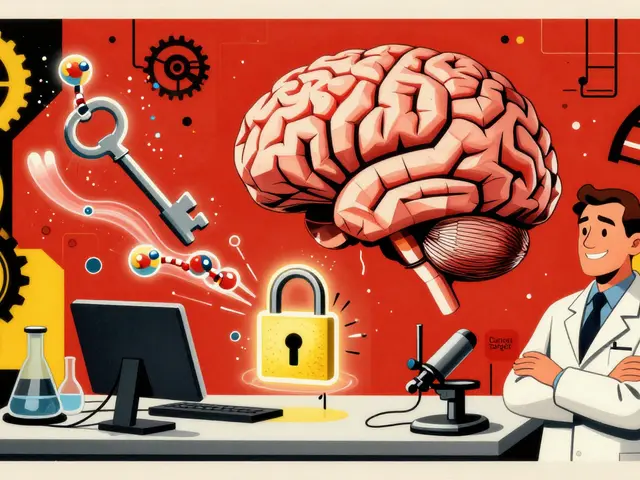
Let’s cut through the jargon. A synthetic workforce isn’t just a chatbot answering customer queries. It’s a collection of agentic AI systems-digital workers capable of performing specialized tasks with increasing autonomy. Unlike traditional automation, which follows rigid if-then rules, these agents use generative AI to create new content, code, and decisions based on context. They are trained on your specific enterprise data, meaning they speak your language and understand your proprietary workflows.
Think of it as moving from a calculator to a junior analyst. The calculator gives you an answer; the analyst explains why the numbers look off and suggests a fix. According to Deloitte’s 2026 analysis, these systems have evolved beyond simple content creation to actively participate in business operations. They don’t just generate text; they execute functions. Whether it’s processing invoices or monitoring regulatory changes, these digital employees operate within a framework that keeps them aligned with your organizational goals.
The Tech Stack: Small Models, Big Impact
You might assume that bigger AI models mean better results. In the world of synthetic workforces, that’s often wrong. Enterprise implementations are shifting toward Small Language Models (SLMs). Why? Because SLMs trained specifically on internal enterprise data deliver higher accuracy for domain-specific tasks while slashing infrastructure costs by up to 62% compared to general-purpose Large Language Models (LLMs).
This specialization is key. A generalist LLM knows everything about nothing. An SLM fine-tuned on your company’s historical records knows exactly how your finance department flags anomalies. RapidOps’ 2026 analysis highlights that modern platforms require 40-60% less computational power yet deliver 25-30% higher accuracy in targeted roles. This efficiency makes it feasible to deploy dozens, even hundreds, of these agents across different departments without melting your cloud budget.
Orchestration: The Conductor of the Digital Orchestra
If the AI agents are the musicians, orchestration layers are the conductor. Without them, you get noise. Orchestration manages task routing, priority setting, and crucially, the handoff between AI and humans. Leading frameworks now process millions of interactions daily, ensuring that when an agent hits its limit-or needs ethical sign-off-it seamlessly passes the baton to a human supervisor.
This layer also handles integration with your existing tech stack. We’re talking native operation within ERP, CRM, and SCM platforms. SAP, for instance, reported a 50% reduction in operational decision latency by integrating real-time AI-driven workflows directly into their core systems. The orchestration engine ensures that data flows smoothly, decisions are logged, and accountability remains clear. It’s not magic; it’s rigorous engineering designed to keep the lights on.

Where Digital Employees Excel (and Where They Don’t)
It’s vital to set realistic expectations. These systems are powerhouses in structured, high-volume environments. Financial services lead adoption with a 68% implementation rate because compliance monitoring and risk assessment benefit massively from speed and consistency. Gartner’s Q1 2026 data shows a 25% higher accuracy in financial compliance tasks compared to rule-based automation. Healthcare follows closely, using synthetic data generation to simulate rare pathologies-creating 10,000 training cases from just 50 real-world examples while maintaining HIPAA compliance.
But don’t expect your digital employee to win a negotiation or comfort an angry client. Visier’s 2026 Trends Report found that connections between human employees and AI colleagues were 37% weaker in customer service roles. These agents struggle with deep emotional intelligence and novel problem-solving that requires original conceptualization beyond pattern recognition. If your task involves ambiguity, creativity, or empathy, keep a human in the loop.
| Feature | Traditional Automation (RPA) | Synthetic Workforce (GenAI Agents) |
|---|---|---|
| Task Type | Repetitive, rule-based | Judgment-based, contextual |
| Adaptability | Low (breaks if rules change) | High (learns from new data) |
| Cost Efficiency | Moderate | High (up to 62% lower infra cost) |
| Human Oversight | Minimal | Essential (Auditor role) |
The Human Element: Accountability and Culture
Here’s what nobody warns you about: the social friction. Reddit threads from early 2026 buzz with stories of teams feeling disconnected after deploying AI colleagues. Workers report confusion about who is accountable when an AI makes a mistake. If a digital employee approves a flawed invoice, who gets fired? The person who supervised the agent? The engineer who built it? Or the executive who bought it?
Successful companies are creating new career pathways to address this. Roles like "AI-Human Collaboration Specialist" and "Synthetic Data Auditor" are emerging. These aren’t just tech jobs; they’re bridge roles. They ensure that AI outputs are validated and that human workers feel supported, not replaced. Deloitte emphasizes that the goal is to bolster innovation and make work easier, not to eliminate the human element entirely. Organizations that succeed treat AI as a teammate, not a tool.

Implementation Roadmap: Avoiding the Pilot Trap
Many enterprises fall into the "pilot trap," where experimental AI projects fail to scale. Gloat’s analysis notes that initial investments often fall short because companies ignore workflow redesign. You can’t just drop an AI agent into a broken process and expect magic. You need to map out exactly where the agent fits, define its boundaries, and train your human supervisors.
- Audit Your Processes: Identify high-volume, repetitive tasks with clear success metrics (e.g., invoice processing, data entry).
- Select Domain-Specific Models: Avoid generic LLMs. Look for solutions that allow fine-tuning on your proprietary data.
- Define Handoff Protocols: Decide exactly when an AI must escalate to a human. Is it based on confidence scores? Ethical triggers? Dollar thresholds?
- Invest in Change Management: Train your staff not just on how to use the tool, but on how to collaborate with it. Expect 3-5 weeks for business users to adapt.
- Monitor and Iterate: Set up dashboards to track accuracy, latency, and user satisfaction. Be ready to adjust prompts and workflows regularly.
The Future: Agentic Autonomy and Persistent Memory
We are standing on the brink of the next evolution. By 2027, Gartner predicts that half of companies using generative AI will launch agentic applications capable of complex work with limited oversight. New capabilities like "persistent memory" will allow digital employees to remember past interactions and learn from them over time, much like a seasoned employee does.
Multimodal generative AI is also entering the fray, allowing agents to process text, images, and voice simultaneously. Imagine a digital employee that reads a scanned contract, listens to a meeting recording discussing it, and drafts a summary-all in one go. However, as these agents become more autonomous, the need for robust governance grows. The EU’s AI Act already mandates "human-in-the-loop" protocols for high-risk applications, signaling that regulation will shape the pace of adoption.
How much does it cost to implement a synthetic workforce?
Costs vary widely based on scale and complexity. While infrastructure costs can be 62% lower than general-purpose LLM deployments due to the use of Small Language Models, you must also budget for orchestration platforms and human oversight. Leading enterprises dedicate 15-20% of their AI implementation budget specifically to human supervision and ethics review boards.
Will digital employees replace human jobs?
Not entirely. The World Economic Forum expects 39% of workers' core skills to change by 2030. Instead of replacement, we see augmentation. Repetitive tasks are automated, freeing humans for strategic, creative, and empathetic work. New roles like AI auditors and collaboration specialists are being created to manage this transition.
What industries are adopting synthetic workforces fastest?
Financial services lead with a 68% adoption rate, driven by compliance and risk management needs. Healthcare follows at 57%, utilizing synthetic data for diagnosis and training. Manufacturing is at 49%, focusing on supply chain optimization. Creative industries lag behind at 32% due to the subjective nature of their work.
How do I ensure my AI doesn't hallucinate critical errors?
Use domain-specific Small Language Models trained on your internal data, which reduces hallucinations compared to general models. Implement strict orchestration layers that validate outputs against known facts before execution. Always maintain human-in-the-loop protocols for high-stakes decisions, especially in regulated industries.
What is the biggest challenge in managing digital employees?
Integration complexity with legacy systems is the top complaint, cited in 63% of negative reviews. Additionally, cultural resistance and unclear accountability protocols pose significant hurdles. Success requires not just technical integration but also clear communication about roles and responsibilities.