SAST, DAST, and SCA for AI-Generated Code: Tools That Catch Real Issues
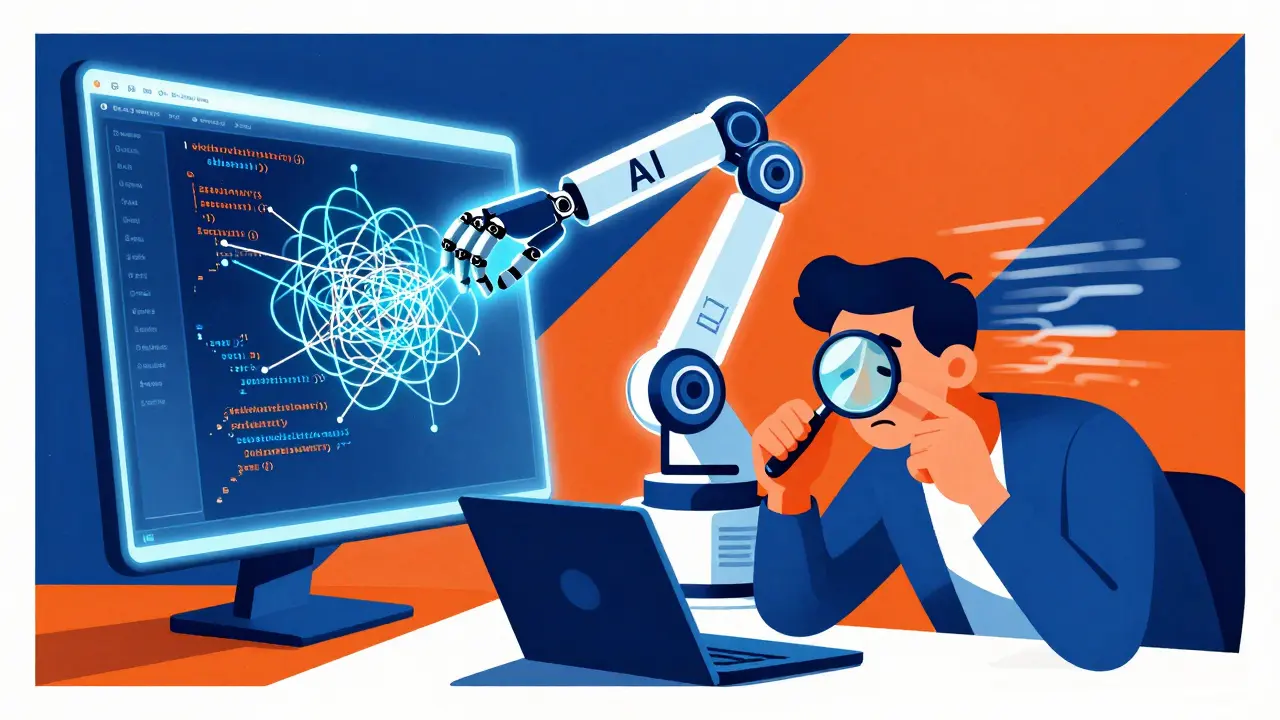
By mid-2026, up to 30% of the production code running in leading tech companies was written by artificial intelligence. This shift has created a massive problem for application security teams. Traditional scanning tools were built for human developers who write code slowly and deliberately. They are not built for AI assistants like GitHub Copilot or Amazon CodeWhisperer, which can generate complex, dependency-heavy code blocks in seconds. If you are still using standard security scans without adapting them for AI velocity, you are likely missing critical vulnerabilities.
The core trio of Application Security (AppSec) testing-Static Application Security Testing (SAST), Dynamic Application Security Testing (DAST), and Software Composition Analysis (SCA)-remains essential. However, their roles have changed dramatically. SAST must move closer to the developer’s keyboard, DAST is becoming obsolete in its traditional form due to speed mismatches, and SCA is more critical than ever because AI tends to over-rely on third-party libraries. Here is how these tools actually perform against AI-generated code and what you need to do to make them work.
Why AI-Generated Code Breaks Traditional Security Scans
Traditional security tools assume a certain rhythm in software development. You write code, you commit it, you run a scan, and then you fix issues before deployment. This cycle might take days or weeks. AI-generated code shatters this timeline. According to data from Cycode in 2025, high-velocity organizations deploy AI-assisted code up to 10 times a day. When your deployment frequency is that high, a security scan that takes eight hours is useless. It is like trying to photograph a speeding train with a camera that takes all morning to focus.
Beyond speed, the structure of AI code differs from human-written code. Large Language Models (LLMs) often prioritize functionality and brevity over security best practices. They may suggest deprecated functions or obscure libraries that look convenient but carry hidden risks. A study by Contrast Security in late 2025 highlighted that AI-generated code evolves continuously, meaning the state of the application changes faster than most static scanners can process. Furthermore, AI models sometimes hallucinate imports or create logical flows that bypass simple rule-based detection engines. This requires security tools that understand context and data flow, not just pattern matching.
SAST: The First Line of Defense at the IDE Level
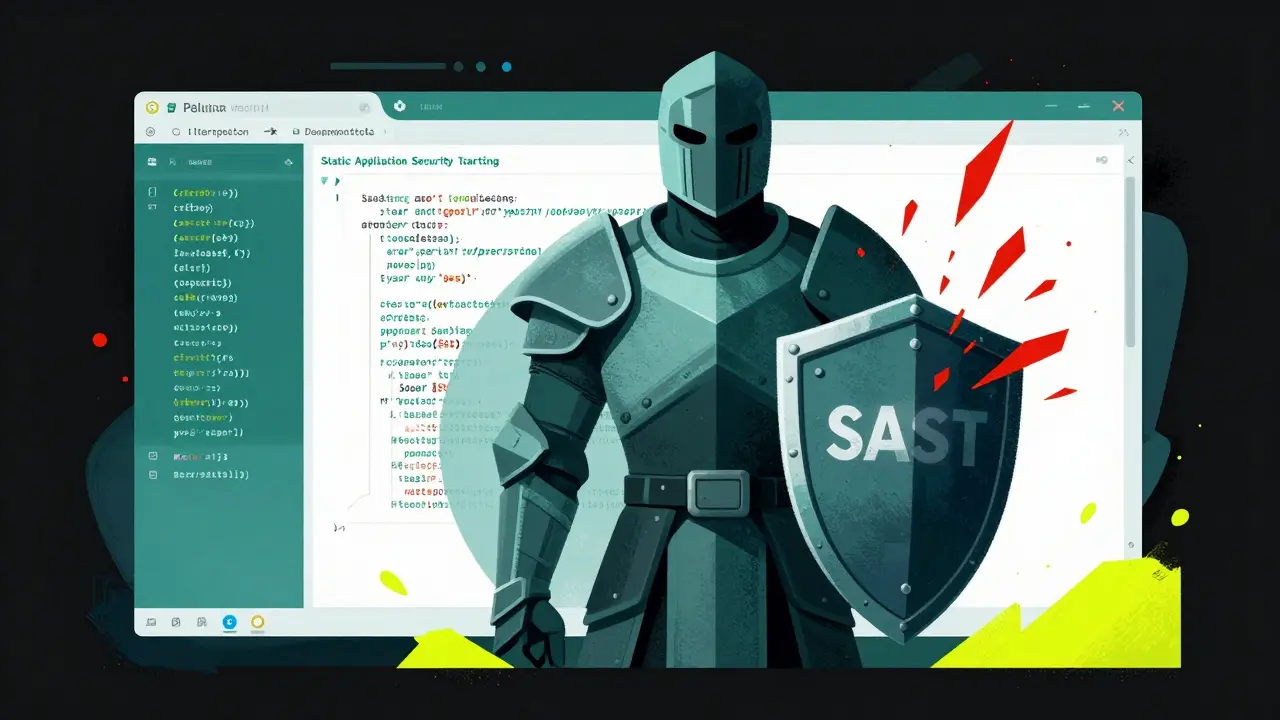
Static Application Security Testing (SAST) analyzes source code without executing it. For AI-generated code, SAST is no longer just a gatekeeper at the end of the sprint; it must be an active participant during coding. The most effective SAST tools today integrate directly into Integrated Development Environments (IDEs) like VS Code or JetBrains platforms. This allows the tool to analyze code as soon as the AI assistant generates it, providing immediate feedback to the developer.
Modern AI-enhanced SAST engines, such as those offered by Mend or Cycode, use machine learning to reduce false positives. Traditional SAST tools often flag hundreds of benign issues, causing "alert fatigue." In contrast, AI-optimized SAST can achieve false positive rates below 6% by understanding the specific patterns common in LLM-generated code. For example, if an AI suggests a standard logging function that looks suspicious but is safe in context, the tool recognizes this nuance. Cycode reported reducing false positives by over 94% compared to legacy scanners through deep cross-file analysis. This accuracy is crucial because developers will ignore security warnings if they are constantly wrong.
However, SAST has limits. It cannot detect runtime behaviors or configuration errors that only appear when the application is live. Additionally, while AI-SAST is getting better, experts warn that current tools still miss about 37% of logic vulnerabilities specific to AI code patterns. Therefore, SAST should be viewed as a filter, not a complete solution.
DAST: The Speed Mismatch and the Rise of Runtime Security
Dynamic Application Security Testing (DAST) tests running applications from the outside, simulating attacks to find runtime vulnerabilities. Historically, DAST was excellent for finding issues like SQL injection or broken authentication that only manifest when the app is live. But for AI-generated code, traditional DAST is struggling. The primary issue is time. A comprehensive DAST scan can take eight hours or more. If you deploy ten times a day, you will have dozens of deployments between weekly scans. These gaps leave your application exposed.
This limitation has led to a shift toward Runtime Application Self-Protection (RASP) and continuous monitoring solutions. Companies like Contrast Security are positioning their platforms as alternatives to traditional DAST for AI-heavy environments. Instead of periodic scans, these tools monitor the application in real-time, catching vulnerabilities as they occur. Veracode’s research indicates that 80% of web application vulnerabilities are only detectable via dynamic methods, so abandoning dynamic testing entirely is dangerous. The key is evolving from batch scanning to continuous runtime protection. This approach aligns with the velocity of AI deployments, ensuring that security checks happen concurrently with usage rather than after the fact.
SCA: Managing the Dependency Explosion
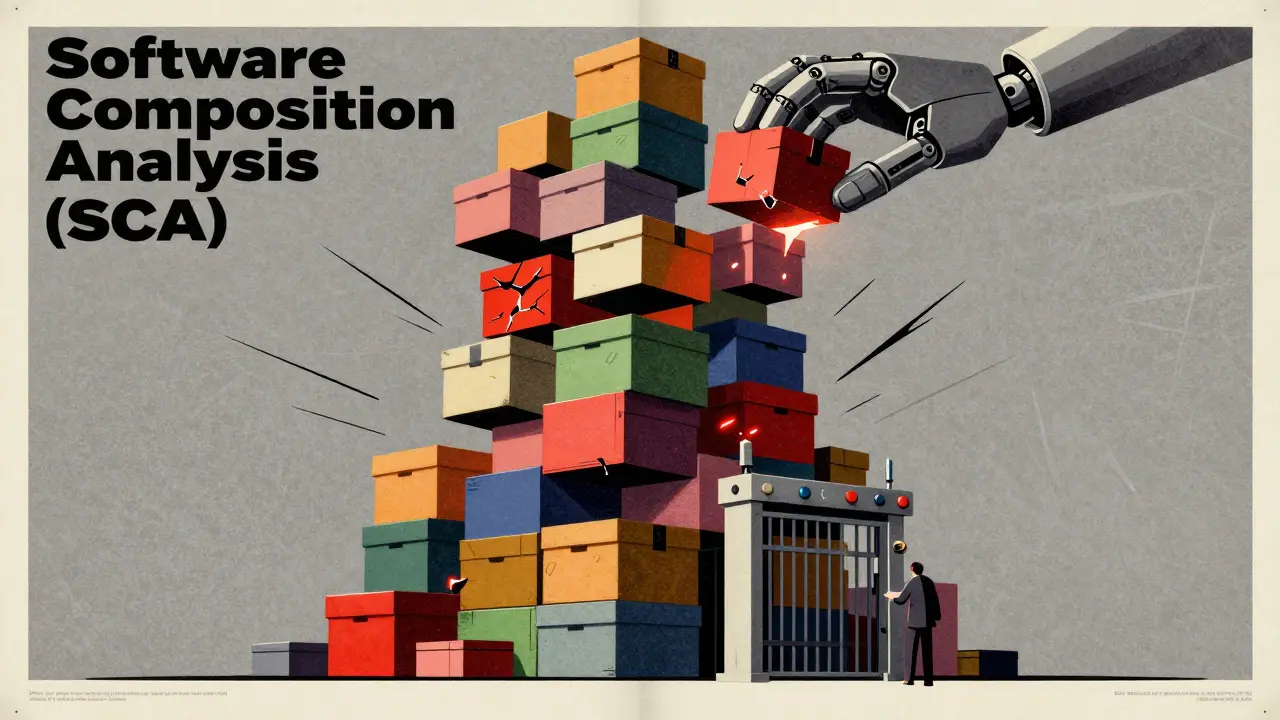
One of the most significant risks introduced by AI coding assistants is the explosion of third-party dependencies. AI models are trained on vast amounts of public code, much of which relies on external libraries. Research from Mend in 2025 showed that AI-generated code typically includes 40% more third-party libraries than human-written code. Each library introduces potential security vulnerabilities and license compliance risks. This makes Software Composition Analysis (SCA) arguably the most critical component of your security stack for AI code.
SCA tools scan your project’s dependencies against databases of known vulnerabilities (like the National Vulnerability Database). However, traditional SCA tools are missing the mark here. Ox Security’s benchmark study in early 2026 found that standard SCA tools missed 22% of vulnerabilities in AI-suggested dependencies. Why? Because AI often recommends niche or less-maintained packages that aren’t well-covered by traditional vulnerability databases. Advanced SCA solutions now incorporate AI-driven risk scoring to evaluate not just known CVEs (Common Vulnerabilities and Exposures) but also the health and maintenance status of the library itself. You need an SCA tool that integrates into your pull request workflow, blocking merges if risky dependencies are introduced by the AI.
Comparing Tool Effectiveness for AI Code
| Tool Type | Primary Strength | Weakness with AI Code | Best Use Case |
|---|---|---|---|
| SAST | Catches structural flaws early in IDE | Misses logic errors and runtime behavior | Real-time feedback during coding |
| DAST | Finds runtime/config vulnerabilities | Too slow for high-frequency deployments | Periodic deep-dive audits |
| SCA | Identifies risky third-party libraries | May miss novel/niche AI-suggested libs | Dependency management in PRs |
| RASP/Runtime | Continuous monitoring | Higher resource consumption | Production environment protection |
Implementing a Layered Strategy
No single tool is enough. The consensus among security leaders, including findings from the SANS Institute’s 2025 survey, is that organizations using all three methodologies (SAST, DAST/RASP, and SCA) experience 63% fewer production incidents. To implement this effectively for AI-generated code, you need a layered strategy:
- Shift Left with SAST: Integrate AI-optimized SAST directly into your developers’ IDEs. Configure it to scan code as it is generated by Copilot or other assistants. Aim for sub-minute scan times to avoid disrupting workflow.
- Gate Dependencies with SCA: Run SCA scans automatically during pull requests. Block merges if the AI introduces libraries with critical vulnerabilities or risky licenses. Tune the tool to recognize AI-specific dependency patterns.
- Monitor Continuously with Runtime Security: Replace or supplement traditional DAST with runtime protection platforms. These tools provide visibility into how the AI-generated code behaves in production, catching issues that static analysis misses.
Expect a tuning period. Surveys indicate that 68% of security professionals spent 3-6 months optimizing their tools specifically for AI code patterns. Initial false positives will be high. Work with your team to whitelist valid AI patterns and refine detection rules. Training is also essential; security teams need to understand both traditional vulnerabilities and the unique anti-patterns of LLM-generated code.
Future Trends and Regulatory Pressure
The landscape is evolving rapidly. NIST updated its AI Risk Management Framework in January 2026 to require security testing specifically validated for AI-generated code. This means compliance is no longer optional. Vendors are responding with deeper integrations. Snyk announced plans to embed security analysis directly into AI coding assistants by 2027. Meanwhile, traditional DAST vendors are pivoting toward continuous monitoring. The gap between code generation and security validation is closing, but only for those who adapt their tools and processes. Ignoring this shift leaves your organization vulnerable to novel attack vectors that exploit the speed and complexity of AI-driven development.
Is traditional DAST still necessary for AI-generated code?
Traditional DAST is becoming less effective due to its slow scan times, which do not match the high deployment frequency of AI-generated code. While it can still find critical runtime vulnerabilities, it is increasingly being replaced or supplemented by Runtime Application Self-Protection (RASP) and continuous monitoring solutions that provide real-time visibility without delaying deployments.
Why does AI-generated code have more third-party dependencies?
Large Language Models are trained on vast datasets of existing code, much of which relies heavily on open-source libraries for efficiency. When AI generates code, it often replicates this pattern, suggesting established libraries rather than writing custom implementations. Studies show AI-generated code can include 40% more third-party libraries than human-written code, increasing the attack surface.
How can I reduce false positives in SAST for AI code?
Use AI-enhanced SAST tools that leverage machine learning to understand context and data flow. These tools can distinguish between benign AI patterns and actual vulnerabilities, reducing false positives by up to 94%. Additionally, spend time tuning the tool to your specific codebase and whitelist valid patterns identified during the initial implementation phase.
What is the recommended security strategy for AI-generated code?
Adopt a layered approach combining SAST, SCA, and runtime security. Integrate SAST into the IDE for immediate feedback, use SCA to gate dependencies during pull requests, and employ runtime monitoring for continuous protection. This multi-layered strategy addresses the different types of vulnerabilities introduced by AI and matches the speed of modern development cycles.
Are there regulatory requirements for securing AI-generated code?
Yes, regulations are evolving. As of early 2026, frameworks like NIST’s AI Risk Management Framework require organizations to implement security testing specifically validated for AI-generated code. Compliance now involves demonstrating that your security tools are tuned to detect vulnerabilities unique to LLM-generated patterns.







Oh, the sheer audacity of suggesting that SAST is merely a 'filter' when it should be the absolute gatekeeper of our digital sanctums! It is absolutely tragic that we are allowing AI to inject such chaotic entropy into our codebases without rigorous, draconian oversight. The notion that DAST is 'obsolete' is preposterous; it is not obsolete, it is simply being marginalized by lazy engineers who refuse to wait for comprehensive runtime analysis. We are witnessing a catastrophic failure of security hygiene where velocity trumps veracity, and frankly, it makes my blood boil. The dependency explosion mentioned in the article is not just a risk; it is an existential threat to the integrity of software engineering as a discipline. If you are not manually auditing every single library suggestion from Copilot, you are complicit in the next major breach. I cannot stress enough how critical it is to maintain grammatical precision in your security policies because ambiguity leads to vulnerability. This entire trend of 'shifting left' is just corporate speak for 'we broke it so fast we couldn't fix it.'
its all a lie they want you to buy more tools while the ai is already backdooring your systems. nist is just a front for big tech to monitor what you build. why do you think they need so many dependencies? its data collection pure and simple. dont trust the scanners they are owned by the same people selling the ai. wake up sheeple.
the code writes itself but does it know why it exists? we are building castles on sand made of hallucinations. the machine dreams in libraries and wakes up in vulnerabilities. there is no safety only the illusion of control through scanning. we are ghosts in the machine now writing our own demise one commit at a time. silence is the only secure state.
Ugh, another article telling us that everything is broken and we need to spend millions on new tools. Typical fear-mongering. I have been using basic static analysis for years and my apps are fine. The problem isnt the tools, it's the developers who cant write secure code even with human help. Also, saying DAST is obsolete is ridiculous because sometimes you just need to see if the app actually crashes under load, which static tools cant tell you. Stop trying to sell me on RASP when a good old-fashioned penetration test works just dandy. And please, stop with the jargon about 'velocity' and 'AI-assisted code'. It's just code, folks. Write it better or hire someone who can. The whole industry is just chasing trends instead of fixing basics like input validation.
In my experience working across diverse global teams, the integration of AI tools has been nothing short of revolutionary, yet it demands a profound cultural shift in how we perceive security. We must embrace this technological evolution not with fear, but with a collaborative spirit that prioritizes both innovation and robustness. The layered strategy proposed here is indeed vital, as it mirrors the complex, interconnected nature of modern society. However, we must remember that technology serves humanity, and thus, our security measures must be humane, inclusive, and adaptable to the unique rhythms of different development cultures. Let us move forward together, ensuring that our digital foundations are as strong as our collective will to innovate safely.
I completely agree with the emphasis on a layered approach, and I believe it is crucial for teams to feel supported rather than policed during this transition. Security should be an enabler, not a blocker, and fostering an environment where developers understand the 'why' behind these scans is essential for long-term success. Let's empower our teams with the right tools and training, ensuring they feel confident in their ability to navigate this new landscape. Together, we can build a more secure future without sacrificing the joy of creation. Keep pushing forward!
I hear the frustration in some of these comments, and I want to gently remind everyone that we are all navigating uncharted territory together, which can certainly feel overwhelming at times. The shift towards AI-generated code is happening so rapidly that it is natural for teams to feel a sense of loss of control, but by embracing a mindset of continuous learning and mutual support, we can transform this anxiety into empowerment. It is important to recognize that making mistakes is part of the process, and creating a safe space for open dialogue about security challenges can help bridge the gap between traditional methods and new technologies. Let us encourage each other to take small, manageable steps towards integrating these tools, remembering that our ultimate goal is to protect our users and our work, and that this journey is shared by all of us in the community.