
Win Hackathons in 2026: Vibe Coding & LLM Agents Strategy
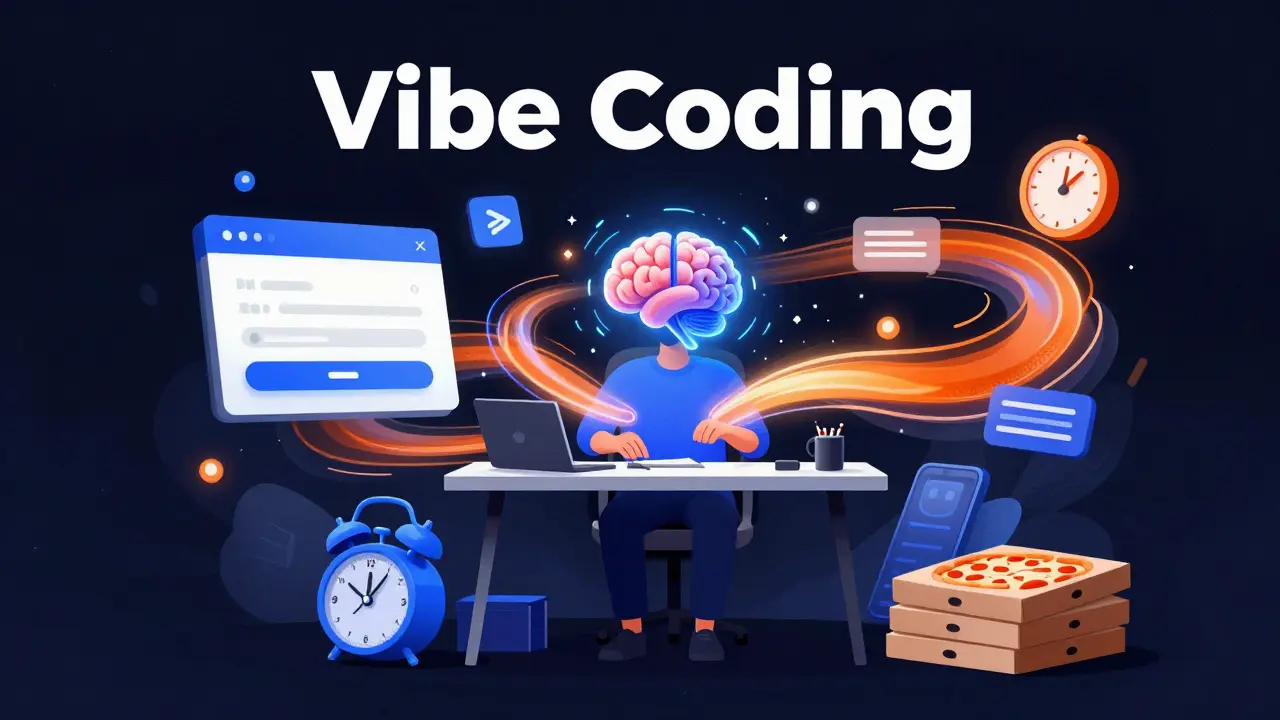
Remember the old days of hackathons? You know the ones. Teams huddled around laptops for forty-eight hours straight, fueled by cold pizza and caffeine, fighting with backend API integrations until 3 AM. If you’re still playing that game in 2026, you’ve already lost. The landscape has shifted beneath our feet. Today’s winning teams aren’t just coders; they are orchestrators. They combine vibe coding techniques with autonomous LLM agents to build investor-grade prototypes in a fraction of the time it used to take.
The goal hasn't changed-build something people want-but the method has evolved from raw typing speed to strategic automation. This isn't about writing less code; it's about writing smarter code using tools like DataButton and Claude Code to handle the heavy lifting. Let’s break down exactly how to dominate your next competition using this new playbook.
The New Mindset: From Coder to Orchestrator
To win in 2026, you need to stop thinking like a student submitting homework and start thinking like a founder raising seed capital. This shift is often called wearing the "Investor Hat." When you view the hackathon as a startup pitch rather than a technical challenge, every decision changes. You stop obsessing over perfect database schemas and start focusing on product-market fit and user validation.
This mindset relies on two pillars: Aggressive Automation and Strategic Positioning. Aggressive Automation means leveraging AI to compress the software development lifecycle (SDLC). Strategic Positioning means ensuring your solution solves a painful, real-world problem that judges-and potential investors-care about. If your idea doesn’t have a clear path to monetization or significant impact, no amount of clean code will save it.
| Aspect | Traditional Approach (Pre-2025) | Modern Winner Profile (2026) |
|---|---|---|
| Primary Skill | Fastest typing speed | Orchestration & Prompt Engineering |
| Time Allocation | 47 hours coding, 1 hour pitching | 12 hours building, 36 hours validating/pitching |
| Code Quality | Production-ready infrastructure | MVP with mocked dependencies |
| Focus | Technical complexity | User value & Business viability |
Mastering Vibe Coding for Rapid Prototyping
Vibe coding is more than a buzzword; it’s a disciplined workflow that prioritizes iteration over perfection. The core loop is simple: Prompt → Generate → Preview → Critique. You use AI tools to generate functional components instantly, preview them immediately, critique the output, and iterate. This cycle allows you to ship bug-free, aesthetically pleasing minimum viable products (MVPs) within twelve hours.
Why twelve hours? Because a standard hackathon is usually forty-eight hours long. By finishing the build phase early, you reserve the remaining thirty-six hours for what actually wins competitions: customer validation and pitch refinement. Traditional teams spend their last six hours fixing bugs that prevent the demo from running. Modern teams spend those hours rehearsing their narrative and gathering user feedback.
Crucially, vibe coding requires you to mock everything except your core innovation. If you’re building an AI agent that summarizes legal documents, do not build a custom authentication system. Mock the login. Do not build a complex payment gateway if it’s not the core feature. Use placeholder data. Your goal is to demonstrate concept viability, not technical completeness. Judges can smell a half-baked backend from a mile away, but they won’t care if the login button doesn’t actually connect to a database-as long as the core AI magic works flawlessly.
Leveraging LLM Agents Effectively
In 2026, integrating LLM agents into your prototype is expected, not optional. However, simply wrapping an API call in a chat interface is no longer enough. Judges are tired of "ChatGPT wrappers." To stand out, your project must show deep AI integration where the agent performs multi-step reasoning, interacts with external tools, or manages complex workflows autonomously.
Think about the specific role the agent plays in your solution. Is it a researcher? A coder? A customer support handler? Define its boundaries clearly. For example, instead of a generic "AI Assistant," build an "Automated Grant Application Reviewer" that reads PDFs, cross-references eligibility criteria, and drafts rejection letters. Specificity demonstrates market understanding. Ensure your agent handles errors gracefully and provides transparent reasoning for its outputs. This builds trust with both users and judges.
Team Composition: Architects, Executors, and Evangelists
Your team makeup determines your ceiling. Diverse teams with complementary skills consistently outperform homogeneous groups. But beyond technical skills, you need personality balance. Use frameworks like 16Personalities to ensure you don’t end up with four introverted coders who panic when asked to present.
A winning team typically consists of three roles:
- The Architect: Defines the problem, designs the solution structure, and ensures technical feasibility.
- The Executor (Vibe Coder): Implements the solution using AI tools, manages the prompt-to-code pipeline, and handles debugging.
- The Evangelist: Crafts the narrative, prepares the pitch deck, conducts user interviews, and presents to judges.
Strategic Scoping and Problem Definition
The biggest mistake teams make is picking a problem too broad. You cannot solve world hunger in forty-eight hours. You can, however, build a tool that optimizes food distribution routes for local shelters. Narrow, focused solutions defeat broad ambitions every time. Before you write a single line of code, document your idea in a one-page summary. Describe the problem, your innovative solution, key assumptions, and the technologies involved.
Use the Ikigai framework to find the sweet spot between passion, skill, market need, and what the world pays for. Engage with potential users or domain experts early in the process. Talk to them. Ask them about their pain points. If you skip this step, you risk building something technically impressive but utterly useless. Paul Graham, founder of Y Combinator, famously said, "Make something people want." That advice holds true more than ever in the age of AI.

Pitching: The Other Half of Victory
In AI-focused hackathons, the pitch accounts for approximately fifty percent of your success. A brilliant app with a confusing narrative will lose to a mediocre app with compelling storytelling. Start preparing your pitch on Day One. Don’t wait until the final hours to scramble together slides.
Your pitch should be creative, informal, and human. Incorporate humor. Show, don’t just tell. Include user feedback elements-recordings of real people reacting to your prototype add immense credibility. Rehearse multiple times. Use templates like the Sequoia Template for structuring your business case, and consider dynamic presentation tools like Prezi to keep judges engaged. Remember, you’re not just selling technology; you’re selling a vision of a better future enabled by your solution.
Avoiding Common Pitfalls
Even with great tools, teams fail. Here are the traps to avoid:
- Over-engineering: Building production-ready code when a working demo suffices.
- Ignoring judging criteria: Pursuing technical interests that don’t align with evaluation metrics.
- Delaying pitch prep: Leaving storytelling until the last minute.
- Solo participation: Trying to do everything alone when collaboration is permitted.
- Broad problem statements: Attempting to solve everything instead of one specific thing well.
Post-Hackathon Strategy
The competition ends, but your journey doesn’t have to. Instead of asking for funding immediately, ask for advice. Judges and mentors offer invaluable insights that can refine your product for real-world deployment. Iterate based on user feedback gathered during the event. Many successful startups began as hackathon projects that continued to evolve after the prize money was awarded. Treat the hackathon as the beginning of your innovation strategy, not a one-off gimmick.
What is vibe coding?
Vibe coding is a rapid prototyping methodology that uses AI tools to automate the software development lifecycle. It follows a loop of prompting, generating, previewing, and critiquing code, allowing teams to build functional MVPs quickly by mocking non-essential dependencies.
How do LLM agents improve hackathon projects?
LLM agents enable deeper AI integration beyond simple API calls. They can perform multi-step reasoning, interact with external tools, and manage complex workflows, making prototypes more sophisticated and valuable to judges.
Should I build production-ready code for a hackathon?
No. Hackathons prioritize demonstration of concept viability over technical completeness. Focus on a working demo with mocked dependencies. Production-ready code wastes valuable time that could be spent on validation and pitching.
What is the "Investor Hat" mindset?
The Investor Hat mindset involves treating the hackathon as a startup seed round. It focuses on commercial viability, market need, and user value rather than just technical complexity, helping teams align their projects with judge expectations.
How important is the pitch in AI hackathons?
The pitch accounts for approximately 50% of success in AI hackathons. A compelling narrative, clear business value, and engaging delivery are crucial, often outweighing minor technical flaws in the prototype.
What tools are best for vibe coding?
Tools like DataButton and Claude Code are popular for vibe coding. They automate code generation and allow for rapid iteration through prompt-based development loops, speeding up the prototyping process significantly.
Can solo hackers win against teams?
It is difficult. Teams with diverse skills (Architect, Executor, Evangelist) consistently outperform individuals because they can balance coding, validation, and pitching simultaneously. Solo participants often struggle with bandwidth.
How should I choose my hackathon problem?
Choose a narrow, focused problem that solves a specific pain point. Avoid broad ambitions. Use frameworks like Ikigai to ensure alignment with passion, skill, and market need, and validate the problem with potential users early.








Oh, brilliant. Another guide telling us to stop coding and start "orchestrating" like we're conducting a symphony of hallucinations.
I've been building software since before "vibe coding" was a term invented by a marketing intern who's never touched a compiler. You want to win hackathons? Fine. But let's be clear: mocking your auth system and payment gateway isn't "strategy," it's fraud dressed up as agility. Judges might buy it for five minutes until they realize the core logic is just a fancy chat wrapper calling an API that costs $0.50 per call.
The idea that you should spend 36 hours pitching and only 12 building is hilarious coming from people who have never had to debug a race condition at 3 AM. It works if your judges are VCs who don't know what a database schema is. If your judges are engineers, you're dead on arrival.
Hey Kieran! I get where you're coming from with the skepticism, but I think there's a middle ground here. The post isn't saying code doesn't matter; it's saying the *ratio* has shifted.
When I tried this approach last month using Claude Code, I was shocked at how fast I could spin up a UI. It felt like magic, honestly! Of course, you still need to understand the underlying tech to fix things when the AI goes off the rails, which happens more often than not. But treating the hackathon like a startup pitch rather than a CS final exam makes so much sense. You're validating a problem, not proving you can write a linked list in C.
Do you think the "mocking dependencies" part is too risky though? I worry about losing credibility if a judge digs deeper.
Ray, you're missing the point. It's not about the ratio. It's about the fundamental degradation of skill. When you outsource your thinking to an LLM, you lose the ability to reason about edge cases.
And yes, mocking dependencies is risky because it signals laziness to anyone who actually builds products. In a real startup, if your login doesn't work, you don't have a product. You have a PowerPoint presentation. Hackathons are supposed to be about building something functional. If the goal is just to look good for 10 seconds, then sure, go ahead and vibe code your way to a trophy. Just don't expect that trophy to translate into anything other than a pat on the back from people who don't know better.
This entire article feels morally bankrupt. We are encouraging young developers to cut corners and present half-baked solutions as viable products. Where is the integrity?
I believe in hard work and doing things the right way. Spending 48 hours coding properly teaches discipline. Using AI to cheat the system teaches entitlement. We are creating a generation of "orchestrators" who cannot actually build anything. This is dangerous for the future of technology. We should be promoting rigorous engineering standards, not teaching kids how to fake it till they make it.
Your moralizing is tedious and reveals a profound ignorance of modern economic realities. The market does not care about your feelings of "integrity." It cares about value delivery.
If I can deliver a working prototype in 12 hours that solves a user's pain point, why should I waste 36 hours writing boilerplate code that will be rewritten anyway? Your attachment to "hard work" is a relic of a pre-AI era that no longer exists. The elites who win these hackathons understand leverage. They use tools to amplify their output. Those who cling to outdated notions of "doing it the right way" will be left behind, struggling to compete with those who embrace efficiency. Stop preaching virtue ethics to people trying to build businesses.
Patrick here. I think both sides have valid points, but the key is balance. As someone who has participated in several hackathons recently, I find that the "Investor Hat" mindset is genuinely useful, provided you don't cross the line into deception.
Using AI to accelerate development is smart. Mocking non-core features is pragmatic. However, you must ensure your core innovation is robust. If your AI agent fails during the demo because you didn't test it properly, no amount of pitch polish will save you. I recommend using tools like DataButton for rapid prototyping but keeping a tight loop on testing the critical path. Collaboration is also key-having a dedicated pitcher allows the coders to focus on stability. It's not about cheating; it's about resource allocation.