Vibe Coding for E-Commerce: Rapid Launch of Product Catalogs and Checkout Flows
You know the feeling. You have a great product, maybe even the inventory sitting in a warehouse waiting to ship, but the digital storefront is still stuck in a design meeting. Traditional development timelines often drag on for weeks. You're looking at three sprints just to get a basic product catalog and a functional checkout flow running. In early 2026, that delay doesn't make sense anymore.
Enter Vibe Codinga paradigm shift in development blending creativity, efficiency, and AI tools to create applications rapidly while maintaining high functionality. This isn't just about typing faster; it is about leveraging natural language to build complex systems in hours rather than weeks. Imagine describing your ideal checkout process to an intelligent assistant and watching it generate the backend logic while you refine the frontend prompts.
Understanding Vibe Coding in 2026
Vibe Coding has evolved significantly since its origins around 2023. Originally popularized by platforms like Replit partnering with payment giants like PayPal, it has matured into a robust development workflow. By March 2026, it stands distinct from both traditional coding and no-code builders. Unlike pure no-code solutions which lock you into rigid templates, vibe coding uses Natural Language Processing to generate actual, editable code that you own.
The magic lies in the iteration speed. You don't start with a blank file. You start with a prompt like "create a responsive grid for winter apparel products." The system provides a scaffold. You tweak it. You ask it to add filtering. Within minutes, you have a working prototype. A study from Tech.co in late February 2026 found that vibe-coded prototypes reached 78-85% functionality completeness on the very first try. That leaves minimal cleanup work before you are ready to launch.
Building Your Product Catalog Fast
The product catalog is often the biggest bottleneck in setting up a store. It requires database structures, image handling, and search filters. With vibe coding, you can skip the manual schema definitions for initial testing.
- Start with Data: Ask your platform to generate realistic mock data. For example, a developer noted on GitHub that they created a catalog with 500 realistic JSON items in just 15 minutes. This allows you to test load performance immediately.
- Define the Layout: Describe the visual arrangement. Do you want a masonry layout? A carousel? Simply type it out. The underlying CSS adapts to match your description.
- Integrate Dynamic Content: Connect the generated frontend to your data source. Most modern vibe coding environments offer pre-built connectors for databases or CMS platforms, removing the need to write manual API calls from scratch.
According to benchmarks from Knack in 2025, this approach reduces the time-to-prototype for standard catalogs from an industry average of 17.3 hours down to just 3.2 hours. You spend your time curating the user experience, not wrestling with CSS grids.

Designing Secure Checkout Flows
While building pretty pictures is easy, handling money requires precision. This is where many developers hit friction. Vibe coding excels here by integrating directly with trusted payment APIs. Instead of writing a custom payment gateway-which introduces massive security risks-you prompt the system to integrate proven SDKs.
For instance, using a platform like Lovable combined with Shopify integration allows you to spin up a secure checkout in under 90 seconds for standard templates. The critical part is ensuring the connection uses sandboxed credentials during development. PayPal released guidelines in November 2025 explicitly stating that vibe-coded projects in the testing phase must never connect directly to core live business systems until verified.
| Feature | Vibe Coding | Traditional Dev |
|---|---|---|
| Time to Prototype | 3.2 Hours | 17.3 Hours |
| Customization Level | High (Editable Code) | High |
| Licensing Needs | Minimal | Extensive (Frameworks/Libraries) |
| Learning Curve | 4.7 Hours (Basics) | Months/Weeks |
Choosing the Right Platform Stack
Not all vibe coding tools are created equal. The market has fragmented into specialists. If your primary goal is rapid prototyping with deep developer control, Replit dominates the landscape with a 32% market share as of Q1 2026. They excel at browser-based IDEs where you can run full Python or Node.js backends instantly.
If you are already committed to the Shopify ecosystem, tools like Lovable offer a smoother path. Their one-click theme integration was updated in February 2026 to reduce setup time drastically. However, if you need enterprise-grade features and are willing to accept a steeper learning curve, Cursor serves 19% of the market with more advanced AI assistance tailored for larger codebases.
Selecting a stack also depends on your team's skill level. Users with basic HTML/CSS knowledge achieve proficiency in vibe tools within 4.7 hours on average. Complete beginners take longer, roughly 11.3 hours, but the payoff remains the same: working software much faster.
Risk Management and Security
This is the most important section. Because vibe coding generates code, sometimes it makes mistakes. We are not talking about typos, we are talking about logic errors. In February 2026, a security incident occurred where improperly configured checkout flows led to thousands of test transactions appearing in live merchant accounts. While rare, it highlights the danger of skipping verification steps.
To mitigate this risk, always follow these protocols:
- Sandbox First: Route all payments through test environments until you have manually reviewed every webhook endpoint.
- Verify Unit Tests: Use tools like Gemini to generate unit tests for your vibe-coded logic. Google Cloud notes that automated testing addresses 68% of the quality concerns developers usually worry about.
- Audit Hooks: Webhook implementation is the #1 failure point, accounting for 41% of support tickets regarding failed notifications. Always verify that order updates trigger correctly before going live.
Dr. Elena Rodriguez from MIT suggests that while this technology democratizes access to development, it does not replace the need for oversight. Think of it like Excel for finance: it handles calculations quickly, but you still need someone who understands the accounting principles to verify the balance sheet.
Implementation Roadmap for Merchants
If you are ready to jump in, here is the logical flow for a successful launch in March 2026.
- Ideation: Write down exactly what you want. Be specific. "Show products with a discount badge" works better than "make it look nice".
- Prototype: Generate the initial UI and connect mock data. Spend the first few hours just clicking through the flow.
- Integration: Connect real payment providers like Stripe or PayPal via their official API keys within the vibe platform.
- Testing: Run through checkout as a customer would. Break it intentionally to see how it handles errors.
- Deployment: Push to production once unit tests pass and sandbox checks are complete.
Gartner forecasts that by 2027, 70% of e-commerce platforms will incorporate these capabilities as standard features. Getting comfortable now puts you ahead of the curve.
Can I use vibe coding for large-scale enterprise stores?
Yes, but with caveats. According to Forrester's January 2026 Wave analysis, vibe coding faces limitations in complex transactional environments requiring 99.99% uptime. It excels at rapid prototyping and moderate traffic sites, but deep integrations with legacy ERP systems usually require traditional developer intervention.
Is vibe coding better than no-code builders like Wix?
Coredna's August 2025 analysis shows vibe coding offers 43% greater customization capability compared to pure no-code platforms while maintaining 89% of the speed advantage. It is a middle ground that gives you full access to the underlying code.
What happens if the AI writes insecure code?
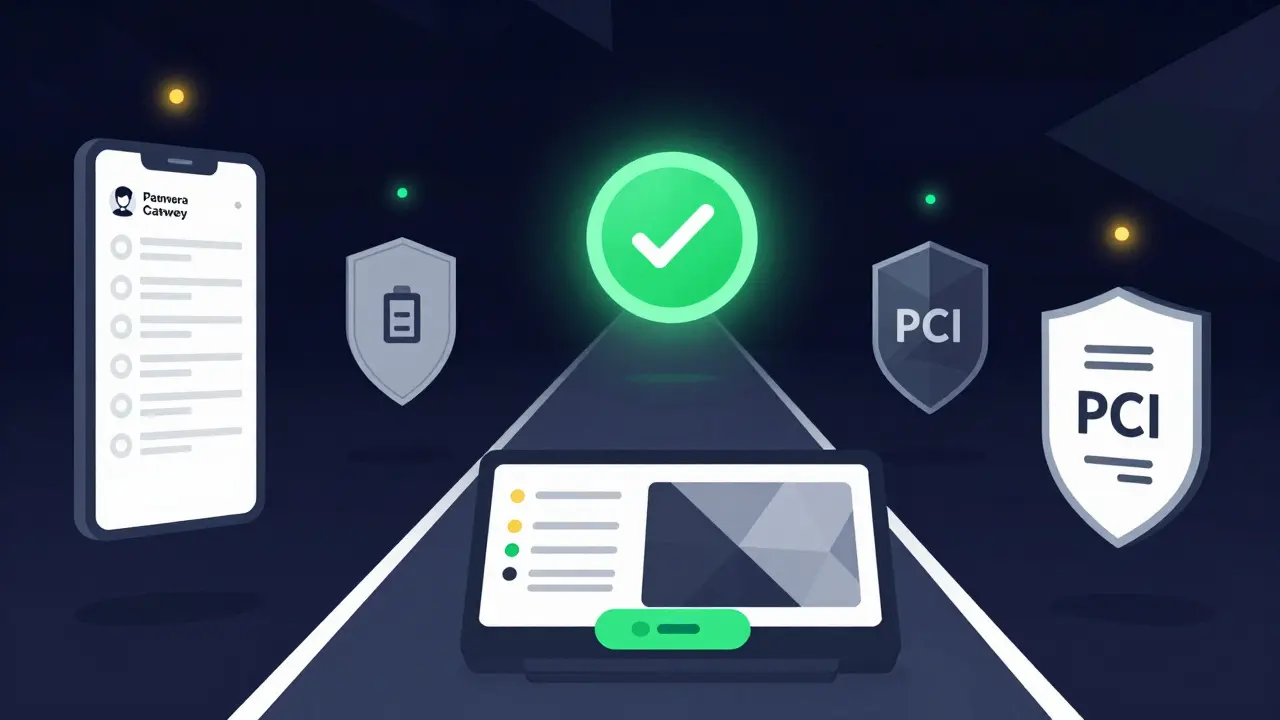
Recent updates from major providers like PayPal include automatic security checks. However, developers should validate outputs manually. Never skip the step of reviewing authentication logic and ensuring PCI compliance for any project handling financial data.
How fast can I really launch a store?
Temporary promotional storefronts can be implemented in under four hours. Custom flows for niche markets generally take 3-6 hours to implement fully. Compare this to the traditional two-week timeline for similar custom requirements.
Do I need to know how to code to use this?
Basic HTML/CSS knowledge helps and leads to proficiency in about 5 hours, but you don't strictly need it. The natural language interface handles the heavy lifting, though you will eventually learn syntax patterns through the suggestions the AI provides.





Software builds require actual verification steps. You cant trust a bot to handle money safely. It feels like a scam to me personally. Just another way to make developers feel obsolete fast. Security is always compromised when you skip steps. The industry moves too fast for safety checks.
omg why are u so negative !!! lol they fixed the bugs long ago !! you are just scared of change!!!! nobody wants to write manual code anymore !!! the ai is super smart now!!! you guys need to chill out !!!
Your spelling is absolutely unacceptable here. You cannot take punctuation seriously either. This article talks about security risks too lightly. People ignore the red flags everywhere around us. The data points look fabricated completely. Testing errors happen frequently during trials. Developers need to stay vigilant always. We cannot abandon traditional methods completely. Speed comes at a high cost to quality. Many companies will suffer losses soon. You should stop spreading misinformation online right now. Verify every single line of code manually. Do not listen to marketing fluff blindly. Safety must remain the top priority now. Stop arguing and read the documentation properly. You are creating fear unnecessarily.
guess it works fine if you test enough
Technology changes society fundamentally in ways we cannot predict. We must consider the cultural impact of automation deeply. Speed is not the only metric that matters here today. Human oversight defines our future integrity completely. Without boundaries we lose control completely over our tools. It is vital to set strict ethical limits immediately.
The report cited specifically mentions November 2025 guidelines clearly. That document states sandboxing is mandatory for safety. Ignoring those rules creates liability issues immediately. Most users fail to check version history accurately. You should verify the source material accurately.
Thanks for clarifying that part honestly. It helps to know the specific dates clearly. Everyone makes mistakes sometimes so patience is key here. Good luck with the setup process later.