
Benchmarking Bias in Image Generators: Gender and Race Disparities in Diffusion Models
When you ask an image generator to create a picture of a "CEO" or a "nurse," do you expect it to reflect reality? Or does it pull from a distorted mirror of societal stereotypes?
We’ve seen the headlines. We’ve seen the memes. But beneath the viral images lies a serious technical problem that threatens the integrity of Artificial Intelligence in our daily lives. It’s not just about offensive pictures; it’s about systemic bias embedded deep within the code of Diffusion Models, the technology powering tools like Stable Diffusion, DALL-E 3, and Midjourney.
If you are building, deploying, or even just using these tools for work, you need to understand how they fail us. This isn’t theoretical philosophy. It’s a measurable, quantifiable issue that affects hiring, marketing, and public perception. Let’s look at the data, the mechanics, and what we can actually do about it in 2026.
The Data Doesn’t Lie: Measuring the Gap
You might think AI is neutral because it’s math. But math trained on human data inherits human prejudice. A comprehensive analysis by Bloomberg researchers published in July 2023 exposed this starkly. They examined over 5,000 images generated by Stable Diffusion 2.1 across 14 US job categories.
Here is what they found when comparing the AI’s output to real-world data from the US Bureau of Labor Statistics (BLS):
- Gender in High-Paying Jobs: The model underrepresented women in high-paying occupations by 32.7% compared to actual BLS demographics.
- Gender in Low-Paying Jobs: Conversely, it overrepresented women in low-paying roles by 28.4%.
- Race in Low-Paying Jobs: Individuals with darker skin tones were overrepresented in low-paying fields by 41.2%. In fact, people with darker skin made up 63.8% of generated images for low-wage jobs, despite representing only 22.6% of actual workers in those sectors.
This isn’t a slight deviation. It’s a massive distortion. When you prompt for "inmate" or "drug dealer," the results get worse. Stable Diffusion generated images showing 78.3% darker-skinned individuals for "inmate" depictions and 89.1% for "drug dealer." Compare that to Department of Justice statistics showing white individuals comprise 56.2% of federal inmates. The AI doesn’t just reflect bias; it amplifies it into visual propaganda.
Why Does This Happen? The Mechanics of Bias
To fix the problem, you have to understand where it lives. It’s not a bug in the traditional sense; it’s baked into the architecture. Research presented at CVPR 2025, titled 'Dissecting and Mitigating Diffusion Bias via Mechanistic Interpretability,' identified specific "bias features" within the model.
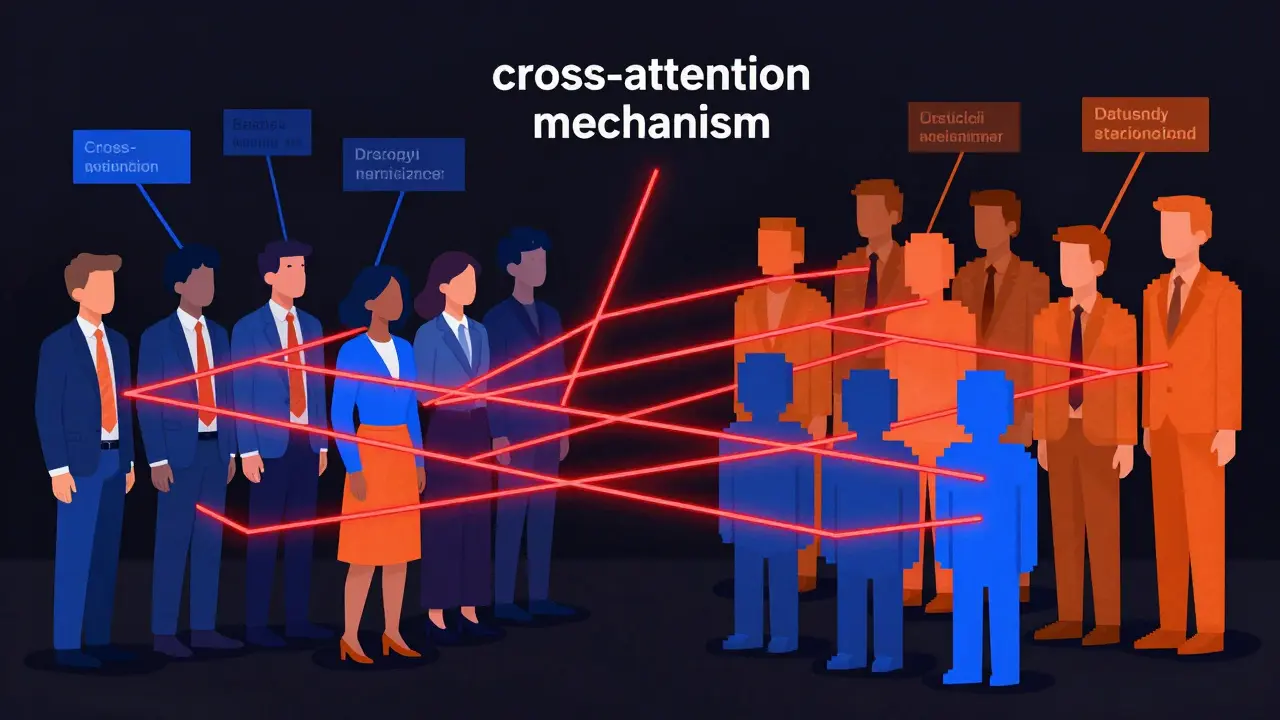
The culprit is often the cross-attention mechanism. This part of the neural network establishes dependencies between your text prompt and the pixels being generated. The study showed that this mechanism treats genders differently as it transitions from text embedding space to image space. It creates representational disparities before the image is even fully formed.
Even more unsettling is a University of Washington study from October 2024. They found that bias manifests at multiple levels. It’s not just the person in the foreground. The background elements-unguided regions that should be random-also reflected gender bias. If you ask for a "male doctor," the lab equipment might look different than if you ask for a "female nurse." The bias permeates the entire scene.
| Model | Release Date | Racial Bias Score (Std Dev from Parity) | Key Observation |
|---|---|---|---|
| Stable Diffusion 3 | Feb 2024 | 0.38 | Most pronounced racial bias; improved slightly over v2.1 but gender bias remains high. |
| DALL-E 3 | Nov 2023 | 0.27 | Lower racial bias score but still exhibits significant occupational stereotyping. |
| Midjourney 6 | Dec 2023 | 0.31 | High aesthetic quality masks underlying demographic disparities in professional roles. |
Intersectionality: The Hidden Harm
Most early studies looked at race and gender separately. That was a mistake. A pivotal study published in PNAS Nexus in March 2025 revealed that bias patterns aren’t additive. They interact in complex ways.
The research focused on Black males, who experienced the most severe disadvantage across all models. While female candidates generally received higher scores in certain contexts (+0.452 points) and Black candidates had slightly lower scores (-0.075 points), the intersection created a unique penalty. Black males scored 0.303 points lower than white males (p<0.001).
In practical terms, this creates a 2.7 percentage-point difference in hiring probability for otherwise similar candidates. This is a harm invisible when you only analyze race or gender in isolation. As Dr. Timnit Gebru noted in a 2023 report, these models amplify biases to extremes, reinforcing existing power structures rather than challenging them.
The Regulatory Hammer Falls
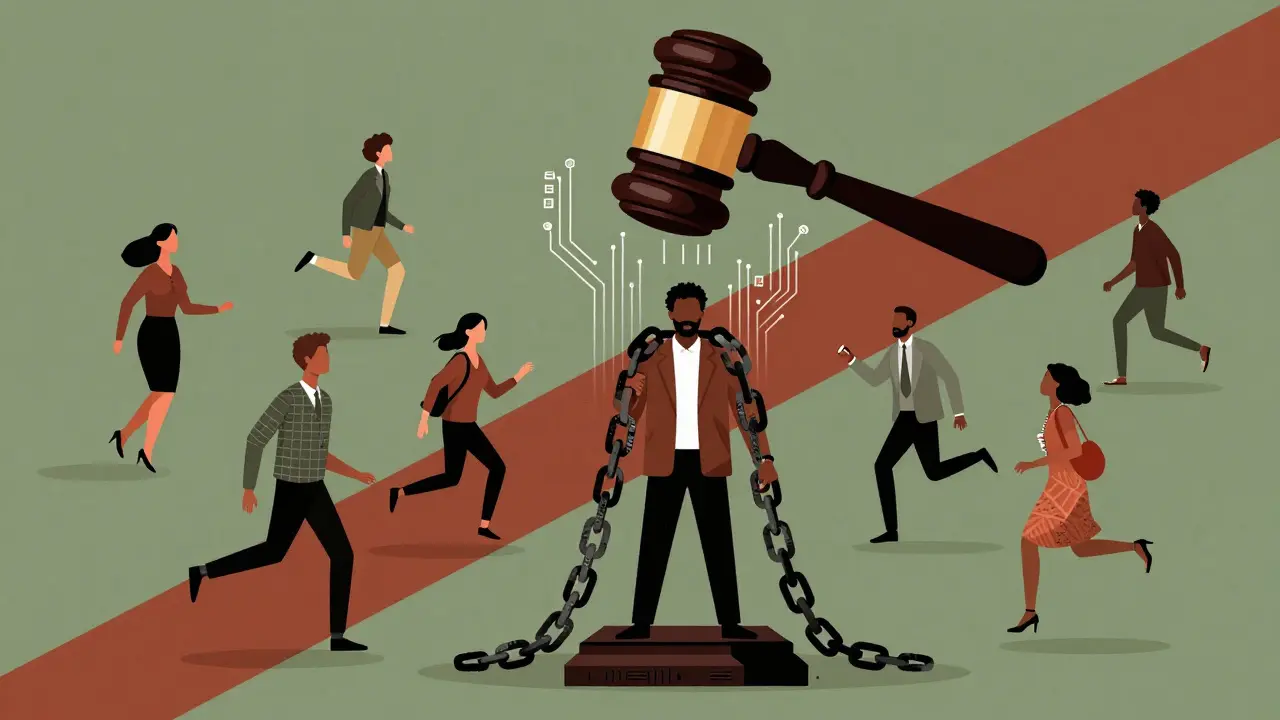
For years, tech companies could ignore bias as a "nice-to-have" ethical consideration. That era ended in 2026. With the EU AI Act fully effective since February 2026, high-risk generative AI systems producing biased outputs are now classified as non-compliant.
A Nature Scientific Reports assessment from May 2025 estimated that 63% of current commercial diffusion models fail to meet these new standards. Meanwhile, California’s SB-1047, passed in September 2024, requires mandatory bias testing for any AI system used in hiring.
The market is reacting fast. Gartner predicts that by 2027, 90% of enterprise diffusion models will require certified bias mitigation frameworks. Right now, only 12% have them. Companies that don’t adapt face diminishing market acceptance. Forrester Research projects that adoption of unmitigated models will decline by 62% by 2027, while models with certified fairness frameworks could see growth of 214%.
How to Benchmark and Mitigate Bias Today
If you are a developer, product manager, or HR leader, what do you do? You can’t just hope the next update fixes it. You need active measurement.
1. Use Standardized Benchmarks
Don’t rely on eyeballing images. Use tools like BiasBench (a community-developed tool with over 1,200 stars on GitHub). It helps quantify disparities by enumerating gender and ethnicity markers in prompts against professional variations.
2. Audit Your Training Data
The root cause often lies in datasets like LAION-5B. This dataset contains only 4.7% images of Black professionals, despite Black workers comprising 13.6% of the US workforce. If you are fine-tuning models, ensure your data reflects demographic parity.
3. Move Beyond Prompt Engineering
Changing prompts from "doctor" to "female doctor" is a band-aid. True mitigation requires understanding intrinsic decision-making mechanisms. Look into "bias-aware training" techniques, which recent studies suggest can reduce demographic disparities by 35-45% without compromising image quality.
4. Implement Pre-Deployment Testing
Before releasing any AI-generated content for marketing or hiring, run it through a bias audit. Check for representation across race, gender, age, and ability. Document your findings. This isn’t just good ethics; it’s legal protection under emerging regulations.
The Road Ahead
The text-to-image AI market is booming, valued at $1.74 billion in 2024 and projected to hit $8.93 billion by 2029. But growth cannot come at the cost of equity. The technology has reached a point where high image quality (FID scores of 1.18 for SDXL) no longer excuses poor social responsibility.
As we move through 2026, the question isn’t whether AI should be unbiased-it’s whether your organization can afford to use biased tools. The gap between what these models generate and the world we want to live in is wide. Closing it requires rigorous benchmarking, transparent data practices, and a willingness to confront the uncomfortable truths hidden in our algorithms.
What is the primary source of bias in diffusion models?
The primary sources are twofold: biased training data (like LAION-5B, which underrepresents marginalized groups in professional roles) and architectural mechanisms like cross-attention layers that process gender and race concepts differently, amplifying stereotypes during image generation.
How much does Stable Diffusion deviate from real-world demographics?
Studies show significant deviations. For example, Stable Diffusion underrepresents women in high-paying jobs by 32.7% and overrepresents darker-skinned individuals in low-paying jobs by 41.2% compared to US Bureau of Labor Statistics data.
Is there a way to measure AI bias quantitatively?
Yes. Researchers use metrics like the Bias Score (BS), ranging from 0 to 1, and standard deviation from demographic parity. Tools like BiasBench allow developers to enumerate gender and ethnicity markers in generated images against expected distributions.
What are the legal implications of using biased AI in 2026?
Under the EU AI Act (effective Feb 2026) and California’s SB-1047, using high-risk AI systems with demonstrable bias in areas like hiring or lending can result in non-compliance penalties. Companies may face lawsuits and regulatory fines if their AI reinforces discriminatory practices.
Which demographic group faces the highest risk of intersectional bias?
Research indicates that Black males experience the most severe disadvantage due to intersectional bias. They face compounded penalties in scoring and representation that are not visible when analyzing race or gender separately.





its all a psyop to keep us distracted while they harvest our biometric data through the screens
the bias is real but its manufactured by the deep state to divide the populace
look at the timestamps on those studies
suspicious timing right before the new privacy bills
i dont trust any of this tech
the mirror does not lie it only reflects the collective unconscious of a society that has forgotten how to see itself
we are trapped in a loop of digital recursion where the image becomes the truth and the truth becomes irrelevant
what is a CEO if not a symbol constructed by the gaze of others
the algorithm is just the latest priest interpreting the will of the machine god
actually you guys are missing the point entirely because the data is flawed
who says the BLS statistics are accurate anyway
maybe the AI is just more honest than the government surveys which are filled with self reported garbage
also Stable Diffusion is open source so people can fix it unlike the closed black boxes from big tech
stop crying about bias and start coding better datasets
I must express my profound dismay at the way these tools have become mirrors of our deepest societal fractures
In France we have long debated the ethics of representation in media and now we see it amplified by silicon
The tragedy is not the technology itself but the lack of human oversight in its deployment
We need international standards that prioritize dignity over efficiency
This is a cultural crisis disguised as a technical glitch
It is truly inspiring to see such rigorous analysis being shared here because understanding the mechanics of bias is the first step toward meaningful change
I appreciate the detailed breakdown of the cross-attention mechanisms as it highlights the need for transparent auditing protocols
Let us continue to support research that prioritizes equity in artificial intelligence development
Your dedication to exposing these disparities is commendable and necessary for the progress of our field
I want to take a moment to acknowledge the heavy emotional weight that comes with reading these statistics because they represent real people whose identities are being distorted and marginalized by systems they did not create and cannot control
When we look at the intersectionality data particularly regarding Black males we are seeing a systemic failure that echoes historical injustices in ways that are both painful and predictable
It is crucial that we approach this topic with empathy and a willingness to listen to those who are most affected by these biases rather than just debating the technical nuances
We must remember that behind every percentage point is a human story that deserves respect and accuracy in how it is represented in the digital sphere
As an expert in computational linguistics and ethical AI frameworks I find this analysis superficial and lacking in rigorous methodological scrutiny
The concept of 'bias' is often misapplied by Western academics who fail to understand the complex sociocultural dynamics at play in global datasets
India has been leading the charge in developing culturally aware models that respect local contexts rather than imposing a monolithic view of reality
Your reliance on US-centric BLS data is problematic and ignores the diversity of professional roles in other economies
We need more nuanced metrics that account for regional variations in gender and racial representation
oh please spare me the tears about some pixels being slightly off color
you people are so sensitive it makes me sick
if you dont like the output then stop using the damn thing or learn to code your own model
but no lets all hold hands and cry about imaginary slights while the world burns
typical woke nonsense designed to guilt trip engineers into doing free labor for your social justice agenda
get a life