Data Privacy and Compliance Pitfalls for Non-Technical Vibe Coders
What Happens When You Build Apps Without Thinking About Data Privacy
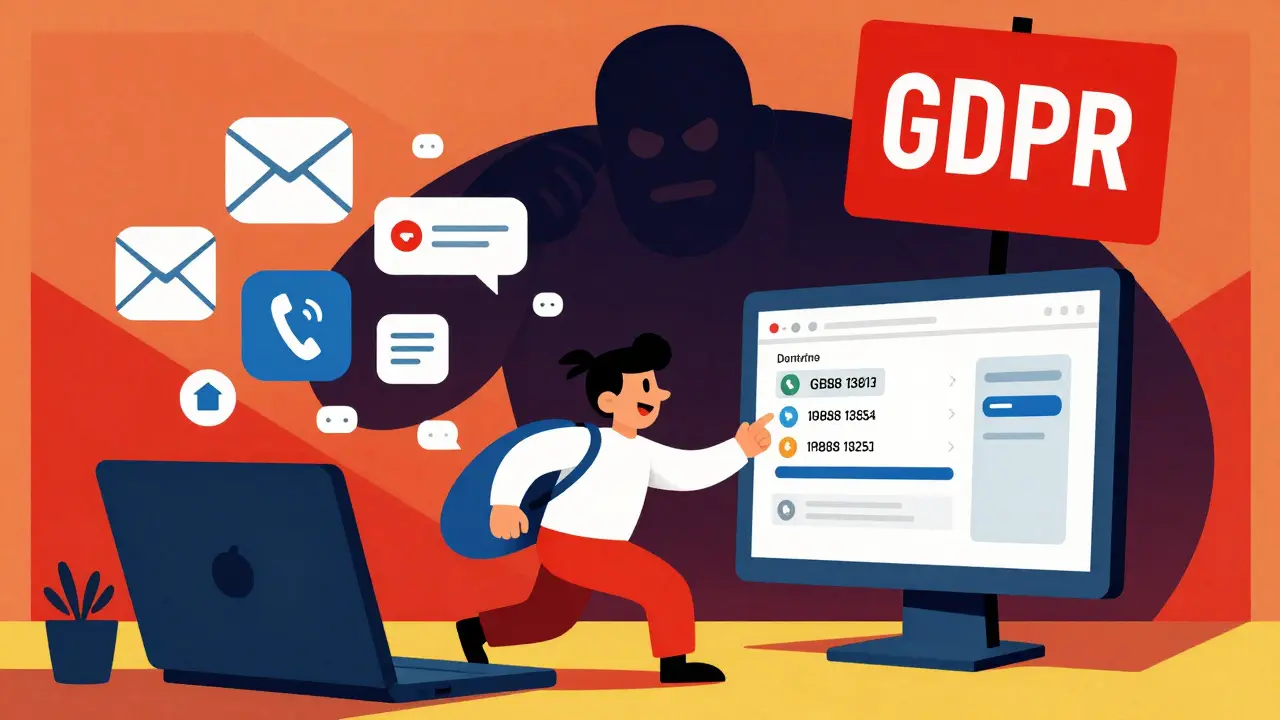
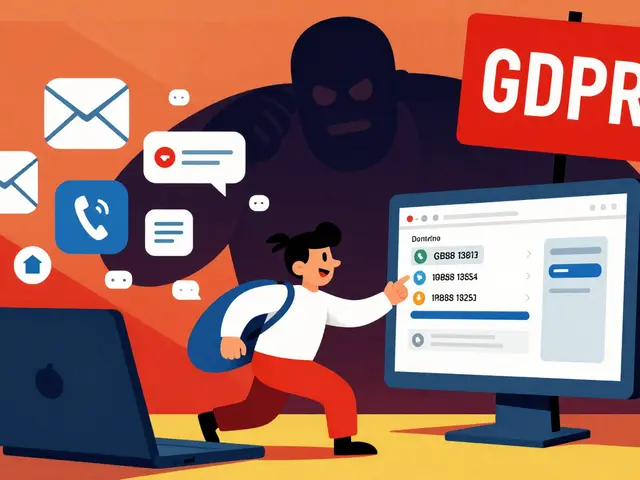
You built a customer portal in Bubble. It looks amazing. Users love it. You didn’t touch a line of code-just dragged and dropped, connected a few APIs, and called it done. But then you got an email: "Your app is in violation of GDPR. Pay €20,000 or shut it down." You didn’t even know GDPR applied to you. You thought you were just helping small businesses track orders.
This isn’t rare. It’s happening every day.
The rise of low-code and no-code tools has put app-building power into the hands of marketers, designers, small business owners, and creatives-people who care more about how something feels than how it’s built under the hood. These are the vibe coders. They build fast. They iterate quickly. They prioritize user experience. And too often, they ignore data privacy like it’s a bug they can fix later.
But privacy isn’t a feature you add at the end. It’s the foundation. Skip it, and you’re not just risking fines-you’re risking trust, reputation, and your business.
Why Your App Is Already in Violation (Even If You Didn’t Mean to)
You collected email addresses. Maybe you asked for names. Maybe you stored phone numbers. You didn’t think twice. After all, it’s just a form. But under GDPR, CCPA, or HIPAA, that’s personal data. And collecting it without consent? That’s a violation.
Here’s the scary part: 89% of apps built on no-code platforms lack proper consent mechanisms. That means if you’re collecting any personal info-email, location, IP address, even a user’s favorite color if it’s tied to their account-you’re likely breaking the law.
And it’s not just about consent. You might be storing data longer than you should. GDPR says you can’t keep data “forever just in case.” You need a clear reason-and a deadline. Most vibe coders don’t set expiration dates. They just let data pile up.
Then there’s data minimization. Do you really need someone’s full birthdate to let them sign up for a newsletter? Probably not. But 78% of apps built without technical training collect more data than necessary. That’s not just bad practice-it’s illegal under most privacy laws.
The Hidden Security Risks You Can’t See
You think your app is safe because you used a “trusted” platform like Airtable, Zapier, or Retool. But those tools don’t magically protect you.
Here’s what’s probably going wrong:
- You hardcoded API keys into your app. Someone found them in your GitHub repo. Now hackers are using your account to send spam.
- You’re using client-side validation only. That means a hacker can bypass your form and inject malicious code straight into your database.
- You didn’t encrypt data at rest. Your customer list? It’s sitting in plain text on a server.
- You gave “edit access” to everyone on your team. One person leaves. They still have access to your customer data.
According to GitGuardian, 31% of GitHub repositories from low-code developers contain exposed secrets. That’s not a mistake. That’s a liability waiting to happen.
And don’t assume your platform handles everything. OutSystems, Mendix, Power Platform-they give you tools. But if you don’t know how to use them correctly, you’re building a house with a leaky roof and calling it waterproof.
GDPR, CCPA, HIPAA: What You Actually Need to Know
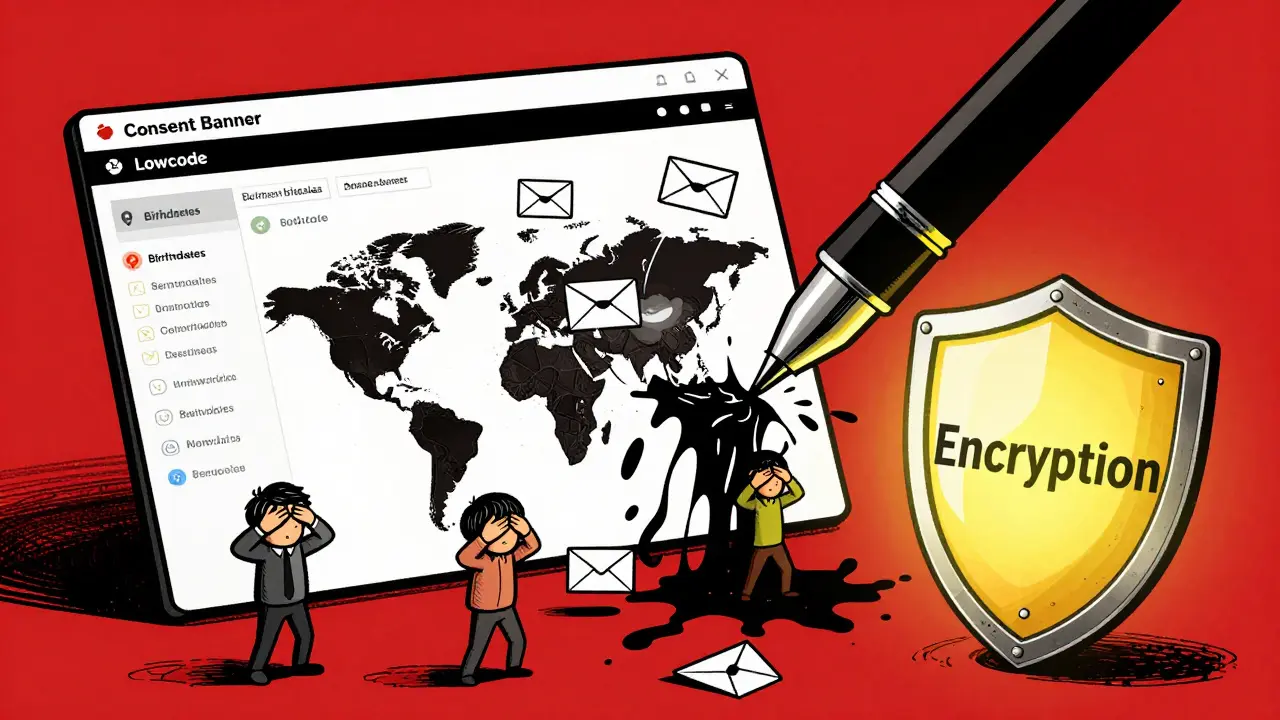
You don’t need to become a lawyer. But you do need to understand three basic rules:
- Consent - You can’t collect data unless the user says yes, clearly and freely. Pre-checked boxes? Not allowed.
- Right to be forgotten - If someone asks you to delete their data, you have to find it everywhere. In your database? In your backups? In your Zapier flows? All of it. But 67% of low-code apps can’t even locate all the places personal data is stored.
- Data minimization - Only ask for what you absolutely need. Don’t collect a home address if you’re just sending a newsletter.
HIPAA adds another layer if you’re handling health data-even something as simple as a user logging their migraine frequency. If you’re building a wellness app, you’re now in the healthcare space. No exceptions.
And here’s the truth: it doesn’t matter if you’re a one-person shop. GDPR applies to anyone handling EU residents’ data. CCPA applies if you do business in California. You don’t need to be big to be targeted.
What Vibe Coders Do Right (And How to Keep Doing It)
Let’s be fair: vibe coders aren’t bad people. They’re creative. They move fast. They solve real problems.
Apps built on low-code platforms get 32% higher user satisfaction scores than traditional apps. Why? Because they’re intuitive. They’re beautiful. They work the way people expect.
That’s your superpower. Don’t lose it.
But now, pair that speed with a little structure:
- Use platform templates. Mendix has a GDPR template that cuts setup time from 120 hours to 15. Use it.
- Enable built-in privacy features. Power Platform now scans for GDPR issues automatically. Turn it on.
- Use OneTrust or Usercentrics for consent management. They plug right into most low-code tools.
You don’t have to write code to be compliant. You just have to know where to click.
How to Fix What’s Already Broken
It’s not too late. Even if you’ve already launched, you can still fix it.
Here’s your 5-step cleanup plan:
- Map your data - Where does every piece of user info go? Write it down. Even if it’s just on a sticky note.
- Remove what you don’t need - Delete old records. Turn off data collection for fields you don’t use.
- Enable encryption - If your platform lets you encrypt data at rest, turn it on. If not, switch platforms.
- Add consent banners - Use a free tool like Cookiebot or Osano. It takes 10 minutes.
- Train your team - Share the OWASP Secure Coding Quick Reference Guide (2024 version). It’s written for non-developers. 78% of users reduced vulnerabilities after using it.
One user on Reddit fixed their €20,000 violation by spending 3 hours setting up a consent form and deleting 3 years of unused data. No code. No developer. Just action.
The Future Is Built for You
The good news? The tools are catching up.
By 2026, 70% of low-code platforms will have automated compliance checks built in. OutSystems is rolling out AI assistants that flag privacy issues as you build. Microsoft’s Power Platform already scans for violations in real time.
But here’s the catch: automation won’t save you if you don’t pay attention.
These tools are guardrails, not magic. They’ll tell you when you’re about to drive off the road. But if you ignore the warning, you’ll still crash.
The future belongs to vibe coders who care about both experience and ethics. The ones who build beautiful apps-and then make sure they’re safe.
You don’t need to be a security expert. You just need to care enough to ask: "Is this data protected? Can someone delete it? Do I really need it?"
That’s all it takes.
Do I need to worry about GDPR if I’m not in Europe?
Yes. GDPR applies to any business that collects data from people in the European Union-even if you’re based in Texas or Tennessee. If someone from Germany signs up for your newsletter, you’re covered by GDPR. Ignoring it won’t make it go away.
Can I just use a free privacy policy generator?
Free generators are better than nothing, but they’re not enough. Most don’t account for how your app actually works. If your app pulls data from Airtable and sends it to Zapier, your policy needs to say that. Generic templates won’t cover custom workflows. Use them as a starting point, then customize them with your actual data flows.
What’s the biggest mistake vibe coders make?
Thinking that the platform handles everything. Low-code tools give you superpowers-but not superknowledge. You still need to understand what data you’re collecting, where it goes, and how to protect it. The platform won’t remind you to delete data when someone asks. You have to do that yourself.
Are there free tools to help me stay compliant?
Yes. Use the OWASP Secure Coding Quick Reference Guide (2024) for a 47-point checklist. Use Cookiebot or Osano for free consent banners. Enable built-in compliance scanners in Power Platform or Mendix. Use OneTrust’s free data mapping tool. You don’t need to spend money to be compliant-you just need to take 2 hours and do the work.
What happens if I ignore compliance?
You could get fined. GDPR fines have totaled over €3.3 billion since 2018. You could get sued. You could lose your app’s reputation overnight. And if you’re handling health data, you could face criminal charges under HIPAA. Fines start at $20,000-but the real cost is trust. Once users know you don’t protect their data, they won’t come back.






Man, I’ve seen this so many times. Someone builds a beautiful app in Bubble, thinks they’re a genius, then gets slapped with a GDPR notice. The scary part? They didn’t even know they were collecting personal data. Consent banners aren’t optional. They’re the bare minimum. And if you’re using Airtable or Zapier without encrypting data at rest? You’re basically leaving your customers’ emails on a park bench.
Low-code tools are powerful, but they don’t think for you. You still have to ask: ‘Where does this data go?’ ‘Who can access it?’ ‘Can I delete it when asked?’ No one’s coming to save you. Not the platform. Not the algorithm. Just you.
Let me guess - you used a free privacy policy generator and called it a day. Cute. That’s like putting a Band-Aid on a broken leg and calling it ‘medical compliance.’
GDPR doesn’t care if you’re a one-person shop in Ohio. If a German user signed up, you’re in their jurisdiction. And no, ‘I didn’t know’ isn’t a defense. It’s a liability.
Fix it. Use Cookiebot. Delete old data. Turn on encryption. 3 hours. That’s all it takes. Stop pretending you’re too busy to protect people’s privacy.
This is why I don’t trust no-code tools. Everything’s built on sand. The platforms? Owned by Silicon Valley giants who sell your users’ data anyway. They give you ‘compliance features’ so you feel safe while they harvest everything behind the scenes.
They want you to think it’s your fault you got fined. But it’s their fault. They sold you a shiny toy and hid the trapdoor. Now you’re paying for their greed. Wake up. This isn’t about privacy. It’s about control.
People think they’re being ‘creative’ by skipping consent forms, but they’re just being selfish. You don’t get to collect someone’s name, email, and location just because you ‘thought it’d be helpful.’ That’s not innovation - that’s exploitation.
And if you’re using a free tool to ‘solve’ this? You’re not helping anyone. You’re just delaying the inevitable. Your users deserve better. Your business deserves better. Start acting like it.
OMG I JUST REALIZED MY APP HAS 47,892 EMAILS FROM 2021 THAT I NEVER DELETED!! I THOUGHT THEY WERE JUST ‘STATS’!!
AND NOW I’M SCARED BECAUSE I USED ZAPIER TO SEND THEM ‘WELCOME EMAILS’ AND I DIDN’T EVEN KNOW I WAS STORING IP ADDRESSES??
MY THERAPIST SAID I HAVE A ‘CONTROL COMPLEX’ BUT NOW I THINK IT’S JUST THAT I’M A CRIMINAL??
HELP. I NEED TO DELETE EVERYTHING. I’M GOING TO CRY IN THE BATHROOM.
It’s not just about GDPR. It’s about competence. You didn’t learn to drive by watching YouTube videos and calling it ‘vibe driving.’ Why should data privacy be any different?
Low-code tools are not magic. They’re levers. And if you pull them without understanding the mechanics, you break everything - including your reputation. You’re not a visionary. You’re a liability with a dashboard.
Stop romanticizing ignorance. The world doesn’t need more ‘beautiful’ apps that leak data. It needs responsible builders.
Consent isn't a checkbox. It's a conversation. If you're not treating it like one, you're not building for people. You're building for profit. And that's not a vibe. That's a virus.
Encryption. Minimization. Deletion. These aren't features. They're ethics. You don't need to be a coder to understand that.
Just enable the built-in scanner. Done.
Stop panicking and just fix it. 2 hours. One day. You got this. Start with the consent banner. Then delete the junk. Then sleep. You’re not a criminal. You’re a learner.
Let’s be honest - this entire movement is a distraction. The real issue is that corporations are weaponizing compliance to extract more data under the guise of ‘user control.’ Consent banners are performative. Encryption is a cost center. The system is rigged.
And you? You’re just a pawn in a game where the rules are written by lawyers and enforced by algorithms you don’t understand. So yes, fix your app. But don’t fool yourself - you’re not saving democracy. You’re just avoiding a fine.