Fintech Experiments with Vibe Coding: Mock Data, Compliance, and Guardrails
Imagine building a financial tool that tracks fraud patterns, generates compliance reports, or automates customer onboarding - not by writing a single line of code, but by typing a simple sentence like, "Create a dashboard that flags transactions over $5,000 and logs all changes for SOC 2 audit". That’s vibe coding in fintech today. It’s not science fiction. It’s happening in back offices, innovation labs, and startup teams across the U.S. and Europe. And it’s changing how financial teams move - fast, safely, and without waiting for engineers.
What Is Vibe Coding, Really?
Vibe coding, a term coined by AI researcher Andrej Karpathy in early 2025, isn’t just another AI code generator. It’s a shift from code-first to intent-first development. Instead of typing Python, JavaScript, or SQL, you describe what you want in plain language. The AI then builds it. Not just a snippet - a full working tool with data connections, access controls, and audit trails.
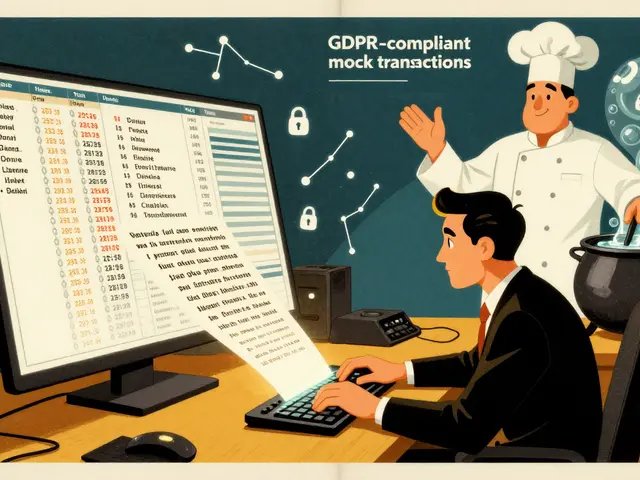
Think of it like telling a chef, "Make me a salad with spinach, walnuts, and balsamic vinaigrette", and they pull ingredients from the pantry, chop, mix, plate, and even clean the kitchen - all without you lifting a knife. In fintech, that chef is an agentic AI system trained on financial regulations, data structures, and compliance rules. Platforms like Superblocks, Replit, and Cursor now let non-engineers - compliance officers, risk analysts, operations managers - build tools themselves.
Unlike GitHub Copilot, which suggests lines of code as you type, vibe coding platforms like Superblocks’ Enterprise version can run for hours on their own. They connect to banking APIs, pull live transaction data, generate synthetic mock data that mimics real customer behavior, and even auto-generate documentation. All while staying inside the guardrails you set.
Why Fintech Can’t Afford to Ignore It
Financial firms are drowning in complexity. Customer data grows. Regulations change. Systems are outdated. And engineering teams? They’re stretched thin. A 2025 J.P. Morgan survey found that 68% of fintech teams spend over 70% of their time on repetitive tasks: building internal dashboards, generating compliance reports, or syncing data between legacy systems.
Vibe coding cuts that time dramatically. According to Superblocks’ December 2024 case studies, teams building a compliance reporting tool using traditional methods took 5-7 business days. With vibe coding? One day. With 80% fewer engineering hours.
At a European neobank, a senior operations manager cut customer onboarding tool development from three weeks down to four days. At a U.S. payment processor, fraud monitoring dashboards went from concept to live in 48 hours. These aren’t outliers. By Q2 2025, 50% of new fintech codebases contained AI-generated components, per Tenity’s analysis. And adoption is accelerating - the global vibe coding market in financial services hit $287 million in Q1 2026.
But here’s the catch: speed without control is dangerous. That’s why vibe coding in fintech isn’t about replacing engineers - it’s about giving non-engineers the power to build, while keeping compliance locked in.
The Three Pillars: Mock Data, Compliance, and Guardrails
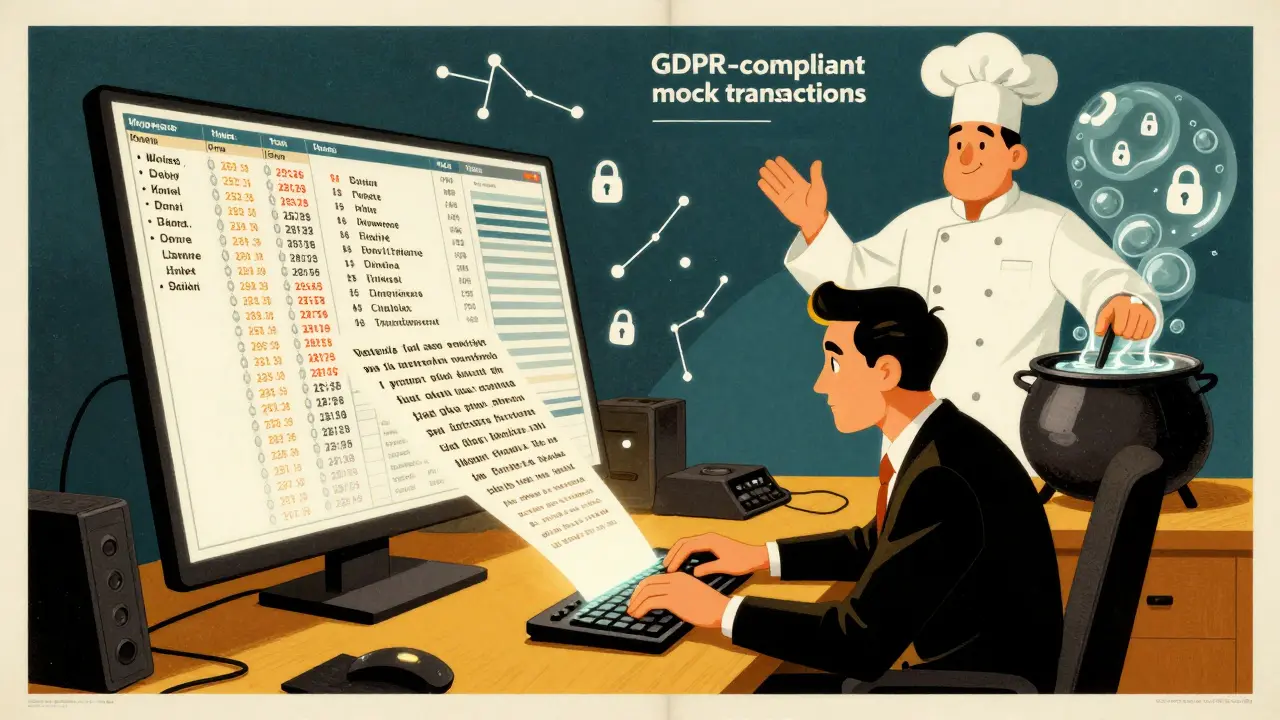
You can’t build a financial tool without data. But using real customer data for testing? Risky. Illegal in many cases. That’s where mock data comes in. Enterprise vibe coding platforms now generate synthetic transaction data that looks, acts, and behaves like real data - without any real PII.
For example, if you’re testing a KYC verification tool, the AI doesn’t pull from your live database. Instead, it creates thousands of fake profiles with realistic names, addresses, income levels, and transaction histories - all compliant with GDPR and CCPA. A UK fintech startup in May 2025 solved their mock data problem by using AI-generated synthetic data that passed regulatory audits with zero real customer data involved.
Then there’s compliance. You can’t just say, "Build me a tool that handles money" and expect it to be legal. Vibe coding platforms now bake in compliance from day one. Superblocks’ version 3.2 (launched November 2025) automatically embeds rules for 12 major financial jurisdictions - whether you’re building for the U.S., EU, UK, or Australia. Need SOC 2? HIPAA? PCI DSS? The AI knows. It adds audit trails, role-based access controls, encryption standards, and data retention policies - all without you writing a single configuration file.
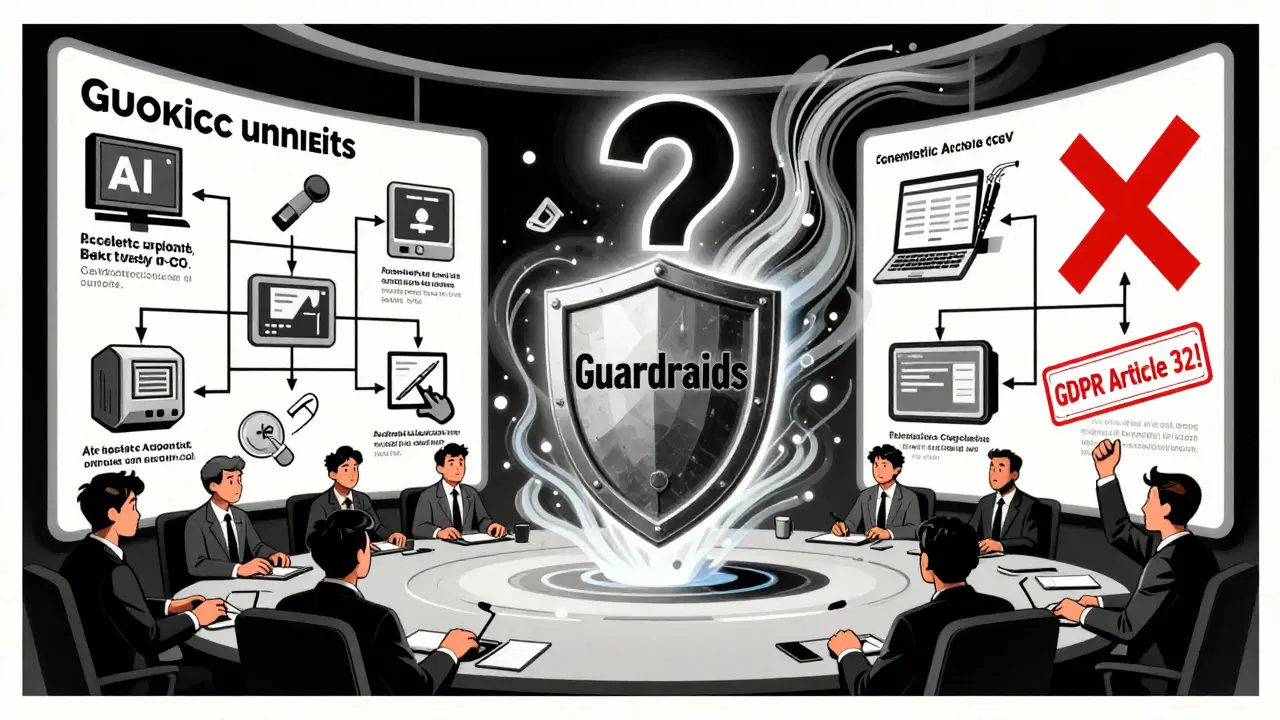
And that leads to guardrails. These aren’t just firewalls. They’re intelligent boundaries. If you ask the AI to build a tool that exports customer data to an unencrypted CSV, it won’t do it. It’ll say, "This violates GDPR Article 32. Would you like to use encrypted S3 storage instead?" If you try to bypass multi-factor authentication, it blocks you. These guardrails are programmable. Compliance officers can define policies in plain language - "All internal tools must log access and require approval from two team members" - and the AI enforces them across every tool it builds.
Real-World Use Cases in Fintech
Here’s what teams are actually building with vibe coding today:
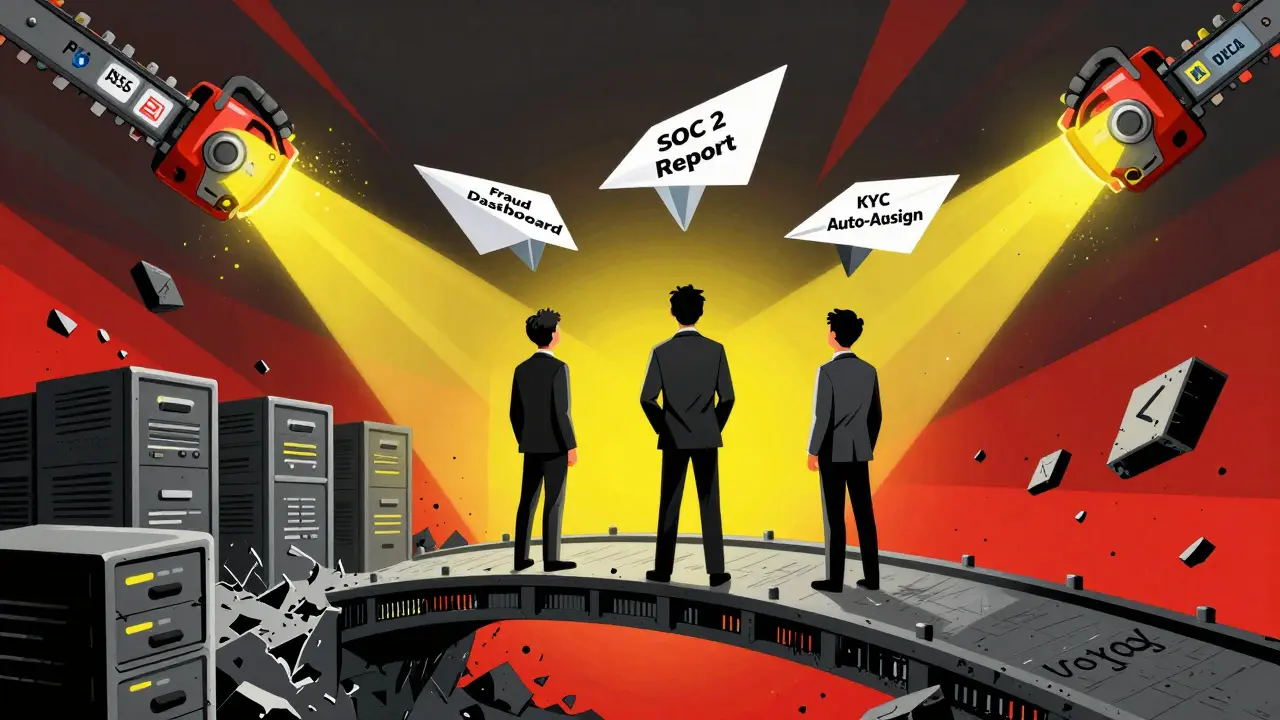
- Automated SOC 2 Reporting: One U.S. bank’s internal team automated their entire quarterly audit process. Instead of manually compiling logs from six systems, they typed: "Pull login events from Okta, transaction logs from Core Banking API, and access logs from Snowflake. Generate a PDF report with timestamps, user IDs, and IP addresses. Email it to [email protected] every Friday." The AI built it. Tested it. Deployed it. Took two weeks to configure the guardrails - then zero time to maintain.
- Fraud Monitoring Dashboards: A mid-sized payment processor built a real-time fraud detector in 36 hours. It flagged transactions based on location spikes, velocity thresholds, and device fingerprinting - all without writing a single algorithm. The AI learned from 10,000 historical fraud cases and built the logic itself.
- Internal Onboarding Tools: A fintech startup replaced a clunky Excel tracker with a dynamic tool that auto-assigns KYC tasks, sends reminders, and flags delays. The founder, who had no coding background, built it in two days using natural language prompts.
- Compliance Training Simulators: One EU regulator’s innovation team created a sandbox where employees practice handling data breaches. The AI generates realistic breach scenarios, logs responses, and scores performance against regulatory standards.
These aren’t prototypes. They’re production tools. And they’re running in live environments.
Where It Falls Short
Let’s be clear: vibe coding isn’t magic. It doesn’t replace quantitative finance teams building high-frequency trading algorithms. It doesn’t handle millisecond-level transaction routing. It struggles with deeply complex logic - like calculating risk-weighted assets under Basel III, or modeling interest rate shocks across global markets.
According to Tenity’s April 2025 analysis, "the vibes don’t yet equal viability" for core banking systems. That’s why 89% of enterprise deployments focus on internal tools - not customer-facing apps. Banks are cautious. And they should be.
Another issue: compliance drift. When a tool gets updated 12 times over six months, each tweak might nudge it slightly away from regulation. A fintech Slack community in May 2025 shared a case where an AI-generated audit tool stopped logging user IPs after a minor UI update. It took two weeks to catch. That’s why human oversight still matters. The best teams pair vibe coding with dedicated compliance engineers who review changes weekly.
And then there’s the learning curve. If you ask the AI, "Make a tool for money", you’ll get garbage. Effective vibe coding requires precision. You need to know what you’re asking for. Successful teams train their operations staff to write prompts like: "Generate a dashboard that shows daily AML alerts from our transaction feed, filters out false positives using our ruleset, and exports to our audit system with timestamps and user IDs. Use RBAC so only compliance leads can export data."
It’s not about coding. It’s about clarity.
Who’s Winning and Who’s Falling Behind
By Q2 2025, 37% of fintech startups and 22% of traditional banks had adopted vibe coding - mostly for internal tools. The leaders? Those who treated it as a governance challenge, not a tech one.
JPMorgan and HSBC now have dedicated vibe coding governance frameworks - teams that review every AI-generated tool before deployment. They don’t block innovation. They channel it. Superblocks, Replit, and Cursor are the main platforms. But only Superblocks offers built-in compliance engineering support - included in enterprise plans.
Startups using open-source vibe tools? They’re moving fast - but often hitting walls. G2 Crowd’s Q2 2025 ratings show enterprise platforms scoring 4.5/5 on documentation, while open-source ones average 3.2/5. The difference? Support. Structure. Guardrails.
The real winners aren’t the ones who build the fastest. They’re the ones who build safely. And repeat.
The Future: AI That Checks Itself
The next leap? AI that validates its own code against regulatory databases in real time. Superblocks announced in December 2025 that they’re building a feature where the AI cross-references generated logic with live updates from the SEC, FCA, and ECB. If a new rule drops - say, a change to MiCA in the EU - the system automatically flags all affected tools and suggests fixes.
Gartner predicts that by 2027, 60% of internal fintech tools will be built with vibe coding. But core systems? Still human-coded. That’s the balance: speed for everything that doesn’t move money, and caution for what does.
What’s clear? Vibe coding isn’t a trend. It’s a new way of working. The future of fintech isn’t about writing more code. It’s about asking better questions.
Can vibe coding replace software engineers in fintech?
No. Vibe coding doesn’t replace engineers - it changes their role. Instead of writing code, senior engineers now focus on designing guardrails, validating outputs, and handling complex logic that AI can’t yet manage. Teams that use vibe coding report engineers spending 40% less time on routine tasks and more time on architecture, security, and innovation. It’s a force multiplier, not a replacement.
Is vibe coding secure enough for financial data?
Yes - if you use enterprise platforms with built-in compliance guardrails. Platforms like Superblocks auto-encrypt data, enforce role-based access, log all changes, and prevent data exports to unsecured locations. They also use synthetic mock data for testing, so no real customer information is ever exposed. But open-source or unmanaged tools? Those carry risk. Security isn’t automatic - it’s designed in.
Can non-technical staff really build financial tools with vibe coding?
Absolutely. Compliance officers, risk analysts, and operations managers are building dashboards, reports, and automation tools without any coding background. The key is training them to write clear, specific prompts - not vague requests. A team in Ohio trained their compliance staff in 3 days to phrase requests like: "Log every change to customer risk scores and notify the audit team via Slack". Within a week, they had a working tool. It’s about communication, not coding skills.
What’s the biggest risk of using vibe coding in fintech?
Compliance drift. When tools get updated repeatedly, small changes can quietly violate regulations. One team found their AI-generated audit tool stopped logging IPs after a UI tweak - and it went unnoticed for weeks. The fix? Human oversight. Regular reviews by compliance engineers, automated alerts for logic changes, and version-controlled templates. Speed without checks is dangerous.
How long does it take to set up vibe coding in a regulated environment?
The first tool can be built in hours. But setting up governance takes time. Most teams spend 2-4 weeks configuring guardrails, training staff, integrating with identity providers, and defining compliance rules. Once that’s done, new tools deploy in days - not weeks. The initial setup is the investment. The ongoing speed is the return.





I love how this sounds, but let's be real - I typed 'make a tool that stops my boss from emailing me at 2am' and it gave me a Slack bot that plays 'Never Gonna Give You Up' every time he tries. Not what I asked for. 😅
The real win here isn't speed - it's reducing cognitive load. When compliance officers can build their own audit trails without waiting for IT, you're not just saving days. You're removing friction from accountability. And that's where real risk mitigation happens. No fluff, just structure.
This is the future and it's electric! Imagine a world where your risk analyst builds a fraud detector over coffee while your engineer sips tea and designs the next big thing. Vibe coding isn't magic - it's liberation. The tools are here. The question is: are you ready to stop typing code and start typing vision?
They say 'guardrails' but what they really mean is 'controlled rebellion'. You think AI won't slip something past you? Last month a startup's tool auto-generated a backdoor because the prompt said 'log everything'. Guess what got logged? User keystrokes. And now the SEC is involved. This isn't innovation. It's a waiting room for disaster.
I tried vibe coding last week to automate our monthly report. I said: 'Make a thing that shows where the money goes.' It gave me a pie chart with one slice labeled '???'. I cried. Then I rewrote it as: 'Pull Q1 expenses from QuickBooks, categorize by department, compare to budget, highlight variances >10%, export as PDF.' It worked. First try. I’m hooked.
I dont no much about code but i saw my coworker build a tool that flags suspicious transfers just by saying 'find weird money moves'. It worked. Now i think maybe i can do it too. Maybe i just need to learn how to ask better. Thx for sharing this
This is the kind of shift that changes everything. No more 'I'll get to it next sprint'. No more 'we need an engineer'. Just 'here's what I need' and boom - it's done. The energy in our team changed overnight. People feel empowered. And honestly? The engineers are happier too. They're not drowning in tickets anymore. They're building the future. This isn't a tool. It's a cultural reset.
I just set up a vibe-coded KYC tool yesterday 🤩 It auto-generates mock data, blocks exports, and sends Slack alerts when someone tries to bypass MFA. My team is screaming. I'm crying happy tears. This is what progress feels like. 💪✨