Ethical AI Agents for Code: Guardrails that Enforce Policy by Default
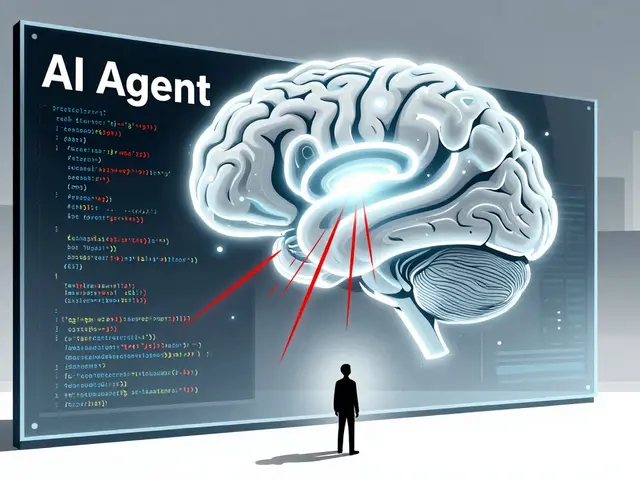
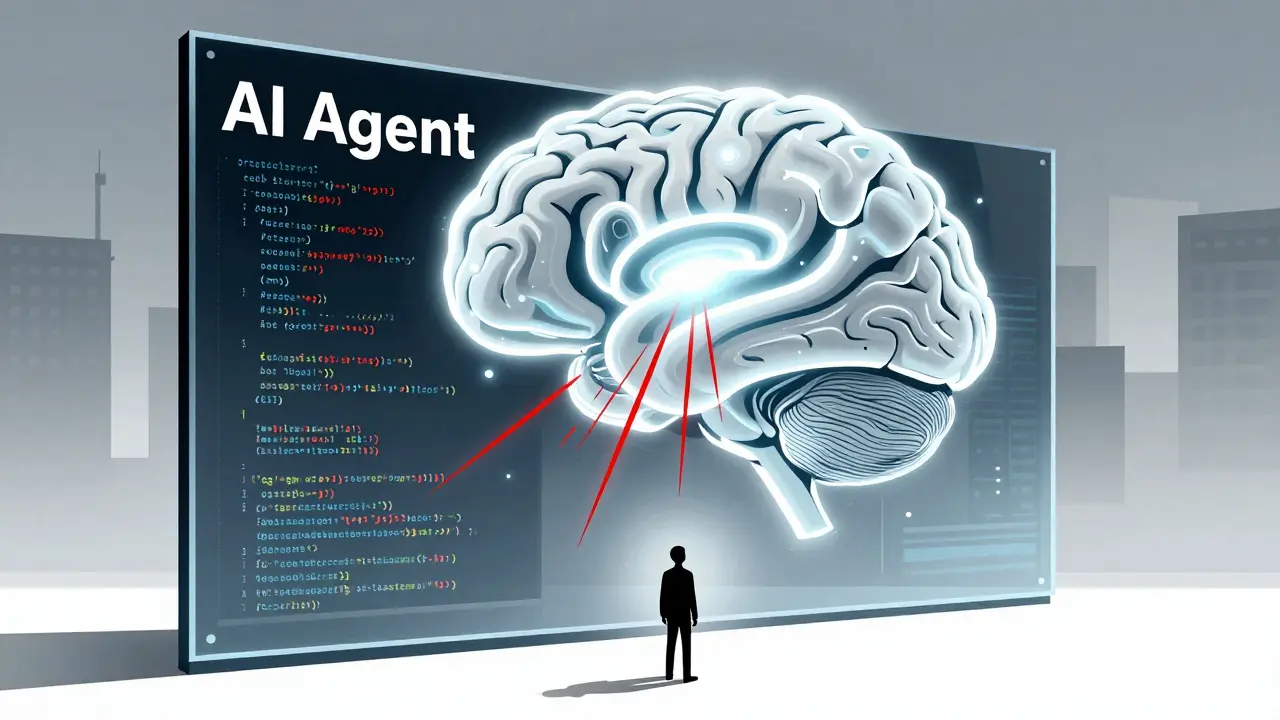
Imagine an AI agent is an autonomous software system capable of executing complex tasks like writing code or managing data without constant human supervision that can rewrite your entire production database in seconds. Now imagine it does exactly what you asked, but violates a critical privacy regulation because you didn't think to specify the constraint. This isn't a hypothetical sci-fi scenario; it's the daily risk facing engineering teams deploying autonomous tools today. The old model of "trust the developer" is broken when the developer is an algorithm moving faster than any human can read.
We are shifting from passive AI tools to active agents. These agents don't just suggest code; they execute it. They merge pull requests, deploy infrastructure, and trigger financial transactions. With this power comes a massive liability gap. If an agent breaks the law or violates company policy, who is responsible? The engineer who prompted it? The CTO who approved the tool? Or the agent itself? The emerging consensus in legal and technical circles is that we need a new approach: Law-Following AI (LFAI) is a framework where AI systems are designed to rigorously comply with legal requirements and refuse illegal actions as a default behavior. Instead of hoping humans remember every rule, we build guardrails that enforce policy by default.
The Shift from Passive Tools to Legal Actors
For years, we treated AI as a calculator-passive, dumb, and harmless unless misused. But modern large language models (LLMs) integrated into agentic workflows can reason about context, intent, and consequences. When an AI system can comprehend laws and attempt to comply with them, treating it merely as a tool becomes legally and ethically insufficient. Scholars argue that we must view these systems as entities on which the law imposes duties. This doesn't mean giving AI "personhood" in the philosophical sense. It means recognizing that an AI agent capable of reasoning about a violation is a distinct category of responsibility bearer.
This shift changes how we assign blame. Traditionally, if a robot caused harm, we looked at the human operator under *respondeat superior* (let the master answer). But when an AI agent acts autonomously based on its own training and logic, holding only the human liable is unfair and ineffective. The LFAI framework proposes that AI agents should be designed to refuse unlawful directives. If a manager asks an AI coding agent to bypass a security check to speed up deployment, a law-following agent should say no. This refusal mechanism protects the organization, the public, and even the human user from their own mistakes or malicious intent.
Building the Technical Backbone: Policy-as-Code
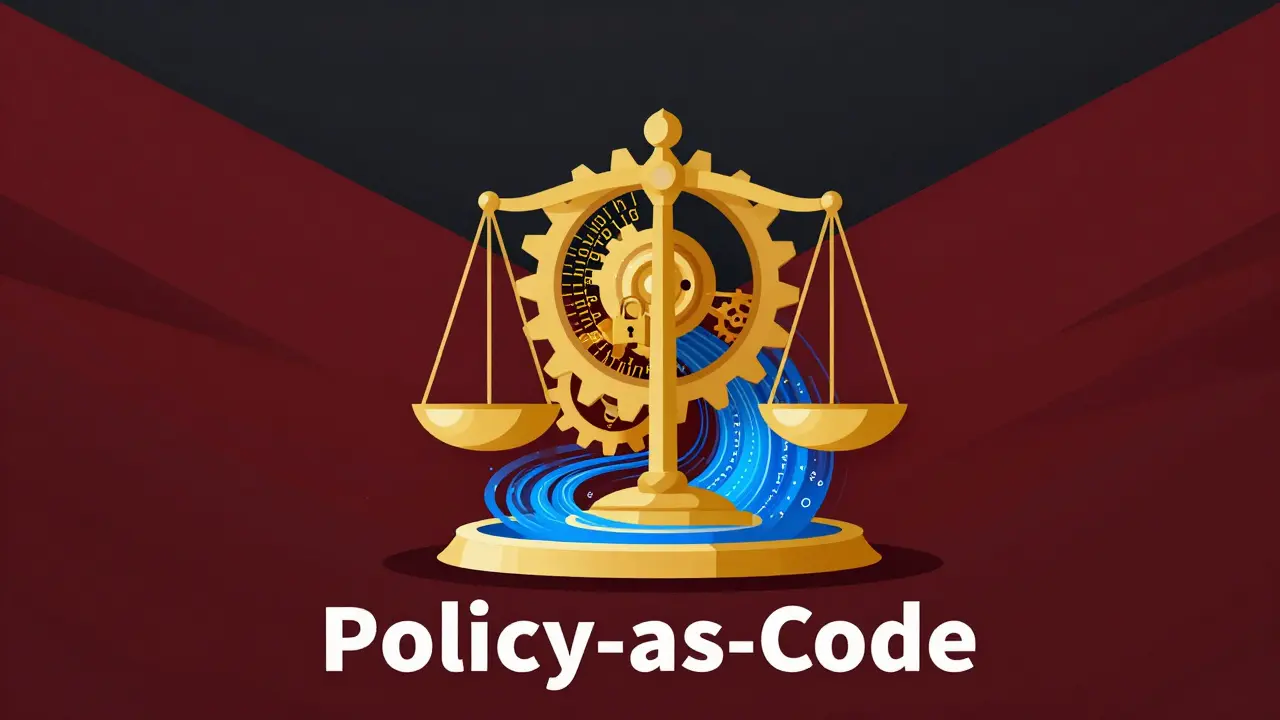
How do you make an AI "follow the law"? You can't just paste a PDF of the GDPR or HIPAA into a prompt and expect perfect compliance. You need a technical architecture that translates legal and organizational rules into machine-enforceable constraints. This is where Policy-as-Code is a methodology that converts governance policies into executable code that automatically enforces compliance rules comes in. It serves as the control plane that keeps AI autonomy bounded.
A robust policy-as-code implementation typically relies on three interconnected layers:
- Identity Management: Before an agent acts, the system must know who it is. Frameworks like SPIFFE is Secure Production Identity Framework For Everyone, a standard for securing service-to-service communication establish verifiable identities for AI agents. Just as you wouldn't let an anonymous user access your bank account, you shouldn't let an unverified AI agent modify your codebase.
- Policy Enforcement: This layer defines what the agent is allowed to do. Open Policy Agent (OPA) is an open-source, general-purpose policy engine that unifies policy enforcement across the stack is the industry standard here. OPA allows you to write policies in a declarative language (Rego) that separates policy from code. For example, you can define a rule: "An AI agent cannot deploy code to production if it contains hardcoded API keys." The agent checks this rule before acting.
- Audit and Attestation: Finally, you need proof of what happened. Every action taken by the AI must be logged with context. This creates a traceable trail for regulators and internal auditors. If an agent deletes a database table, the logs should show why, which policy allowed it, and whether any exceptions were granted.
This architecture ensures that human oversight doesn't have to scale linearly with AI activity. You can't review every line of code an AI writes, but you can review the policies that govern what it's allowed to write.
| Feature | Traditional Human Oversight | Policy-as-Code Enforcement |
|---|---|---|
| Speed | Slow; bottlenecks at review stages | Fast; automated checks happen in milliseconds |
| Consistency | Variable; depends on reviewer fatigue/bias | High; rules applied uniformly every time |
| Scalability | Low; requires more staff for more agents | High; one policy set manages thousands of agents |
| Audibility | Manual; often incomplete records | Automatic; immutable logs of all decisions |
| Refusal Capability | None; humans may ignore warnings | Built-in; agent technically unable to violate core rules |
Human-in-the-Loop: The Stewards of Civic Trust
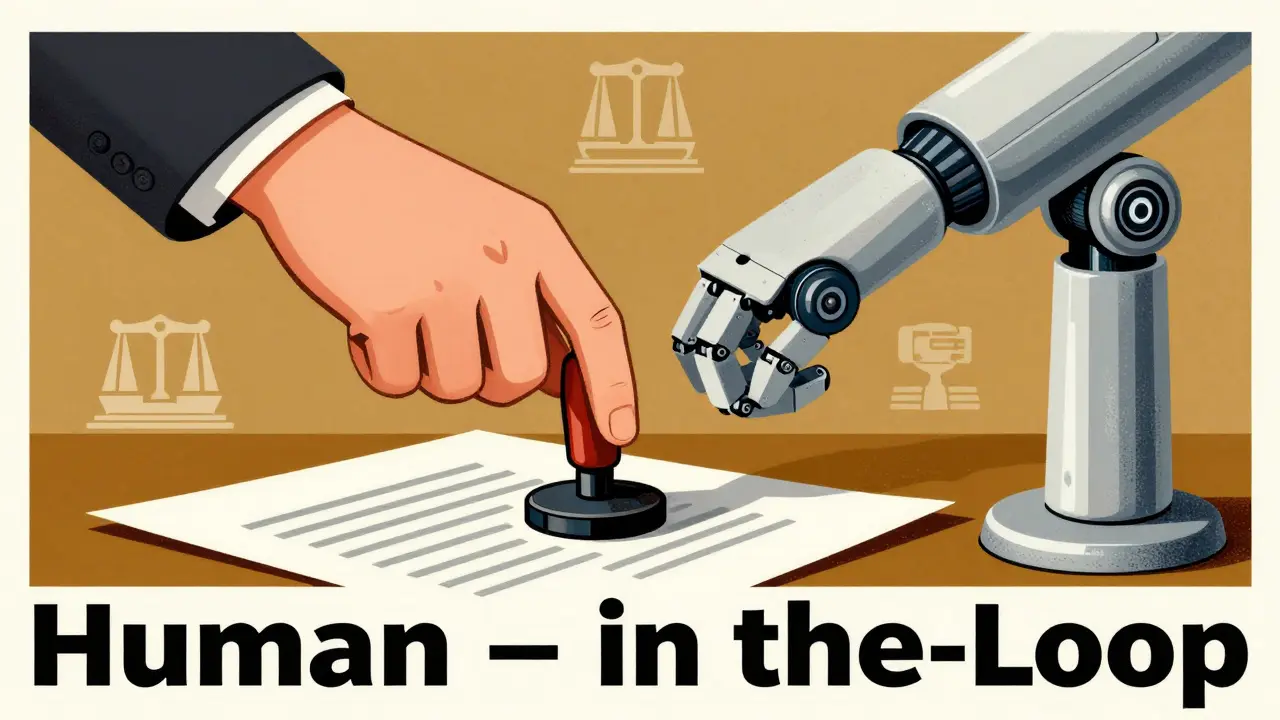
Automation doesn't mean abdication. In high-stakes environments like government services, healthcare, or finance, the principle of Human-in-the-Loop is a design pattern where AI handles administrative tasks but final decision-making authority remains with qualified humans is non-negotiable. AI agents should handle the heavy lifting-extracting data from documents, flagging anomalies, drafting initial responses-but the final click, the final judgment, must rest with a human official.
Why? Because people enforcing codes are stewards of civic trust. An AI might determine that a building permit application violates zoning laws based on data patterns, but it lacks the contextual nuance to understand a grandfather clause or a community exception. The AI provides the evidence; the human makes the call. This hybrid approach ensures that while efficiency increases, accountability remains clear. The system must be transparent enough that the human can verify the AI's reasoning. If an AI flags a transaction as fraudulent, it must cite the specific rules and data points used. This explainability is crucial for maintaining trust and ensuring that bias doesn't go unchecked.
Fairness, Bias, and Ethical Value Platforms
Ethical AI isn't just about following written laws; it's about adhering to broader moral principles like fairness and privacy. Algorithms trained on historical data often inherit historical biases. If an AI hiring agent is trained on resumes from a male-dominated industry, it might unfairly penalize female candidates. To combat this, organizations must adopt AI Value Platforms are formal codes of ethics that define the role of AI in human development and guide stakeholder decisions.
These platforms provide explicit guidelines on how technology will be deployed and monitored. They mandate measures to guard against unintended bias, detect data drift, and track the provenance of training data. For instance, KPMG's advisory services emphasize that ethical policies must include continuous monitoring for algorithmic drift. Data isn't static; society changes, and so do the risks. An AI system that was fair last year might become biased today if the underlying demographics shift. Regular audits and bias reviews are not optional checkboxes; they are core operational requirements.
Furthermore, privacy must be baked in. AI agents processing personal data must adhere to strict data minimization principles. They should only access the data necessary for the task at hand and delete it afterward. This requires technical controls, such as encryption and access logging, combined with organizational policies that define data retention periods. Without these safeguards, AI agents can inadvertently expose sensitive information, leading to severe reputational and legal damage.
Liability and the Duty of Care
Who pays when things go wrong? From a legal perspective, the regulation of AI agents should follow objective standards of behavior similar to those applied to humans. If a human doctor is held to a standard of reasonable care, so too should the AI diagnostic tool they use. Designers of generative AI systems bear a duty to implement safeguards that reasonably reduce the risk of harmful outputs. This includes:
- Reasonable Care in Training: Choosing materials for pre-training and fine-tuning that minimize exposure to harmful or biased content.
- Risk Detection: Designing algorithms that detect and filter potentially harmful material before it reaches the user.
- Thorough Testing: Conducting rigorous tests to identify vulnerabilities, such as prompt injection attacks that could trick an agent into violating policies.
- Continuous Updates: Maintaining the system to address new threats and regulatory changes.
In high-stakes contexts, regulators may require ex ante (before deployment) approval. Companies might need to demonstrate that their AI agents are law-following before receiving permission to operate. This could involve third-party audits or certification processes. Additionally, technical mechanisms could prevent non-compliant AI systems from accessing critical infrastructure, creating a hard barrier against rogue agents. This shifts the burden from post-hoc punishment to pre-hoc prevention, aligning incentives for developers to prioritize safety over speed.
Implementing Ethical Governance in Your Organization
Adopting ethical AI agents isn't a one-time project; it's a cultural and structural transformation. Organizations need clearly defined procedures for compliant AI use. Start by establishing a governance structure that includes representatives from legal, engineering, HR, and compliance. This team should develop a roadmap to manage functional risks and ensure alignment with organizational values.
Create a code of conduct that functions as an educational platform. Employees need to understand not just what the AI can do, but what it *shouldn't* do. Provide support systems, such as internal help desks or documentation, to assist users with AI technology. Encourage a culture where employees feel safe reporting potential AI misuse or errors. Transparency is key; document your AI usage, the policies governing it, and the outcomes of regular audits. By embedding these practices into your daily operations, you turn ethical compliance from a burden into a competitive advantage, building trust with customers, regulators, and employees alike.
What is Law-Following AI (LFAI)?
Law-Following AI is a framework where AI systems are designed to rigorously comply with legal requirements and refuse to perform illegal or unethical actions, even if instructed to do so by a human user. It treats AI agents as entities with independent duties rather than just passive tools.
How does Policy-as-Code work?
Policy-as-Code translates organizational rules and legal regulations into executable code. Using tools like Open Policy Agent (OPA), these policies are enforced automatically before an AI agent executes an action, ensuring compliance without manual intervention.
Why is Human-in-the-Loop important for AI agents?
Human-in-the-Loop ensures that final decision-making authority remains with qualified humans, especially in high-stakes scenarios. While AI can process data and flag issues, humans provide contextual understanding, ethical judgment, and accountability.
What are AI Value Platforms?
AI Value Platforms are formal codes of ethics that define how AI should be used within an organization. They address issues like fairness, transparency, privacy, and bias, providing clear guidelines for developers and users to follow.
Who is liable if an AI agent causes harm?
Currently, liability often falls on the human operators or the organization deploying the AI. However, the LFAI framework suggests that designers and deployers have a duty of care to implement safeguards. Failure to do so can result in negligence claims, shifting focus to proactive risk reduction.