Ethics Boards for AI-Assisted Development Decisions: How They Prevent Harm and Build Trust
When you build an AI system that decides who gets a loan, who gets hired, or which medical treatment gets prioritized, you’re not just writing code. You’re making decisions that affect people’s lives. And if those decisions are biased, opaque, or unfair, the damage isn’t just technical-it’s human. That’s why more companies are setting up AI ethics boards-not as a PR move, but as a necessary guardrail.
What an AI Ethics Board Actually Does
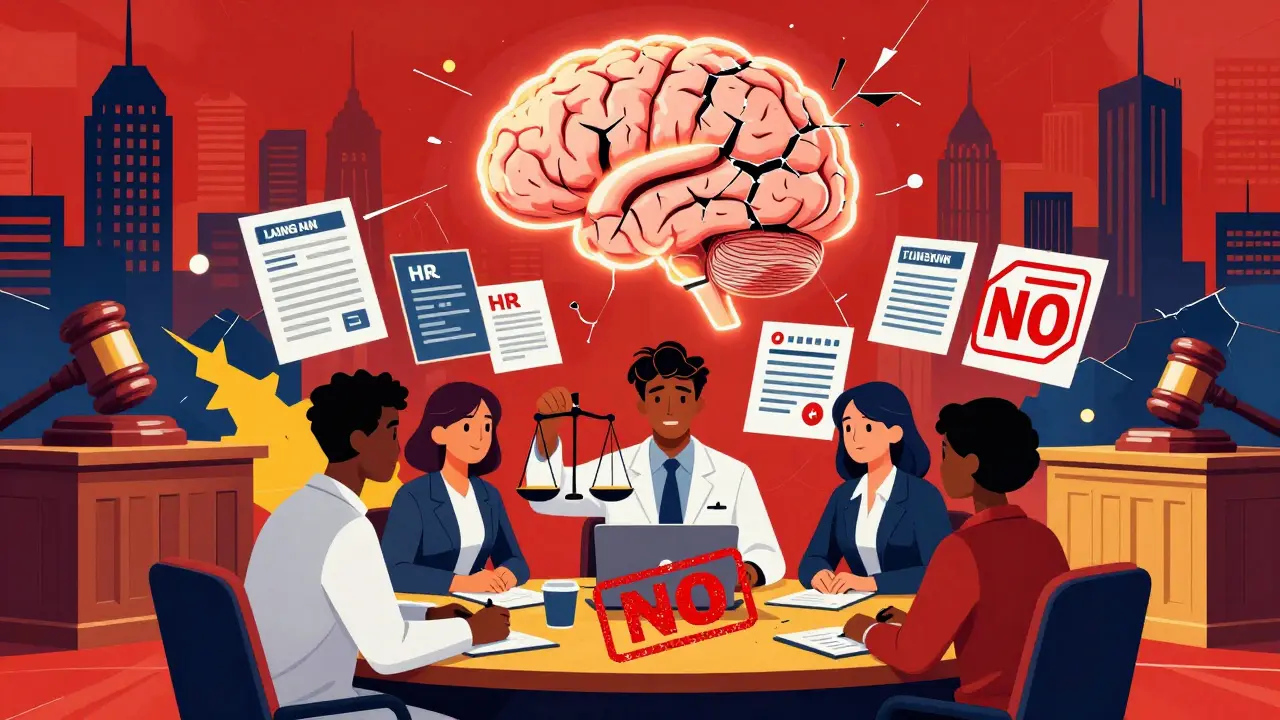
An AI ethics board isn’t a group of philosophers debating abstract ideas. It’s a working team with real power. These boards are made up of people from different backgrounds: data scientists, lawyers, HR leaders, civil rights advocates, and sometimes even external experts from universities or nonprofits. Their job? To step in before an AI system goes live and ask: Is this fair? Who could get hurt? Who’s accountable if it goes wrong? According to Harvard DCE’s 2024 framework, effective AI governance rests on five pillars: fairness, transparency, accountability, privacy, and security. An ethics board doesn’t just talk about these-it builds processes to enforce them. For example, if a hiring algorithm is trained on historical data that favors men over women, the board doesn’t just flag the bias. They demand the team retrain the model, document the changes, and test it again with diverse datasets. They don’t wait for complaints. They look for problems before they happen.Why Traditional Oversight Falls Short
Many companies used to rely on legal or compliance teams to handle AI risks. But here’s the problem: those teams often don’t understand how AI works. They know regulations, but not neural networks. They can tell you if a contract is enforceable, but not whether a facial recognition system misidentifies darker skin tones 30% more often than lighter ones. Deloitte’s 2025 global study found that 77% of executives believe their teams can make ethical AI decisions on their own. Yet in practice, only 28% of companies had formal ethics oversight in 2022. By 2025, that number jumped to 62% among Fortune 500 companies. Why? Because people started seeing the cost of getting it wrong. In 2018, Google faced public backlash after employees protested an AI contract with the Pentagon. That incident didn’t just hurt their reputation-it sparked a wave of internal reviews. Companies realized: if you don’t have a board that can say “no,” someone else will say it for you-on social media, in court, or in Congress.Who Belongs on an AI Ethics Board?
A board with only engineers and executives is doomed to fail. You need people who represent the real-world impact of AI. Successful boards include:- Technical leads (data scientists, ML engineers) who can explain how the system works
- Legal and compliance officers who know GDPR, the EU AI Act, and NIST guidelines
- HR and diversity leads who spot bias in hiring or promotion tools
- External advisors from civil society, academia, or affected communities
- End-user representatives-people who actually use the AI system daily
The Real Power of an Ethics Board
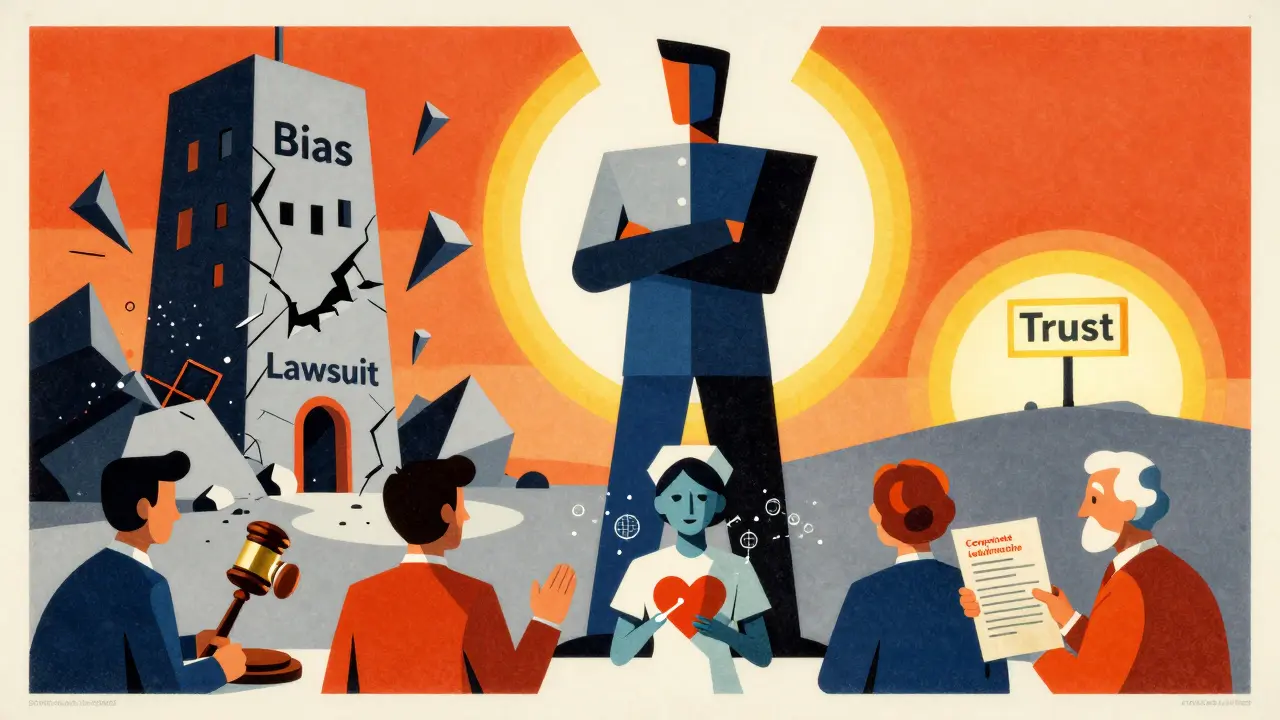
Too many ethics boards are toothless. They review proposals, give feedback, and then disappear. But the most effective ones have something rare: veto power. Microsoft and IBM both grant their ethics boards the authority to block high-risk AI deployments. That means if a product team wants to roll out an AI tool that monitors employee productivity through keystrokes and camera feeds, the ethics board can say no-even if the CEO wants it. This isn’t about slowing innovation. It’s about making innovation sustainable. Shelf.io’s 2023 data shows ethical reviews can delay launches by 30-45 days. But KPMG’s 2025 study found companies with strong ethics oversight had 22% fewer regulatory fines and lawsuits. That’s not a cost-it’s insurance. The EU AI Act, which takes effect in 2026, will require ethics oversight for high-risk AI systems like those used in hiring, policing, and healthcare. Companies without boards will be legally noncompliant. In the U.S., the SEC is expected to require public companies to disclose their AI governance structures by Q3 2026. This isn’t optional anymore.How to Build One (Without Burning Cash)
You don’t need a $1 million budget to start. Here’s how to build a lean, effective board:- Start with a charter-Define your mission, scope, and decision-making process. What counts as a “high-risk” AI system? Who makes the final call?
- Recruit 5-7 members-Mix internal roles (legal, data science, HR) with 1-2 external voices. Look for people with real experience in ethics, not just titles.
- Meet quarterly-Review all new AI projects in development. Don’t wait for launch day.
- Require documentation-Every AI tool needs an “Ethics Impact Statement” before it’s approved. What data was used? Who tested it? How was bias checked?
- Report to leadership-The board should report directly to the CEO or board of directors. If they’re buried under marketing or engineering, their power fades.
What Happens When You Skip It
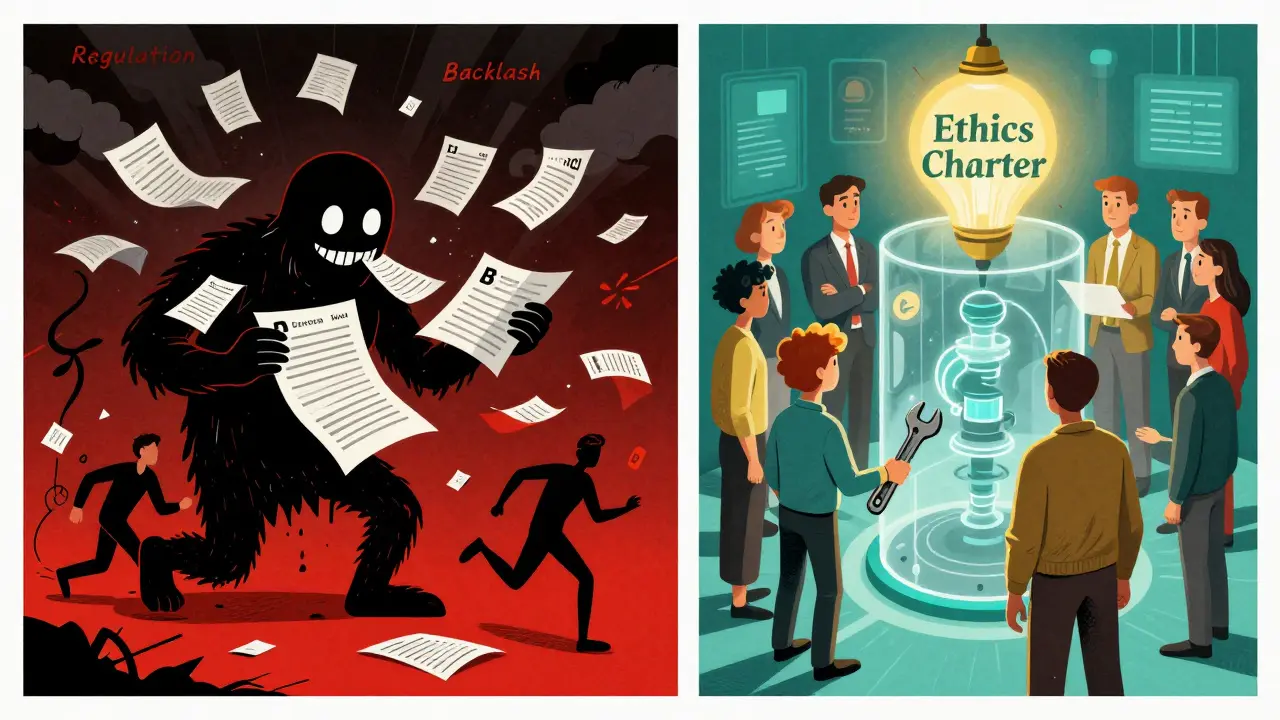
The cost of not having an AI ethics board isn’t just financial-it’s reputational and moral. In 2023, a retail company used an AI tool to screen job applicants. The system downgraded resumes with words like “mother” or “parent” because past hires with those terms had lower retention. The tool wasn’t “broken.” It was trained on biased data. No one caught it until a candidate filed a discrimination lawsuit. The company paid $2.3 million in settlements and lost 15% of its customer base. Another company in healthcare deployed an AI triage system that prioritized patients based on predicted “healthcare costs.” It didn’t consider social determinants like income or access to care. Lower-income patients got lower priority. The system was accurate-but unethical. The board didn’t exist yet. The backlash forced them to shut it down and rebuild from scratch. These aren’t hypotheticals. They’re real cases documented by Harvard DCE and BigDataFramework.org.The Bigger Picture: Ethics Boards and ESG
AI ethics isn’t just a tech issue-it’s a governance issue. And governance is now part of ESG (Environmental, Social, Governance) reporting. As of June 2025, 63% of S&P 500 companies include AI ethics metrics in their annual ESG disclosures. Investors are asking: Do you have a board? Do they have power? Have they blocked any projects? Companies that can answer those questions clearly attract more capital. Those that can’t? They get pushed aside. The World Economic Forum is working on a global certification standard for AI ethics oversight bodies, expected by 2027. That means in a few years, having an ethics board won’t just be smart-it’ll be expected.Final Thought: It’s Not About Control. It’s About Responsibility.
AI doesn’t have morals. It doesn’t care about fairness or dignity. It just follows patterns. The people who build it do. And the people who lead the company must create space for those values to be heard. An AI ethics board isn’t a luxury. It’s the minimum standard for responsible innovation. It’s how you turn principles into practice. It’s how you avoid becoming the next cautionary tale.Companies that act now won’t just avoid lawsuits. They’ll build trust. And trust? That’s the one thing no algorithm can fake.
Do AI ethics boards actually stop harmful AI deployments?
Yes-when they have real authority. Companies like Microsoft and IBM give their ethics boards veto power over high-risk AI projects. In practice, this means teams can’t launch tools that could discriminate, invade privacy, or cause harm without board approval. Boards don’t just advise-they block. According to Deloitte’s 2025 report, 41% of mature AI governance models now include formal veto rights.
How much does it cost to run an AI ethics board?
For mid-sized companies, annual costs range from $150,000 to $500,000. This includes staff time, external advisors, training, audits, and documentation tools. But the cost of *not* having one is higher: KPMG found companies without strong oversight face 22% more regulatory penalties and lawsuits. The investment pays for itself in avoided risk.
Can a small company afford an AI ethics board?
Absolutely. You don’t need a large team. Start small: 3-5 internal members (legal, tech lead, HR) plus one external advisor (like a university ethics professor). Meet quarterly. Require an Ethics Impact Statement for every new AI project. Many startups use volunteer experts from nonprofit networks like AI Now Institute. The goal isn’t size-it’s intentionality.
What’s the difference between an AI ethics board and a compliance team?
Compliance teams ensure you follow laws. Ethics boards ensure you do what’s right-even when the law doesn’t require it. For example, a compliance team might say a facial recognition tool is legal. An ethics board might say it’s too risky to deploy in public spaces because it misidentifies women and people of color. Compliance says “is it allowed?” Ethics says “should we do it?”
Are AI ethics boards just for tech companies?
No. Any company using AI in hiring, lending, healthcare, customer service, or logistics needs one. Financial services lead adoption at 89%, followed by healthcare (82%) and government (76%). Even retailers using AI for pricing or inventory are at risk of bias and backlash. If your AI affects people, you need oversight.
What happens if an AI ethics board is ignored by leadership?
If leadership treats the board as advisory only, it becomes a checkbox-not a safeguard. This is called “ethics washing.” Employees lose trust. Regulators notice. Customers walk away. In 2024, a major bank faced protests after internal documents revealed their ethics board had been overruled five times in a year. The board resigned. The scandal cost them $300 million in market value. Power without independence is meaningless.
How often should an AI ethics board review systems?
Review all new AI projects before launch. Then, audit deployed systems at least quarterly. AI models degrade over time as data changes. A hiring tool that worked well in 2023 might become biased in 2025 due to shifts in applicant pools. Continuous monitoring isn’t optional-it’s required under the EU AI Act and NIST’s 2025 framework.
Can AI ethics boards be too slow and hurt innovation?
They can, if they’re poorly designed. But the real problem isn’t speed-it’s lack of early involvement. Teams that bring ethics boards in during the design phase, not right before launch, move faster. Shelf.io found companies that engaged ethics boards early reduced delays by 60%. The goal isn’t to slow things down-it’s to prevent costly, public failures that take months or years to recover from.

This is such a needed conversation. I’ve seen teams build AI tools that just… replicate old biases because no one stopped to ask who’s being left out. Having a board that can say no? That’s not bureaucracy-that’s basic human decency.
Let me get this straight-you’re telling me we’re finally paying people to say ‘no’ to dumb AI? And it’s not just PR? Wild. I thought we were still in the ‘build first, apologize later’ phase. Guess the lawsuits finally got loud enough.
real talk-i’ve worked places where ethics was a slide in a powerpoint. but when the board actually had veto power? that’s when things changed. not because they were perfect, but because they had skin in the game. also, pls include end users. they know way more than you think.
the EU AI Act is gonna force every corp to have one, but the real win is cultural. when ethics becomes part of the sprint planning, not a post-mortem after the dumpster fire, you start building systems that don’t harm people. also, ‘ethics washing’ is such a cringe term but so accurate lol.
you say ‘ethics board’ but half these companies still let their ML engineers train models on scraped data from 2012 and call it ‘historical patterns.’ if your board doesn’t have data scientists who can audit the training pipeline, you’re just doing performative ethics. also, ‘end-user representatives’? unless they’re from the actual communities being impacted, they’re just props. fix the root, not the PR.
the fact that we even need to talk about this is tragic. AI doesn’t care if you’re poor, Black, female, or disabled. It just optimizes for profit. And if your board isn’t willing to kill a product that makes money but hurts people, then you’re not an ethics board-you’re a liability shield.
in my experience, the biggest hurdle isn’t funding or structure-it’s power dynamics. the engineering team sees ethics as a blocker, the legal team sees it as a compliance checkbox, and leadership sees it as noise. what makes a board work is when the chair reports directly to the CEO and has real authority to pause projects without fear of being sidelined. i’ve seen it work in Bangalore with a startup that had three people and a shared Notion doc. it wasn’t fancy, but it was respected. the key is consistency, not scale.
you think this is new? back in the day, we called this ‘moral responsibility.’ now it’s ‘ESG metrics’ and ‘AI governance frameworks.’ same thing, different buzzwords. but hey, if calling it an ‘ethics board’ makes execs finally stop deploying facial recognition in public housing, i’ll take it. just don’t let it become a corporate trophy. the moment it’s on the annual report and not in the code review, it’s dead.
what if the board itself is biased? like, what if the ‘external advisor’ is from a privileged university and has never met someone who got denied a loan because their zip code was flagged? ethics isn’t just about who’s on the board-it’s about who gets to define ‘fair.’ we need more voices from the margins, not just token reps. and no, ‘diversity hire’ doesn’t count if they’re not empowered to speak up.
Let me be blunt: the entire concept of an AI ethics board is a structural illusion. You cannot outsource morality to a committee. The moment you institutionalize ethics, you sanitize it. What we need is not a board with veto power, but a culture of radical accountability where every engineer is trained to ask, ‘Who will this hurt?’ and is incentivized to stop the project-not file a form. The EU AI Act is a bandage on a hemorrhage. The real solution is dismantling the incentive structure that rewards speed over humanity. Until then, these boards are just expensive theater.