Model Distillation for Generative AI: Smaller Models with Big Capabilities
Imagine running a massive Large Language Model (LLM) on your smartphone or a low-cost server without breaking the bank. Sounds like magic? It’s actually model distillation, a technique that transfers knowledge from a large, complex 'teacher' model to a smaller, efficient 'student' model while preserving performance. As of late 2026, this isn't just a theoretical concept; it's the backbone of modern AI deployment. With inference costs dropping by up to 80% and latency slashed by seven times, distilled models are making high-quality AI accessible everywhere, from real-time chatbots to edge devices.
The Core Concept: Teacher-Student Paradigm
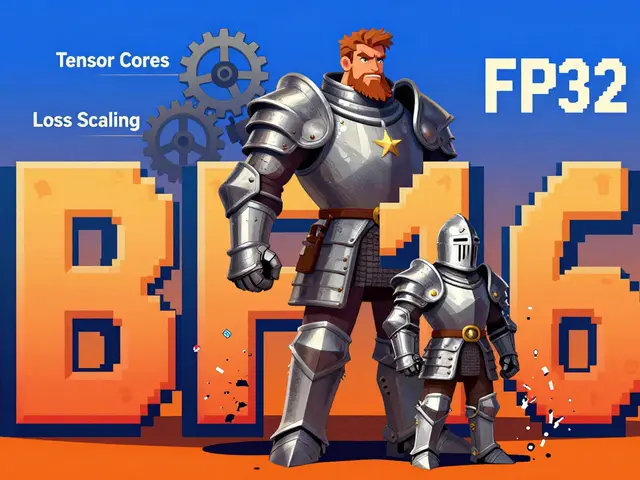
At its heart, model distillation is about efficiency. Think of it as an apprenticeship. You have a Teacher Model (like GPT-4 or PaLM 2), which is huge, smart, but slow and expensive to run. Then you have a Student Model (like DistilBERT or a quantized Llama variant), which is small, fast, and cheap. The goal is to teach the student how to think like the teacher, not just memorize answers.
The process relies on "soft targets." Instead of just telling the student the correct answer (hard target), the teacher provides probability distributions across all possible outputs. This captures the nuance of decision-making. For instance, if a teacher model thinks there's a 90% chance an image is a cat and a 10% chance it's a dog, the student learns that relationship. Traditional training might only say "it's a cat," losing that valuable context. By minimizing the difference between these distributions-often using Kullback-Leibler divergence-the student mimics the teacher's reasoning patterns.
Why Bother? The Business Case for Distillation
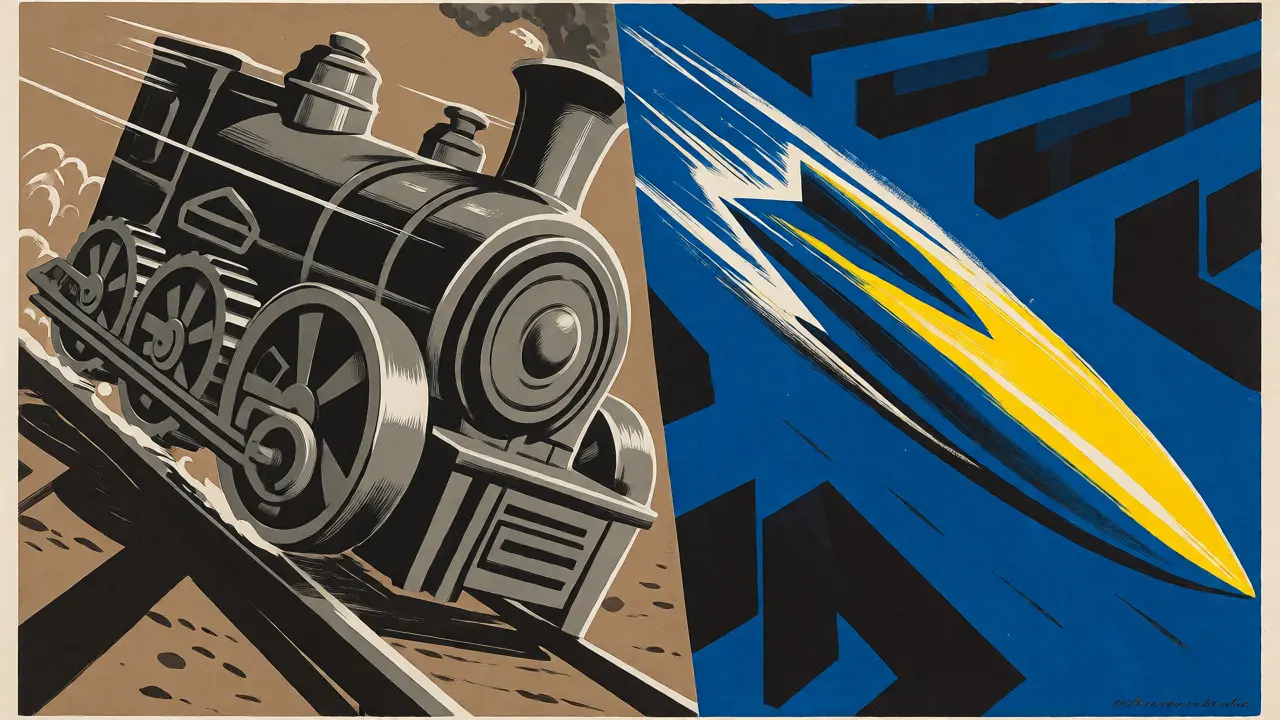
If you're building AI applications, you care about two things: cost and speed. Full-scale LLMs are powerful but resource-hungry. A standard query on a large model might take 500 milliseconds and cost $0.002 per 1,000 tokens. A distilled version can drop that latency to 70 milliseconds and cut costs to $0.0007 per 1,000 tokens. That’s a massive win for scalability.
Consider customer service chatbots. Companies report that distilled models achieve an 87% query resolution rate, matching their larger counterparts, while reducing cloud infrastructure bills by over 60%. For startups burning through cash on API calls, this difference is existential. Moreover, smaller models fit on edge devices. You can run a capable assistant locally on a laptop or even a mobile phone, enhancing privacy and reducing reliance on constant internet connectivity.
| Metric | Teacher Model (e.g., GPT-4) | Student Model (Distilled) |
|---|---|---|
| Inference Latency | ~500ms | ~70ms |
| Cost per 1k Tokens | $0.002 | $0.0007 |
| Accuracy Retention | 100% | 89-95% |
| Hardware Requirement | High-end GPU Cluster | Single GPU / CPU |
| Training Data Needs | Massive Labeled Sets | Synthetic/Unlabeled |
Technical Implementation: How It Works
Implementing distillation isn't as simple as copying weights. It requires careful orchestration. First, you select compatible pairs. AWS recommends students no smaller than 1/10th the teacher's parameter count to avoid catastrophic forgetting. Next, you generate synthetic data. The teacher processes unlabeled inputs to create prompt-response pairs. Tools like Amazon Bedrock automate this, generating up to 15,000 pairs per job.
A critical step is temperature calibration. When the teacher generates soft targets, you adjust the "temperature" parameter to soften the probability distribution. If the temperature is too low, the distribution becomes one-hot (just the top choice), losing the nuance. If it's too high, everything looks equally likely. Google’s guidelines suggest an optimal range of 0.6-0.8 for most tasks. Once the data is ready, the student trains on these soft labels, learning to replicate the teacher's confidence levels rather than just its final decisions.
Advanced techniques like "distilling step-by-step" take this further. Here, the teacher doesn't just give answers; it provides rationales. The student learns the reasoning chain. This approach has shown remarkable results, requiring 87.5% less training data than traditional fine-tuning while maintaining high accuracy on reasoning-heavy tasks.
Limitations and Pitfalls
Distillation isn't a silver bullet. The student can never exceed the teacher. If the teacher hallucinates or holds biases, the student inherits them-sometimes amplifying them. Dr. Emily Bender from the University of Washington noted that distillation can increase gender bias propagation in sentiment analysis models by over 12% if not carefully mitigated. You must audit your teacher model before starting.
Another challenge is domain specificity. Distilled models excel at general tasks like classification or simple generation. However, they struggle with highly specialized domains requiring deep, nuanced reasoning. In legal document analysis, for example, distilled models dropped to 72% accuracy compared to the teacher's 89%. If your use case involves complex multi-step logic, a full-scale model might still be necessary. Additionally, managing hallucinations in synthetic data requires manual verification. Expect to review 15-20% of generated samples to ensure quality.

The Future: Self-Distillation and Edge Deployment
The technology is evolving rapidly. We are seeing the rise of self-distillation, where models improve themselves through recursive knowledge transfer. Meta AI reported 8.7% accuracy gains on reasoning tasks using this method. Meanwhile, iterative distillation cycles are pushing performance closer to parity, with some studies showing 96.2% retention after three cycles.
By 2027, industry analysts predict that 80% of production AI deployments will use distillation as a standard practice. The focus is shifting toward multimodal distillation, transferring knowledge across text, image, and audio simultaneously. As hardware constraints tighten and sustainability concerns grow, the ability to do more with less will define the next era of AI. The question isn't whether you should use distilled models, but how quickly you can integrate them into your stack.
Frequently Asked Questions
Does model distillation reduce accuracy?
Yes, but minimally. Well-implemented distilled models typically retain 89-95% of the teacher model's accuracy on general benchmarks like GLUE. The trade-off is significantly lower computational cost and faster inference times, which often outweigh the slight drop in precision for most enterprise applications.
Can I distill any model?
Not exactly. The teacher and student models need architectural compatibility. While cross-architecture distillation exists (e.g., Transformer to CNN), it is more effective when both models share similar structures. Also, the student should generally not be smaller than 1/10th of the teacher's parameters to maintain sufficient capacity for learning.
What is the main difference between distillation and quantization?
Quantization reduces the precision of the model's weights (e.g., from 32-bit floats to 8-bit integers), shrinking file size and speeding up computation without changing the architecture. Distillation creates a new, smaller model that learns to mimic the original. Distillation preserves nuanced reasoning better but requires a training phase, whereas quantization is a post-training compression technique.
How much data do I need for distillation?
Distillation is data-efficient because it leverages synthetic data generated by the teacher model. You don't need massive labeled datasets. Techniques like "distilling step-by-step" can achieve high performance with up to 87.5% less training data compared to traditional fine-tuning methods.
Are distilled models good for creative writing?
They are decent for structured creative tasks but may lack the depth and novelty of larger models. Distilled models can handle style imitation and short-form content well. However, for long-form narratives requiring complex plot coherence and subtle thematic elements, larger teacher models often provide richer, more unpredictable outputs.