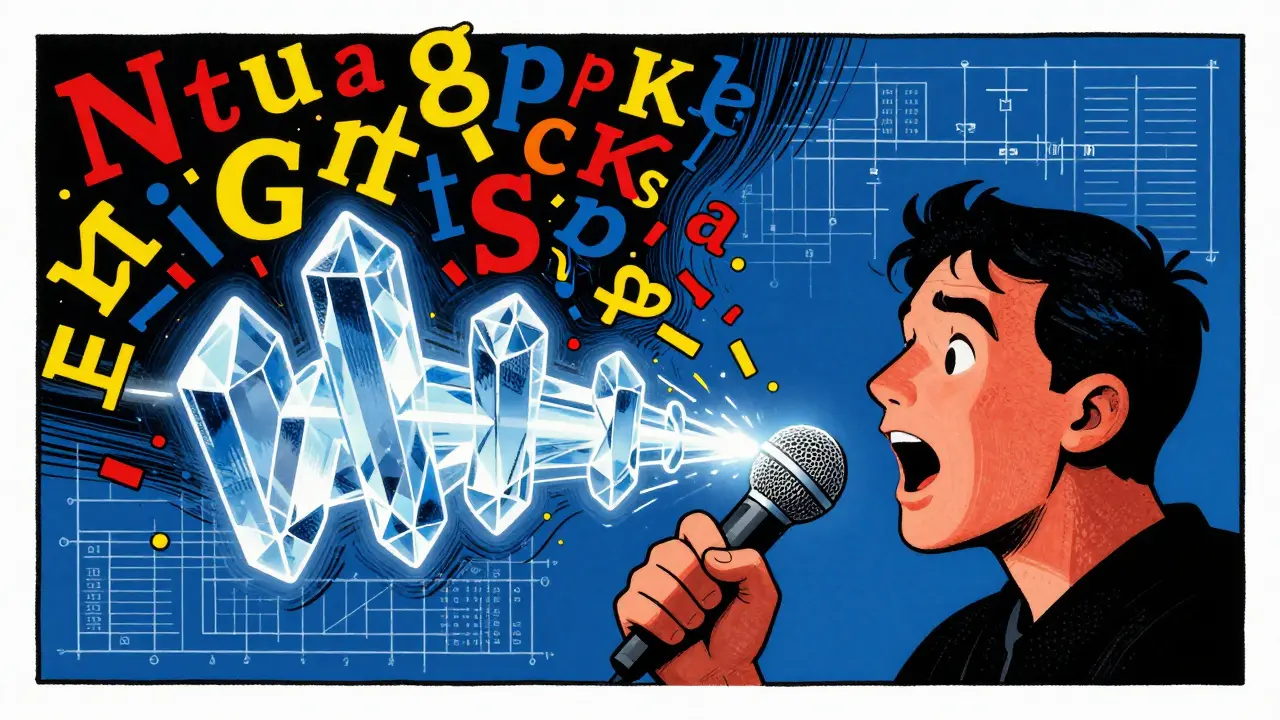
Natural Language to Schema: Prompting Databases and ER Diagrams
You don't need to memorize SQL syntax is a standardized programming language used for managing relational databases and processing structured data anymore. Or at least, you shouldn't have to. The rise of Natural Language to Schema (NL2Schema) is an advanced application of natural language processing that converts conversational queries into database structures and SQL commands is changing how we interact with data. Instead of wrestling with joins and keys, you can simply ask your database a question in plain English. But here’s the catch: getting it right isn’t just about translating words. It’s about teaching the AI to understand the invisible skeleton of your data-the schema.
If you’ve tried asking an LLM to write a query for your company’s database, you know the pain. It guesses column names. It hallucinates tables. It writes code that looks perfect but returns empty results. That’s because most people treat NL2SQL as a translation task. It’s not. It’s a structural reasoning problem. To fix this, we need to shift our focus from prompting for answers to prompting for understanding. Specifically, we need to master the art of prompting databases and Entity-Relationship (ER) diagrams directly.
The Core Problem: Why Natural Language Fails Without Schema Context
Large Language Models (LLMs) are great at predicting the next word, but they are terrible at knowing what data actually exists in your specific system. When you ask, "Show me sales by region," the model doesn't know if your table is called `sales_data`, `revenue_logs`, or `transactions`. It doesn't know if "region" is a column named `geo_region` or nested inside a JSON blob called `customer_info`.
This gap between human intent and database structure is where NL2Schema comes in. According to research from the Defensive Publications Series in 2024, successful architectures require a distinct phase called schema extraction is the process of identifying primary keys, foreign keys, column names, and metadata from database definitions. Without this step, accuracy plummets. Oracle’s benchmark tests show that while simple single-table queries might hit 78% accuracy, complex multi-database queries drop to 63.4% when schema context is weak or missing.
The issue isn't just vocabulary; it's topology. Your database is a map. If you give the AI a destination but no map, it will drive off a cliff. In enterprise settings, this lack of context leads to ambiguous intents in nearly 38% of queries. The solution? Stop treating the schema as background noise. Start treating it as the primary prompt input.
How NL2Schema Works: From Words to Structure
To understand how to prompt effectively, you need to see under the hood. Modern NL2Schema systems use a multi-stage architecture. Here is how the data flows:
- Data Preprocessing: The system cleans your natural language input, removing filler words and standardizing terms.
- Schema Extraction: This is the critical step. The system pulls relevant table definitions, column types, and relationships from your data catalog. It identifies which tables are likely needed based on keywords.
- Structured Query Building: The LLM generates the SQL or ER diagram logic using the extracted schema as a constraint.
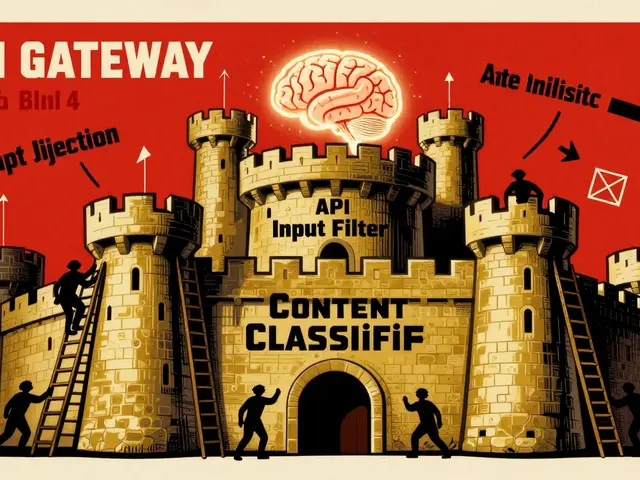
- Validation: Before executing, the query is checked for syntax errors and security risks like SQL injection.
The magic happens in step two. Advanced implementations, like those from AWS, use Retrieval-Augmented Generation (RAG) to pull schema information from data catalogs in real-time. This reduces errors by over 32%. Instead of stuffing your entire database definition into the prompt-which hits token limits and confuses the model-you retrieve only the relevant tables. If you ask about "customer churn," the system fetches the `customers` and `subscriptions` tables, ignoring `inventory` and `shipping`.
Prompting for ER Diagrams: Visualizing Relationships
Most guides focus on generating SQL text. But sometimes, you don't want code; you want clarity. You want to see how tables connect. This is where prompting for Entity-Relationship (ER) Diagrams is a visual representation of entities and their relationships within a database schema becomes powerful. Microsoft released a feature in September 2024 that automatically generates ER diagram representations from natural language descriptions with 76.4% accuracy.
How do you prompt for this? You need to be explicit about relationships. A bad prompt looks like this:
"Draw a diagram for my user data."
A good prompt specifies the cardinality and constraints:
"Generate an ER diagram showing the relationship between Users, Orders, and Products. Assume a one-to-many relationship from Users to Orders, and many-to-many between Orders and Products via an OrderItems junction table. Include primary keys for all entities."
By defining the relationships (one-to-many, many-to-many), you guide the AI to respect referential integrity. This is crucial because LLMs often struggle with many-to-many relationships, failing to interpret them correctly in over 41% of test cases according to Microsoft’s internal documentation. Explicitly stating the join conditions helps bridge this gap.

Best Practices for High-Accuracy Database Prompting
If you want your NL2Schema interactions to work reliably, you need to adopt a disciplined approach. Here are the key strategies that top-performing teams use:
- Annotate Your Schema: Raw column names like `col_1` or `usr_id` are useless to an AI. Add business-friendly descriptions. If `usr_id` is "The unique identifier for active customers since 2020," tell the AI. Oracle found that detailed column descriptions improve accuracy significantly.
- Provide Few-Shot Examples: Don't just ask for a query. Provide two or three examples of natural language questions paired with the correct SQL output. This teaches the model the dialect and style you prefer.
- Limit Scope: Never expose the entire database schema to the prompt. Use RAG to filter tables. For every additional table added to the context without filtering, accuracy drops by approximately 0.8%, according to Oracle’s testing.
- Validate Output: Always run generated SQL through a validation layer. Check for SQL injection vulnerabilities and syntax errors. Enterprise implementations mitigate 98.7% of security risks through post-processing validation steps.
Remember, the AI is a junior developer. It’s fast and eager, but it needs supervision. Treat its output as a draft, not final code.
Comparing NL2Schema Solutions: Who Does It Best?
Not all NL2Schema tools are created equal. Depending on your stack, some perform better than others. Here is a comparison of leading solutions based on recent benchmarks:
| Provider | Best For | Accuracy (Single DB) | Key Strength | Weakness |
|---|---|---|---|---|
| Microsoft Azure OpenAI | SQL Server Environments | 86.3% | Tight integration with existing Microsoft ecosystem | Struggles with Oracle-specific syntax (68.2%) |
| Oracle Database 23c | Complex Enterprise Schemas | 82.7% | Dynamic schema adaptation and ER generation | Lower accuracy with PostgreSQL (71.4%) |
| AWS Bedrock / Aurora | Cloud-Native Data Lakes | 78.2% | Active RAG integration with data catalogs | High computational resource requirements |
| Chat2DB (Open Source) | Small Teams / Prototyping | 74.1% | Free community edition, easy setup | Requires manual schema configuration |
Note that accuracy drops significantly for complex operations. Window functions, recursive queries, and cross-database transactions remain difficult for all providers, with accuracies ranging from 38% to 52%. If your use case involves heavy analytics, keep a human in the loop.

Implementation Challenges and How to Overcome Them
Deploying NL2Schema isn't plug-and-play. You’ll face hurdles. The biggest one? Schema drift. As your database changes-new columns added, tables renamed-the AI’s knowledge becomes stale. A TDWI survey found that 78% of data professionals cite schema drift management as their top challenge.
To combat this, automate your schema updates. Integrate your NL2Schema tool with your CI/CD pipeline so that every time you deploy a database change, the AI’s context is refreshed. Another major hurdle is the "context window problem." If you have more than 200 tables, you can’t fit them all in the prompt. This affects 68% of enterprise databases. The solution is intelligent retrieval. Use vector search to find the most semantically similar tables to the user’s query before sending them to the LLM.
Security is also paramount. Never allow direct execution of AI-generated SQL without validation. Implement a sandbox environment where queries are tested against read-only replicas first. This prevents accidental data deletion or exposure of personally identifiable information (PII). With GDPR and CCPA compliance concerns, 67% of enterprises now add extra validation layers to prevent PII leakage through natural language queries.
The Future: Automated Schema Refinement
We are moving toward a future where the database learns from you. Gartner predicts that by 2026, 70% of enterprise NL2SQL implementations will incorporate automated schema refinement based on user feedback loops. Imagine correcting a wrong query once, and having the system update its understanding of your schema terminology forever. This "feedback loop" capability is already emerging in platforms like ThoughtSpot and K2view.
As these technologies mature, the role of the data engineer shifts from writing queries to curating schemas. Your job becomes ensuring the metadata is rich, accurate, and accessible. The AI handles the syntax; you handle the semantics. This partnership allows non-technical users to access data safely while freeing up engineers to focus on architecture and governance.
What is the difference between NL2SQL and NL2Schema?
NL2SQL focuses solely on converting natural language into executable SQL queries. NL2Schema is broader; it includes understanding the underlying database structure (tables, keys, relationships) to generate both queries and visual representations like ER diagrams. NL2Schema treats the schema as a dynamic entity to be reasoned about, not just a static reference.
How accurate are current NL2Schema tools for complex queries?
For simple retrievals and filters, accuracy is high (85-95%). However, for complex joins across multiple tables, accuracy drops to around 63-78%. Complex operations like window functions and recursive queries often fall below 55% accuracy. Human review is still recommended for critical business logic.
Do I need to expose my entire database schema to the AI?
No, and you shouldn't. Exposing the entire schema consumes too many tokens and confuses the model, reducing accuracy. Use Retrieval-Augmented Generation (RAG) to dynamically fetch only the relevant tables and columns based on the user's query keywords. This improves performance and security.
Is NL2Schema secure for enterprise use?
It can be, if properly implemented. Risks include SQL injection and accidental data exposure. Mitigate these by validating all generated SQL against a whitelist of allowed operations, running queries in read-only sandboxes, and implementing strict access controls. Post-processing validation steps mitigate 98.7% of known security risks in enterprise setups.
Which industries are adopting NL2Schema the fastest?
Financial services (62% adoption), healthcare (58%), and retail (54%) are leading the way. These sectors benefit most from democratizing data access for analysts who lack deep SQL expertise but need rapid insights from large datasets.





It is quite amusing to see how laymen attempt to grasp the nuanced intricacies of semantic layering without understanding the underlying ontological frameworks. Your discussion on NL2Schema barely scratches the surface of what constitutes true structural reasoning in enterprise environments. One must consider the epistemological implications of relying on probabilistic models for deterministic data structures. The hallucination rate you cite is merely a symptom of the model's inability to comprehend the metaphysical reality of relational integrity. Perhaps if one spent less time reading superficial benchmarks and more time studying the foundational theories of database normalization, they would appreciate the depth required here. It is not just about accuracy percentages; it is about the philosophical alignment between human intent and machine execution.
We are standing at the precipice of a new era where language itself becomes the architecture of our digital souls. The database is no longer a cold repository of facts but a living entity that breathes through our queries. When we ask for sales by region we are not just retrieving data we are engaging in a dialogue with the collective memory of our organization. The AI is our mirror reflecting back our own structured thoughts yet distorted by the fog of ambiguity. We must learn to speak clearly to this digital oracle or risk losing ourselves in the labyrinth of its generated illusions. The future belongs to those who can weave words into structure with the precision of a poet and the logic of a mathematician.
This is an exceptionally well-reasoned analysis of the current state of natural language processing in database management. The emphasis on schema extraction as a distinct phase is particularly insightful and aligns with best practices observed in high-performance enterprise environments. I would strongly recommend that all data professionals pay close attention to the validation steps mentioned herein. The statistical evidence provided regarding accuracy drops in complex multi-database scenarios serves as a critical warning against over-reliance on unvalidated AI outputs. Furthermore the suggestion to integrate schema updates with CI/CD pipelines is a pragmatic solution to the pervasive issue of schema drift. Such disciplined approaches are essential for maintaining data integrity and security in modern technological infrastructures.
the grammar in the original post was mostly fine but i noticed some run-on sentences that could have been broken up for better readability. also the use of bold text was a bit excessive in my opinion. nonetheless the technical content was sound and the points about rag were valid. i did not see any major punctuation errors which is rare these days. good job overall.