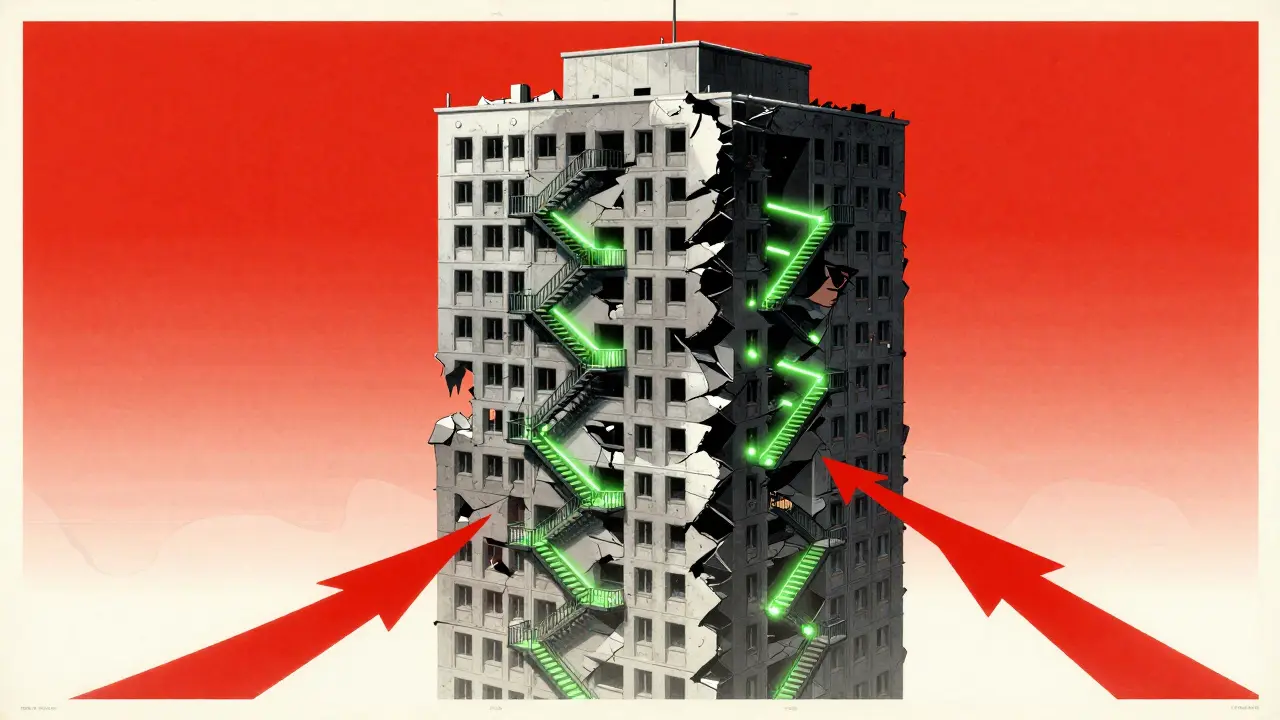
Residual Connections and Layer Normalization in Large Language Models: Why They Keep Training Stable
Residual connections and layer normalization are essential for training stable, deep large language models. Without them, transformers couldn't scale beyond a few layers. Here's how they work and why they're non-negotiable in modern AI.

Multimodal Transformer Foundations: How Text, Image, Audio, and Video Embeddings Are Aligned
Multimodal transformers align text, image, audio, and video into a shared embedding space, enabling systems to understand the world like humans do. Learn how they work, where they're used, and why audio remains the hardest modality to master.

Transformer Pre-Norm vs Post-Norm Architectures: Which One Keeps LLMs Stable?
Pre-norm and post-norm architectures determine how Layer Normalization is applied in Transformers. Pre-norm enables stable training of deep LLMs with 100+ layers, while post-norm struggles beyond 30 layers. Most modern models like GPT-4 and Llama 3 use pre-norm.