Vendor Management and Contracts for Large Language Model Providers: A 2026 Guide
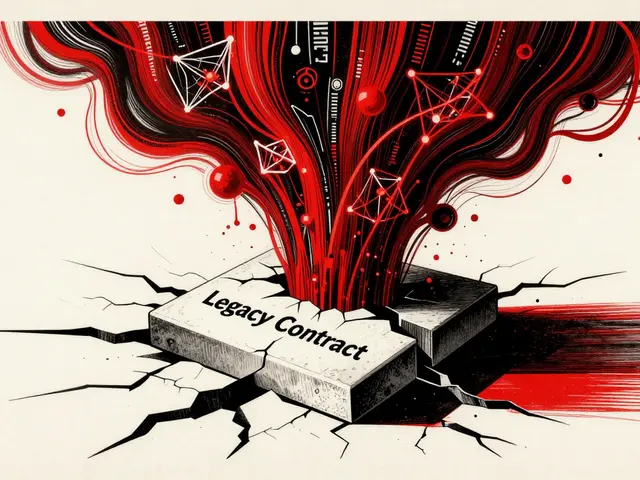
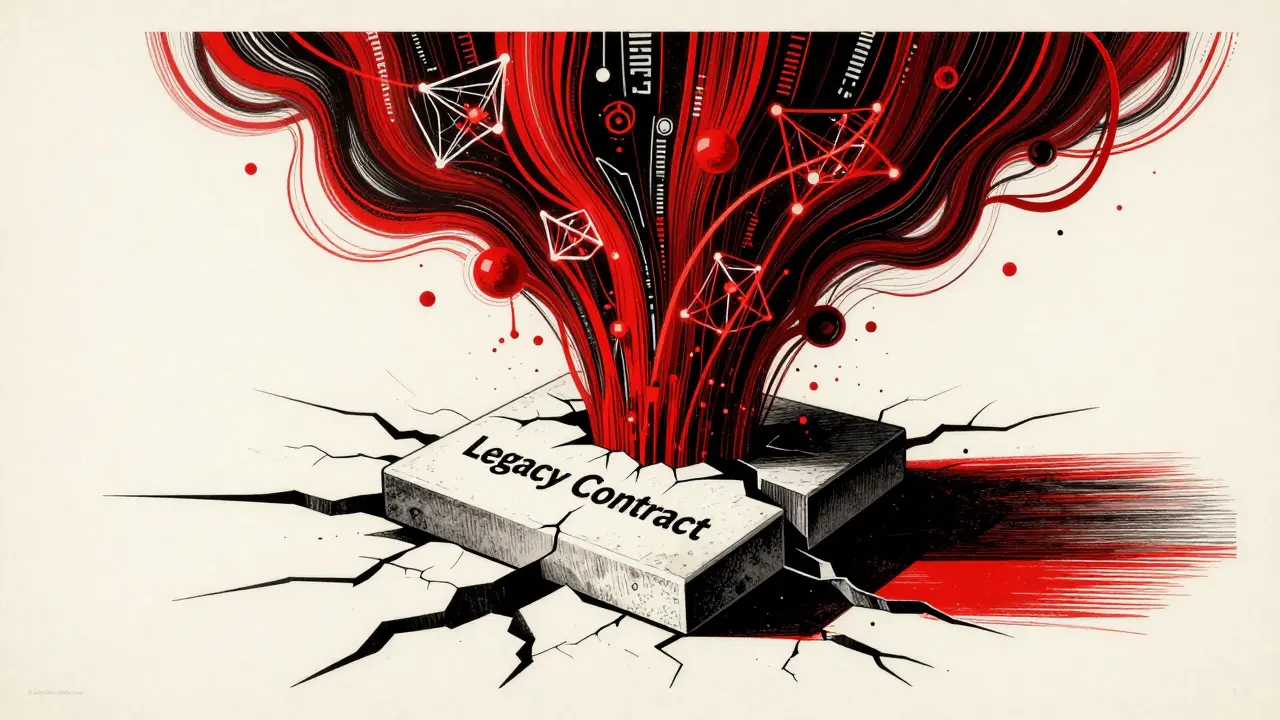
Remember when signing a software contract meant checking the uptime guarantee and reading the liability cap? Those days are gone. If you are procuring Large Language Models (LLMs) in 2026, your old playbook is not just outdated; it is dangerous.
Standard IT vendor agreements assume static deliverables. They promise that Version 1.0 will work today and tomorrow. LLMs do not work that way. They evolve. They drift. They hallucinate. And they carry risks-from data leakage to biased outputs-that traditional indemnification clauses simply do not cover. The gap between what legal teams sign and what engineering teams deploy is where companies lose money, reputation, and control.
This guide breaks down exactly how to manage vendors who provide generative AI services. We will look at why standard Service Level Agreements (SLAs) fail, how new regulations like the U.S. Office of Management and Budget (OMB) memo change the rules, and what specific clauses you need to protect your organization. This is not theoretical advice. It is based on current market realities, including insights from Bamboo Data Consulting, Sirion AI benchmarks, and federal procurement mandates.
Why Traditional Vendor Contracts Fail with AI
The core problem is a mismatch in expectations. When you buy a Customer Relationship Management (CRM) tool, you expect stability. You want the buttons to stay in the same place. When you buy an LLM service, you are buying a probabilistic engine that changes behavior based on new training data, prompt updates, and fine-tuning adjustments.
In traditional contracts, about 5-10% of negotiation time goes to data rights and output ownership. For LLM contracts, that number jumps to 30-40%, according to Icertis’ 2024 contract intelligence report. Why? Because the value-and the risk-lies in the data you feed into the model and the text the model generates for your customers.
Consider three critical failures in legacy contracts:
- Static SLAs vs. Dynamic Performance: Standard contracts guarantee 99.9% uptime. An LLM can be "up" but completely useless if its accuracy drops below acceptable thresholds. Uptime does not measure quality.
- Limited Liability Caps: Most SaaS contracts cap liability at 1x or 2x annual fees. If an LLM provides incorrect medical advice or leaks proprietary code due to a security flaw, those damages often exceed millions. Capped liability leaves you exposed.
- Vague Data Ownership: Does the vendor own the embeddings created from your data? Can they use your prompts to train their base model? Legacy contracts rarely address these nuances, leading to accidental intellectual property loss.
As Russell Vought, Director of the Office of Management and Budget, noted in late 2024, agencies must update procedures to ensure compliance with unbiased AI principles. This shift is now bleeding into the private sector. Companies that treat LLM procurement like standard software purchasing are setting themselves up for failure.
The Five Pillars of Modern LLM Contracts
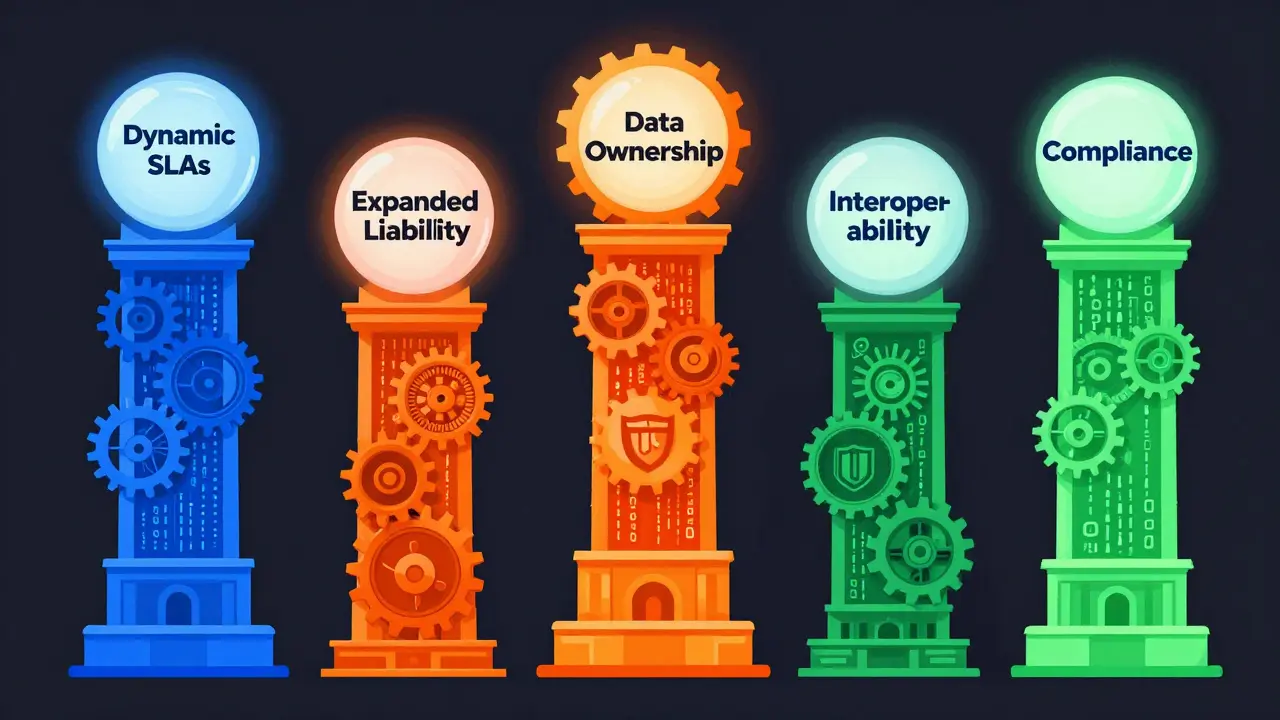
To fix these gaps, you need a contractual framework built around five specific dimensions. These are not optional add-ons; they are the foundation of responsible AI governance.
- Dynamic SLAs and Monitoring Rights: Move beyond uptime. Your contract must specify performance Key Performance Indicators (KPIs). This includes model accuracy thresholds (typically 85-95% depending on the use case), drift detection limits (allowing no more than 0.5-2% monthly degradation), and explainability standards. You need the right to audit these metrics continuously.
- Expanded Liability Structures: Standard indemnification is obsolete. Effective LLM contracts establish tiered liability. For example, bias-related damages might trigger a 3-5x annual fee penalty, while security breaches should have uncapped liability. This aligns the vendor’s incentives with your risk profile.
- Granular Data and Output Ownership: Explicitly state who owns the inputs, the outputs, and any intermediate artifacts like embeddings. Ensure the contract prohibits the vendor from using your proprietary data to improve their public models without explicit consent.
- Interoperability and Exit Strategies: Vendor lock-in is a major risk in AI. Include clauses for interoperability to ease transitions to other providers. Define a clear, pre-negotiated exit strategy that covers secure data retrieval and a timeline for transitioning to an alternative solution.
- Regulatory Compliance Mechanisms: With the EU AI Act and various U.S. state laws, compliance is moving target. Contracts must require vendors to provide transparency reports, model cards, and evidence of human oversight mechanisms, especially for high-risk automated decision-making tools.
Bamboo Data Consulting describes this approach as an "organic, end-to-end discipline." It requires constant adaptation because the AI ecosystem itself never stands still.
Navigating Regulatory Pressure: OMB Memos and Beyond
If you are working with government entities or heavily regulated industries, the regulatory landscape has tightened significantly. The most impactful recent development was the OMB memo issued in March 2025, which required federal agencies to implement specific contractual requirements for LLM procurement by March 11, 2025.
What does this mean for your contracts? Agencies must now request specific documentation from vendors:
- Acceptable Use Policies: Clear guidelines on what the model can and cannot do.
- Model and System Cards: Technical documentation detailing training data sources, known limitations, and evaluation results.
- End-User Resources: Tools and feedback mechanisms for users to report issues.
- Transparency Reports: Details on pre-training activities, post-training modifications, and third-party integrations.
This follows President Trump’s July 2024 executive order requiring AI vendors to measure political bias. While initially focused on the public sector, these standards are becoming de facto industry best practices. Major vendors like Anthropic and Meta introduced standardized AI contract frameworks in Q4 2024 featuring tiered liability structures and performance scorecards. Private sector buyers are increasingly demanding similar transparency to mitigate reputational risk.
Furthermore, the EU AI Act establishes mandatory requirements for high-risk AI systems. If your business operates globally, your LLM contract must explicitly address the level of human review and oversight. Without these terms, you may find yourself non-compliant before the system even goes live.
Comparing Traditional IT vs. LLM Vendor Management
To understand the shift, let’s look at a side-by-side comparison. This table highlights the stark contrasts in focus, metrics, and risk allocation.
| Feature | Traditional IT/SaaS Contract | LLM Provider Contract |
|---|---|---|
| Primary Focus | Uptime, availability, feature delivery | Model accuracy, bias mitigation, data privacy |
| SLA Metrics | 99.5-99.9% uptime guarantees | Accuracy thresholds (85-95%), drift limits (<2%), explainability scores |
| Data Rights Negotiation | 5-10% of negotiation time | 30-40% of negotiation time |
| Liability Cap | 1-2x annual fees | Tiered: 3-5x for bias, uncapped for security breaches |
| Vendor Relationship | Transactional, periodic reviews | Partnership, continuous collaboration, shared accountability |
| Exit Strategy | Standard data export | Interoperability clauses, model weight retrieval, transition timelines |
The data shows that LLM contracts are fundamentally different beasts. They require deeper technical scrutiny and more robust legal safeguards. As Rajesh Gupta, CTO of Sirion AI, warned in 2025, "LLMs alone are insufficient - Small Data Models add precision." This insight suggests that contracts should also account for hybrid architectures, where task-specific small models handle critical decisions while LLMs provide context. Ignoring this architectural reality can lead to performance gaps.
Implementation Challenges and Real-World Pitfalls
Knowing what to include in a contract is one thing; enforcing it is another. Enterprise procurement professionals face significant hurdles. According to a 2025 client survey by Baker McKenzie, 68% of early adopters failed to allocate sufficient personnel for continuous contract compliance verification.
Here are the most common pitfalls:
- Underestimating Drift Costs: Reddit discussions in r/ContractManagement revealed that 73% of procurement managers reported unexpected costs from model drift remediation, averaging 22% of initial contract value in the first year. One user shared a cautionary tale: "We signed a 3-year deal... by month 10, accuracy dropped from 92% to 78%... the vendor refused to compensate because our SLA only specified uptime."
- Integration Delays: Implementing AI Contract Lifecycle Management (CLM) platforms like Sirion AI or Icertis takes time. Users report a 3-6 month implementation timeline for full integration with existing ERP systems. Plan for this lag.
- Skill Gaps: Procurement teams need new skills. Procurable AI’s 2025 benchmark report states that teams require 120-160 hours of specialized training. You need attorneys with AI expertise, data scientists for validation, and procurement specialists who understand model metrics like F1 scores and precision.
Success stories exist, but they come from organizations that treated this as a strategic initiative, not a checkbox exercise. Kanerika, for instance, helped a Middle Eastern real estate developer reduce manual processing time by implementing a scalable LLM architecture for vendor agreement processing. The key was integrating the AI tool into their workflow with clear governance, not just plugging it in.

Building Your Vendor Management Team
You cannot outsource this entirely to legal or IT. Effective LLM vendor management requires a cross-functional team. Based on Bamboo Data Consulting’s implementation guide, here is the recommended structure:
- Legal Counsel (2-3 Attorneys): Must have specialized AI contract experience. They draft the liability tiers and data ownership clauses.
- Data Scientists (3-5 FTEs): Responsible for validating model performance against SLAs. They define the drift thresholds and interpret evaluation metrics.
- Procurement Specialists (2-3 FTEs): Manage the commercial relationship, monitor spend, and coordinate with the vendor on operational issues.
Additionally, consider adopting the ISO/IEC 23053:2022 framework for AI system evaluation. This provides objective standards for measuring performance, reducing disputes over whether a model is "failing" or just "evolving."
Future Trends: Self-Updating Contracts?
The field is moving fast. By 2027, 81% of industry experts predict the rise of "self-updating contracts" that automatically adjust terms based on model performance metrics, according to Sirion AI’s 2025 industry survey. Imagine a contract that automatically triggers a price reduction if model accuracy dips below 90%, or pauses billing if latency exceeds agreed limits.
Meanwhile, the International Association for Contract and Commercial Management (IACCM) launched a working group in January 2025 to create the first industry-wide LLM vendor contract framework. This suggests we will see more standardized templates emerging, reducing the need to negotiate every clause from scratch.
However, risks remain. Regulatory fragmentation is real, with 34 U.S. states pursuing divergent AI procurement rules. Talent shortages persist, with only 17% of procurement teams having staff with dedicated AI contract expertise. Organizations that build mature LLM vendor management practices now will achieve 28-35% higher ROI from AI investments, according to McKinsey’s 2025 AI Procurement Outlook. Those that wait risk 42% higher chances of project failure due to vendor misalignment.
Next Steps for Procurement Leaders
If you are starting fresh, begin with an audit of your current AI engagements. Do your contracts address data ownership? Do they have dynamic SLAs? If not, prioritize renegotiation.
Invest in training. Send your legal and procurement teams to workshops on AI literacy. Partner with a CLM platform that supports AI-specific workflows. And finally, build relationships with your vendors based on transparency, not just transaction. In the world of LLMs, trust is verified through code and contracts, not just handshakes.
What is the biggest difference between an LLM contract and a traditional SaaS contract?
The biggest difference lies in performance metrics and liability. Traditional SaaS contracts focus on uptime (e.g., 99.9%) and cap liability at 1-2x annual fees. LLM contracts must define dynamic performance KPIs like model accuracy, drift thresholds, and explainability. They also require expanded liability structures, often uncapping penalties for security breaches or bias-related damages, because the risks of AI failure are much higher and less predictable.
How does the OMB March 2025 memo affect private sector companies?
While the OMB memo directly targets federal agencies, its requirements for transparency, model cards, and bias measurement are becoming industry standards. Private sector companies, especially those bidding for government contracts or operating in regulated industries, are adopting these frameworks to ensure compliance and mitigate risk. Vendors are updating their standard terms to meet these expectations, making them the new baseline for all enterprise AI deals.
What should I include in an LLM exit strategy?
An effective LLM exit strategy must include clauses for interoperability to prevent vendor lock-in. Specifically, you need provisions for secure data retrieval, including all prompts, outputs, and custom embeddings. Additionally, define a clear timeline for transitioning to an alternative solution and ensure the vendor provides assistance during the handover period. Without these terms, migrating away from a provider can be technically difficult and legally risky.
Who needs to be involved in negotiating an LLM contract?
Negotiating an LLM contract requires a cross-functional team. You need legal counsel with AI expertise to handle liability and data rights, data scientists to define technical performance metrics like accuracy and drift, and procurement specialists to manage commercial terms. Relying solely on legal or IT teams often leads to gaps in either technical feasibility or commercial protection.
What is model drift, and why does it matter in contracts?
Model drift occurs when an AI model's performance degrades over time because the real-world data it encounters differs from the data it was trained on. In contracts, this matters because a model can be "up" but inaccurate. Without specific drift thresholds (e.g., allowing no more than 2% monthly degradation) and remediation clauses, vendors may refuse to compensate for poor performance, leaving the buyer with a useless tool.