Vibe Coding Market Forecast: Adoption Scenarios Through 2030
Imagine describing your dream app to a friend over coffee, and by the time you finish your sentence, a fully functional prototype is running on your screen. No syntax errors, no endless debugging loops, just pure creation. This isn't science fiction; it's vibe coding, a transformative approach to software development that uses generative AI and natural language interfaces to build applications without traditional text-based coding. But how quickly will this shift happen? And more importantly, what does the market look like between now and 2030?
If you're a developer, product manager, or investor, you've likely seen conflicting numbers. Some say the market is tiny; others claim it's exploding into hundreds of billions. The truth lies in understanding the difference between narrow definitions and broad ecosystem impacts. We are currently witnessing a hyper-growth phase driven by tools like Cursor, Replit, and Lovable. These platforms aren't just helping developers write code faster; they are fundamentally changing who can create software. Let's break down the real adoption scenarios, the financial projections, and the hidden risks that could derail this revolution.
The Reality Behind the Numbers
Market forecasts for AI-driven development vary wildly because researchers define "the market" differently. Are we counting only the subscription fees for AI assistants? Or are we including the broader low-code/no-code (LCNC) platforms that enable vibe coding workflows?
According to Grand View Research, the global generative AI-powered coding market might reach US$106.3 million by 2030. That sounds small until you realize other analysts, like those at Vestbee, project the AI-assisted programming market to hit US$26 billion by 2030. Why the gap? One group looks at niche tools; the other looks at the entire infrastructure shift. A third perspective from The Futurist Speaker suggests the AI code tools market could surpass US$25 billion by 2030. The consensus? Growth rates are staggering, ranging from 24.8% to 35.9% CAGR depending on the segment. The "code generation" subsegment alone is expected to grow at a 52% CAGR, making it the fastest-growing part of the industry.
| Source / Scope | 2025 Baseline Estimate | 2030 Projection | CAGR |
|---|---|---|---|
| Narrow Gen AI Assistants | US$21.1 Billion | US$97.8 Billion | 35.9% |
| Broad AI Programming Market | US$5 Billion (2023) | US$26 Billion | 20-30% |
| Low-Code/No-Code Platforms | US$45.5 Billion | US$101.7 Billion | 22.3-31% |
Who Is Adopting Vibe Coding First?
Adoption isn't uniform. It follows a pattern of early enthusiasm followed by enterprise caution. Gartner predicts that by 2028, enterprises will use vibe coding techniques to create 40% of new production software. That’s a massive shift from today, where most critical systems still rely on hand-written code.
Startups are moving even faster. By 2030, 25% of Y Combinator startups are expected to use AI to generate most of their code. For these companies, speed is survival. Automating 80% of routine tasks allows them to ship products up to 55% faster. If you’re building an MVP, vibe coding is already standard practice. If you’re maintaining a legacy banking system, you’re probably still waiting for better governance tools.
The low-code/no-code sector provides the backbone for this trend. Gartner noted that 70% of new applications developed by organizations used LCNC platforms by 2025, up from less than 25% in 2020. Enterprise low-code platforms are projected to power 80% of mission-critical applications globally by 2029. This convergence means vibe coding isn't just for hobbyists anymore; it's becoming the default for business logic.

The Venture Capital Signal
Follow the money, and you'll see confidence. The combined valuation of leading vibe coding startups-Cognition, Lovable, Replit, Cursor, and Vercel-grew by 350% year-on-year. In mid-2024, these companies were worth roughly US$7-8 billion. By 2025, that number exceeded US$36 billion.
What’s remarkable isn't just the valuation, but the revenue. These companies collectively generate about US$800 million in annual recurring revenue (ARR), despite averaging less than three years old. This rapid scaling proves that businesses are willing to pay for speed. However, high valuations don't always mean sustainable profits. Compute costs for real-time AI inference are heavy. If unit economics don't improve, we might see consolidation rather than continued growth.
Barriers to Mass Adoption
It’s not all smooth sailing. Recent data shows traffic declines for some major platforms after summer 2025 peaks. Lovable saw a 40% drop, Vercel’s v0 declined 64%, and Bolt.new fell 27%. Why? Retention challenges. Many users try vibe coding, hit a wall with complex logic or security concerns, and revert to traditional methods.
The biggest hurdle isn't technical-it's organizational. Industry analysts estimate that 80% of developers need retraining by 2027 to adapt to AI-guided workflows. You can’t just buy a tool and expect productivity gains. Teams must learn how to prompt effectively, review AI-generated code critically, and integrate these outputs into existing CI/CD pipelines. Without proper change management, vibe coding becomes a source of technical debt rather than efficiency.
- Security Risks: Overconfidence in AI output leads to vulnerable code.
- Maintainability: Large-scale apps generated via prompts can become unreadable black boxes.
- Intellectual Property: Who owns code generated by proprietary models?
- Cost Volatility: High inference costs make pricing models unstable.
Future Scenarios: Voice, Visuals, and Verticals
So, what does 2030 actually look like? Three key developments will shape the landscape.
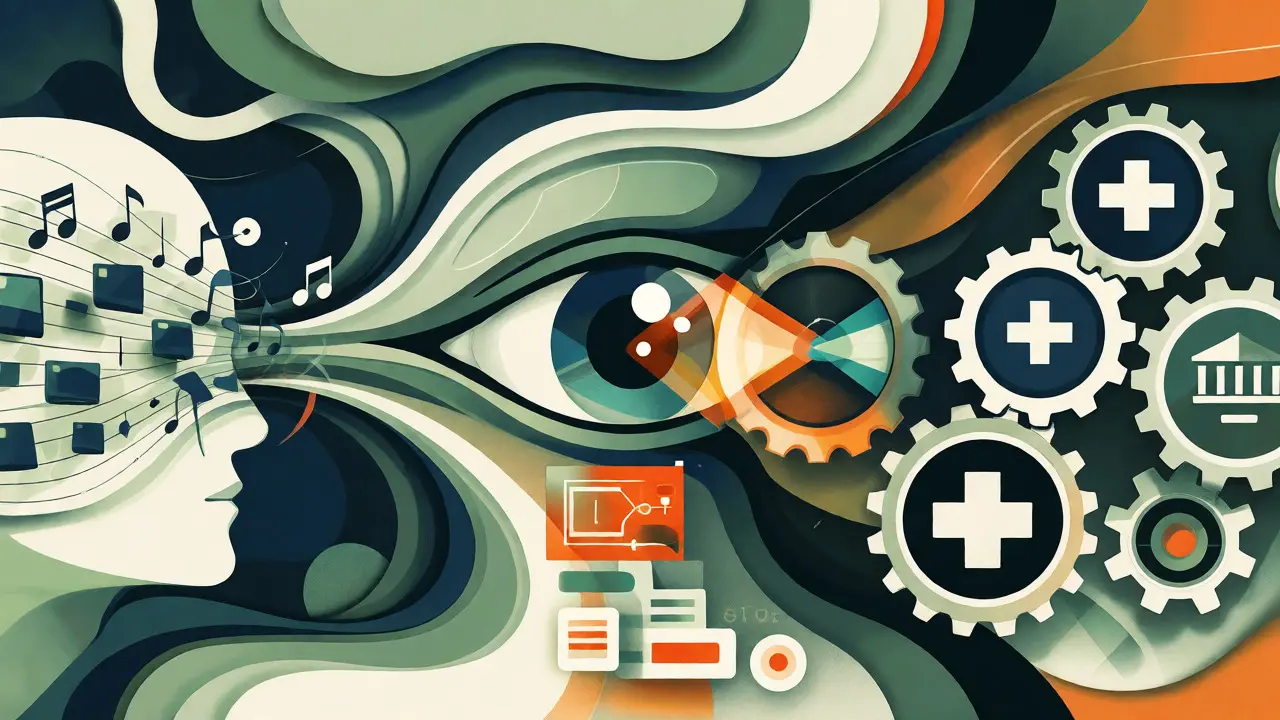
First, voice-to-code will mature. Imagine dictating a feature request while walking, and watching the interface update in real-time. This lowers barriers further, aiding accessibility for users with motor disabilities or visual impairments.
Second, domain-specific AI assistants will dominate. Instead of one general-purpose coder, you’ll have specialized agents. A healthcare AI will understand HIPAA compliance natively. A fintech agent will know regulatory constraints. This specialization reduces hallucinations and improves accuracy.
Third, visual development paradigms may replace text entirely. Developers might manipulate diagrams of data flow or UI components, with AI translating visuals into code automatically. This shifts the skill set from syntax memorization to architectural thinking.
Sustainability will also play a role. Green SDLC practices will emerge, with carbon-aware pipelines optimizing resource use. As quantum and edge computing grow, vibe coding tools will need to support hybrid workflows, ensuring code runs efficiently across diverse hardware environments.
Strategic Recommendations for Stakeholders
If you're deciding how to engage with vibe coding through 2030, consider your position in the value chain.
For Developers: Don't fear replacement. Focus on architecture, security, and complex problem-solving. Learn to orchestrate AI agents rather than just writing lines of code. Your value shifts from typing speed to judgment quality.
For Enterprises: Start small. Pilot vibe coding in non-critical internal tools. Measure velocity gains versus maintenance costs. Invest heavily in training and governance frameworks before scaling to production systems.
For Investors: Look beyond hype. Prioritize companies with clear paths to positive unit economics. Those relying solely on cheap compute subsidies may struggle as costs normalize. Watch for consolidation opportunities among smaller players.
The market trajectory bifurcates sharply. Total value grows massively, but individual company sustainability varies. Success depends less on the technology itself and more on how well organizations integrate it into their culture and processes.
What is the difference between vibe coding and low-code?
Low-code platforms provide visual interfaces for assembling applications, often requiring manual configuration. Vibe coding goes further by using generative AI to interpret natural language or abstract intent, automatically generating the underlying logic and structure. While low-code gives you blocks, vibe coding builds the house based on your description.
Will vibe coding replace human developers by 2030?
Unlikely. Projections suggest AI will generate 60% of new software code by 2026, but humans remain essential for architecture, security, and complex integration. The role evolves from writer to editor and architect. Demand for skilled developers who can guide AI remains high.
Why do market forecasts for vibe coding vary so much?
Discrepancies arise from differing definitions of scope. Some reports count only specific AI assistant subscriptions (valued in millions), while others include the broader low-code/no-code ecosystem and infrastructure spending (valued in billions). Methodology differences regarding which technologies are included cause these wide variances.
What are the main risks of adopting vibe coding?
Key risks include inconsistent code quality, security vulnerabilities due to over-reliance on AI, maintainability issues in large projects, and high computational costs affecting profitability. Organizational resistance and lack of training also hinder successful implementation.
How fast will enterprises adopt vibe coding?
Gartner expects enterprises to use vibe coding for 40% of new production software by 2028. Adoption starts with non-critical internal tools and moves toward customer-facing applications as trust and governance frameworks mature.