
Why You Don't Need to Read Every Line of AI Code in Vibe Coding
Imagine building a house without knowing how to mix concrete. Sounds risky, right? But that is exactly what vibe coding is an AI-assisted programming approach where developers focus on intent rather than syntax. It’s not about being lazy. It’s about speed, creativity, and letting the machine handle the heavy lifting. The term was coined by computer scientist Andrej Karpathy a renowned researcher who popularized the concept in February 2025, suggesting we should "give in to the vibes" and stop obsessing over every single line of code.
If you are used to traditional software engineering, this idea might make your stomach drop. For decades, we were taught that understanding every bracket, semicolon, and variable declaration was the mark of a good developer. But in 2026, that rule is changing. The goal isn’t perfection; it’s validation. Here is why reading every line of AI-generated code is no longer the primary goal-and how you can still build safe, effective applications.
The Shift from Syntax to Intent
In traditional coding, you spend hours writing boilerplate code-those repetitive chunks of logic that set up databases, handle user logins, or format dates. It’s tedious work. With vibe coding, you describe what you want in plain English, and tools like GitHub Copilot an AI pair programmer integrated into IDEs, ChatGPT a large language model by OpenAI, or Claude an AI assistant by Anthropic generate the code for you.
Your role changes. You are no longer the bricklayer; you are the architect. You direct the outcome. If the AI writes a function to sort a list, you don’t need to know the exact algorithm it used (like quicksort vs. mergesort). You just need to know that the list is sorted correctly. This shift allows non-technical creators to build software and lets experienced developers focus on high-level architecture and user experience instead of getting stuck in technical weeds.
Why "Good Enough" Beats Perfect
The core philosophy of vibe coding is momentum. In fast-paced environments, time-to-validation matters more than code elegance. If you spend three days perfecting a login screen’s backend logic, but your users hate the design, you’ve wasted time. Vibe coding encourages a "code first, refine later" mindset.
Experienced developers benefit most here. They can glance at generated code, understand its purpose in seconds, and move on. If the AI makes a mistake, they fix it. They don’t rewrite it from scratch. This acts as a productivity multiplier. You get the speed of automation with the safety net of human oversight. The goal is to get a working prototype out quickly, test it with real users, and iterate based on feedback-not to produce a textbook-perfect codebase on day one.

The Risks of Blind Trust
Does this mean you can ignore the code entirely? Absolutely not. There is a big difference between "not needing to understand every line during generation" and "never reviewing the code." Ignoring the output completely is dangerous.
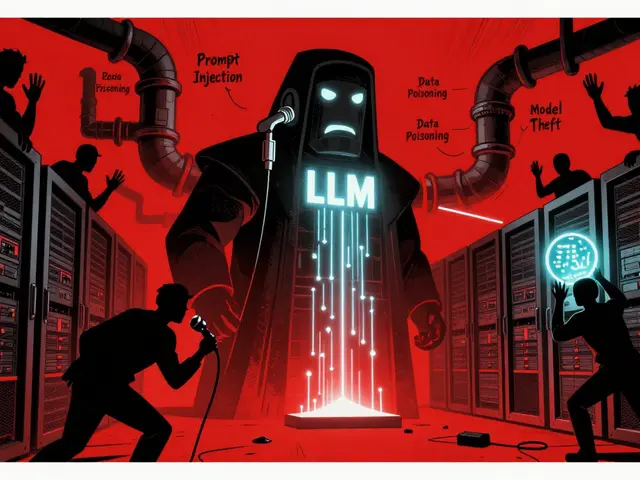
AI models can hallucinate. They might write code that looks correct but contains security vulnerabilities, such as improper user authentication or weak error handling. Without deep context, an AI might introduce bugs that expose personal data or break your app under load. The attack surface expands when you generate large amounts of code quickly. More code means more places for exploits to hide.
This is where the "vibe" part gets tricky. It’s not about being reckless. It’s about trusting the process while maintaining strict checkpoints. You need to know enough to spot red flags, even if you didn’t write the lines yourself.
How to Review AI Code Effectively
Since you aren’t reading every line character-by-character, how do you ensure quality? You shift your review strategy from microscopic to macroscopic. Instead of checking syntax, check logic and security.
- Check Inputs and Outputs: Does the function take the right data? Does it return what you expect? Trace the data flow rather than the code structure.
- Scan for Security Patterns: Look for known bad practices, like hard-coded passwords or unsanitized SQL queries. These stand out even if you don’t read the whole file.
- Run Tests Immediately: Let the code prove itself. Write unit tests or integration tests that verify behavior. If the tests pass, the code likely works.
- Use AI-Paired Programming: Have another human developer review the AI’s output. Fresh eyes catch mistakes that you might miss because you’re too close to the prompt.
Organizations are starting to adopt policies where any AI-generated code must be reviewed by a human pair. This transforms traditional paired programming into a safety net for vibe coding. It minimizes risk while keeping the speed benefits intact.

Who Is Vibe Coding For?
Vibe coding democratizes software development. If you have an idea but don’t know Python or JavaScript, you can still build a prototype. Tools lower the barrier to entry significantly. You type your idea, and the AI handles the implementation details.
For seasoned engineers, it’s a force multiplier. You can tackle complex projects faster because you aren’t bogged down by routine tasks. However, it requires a change in mindset. You must accept that the code might look messy. It might use libraries you haven’t heard of. As long as it works securely and efficiently, that’s fine.
| Aspect | Traditional Coding | Vibe Coding |
|---|---|---|
| Primary Focus | Writing syntax and logic manually | Defining intent and outcomes |
| Speed | Slower due to manual implementation | Faster through AI generation |
| Code Understanding | Must understand every line | Understand purpose and behavior |
| Role of Developer | Author and implementer | Director and reviewer |
| Risk Management | Prevention through careful writing | Mitigation through rigorous review |
Building Sustainable Workflows
To make vibe coding work long-term, you need structure. It’s easy to let codebases become spaghetti monsters if you just keep prompting and pasting. Establish a cleanup phase. After generating a feature, refactor the code to fit your project’s standards. Remove unused dependencies. Add comments explaining the AI’s logic if it’s complex.
Also, document your prompts. Knowing what you asked for helps future-you (or your team) understand why certain code exists. Treat AI generation as a draft, not the final product. The final product comes after human refinement, testing, and deployment checks.
Is vibe coding only for beginners?
No. While it lowers the barrier for non-technical users, experienced developers benefit most by using it as a productivity multiplier. They can focus on high-level architecture while AI handles boilerplate.
Do I need to learn coding to use vibe coding?
You don’t need to memorize syntax, but understanding basic programming concepts helps. Knowing how to debug, read error messages, and structure logic makes you a better director of AI tools.
Is AI-generated code secure?
Not automatically. AI can introduce vulnerabilities like poor authentication or data leaks. Human review and automated security scans are essential before deploying any AI-generated code.
What tools are best for vibe coding?
Popular tools include GitHub Copilot, ChatGPT, Claude, and Replit’s AI features. These platforms integrate seamlessly into workflows to generate code from natural language prompts.
Can I deploy AI code directly to production?
It is risky to deploy without review. Always run tests, check for security issues, and ensure the code aligns with your project’s architecture before shipping to production.





Oh great, another article telling us we can just "vibe" our way through engineering now.
I suppose next week they'll tell me I don't need to understand thermodynamics if I really believe in the car starting.
The problem with this "architect vs bricklayer" analogy is that most people using these tools aren't architects; they're just people who think they have a good idea for an app that solves a problem nobody has.
You say you don't need to read every line, but you immediately contradict yourself by saying you need to check inputs, outputs, and security patterns.
So you DO need to read the code. You just need to read it selectively.
That's not vibe coding, that's just standard senior dev review practices wrapped in buzzword marketing.
Also, Karpathy coining terms doesn't make them valid, it just makes them trendy until the next AI model comes out and breaks everything again.
It is truly fascinating to observe how technology continues to reshape the very fabric of our professional lives, is it not?
In my experience working within the tech sector here in South Africa, we are seeing similar shifts where the emphasis moves from rote memorization of syntax to the broader conceptual understanding of system architecture.
This evolution allows for a more inclusive environment where individuals who may not have had access to traditional computer science education can still contribute meaningfully to software development projects.
However, as any responsible practitioner would agree, one must remain vigilant regarding the integrity and security of the systems being built.
We must ensure that while we embrace speed, we do not compromise on the fundamental principles of safety and reliability that protect users across all communities.
Ah, the classic "I'm too important to type semicolons" argument.
Let me guess, you're one of those devs who thinks because you can prompt an LLM to write a hello world script, you're basically Elon Musk now?
Please.
Real engineers know that the devil is in the details. The AI might generate code that looks fine, but does it handle edge cases? Does it scale under load? Does it leak memory like a sieve?
Probably not.
But sure, keep telling yourself you're an "architect" when you're really just a middle manager for a robot that writes buggy spaghetti code.
I remember when developers actually knew their craft. Now it's all vibes and no substance. Truly tragic.
its all part of the plan
they want us to stop thinking so the ai can take over completely
i tried vibe coding once and my app crashed in three seconds
probably sabotage
the big tech companies are testing us
see if we will just let the machines do everything
soon we wont even know what code is
just prompts
and then they turn off the internet and we are helpless
stay woke folks
i think this is cool
it helps me get things done faster
i dont know much about code but i can build simple stuff now
as long as it works i am happy
maybe i should learn more though so i dont get tricked
Sure, because nothing says "professional software engineering" like trusting a black box algorithm to secure your user data.
I love how the article suggests running tests immediately.
Because writing comprehensive test suites is definitely easier than reading the code you just generated.
Good luck with that.
I'm sure your "macroscopic" review strategy will catch that subtle race condition in the authentication module that only happens under high concurrency.
Not.