How Finance Teams Use Generative AI for Better Forecasting and Variance Analysis
Finance teams used to spend weeks grinding through spreadsheets, pulling data from five different systems, and writing the same explanations over and over. By the time they finished, the numbers were already outdated. Today, that’s changing-fast. Generative AI isn’t just a buzzword in finance anymore. It’s the tool that turns messy, slow forecasting into clear, fast, and accurate insights. And it’s not replacing finance professionals. It’s giving them back their time.
What Generative AI Actually Does in Finance
Generative AI in finance doesn’t just spit out numbers. It tells you why those numbers changed. If sales dropped 15% in Q1, a traditional model might show the variance. A generative AI system explains: “Sales fell due to a 22% decline in customer retention in the Midwest, linked to delayed product shipments from the Ohio warehouse, which were impacted by union labor disruptions in January.” That’s not a guess. It’s pulled from internal ERP data, supply chain logs, news articles, and even employee sentiment reports.
This isn’t science fiction. Companies like King’s Hawaiian cut their interest expenses by over 20% in 2023 after switching to AI-driven cash flow forecasting. How? The system didn’t just predict cash needs-it flagged upcoming shortfalls weeks in advance and suggested optimal borrowing windows based on historical payment patterns and seasonal trends.
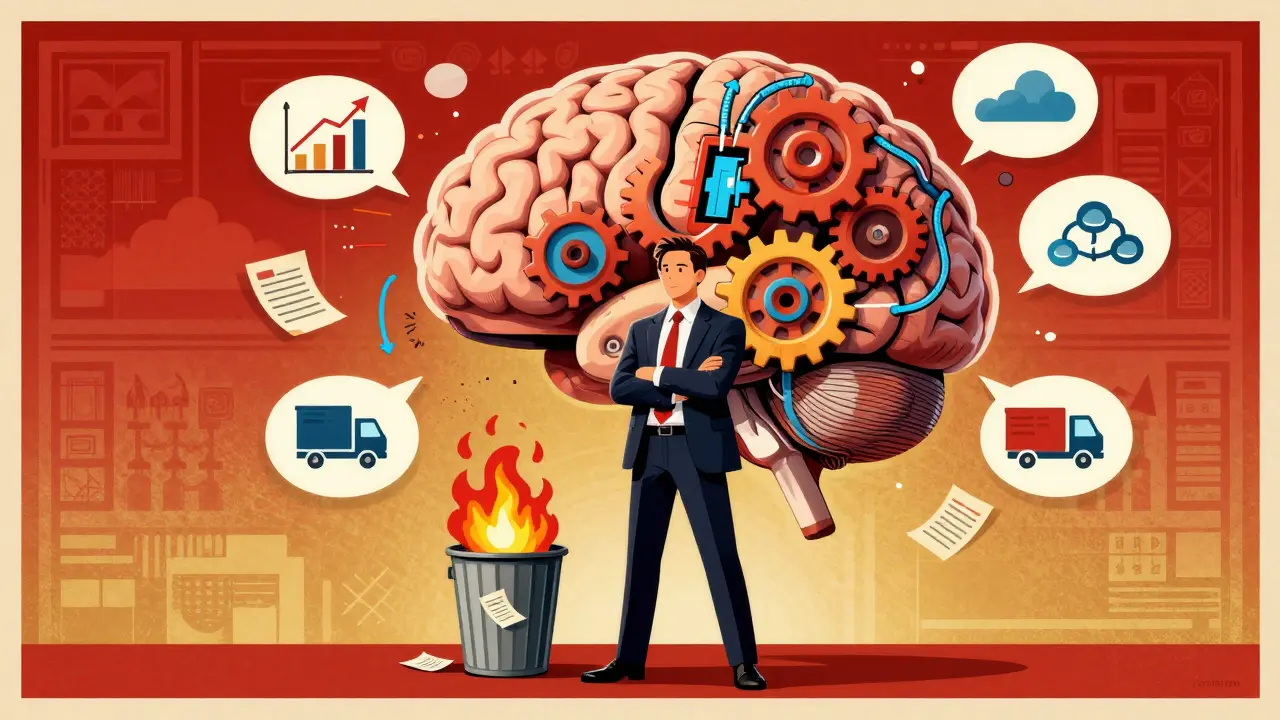
The magic lies in combining two things: machine learning models that find hidden patterns in data, and large language models (like GPT-4) that turn those patterns into plain English. It’s like having a senior analyst who’s read every financial report, supply chain update, and market trend for the past five years-and can summarize it all in one paragraph.
From Quarterly Reports to Daily Updates
Before generative AI, most finance teams updated forecasts once a quarter. That’s too slow. Markets don’t wait. Inflation spikes. Supply chains break. Customers cancel orders. Waiting 90 days to react means missing opportunities-and losing money.
Now, AI-powered systems run rolling forecasts that refresh daily. At a large North American bank, the finance team uses AI to automatically update loan loss projections every morning based on new credit applications, regional unemployment data, and Fed rate announcements. What used to take three analysts two days to compile now happens overnight.
And it’s not just about speed. Accuracy jumped. According to a 2024 FP&A Trends survey, teams using generative AI saw 25% higher forecast accuracy than those still using Excel. That’s not a small win. That’s hundreds of thousands of dollars in avoided overages, underfunded reserves, or missed investment windows.
How Variance Analysis Got Smarter
Variance analysis used to mean comparing last month’s budget to actuals-and then writing a 10-page memo explaining every difference. Most of that work was repetitive: “Revenue was down because of lower foot traffic,” “COGS rose due to higher freight costs.”
Generative AI automates the grunt work. It scans actuals, compares them to forecasts, and generates a narrative for each major variance. No more manual tagging. No more chasing down department heads for explanations. The system pulls from the same data sources as the forecast-ERP systems, CRM logs, payroll records-and connects the dots.
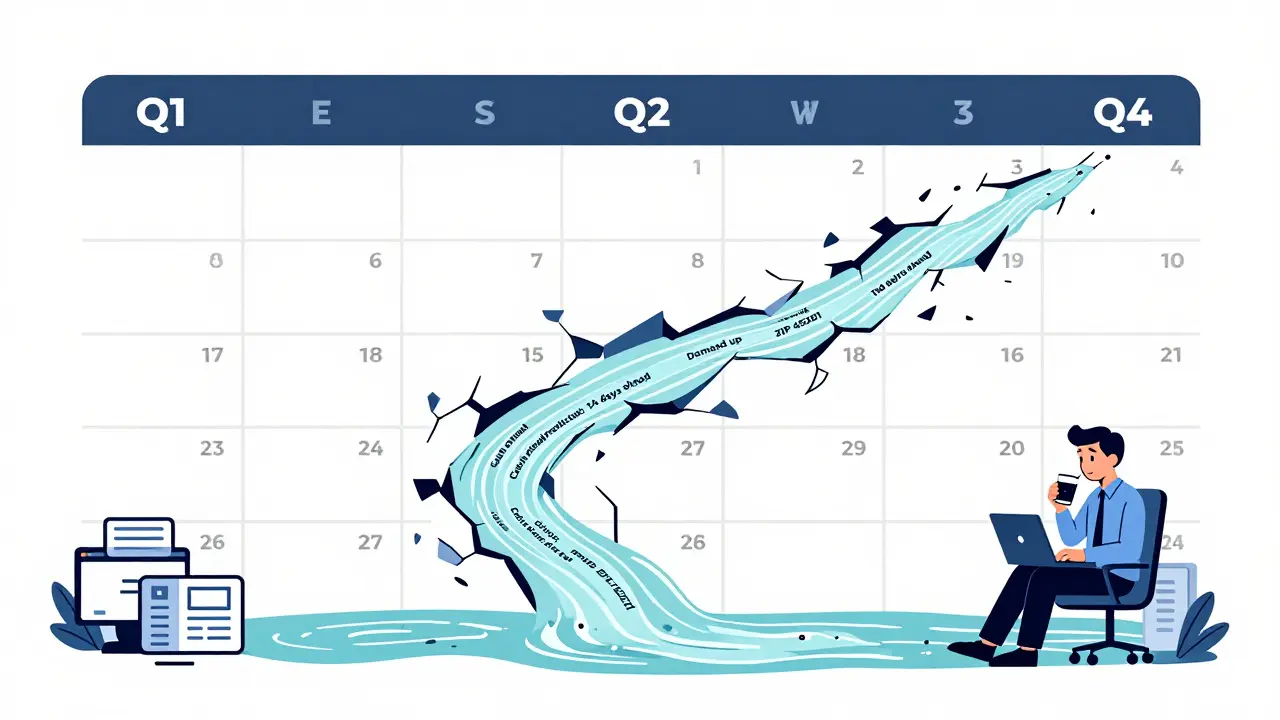
One mid-sized retailer in Ohio cut its variance analysis time from 14 days to 48 hours. The AI flagged three unexpected variances the team had missed: a spike in returns tied to a defective batch, a surge in online orders from a new zip code, and a delay in vendor payments affecting cash flow. All three were buried in data no one had time to cross-reference.
And here’s the kicker: the AI doesn’t just report variances-it suggests actions. “To offset the return spike, consider offering a targeted promo to customers in the affected region.” Or: “Increase inventory in ZIP 45201 by 18% based on projected demand growth.”
What Systems Are Finance Teams Using?
Most companies don’t build AI from scratch. They plug into tools already in their stack.
- SAP S/4HANA Finance now integrates Joule, its AI assistant, which can generate cash flow forecasts and variance summaries directly from transaction data.
- DataRobot’s Cash Flow Forecasting App connects to SAP Datasphere and analyzes payer behavior to predict when customers will pay-and how much.
- Datarails offers no-code AI for FP&A teams using Excel or NetSuite, turning spreadsheets into dynamic, self-updating models with narrative explanations.
- Anaplan and Adaptive Insights have added AI features, but they’re still catching up on narrative generation. Most still rely on dashboards, not stories.
The key difference? Pure generative AI tools don’t just show you charts. They write the email your CFO needs to send to the board. That’s why 82% of finance leaders say AI frees them up for strategic work, according to IBM.
Who’s Adopting This-and Who’s Not?
Adoption isn’t even across the board. Fortune 500 companies? 62% have rolled out some form of AI in FP&A. Mid-sized firms? Only 28%. Small businesses? Just 12%.
Why the gap? It’s not about budget. It’s about data. AI needs clean, historical data-three to five years’ worth. If your finance team still uses Excel files saved on a shared drive with no version control, you’re not ready. The system can’t learn from chaos.
Another barrier: integration. If your ERP, payroll, and CRM systems don’t talk to each other, AI can’t connect the dots. Companies that succeed have already started unifying their data lakes. Those still clinging to manual uploads? They’re falling behind.
And then there’s trust. Some CFOs worry about “black box” models. But the best systems now include explainability features. You can click any insight and see: “This prediction was based on 12,400 historical transactions, 8 market signals, and 3 news events from the last 30 days.” That transparency builds confidence.
What You Need to Get Started
You don’t need a data science team. You need:
- Clean, centralized financial data-at least 3 years of history. If you’re still using separate Excel files for each department, fix that first.
- A pilot use case-start with cash flow forecasting. It’s the most tangible, has the clearest ROI, and is easier to validate.
- One person to own the process-usually a senior FP&A analyst. They don’t need to code. They need to understand the business and ask the right questions.
- Time to train-most teams need 2-4 weeks to get comfortable with the interface. Leaders need 1-2 hours to learn how to interpret the outputs.
Implementation typically takes 3-6 months from start to full rollout. But the first savings show up in weeks. One manager on Reddit said their monthly forecasting cycle dropped from 10 days to 3. That’s 7 days back for the team every month.
The Big Risks (And How to Avoid Them)
Generative AI isn’t magic. It’s a tool-and like any tool, it can break if misused.
- Garbage in, garbage out: If your data is messy, the AI will make confident, wrong predictions. Clean your data before you buy the tool.
- Over-reliance: AI can’t predict a pandemic or a war. It learns from history. If something unprecedented happens, human judgment still wins. Always keep a human in the loop.
- Regulatory risk: The SEC now requires companies to disclose how they use AI in financial reporting. Make sure your AI outputs are auditable. Every explanation should trace back to its data sources.
- Shadow AI: If you don’t set governance rules, teams will start using free tools like ChatGPT to generate forecasts. That’s a compliance nightmare. Control the tools, don’t ban them.
Best practice? Start small. Test on one line item. Validate against actuals. Scale only when you see consistent accuracy.
What’s Next? The Rise of Self-Driving Finance
What comes after AI that explains forecasts? AI that acts on them.
Bain & Company calls it “self-driving finance.” By 2027, systems will automatically adjust budgets when forecasts drift. They’ll trigger payments when cash flow hits a threshold. They’ll recommend cost cuts before a deficit hits. The finance team won’t be doing the math-they’ll be deciding what to do next.
That’s not coming in 10 years. It’s coming in 18 months. SAP, Oracle, and DataRobot are already building autonomous decision engines into their platforms.
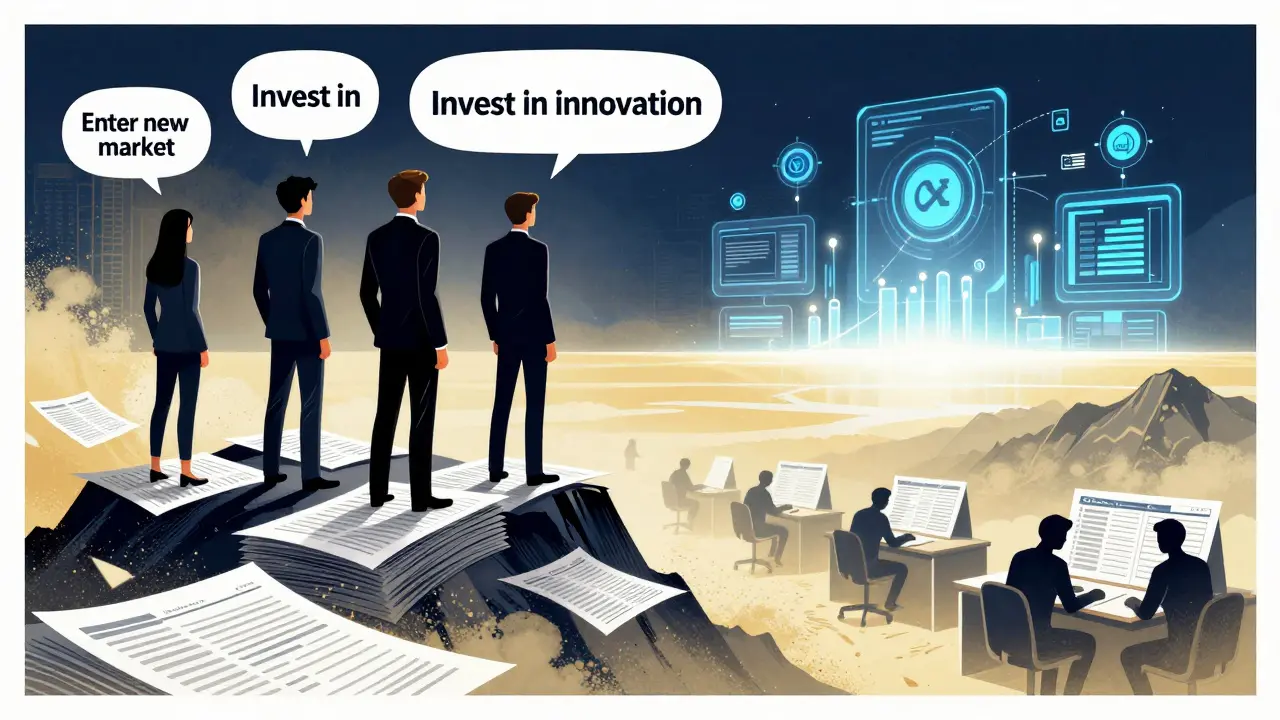
The future isn’t about more reports. It’s about fewer meetings. Fewer late nights. More time to think strategically-to plan acquisitions, enter new markets, or invest in innovation.
Finance teams that use generative AI aren’t just doing their jobs better. They’re becoming strategic partners. And the ones who wait? They’ll be stuck in spreadsheets while everyone else moves forward.
Can generative AI replace finance professionals?
No. It replaces repetitive tasks-data gathering, report writing, variance explanations-so finance teams can focus on strategy, risk assessment, and decision-making. The best finance leaders now spend more time advising the CEO than updating Excel sheets.
Do I need to be tech-savvy to use generative AI in finance?
No. Most enterprise tools are designed for finance professionals, not data scientists. You don’t need to code. You need to understand your business numbers. The interface is usually drag-and-drop or menu-based, like using a dashboard in your ERP system.
How accurate are AI-generated forecasts compared to human ones?
Studies show AI improves forecast accuracy by 20-25% on average. IBM found AI reduces sales forecast errors by 57%. The biggest gains come from reducing human bias and catching subtle patterns humans miss-like how weather patterns affect retail sales in specific regions.
What’s the biggest mistake companies make when adopting AI for forecasting?
Starting with the tool instead of the problem. Many buy AI because it’s trendy, not because they have clean data or a clear use case. The most successful teams start by asking: “What’s the one report we hate doing every month?” Then they automate that. Don’t try to boil the ocean.
Is generative AI only for big companies?
No. Tools like Datarails and others now offer affordable, cloud-based solutions for mid-sized and even small businesses. The barrier isn’t cost-it’s data readiness. If you’ve got 3 years of clean financial records and a single ERP system, you’re ready.
How do I measure ROI from generative AI in finance?
Track three things: reduction in forecast variance (e.g., from 18% to 9%), hours saved per forecasting cycle (e.g., from 120 to 40), and stakeholder satisfaction scores (e.g., CFO feedback on report clarity). Companies that track these see ROI in under six months.







It's wild to think about how much time we used to waste just moving numbers around. Now AI does the heavy lifting and lets us focus on what actually matters-like asking the right questions instead of just answering the ones we’re given. It’s not about replacing humans, it’s about elevating them. I’ve seen teams go from drowning in spreadsheets to having coffee chats with the CEO about where to invest next. That’s the real win.
so like… ai just reads ur excel and goes ‘ohhh so u spent 20k extra on shipping bc the truck driver got sick n the weather sucked’?? i mean… thats kinda magic right?? like why did no one think of this before?? i feel like my finance guy is gonna get replaced by a chatbot and then i’ll have to explain my expense claims to a bot that knows more than me 😭
They say AI is just a tool… but let’s be real-this is how the West starts controlling global finance. First they give us shiny tools, then they lock the data behind paywalls. SAP, Oracle, IBM-they’re not helping us, they’re building digital empires. And when your ERP system starts ‘suggesting’ your budget cuts? Who’s really in charge? Don’t be fooled. This isn’t progress-it’s quiet colonization.
ok so i read this whole thing and honestly i’m still confused. like… ai tells me why sales dropped? cool. but how do i know it’s not just making stuff up? i’ve seen chatgpt write fake citations before. and what if the ai just picks the easiest explanation and ignores the real reason? like maybe sales dropped because the ceo got drunk at a conference and yelled at the sales team? no data source would catch that. also why does everything have to be so long?? i just want to know if i can use this without learning python.
I really appreciate how this post doesn’t just hype AI as a magic fix. It acknowledges the risks, the data problems, the need for human judgment. That’s rare. Too many tech articles act like we’re all going to be replaced tomorrow. But this? This feels like a roadmap. And honestly, if you’re still using separate Excel files for each department… start there. Clean up the basics. The rest will follow. You don’t need to be a genius. You just need to be consistent.
It is important to understand that technology is a helper, not a replacement. The human mind brings context, ethics, and intuition that no algorithm can fully replicate. Even the most advanced system should be guided by wisdom and care. Finance is not just numbers-it is people’s livelihoods, dreams, and futures. We must use these tools with humility and responsibility.
Wait, so if AI can detect that a spike in returns is tied to a defective batch… does that mean it could’ve predicted the batch was defective before it shipped? Like, could it link supplier quality scores, warehouse humidity logs, and production line sensor data to flag a defect before it even leaves the factory? That’s next level. Is anyone doing that yet or am I just dreaming?
If you’re a small business owner reading this and thinking ‘this isn’t for me’-you’re wrong. Start with one thing. Cash flow. Use Datarails. Spend one afternoon connecting your bank feed. Let the AI tell you when you’ll run low next month. That’s it. No code. No consultants. Just one smart move. Then next month, do another. You don’t need to be the biggest. You just need to be the first to try. I’ve seen people go from stressed to strategic in 60 days. You can too.
One thing I didn’t see mentioned: training the AI on local context. A model trained on US retail data might not catch why monsoon delays in Kerala affect inventory turnover in Bangalore. AI needs cultural and regional nuance. Maybe the next frontier isn’t just better models-but better training data that reflects global diversity, not just Silicon Valley patterns. Just a thought.