
Transfer Learning in NLP: How Pretraining Enabled Large Language Model Breakthroughs
Remember when building a decent chatbot meant hiring a team of linguists and spending months labeling thousands of sentences? That era is gone. Today, you can take a model that has already read the internet and tweak it to answer customer support tickets in an afternoon. This shift didn’t happen by accident. It happened because of transfer learning.
Transfer learning is the secret sauce behind the explosion of Large Language Models (LLMs). Instead of teaching a computer language from scratch for every new job, we teach it once on a massive scale and then adapt that knowledge to specific tasks. This approach turned Natural Language Processing (NLP) from a niche academic field into the backbone of modern software.
The Paradigm Shift: From Scratch to Transfer
To understand why transfer learning matters, you have to look at how things used to work. In the early days of NLP, if you wanted a model to classify emails as spam or not spam, you trained it specifically for that. If you later wanted it to summarize news articles, you had to train a completely different model from zero. Each task required its own dataset, its own architecture, and its own compute budget. It was inefficient, expensive, and slow.
Transfer learning flips this script. Imagine learning to play piano. You spend years mastering scales, chords, and rhythm. Once you know those fundamentals, picking up a new song is much faster than if you had never touched a key before. In AI terms, the "scales" are general linguistic patterns-grammar, syntax, semantics-that a model learns during pretraining. The "new song" is your specific business task, like detecting fraud in transaction notes.
This method relies on two distinct phases: pretraining and fine-tuning. During pretraining, a model consumes vast amounts of unstructured text-books, websites, news articles-to learn how language works. During fine-tuning, you take that knowledgeable base and adjust it slightly using a smaller, labeled dataset relevant to your specific problem. The result? A highly specialized tool built on a foundation of broad understanding.
BERT and the Birth of Modern Transfer Learning
While researchers had experimented with transferring knowledge before, BERT (Bidirectional Encoder Representations from Transformers) changed everything when Google released it in 2018. Before BERT, most models processed text linearly, left to right. They couldn't fully grasp context because they didn't know what came next in the sentence.
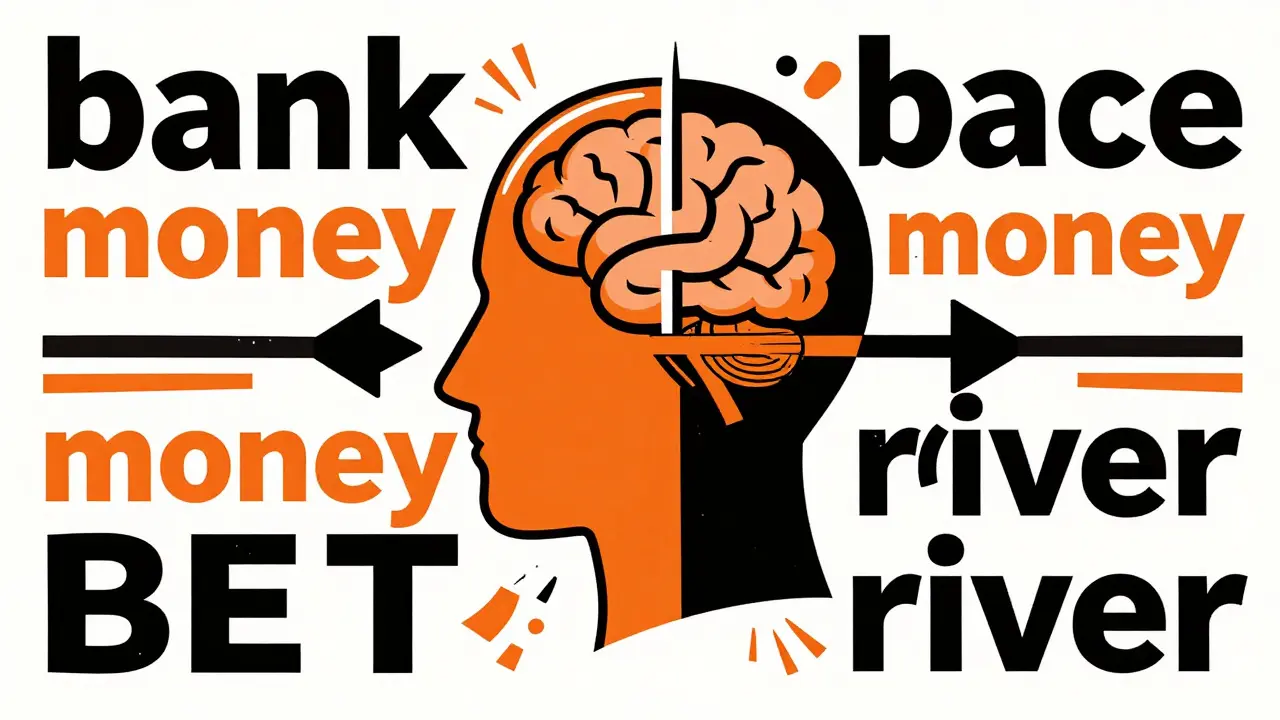
BERT introduced bidirectionality. By masking random words in a sentence and asking the model to predict them (Masked Language Modeling), it learned to consider both the preceding and following words. This allowed it to understand nuance far better than previous systems. For example, in the sentence "I went to the bank to deposit money," BERT understands "bank" refers to a financial institution, not a river edge, because it looks at the surrounding context.
| Model | Architecture Type | Training Objective | Key Innovation |
|---|---|---|---|
| BERT | Encoder-only | Masked Language Modeling (MLM) | Bidirectional context understanding |
| GPT-3 | Decoder-only | Causal Language Modeling | Scale (175B parameters) enabling few-shot learning |
| T5 | Encoder-Decoder | Text-to-Text Transfer | Unified framework for all NLP tasks |
BERT proved that a single pretrained model could be fine-tuned to achieve state-of-the-art results across dozens of different tasks-from question answering to sentiment analysis-without changing the underlying architecture. It democratized high-performance NLP, allowing smaller teams to compete with giants.
The Scale Era: GPT-3 and Beyond
If BERT showed us the power of bidirectional understanding, OpenAI’s GPT-3 showed us the power of scale. Released in 2020, GPT-3 contained 175 billion parameters, roughly 100 times more than BERT. But size wasn't the only difference; the training methodology shifted too.
GPT-3 uses autoregressive generation, predicting the next word in a sequence based on everything that came before it. Because it was trained on such a massive corpus, it developed emergent abilities. Most notably, it demonstrated "few-shot learning." You don't always need to fine-tune GPT-3 with code and data. Sometimes, you just give it a few examples in the prompt, and it figures out the pattern. This is a form of transfer learning where the adaptation happens at inference time rather than through weight updates.
Other models followed suit, each adding unique twists. T5 (Text-to-Text Transfer Transformer) treated every NLP task as a text-to-text problem. Whether you were translating languages or summarizing documents, the input and output were always text strings. This simplified the engineering pipeline significantly. Meanwhile, XLNet improved upon BERT by using permutation-based training, predicting words in random orders to capture bidirectional context without the limitations of masking.
How Pretraining Actually Works
Pretraining is the heavy lifting phase. It’s where the model learns the "rules" of language. This process involves several technical steps that might sound complex but follow a logical flow.
- Data Collection: Engineers gather terabytes of text from diverse sources. Quality matters here. Noisy data leads to noisy models.
- Tokenization: Text is split into smaller units called tokens. These can be whole words, subwords, or even characters. Tokenization allows the model to handle rare words by breaking them down into familiar parts.
- Vectorization: Tokens are converted into numerical vectors. These numbers represent the semantic meaning of the word. Words with similar meanings end up close together in this mathematical space.
- Unsupervised Learning: The model processes this data using objectives like Masked Language Modeling (predicting missing words) or Next Sentence Prediction (determining if two sentences logically follow each other). There are no human labels involved here; the model learns from the structure of the data itself.
The goal isn't to memorize the text. It's to build a statistical map of how language functions. When the model sees "The cat sat on the...", it statistically expects "mat" or "carpet" rather than "airplane". This probabilistic understanding is what makes transfer learning possible.
Fine-Tuning: Adapting General Knowledge
Once pretraining is complete, you have a generic language expert. To make it useful for your specific needs, you fine-tune it. This stage is lighter computationally but requires careful strategy.
In traditional fine-tuning, you keep the pretrained weights mostly intact and add a new output layer tailored to your task. For instance, if you're doing binary classification (spam vs. not spam), you add a layer with two neurons. You then feed your labeled dataset through the model. The model adjusts its internal weights slightly to minimize error on this new task.
You can choose to freeze earlier layers entirely. Why? Because the early layers capture basic grammar and syntax, which are universal. Changing them risks "catastrophic forgetting," where the model loses its general language ability while trying to specialize. More recent techniques, like LoRA (Low-Rank Adaptation), allow you to inject small adapter modules into the network, updating only a fraction of the parameters. This makes fine-tuning faster, cheaper, and less prone to overfitting.
Why Transfer Learning Wins
The benefits of this approach are practical and profound. First, there's data efficiency. Collecting millions of labeled examples is expensive and time-consuming. With transfer learning, you might need only hundreds or thousands of examples to get excellent performance. The model already knows what a "sentence" is; you just need to show it what a "positive review" looks like.
Second, there's resource optimization. Training a model from scratch requires massive GPU clusters and weeks of computation. Fine-tuning a pretrained model can often be done on a single powerful laptop or a modest cloud instance in hours. This lowers the barrier to entry, allowing startups and researchers to deploy sophisticated NLP solutions without deep pockets.
Third, there's generalization. A model pretrained on diverse data tends to perform better on unseen data within the target domain. It has seen variations of language that your narrow dataset might lack, making it more robust against outliers and noise.
Challenges and Ethical Considerations
It’s not all smooth sailing. Transfer learning inherits the biases present in the pretraining data. If the web corpus contains stereotypes about gender, race, or profession, the model will likely replicate them. Mitigating this requires careful curation of pretraining data and active debiasing during fine-tuning.
There's also the issue of domain mismatch. A model pretrained on general web text might struggle with highly specialized jargon, like medical records or legal contracts. While fine-tuning helps, it may not fully bridge the gap if the vocabulary differences are too stark. In these cases, continuing pretraining on domain-specific data before fine-tuning-a technique known as continued pretraining-can yield better results.
Computational costs remain a concern for the initial pretraining phase. Only large organizations can afford to train foundational models from scratch. However, the open-source community has mitigated this by releasing pretrained checkpoints, allowing anyone to leverage these breakthroughs without paying the upfront cost.
The Future of NLP Evolution
As we move further into 2026, the line between pretraining and fine-tuning continues to blur. Techniques like Retrieval-Augmented Generation (RAG) combine pretrained models with external knowledge bases, reducing hallucination and keeping information fresh without retraining. We're also seeing multimodal transfer learning, where models pretrained on text, images, and audio share representations, enabling richer interactions.
Transfer learning hasn't just enabled LLM breakthroughs; it has become the standard infrastructure for AI development. It transformed NLP from a series of isolated tools into a unified ecosystem of adaptable intelligence. For developers, this means focusing less on building wheels and more on solving real problems with the power of language.
What is the main difference between pretraining and fine-tuning?
Pretraining is the initial phase where a model learns general language patterns from a massive, unlabeled dataset. Fine-tuning is the subsequent phase where the pretrained model is adapted to a specific task using a smaller, labeled dataset. Pretraining builds the foundation; fine-tuning adds specialization.
Why did BERT revolutionize NLP?
BERT introduced bidirectional context understanding, allowing models to consider both preceding and following words when analyzing a sentence. This led to significantly better performance in tasks requiring deep contextual comprehension, such as question answering and named entity recognition.
Can I use transfer learning with limited data?
Yes, transfer learning is particularly effective for low-data scenarios. Since the model already possesses general linguistic knowledge, it requires far fewer labeled examples to adapt to a new task compared to training from scratch.
What is catastrophic forgetting in fine-tuning?
Catastrophic forgetting occurs when a model, while being fine-tuned on a new task, loses its previously acquired general knowledge. This often happens if too many layers are updated aggressively. Freezing early layers or using techniques like LoRA helps prevent this.
How does GPT-3 differ from BERT in terms of architecture?
BERT is an encoder-only model designed for understanding context, while GPT-3 is a decoder-only model designed for generating text. GPT-3 predicts the next word in a sequence (autoregressive), whereas BERT predicts masked words in a bidirectional manner.





It is truly fascinating to observe how the masses continue to be dazzled by these so-called 'breakthroughs' in natural language processing, when in reality, we are merely witnessing a sophisticated form of statistical regurgitation that lacks any semblance of true understanding or consciousness. The notion that one can simply 'tweak' a model trained on the unfiltered chaos of the internet to perform nuanced tasks like customer support is, at best, a gross oversimplification of the intricate linguistic and cultural subtleties that define human communication. While I suppose it is convenient for those who lack the patience or intellectual rigor to engage with the foundational principles of linguistics, relying on such black-box algorithms ultimately devalues the art of precise expression. One must wonder if the convenience of transfer learning will eventually lead to a homogenization of thought, where all output becomes indistinguishable from the next, stripped of its unique character and depth.
they dont want you to know that the big tech companies are using this transfer learning stuff to track your every move and sell your data to the highest bidder while pretending its just about making chatbots better its all a conspiracy to control what you think and say because if they can predict your next word they can predict your next action and thats scary af
I have to disagree with the cynicism here because the practical applications are genuinely helping people get things done faster without needing a PhD in computer science. Look at how small businesses are using these tools to handle basic inquiries so their staff can focus on complex issues that actually require human empathy and judgment. It’s not about replacing humans but augmenting our capabilities to reduce burnout and increase efficiency in mundane tasks. We should be collaborating to refine these models rather than tearing them down before seeing their full potential in education and accessibility services for those with disabilities.
Oh sure, let's all just clap our hands and pretend that fine-tuning a model on a few thousand sentences magically solves the inherent bias and logical fallacies embedded in the training data. It’s adorable how everyone believes they’ve tamed the beast when they’re really just petting a tiger that hasn’t decided whether to purr or pounce yet. The idea that this is 'democratizing' AI is laughable when you consider the massive compute resources still required to even run these things locally, let alone train them. Enjoy your little afternoon tweak while the real power remains locked behind corporate firewalls and paywalls.
i think its pretty cool how we can just take a big model and make it do specific jobs now instead of starting from scratch every time saves so much time and money for smaller teams who want to try new things without spending millions on servers
It is indeed a remarkable evolution in the field of artificial intelligence, and one must acknowledge the significant strides made in reducing the computational barriers for entry-level developers. However, it is imperative that we remain vigilant regarding the ethical implications of deploying such powerful tools without rigorous oversight and comprehensive bias mitigation strategies. The democratization of technology is a noble goal, yet it must be pursued with a profound respect for the societal impacts and the preservation of diverse cultural nuances within language models. Let us proceed with caution and wisdom as we integrate these advancements into our daily professional lives.